

The Portuguese Way to Santiago de Compostela: A Sacred Journey of Faith, Coastlines, and Centuries-Old Heritage
For centuries, pilgrims from across the globe have answered the call of St. James the Great, walking ancient footpaths toward his tomb in Santiago de Compostela in northwestern Spain. While the French Way (Camino Francés) is the most famous route, the Portuguese Way (Camino Portugués) has rapidly become one of the most beloved pilgrimage routes in Europe—especially for Catholic travelers from Brazil, Argentina, Mexico, and across Latin America.
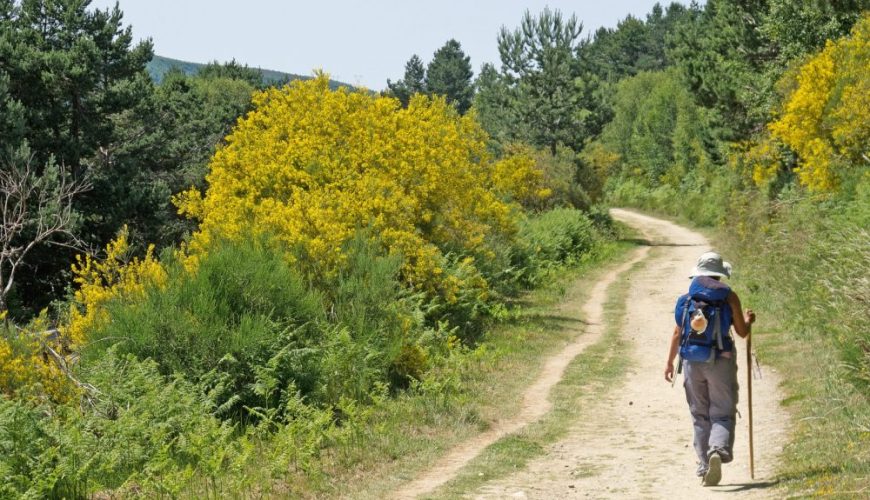
Sharing deep linguistic, cultural, and historical ties with Portugal and Galicia, the Portuguese Way offers an unforgettable spiritual experience. Whether you choose to travel on foot or by bicycle, this route blends quiet coastal beauty, historic sanctuaries, and seamless hospitality.
History and Catholic Significance of the Portuguese Way
The roots of the Camino Portugués date back to the 9th century, shortly after the discovery of the relics of the Apostle St. James (Santiago Matamoros) in Galicia. Once Portugal gained independence in the 12th century, kings, queens, clergy, and everyday believers traveled north from Lisbon and Porto along old Roman roads—such as the Via XIX—to pray at the Cathedral of Santiago.
Queen Saint Elizabeth of Portugal
One of the most revered figures along this route is Queen Saint Elizabeth of Portugal (Rainha Santa Isabel), who walked the pilgrimage from Coimbra to Santiago de Compostela in the 14th century after the death of her husband, King Denis. According to tradition, she donated her royal crown to the Cathedral of Santiago and walked back in humility—inspiring generations of Portuguese, Brazilian, and Hispanic Catholics to follow in her footsteps.
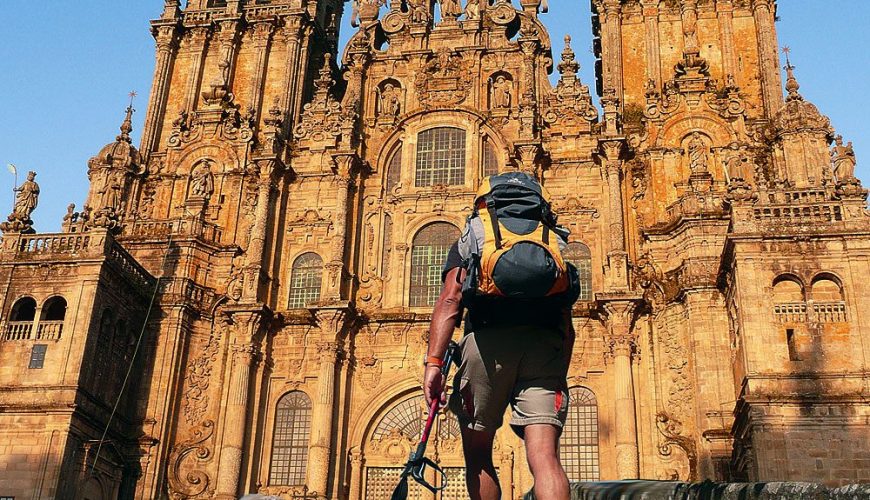
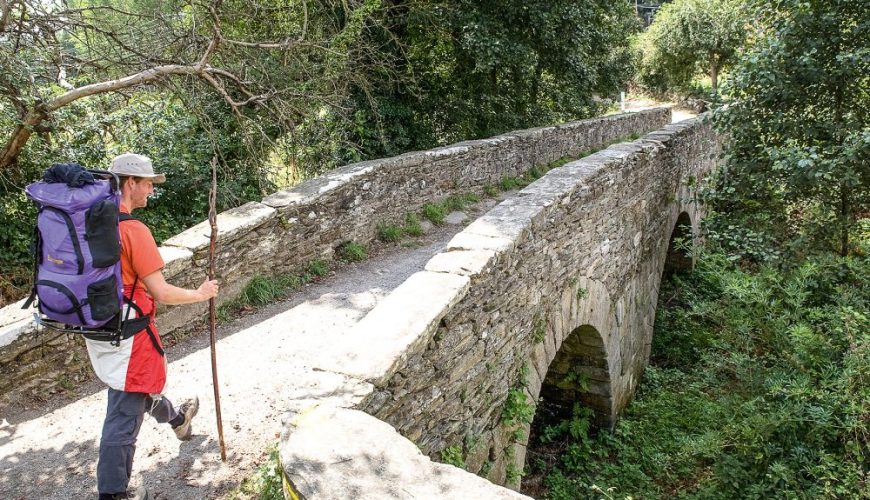
Today, pilgrims who complete at least the last 100 kilometers (62 miles) on foot or the last 200 kilometers (124 miles) by bicycle receive the official Compostela, the Latin certificate of pilgrimage issued by the Cathedral authorities in Santiago.
Choosing Your Route: Central Way vs. Coastal Way
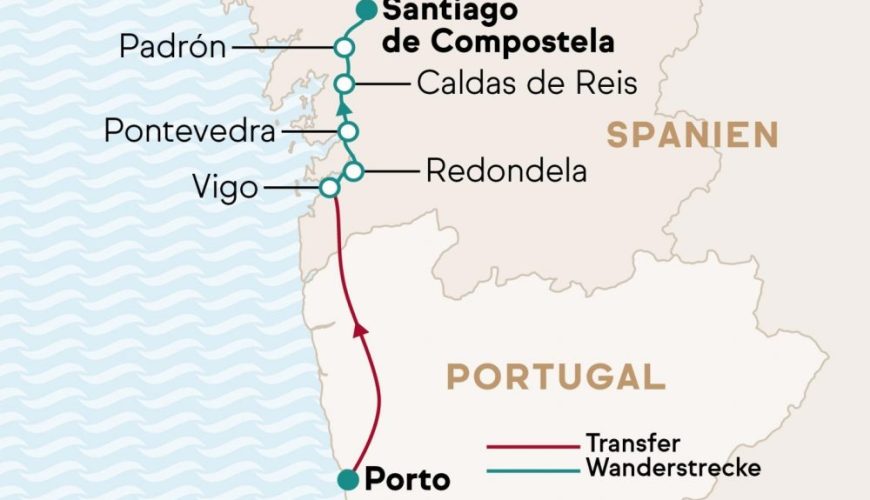
Most travelers from overseas begin their journey in Porto, Portugal’s vibrant northern capital, which sits roughly 240 kilometers (150 miles) south of Santiago de Compostela. From Porto, you can choose between two distinct main paths:
1. The Central Route (Camino Portugués Central)
-
- Atmosphere: Traditional, historic, and deeply contemplative.
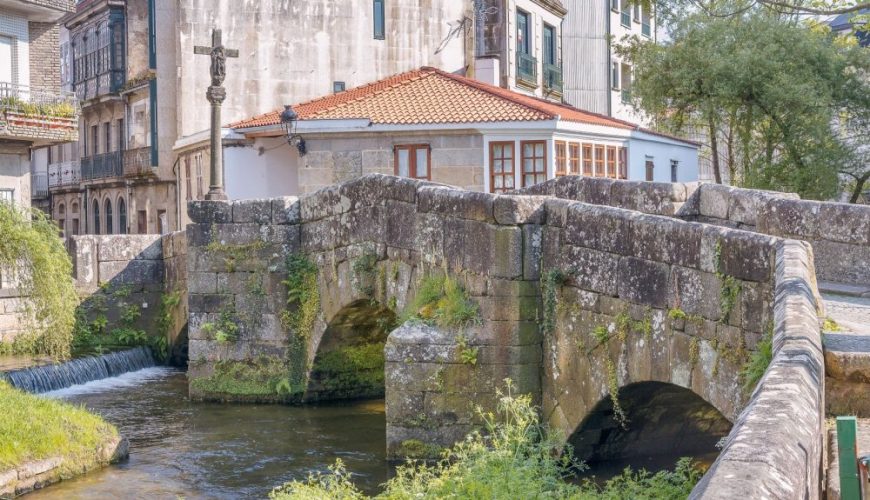
- Highlights: Winds through lush green valleys, medieval stone bridges, vineyards of the Vinho Verde region, and historic towns such as Barcelos, Ponte de Lima (Portugal’s oldest chartered town), and the fortified border city of Valença do Minho.
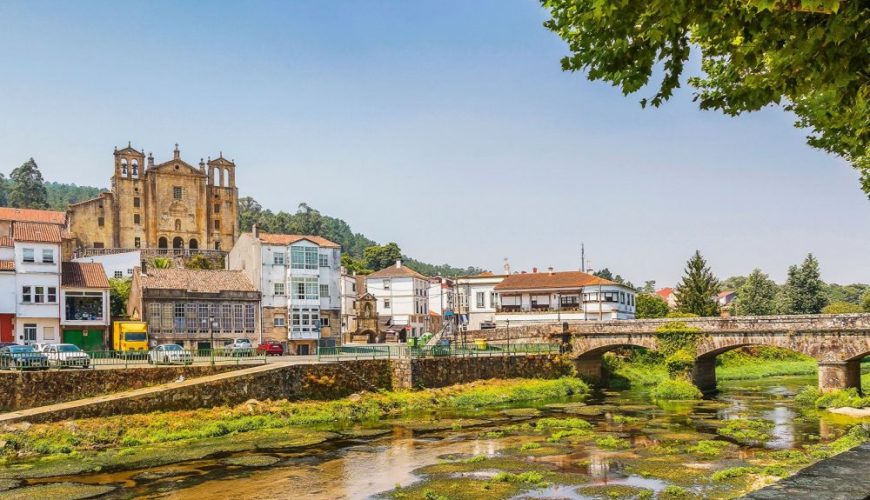
- Crossing into Spain: You cross the Minho River into Tui, passing through O Porriño, Redondela, Pontevedra, and Padrón before reaching Santiago.
2. The Coastal Route (Camino Portugués da Costa)
-
- Atmosphere: Breezy, scenic, and ideal for both hikers and cyclists.
- Highlights: Follows the dramatic Atlantic coastline north from Porto through Vila do Conde, Esposende, and Viana do Castelo (home to the stunning Sanctuary of Santa Luzia).
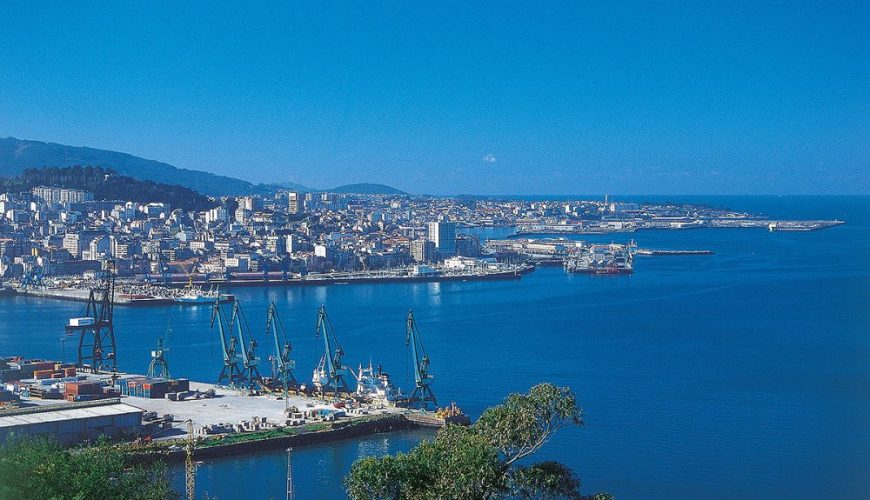
- Crossing into Spain: After taking a ferry across the river mouth to A Guarda in Galicia, the trail hugs the rugged cliffs past Baiona and Vigo, joining the Central Route at Redondela.
Must-See Religious & Cultural Sights Along the Way
-
- Porto Cathedral (Sé do Porto): The traditional starting point in northern Portugal, where pilgrims collect their first stamp in their Credencial (Pilgrim Passport).
- Sanctuary of Santa Luzia (Viana do Castelo): Perched high above the Atlantic, this neo-Byzantine basilica offers sweeping panoramic views of the coastline and the Lima River.
- Cathedral of Tui (Galicia): A fortress-like Romanesque and Gothic cathedral standing right on the Spanish-Portuguese border.
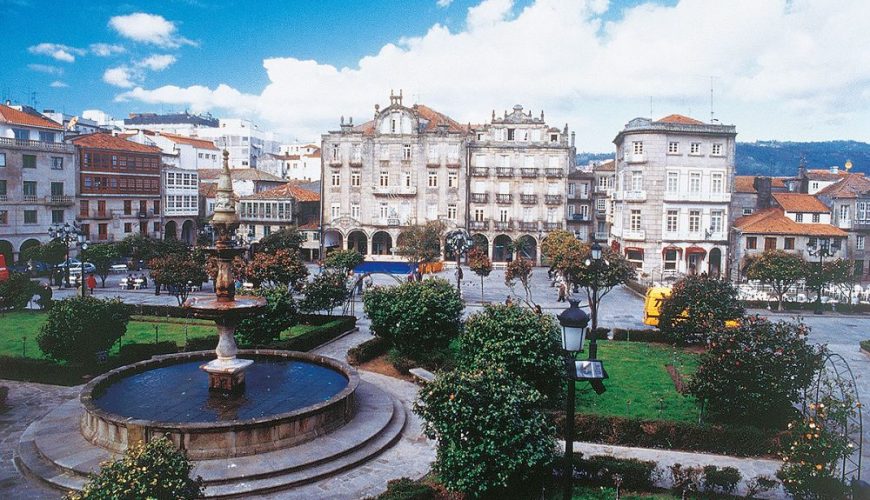
- Church of the Pilgrim Virgin (Igreja da Peregrina, Pontevedra): Famous for its unique scallop-shell-shaped floor plan, dedicated to Our Lady who guides pilgrims safely to Santiago.
- Padrón & the Pedrón: According to Catholic tradition, this is where the stone boat carrying the body of St. James first arrived in Galicia. Beneath the altar of the Church of Santiago in Padrón lies the Pedrón—the ancient Roman mooring stone to which the vessel was tied.
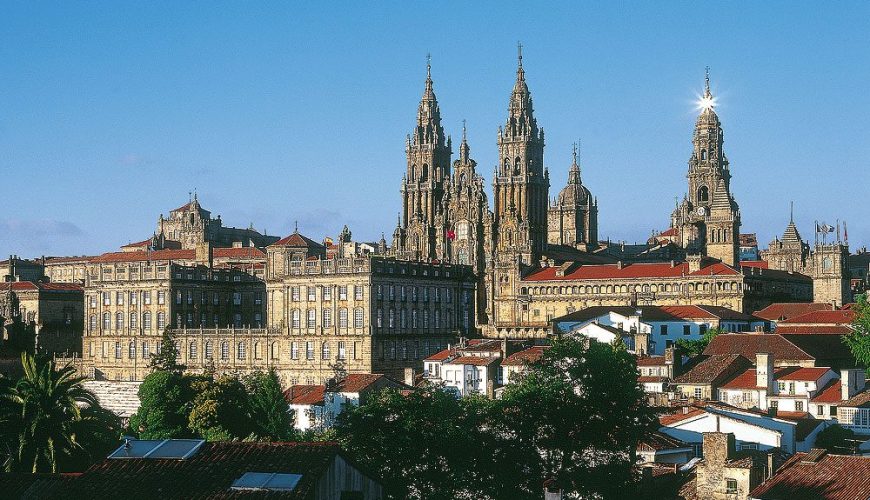
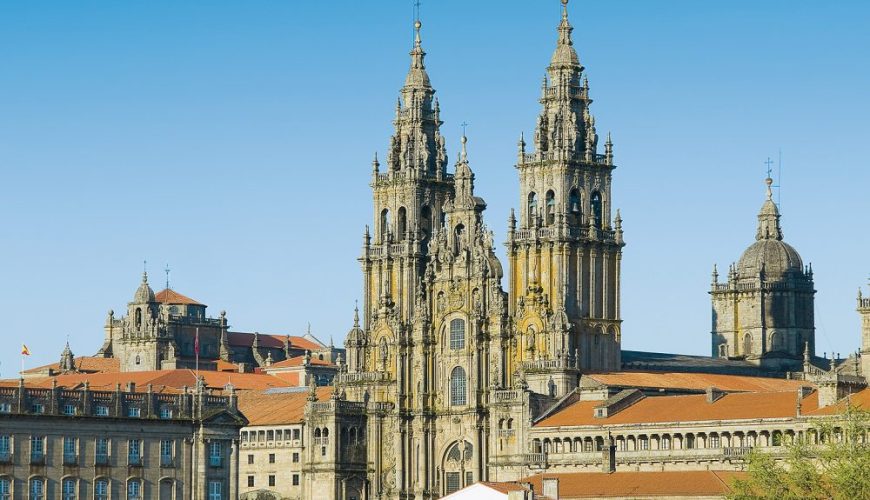
- Cathedral of Santiago de Compostela: The spiritual climax of the journey, featuring the Baroque Obradoiro facade, the Romanesque Pórtico de la Gloria, the crypt of St. James, and the famous Botafumeiro (the giant swinging incense burner used during special Pilgrim Masses).
Walking or Cycling: Organized Tours Without the Stress
While many pilgrims walk independently, an organized walking or cycling tour allows you to focus fully on the spiritual, cultural, and scenic experience without worrying about logistics.
In our curated round-trip database, we feature carefully selected guided and self-guided walking and cycling tours operated by renowned European active-travel specialists:
-
- Guided Group Tours: Travel alongside like-minded international guests with experienced tour leaders, cultural insights, and seamless organization from start to finish.
- Self-Guided Walking & Cycling Packages: Enjoy total freedom at your own pace with pre-booked boutique hotels and historic paradores, GPS navigation, daily luggage transfers from hotel to hotel, and 24/7 local support.
- E-Bike & Trekking Bike Options: Cycling from Porto to Santiago—or along the Galician Atlantic coast—lets you cover more ground comfortably while enjoying coastal boardwalks, quiet country lanes, and charming fishing villages.
How to Get There from Brazil, Argentina, Mexico & the Americas
Reaching the starting point of the Portuguese Way is remarkably straightforward for travelers flying from the Americas:
-
- Direct Flights to Porto (OPO) or Lisbon (LIS): Major airlines (including TAP Air Portugal, Iberia, LATAM, and Aeroméxico) offer direct flights from São Paulo, Rio de Janeiro, Buenos Aires, Mexico City, Miami, and New York to Lisbon or Porto. From Lisbon, fast trains (Alfa Pendular) reach Porto in under 3 hours.
- Flying into Santiago de Compostela (SCQ) or Madrid (MAD): Alternatively, you can fly via Madrid directly into Santiago de Compostela or Vigo (VGO) and take a short regional transfer to your starting point.
- Best Time to Travel:April to June and September to October offer mild temperatures, blooming landscapes, and ideal conditions for both walking and cycling. July and August are warmer and livelier, especially near the Atlantic beaches.
Plan Your Pilgrimage or Active Holiday on the Portuguese Way
Whether you are drawn by Catholic devotion, Iberian history, or the joy of walking and cycling along the Atlantic coast, the Portuguese Way to Santiago de Compostela is a journey that stays with you for a lifetime.
Explore our handpicked walking and cycling round trips in our travel database—or reach out to us directly for personal advice on finding the route, pace, and accommodation style that fits you best.
The Camino de Santiago: A Complete Guide to the Way of St Jamesfor International Pilgrims
Jakobsweg: Geschichte, Sinn, Routen und Tipps für die Pilgerreise nach Santiago de Compostela
Book with Confidence: German Tour Operators & Statutory Payment Protection
When planning an international pilgrimage or active holiday from overseas, financial security and reliability matter just as much as the route itself. All organized walking and cycling tours featured in our database are operated by established, reputable German tour operators—renowned worldwide for precision planning, high safety standards, and decades of experience on the Camino de Santiago.
- 100% Payment Protection (Sicherungsschein): Under strict German and European package travel laws, every package booking includes mandatory insolvency protection. Your payments are legally safeguarded from the moment you book until you safely return home.
- Reliable Quality & Local Support: From handpicked accommodations and punctual daily luggage transfers to high-quality touring bikes and 24/7 emergency assistance on site, everything is arranged to German quality standards.
- International-Friendly Service: While the tour operators are based in Germany, their self-guided roadbooks, GPS tracks, and on-site assistance are readily accessible for international guests, and we assist you personally in English throughout the entire booking process.
Comment (0)