

Bali Round Trip: The Ultimate Guide to Temples, Nature, Culture & Beach Life
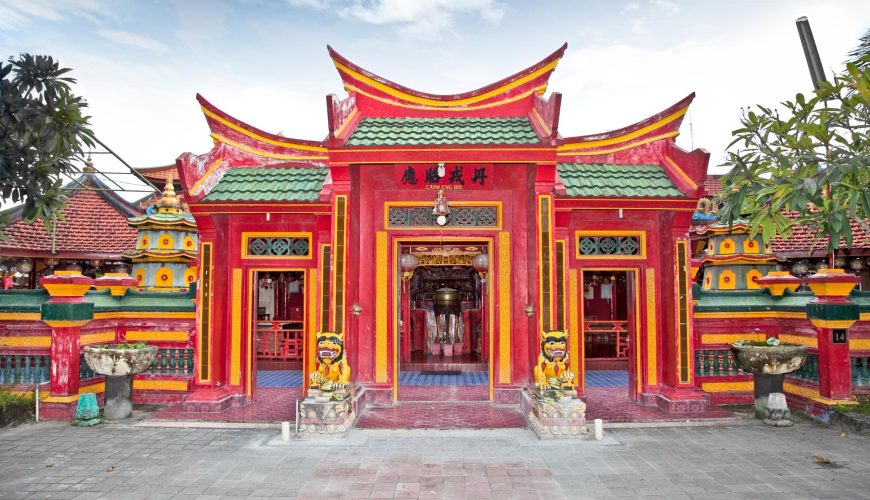
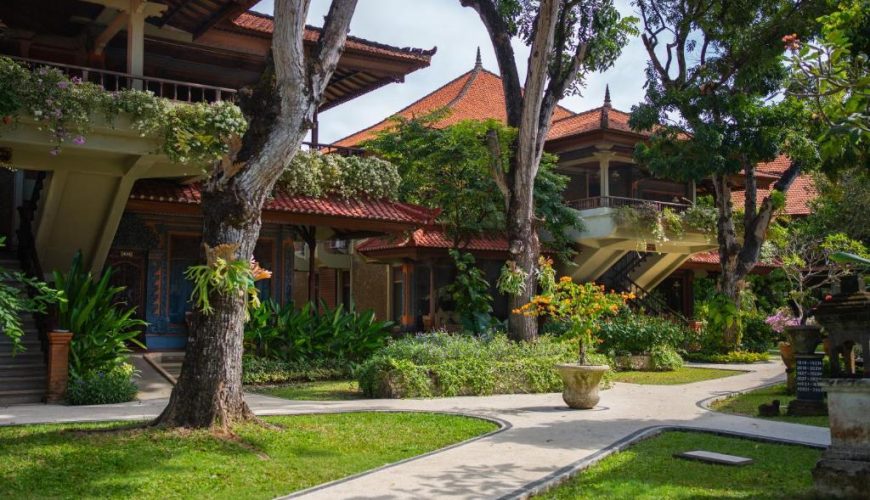
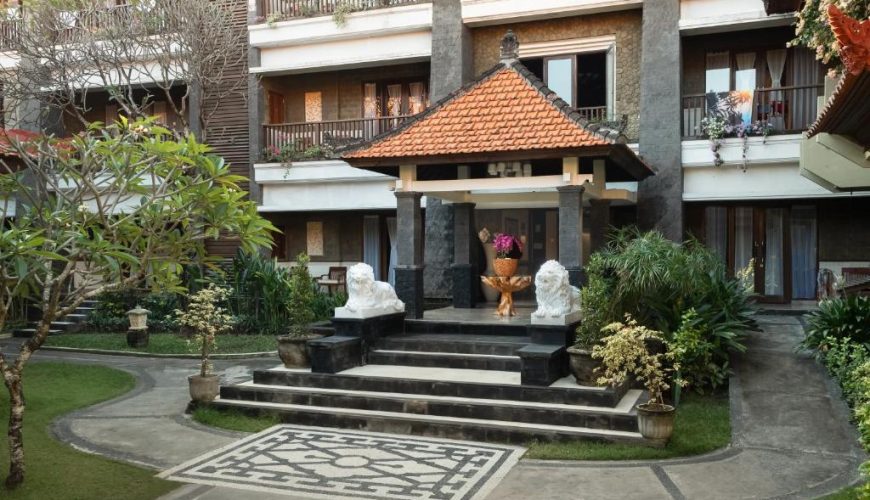
A Bali round trip is one of the best ways to experience the remarkable diversity of Indonesia’s most famous island. Bali is far more than beaches and luxury resorts. Within a relatively compact area, travelers can discover ancient temples, lush rice terraces, volcanic landscapes, tropical forests, traditional villages, artistic communities and vibrant towns.
A well-planned itinerary can combine the cultural atmosphere of Ubud, spectacular temples, traditional Balinese villages and breathtaking natural landscapes with several relaxing days by the sea. This makes Bali particularly attractive for travelers who want more than a conventional beach holiday.
The island is also remarkably versatile. Couples can enjoy romantic resorts and sunset dinners, families can discover temples and nature, active travelers can go hiking, cycling or surfing, and first-time visitors can combine sightseeing with several days of relaxation.
This guide explains how to plan a Bali round trip, which destinations and sights are worth visiting, how long you should stay, what you can expect from the culture and cuisine, and how to combine a tour of the island with a relaxing beach stay.
Why Take a Bali Round Trip?
Bali is small compared with many other destinations in Southeast Asia, but its landscapes and atmosphere change dramatically as you travel around the island.
The south is known for beaches, resorts, restaurants and nightlife. Central Bali is dominated by rice terraces, forests, rivers and the artistic center of Ubud. In the north, travelers encounter quieter villages, volcanic landscapes and black-sand beaches. The east offers temples, mountains and traditional communities.
A Bali round trip allows you to experience several sides of the island during one journey.
Instead of staying in one hotel for the entire vacation, you can spend several nights exploring cultural and natural highlights before moving to a beach resort for a few days.
This combination is particularly attractive for travelers who want:
- Culture and temples
- Tropical landscapes
- Traditional villages
- Rice terraces
- Nature experiences
- Balinese cuisine
- Local markets
- Beaches and swimming
- Relaxation
- Wellness and spa experiences
- Outdoor activities
- Photography
- A comfortable combination of sightseeing and relaxation
For first-time visitors to Indonesia, a combination of Bali round trip and beach holiday is often an ideal introduction to the country.
Bali at a Glance
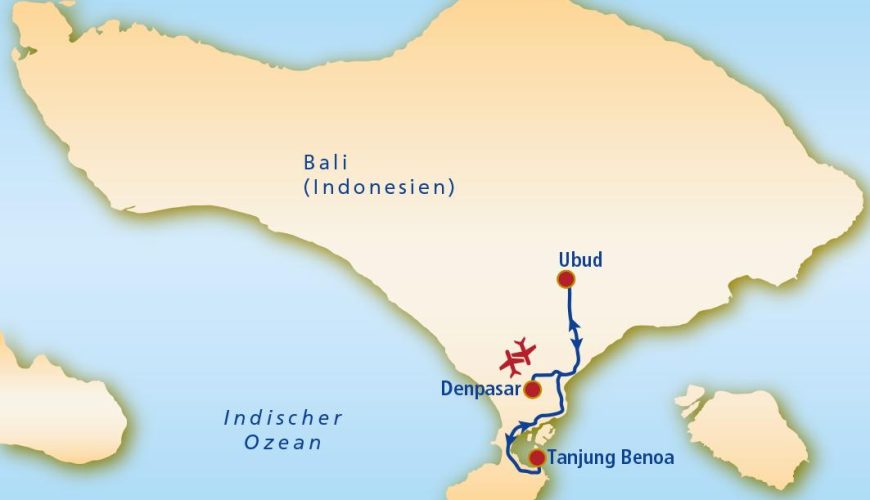
Bali is part of Indonesia and lies between the islands of Java and Lombok. The island is relatively small, but its road network and traffic can make journeys between destinations considerably longer than they appear on a map.
The capital of Bali is Denpasar, while Ubud is widely regarded as the island’s cultural and artistic heart.
The international gateway is Ngurah Rai International Airport, located near Denpasar and the southern tourist areas.
Bali is predominantly Hindu, unlike most of Indonesia, which is predominantly Muslim. Religion is deeply integrated into everyday life. Temples, shrines, offerings and religious ceremonies are visible throughout the island.
This cultural character is one of the reasons Bali feels so different from many other tropical destinations.
Best Time for a Bali Round Trip
Bali has a tropical climate throughout the year, with warm temperatures and relatively high humidity.
The year is generally divided into a dry season and a rainy season.
Dry Season
The dry season generally runs from around April to October.
This period is popular because it usually brings more sunshine, lower rainfall and pleasant conditions for sightseeing and outdoor activities.
July and August are particularly popular and can be busy. Hotels and popular attractions may be crowded during the peak travel period.
Rainy Season
The rainy season generally extends from around November to March.
Rainfall can be heavy, but it does not necessarily rain continuously throughout the day. Many days still offer periods of sunshine.
The rainy season can have advantages for travelers who prefer fewer visitors and sometimes lower accommodation prices.
The landscape can also be especially lush and green.
When Should You Travel?
For a classic Bali round trip combining sightseeing and beaches, May, June, September and October can be particularly attractive.
July and August are excellent for weather but are also among the busiest months.
Travelers who are flexible and do not mind occasional tropical rain can also consider the shoulder and rainy seasons.
How Long Should a Bali Round Trip Take?
The ideal length depends on how much of the island you want to see.
7 Days
Seven days are enough for a short introduction, but the itinerary should remain relatively focused.
A possible itinerary could include:
- Ubud
- Central Bali
- One or two major temples
- A short nature excursion
- Beach stay in the south
10 Days
Ten days provide considerably more flexibility.
You can combine:
- Ubud
- Rice terraces
- Temple visits
- Traditional villages
- Natural attractions
- Southern Bali
- Several beach days
12–14 Days
For a more comprehensive Bali round trip, 12 to 14 days are ideal.
This allows you to travel at a more relaxed pace and include both sightseeing and beach relaxation.
A combination of 8 or 9 nights touring followed by several nights at the beach works particularly well for organized tours.
Ubud – The Cultural Heart of Bali
No Bali round trip would be complete without visiting Ubud.
Located in the interior of the island, Ubud is surrounded by rice fields, forests and traditional villages. It has long been associated with Balinese art, dance, crafts and spirituality.
Today, Ubud combines traditional culture with cafés, restaurants, boutique hotels, wellness centers and galleries.
The town can be busy, but once you move beyond the central streets, the surrounding countryside quickly becomes much quieter.
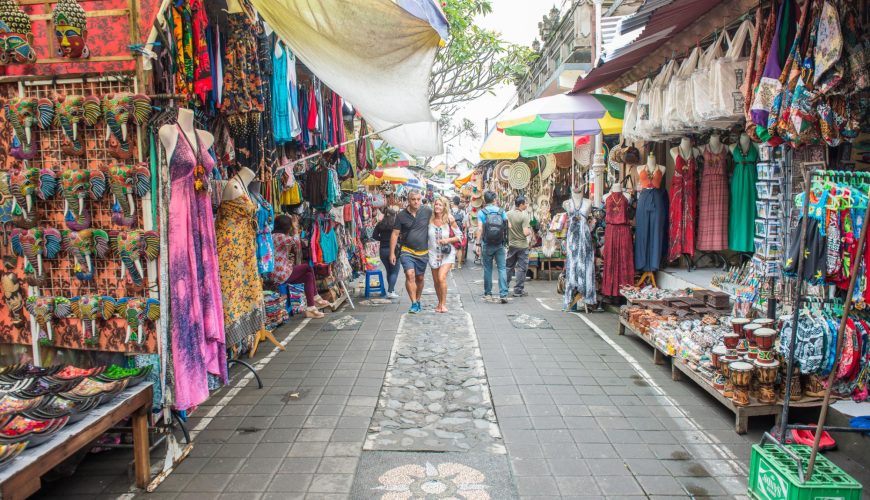
Ubud Market
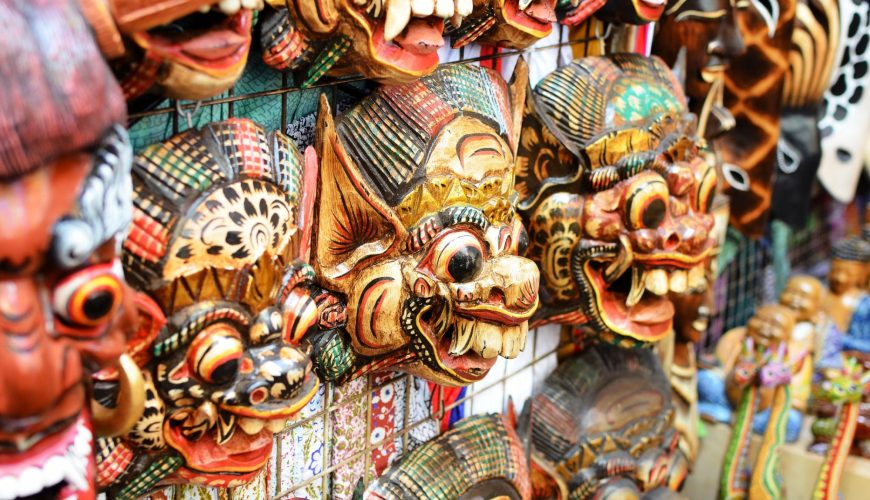
Ubud Market is one of the best-known places to experience local handicrafts and traditional products.
Visitors can find:
- Textiles
- Wood carvings
- Decorative objects
- Baskets
- Jewelry
- Artwork
- Souvenirs
- Traditional handicrafts
Shopping at the market can be part of the cultural experience, but bargaining is common and prices should generally be negotiated politely.
Ubud Palace
The Ubud Palace is another important attraction in the center of town.
The historic complex is associated with the former royal family of Ubud and remains an important cultural location.
Traditional Balinese dance performances are often held here, making an evening visit particularly interesting.
Monkey Forest Ubud
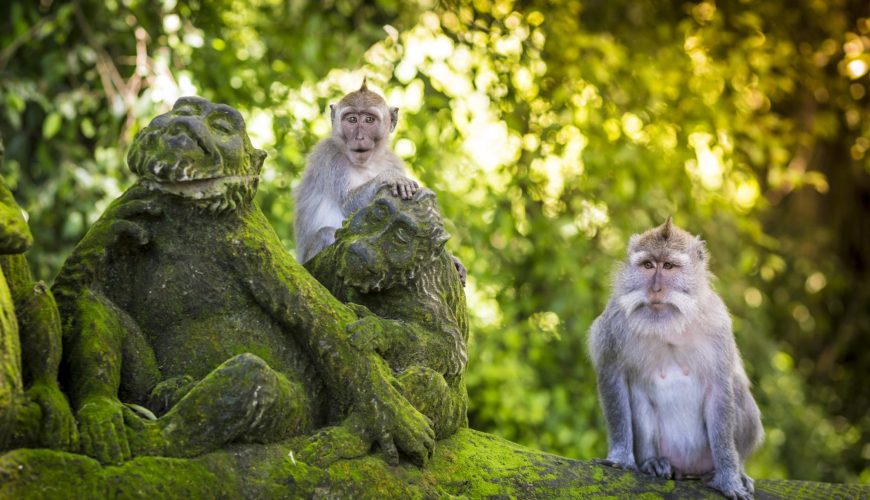
The Sacred Monkey Forest is one of Ubud’s best-known attractions.
The forest contains ancient trees, pathways, temples and large populations of long-tailed macaques.
It offers a fascinating combination of nature and Balinese culture.
Visitors should follow the rules carefully and avoid feeding or provoking the monkeys. Keep valuables securely stored, as the animals can be curious and surprisingly quick.
The forest is particularly atmospheric in the morning when the temperatures are still relatively comfortable.
Bali’s Rice Terraces
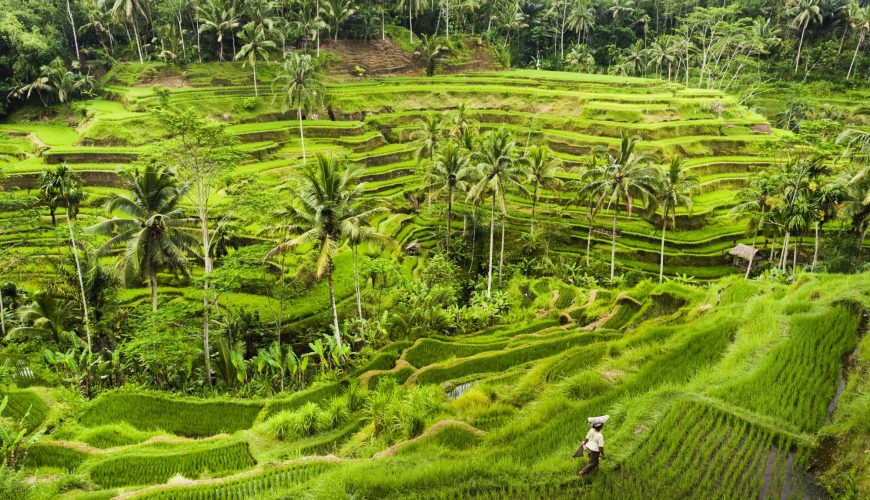
The rice terraces are among the island’s most recognizable landscapes.
They demonstrate how agriculture has adapted to Bali’s mountainous terrain and traditional irrigation systems.
The terraces around Tegallalang near Ubud are particularly famous, although there are many other beautiful rice-growing areas throughout the island.
A walk through the rice fields can be one of the most rewarding experiences on a Bali round trip.
Early morning is generally the best time for photography and walking because temperatures are lower and the light is often beautiful.
Traditional Villages and Balinese Crafts
Bali’s traditional crafts are an important part of the island’s cultural identity.
A round trip can include visits to villages specializing in different forms of craftsmanship.
Mas
Mas is particularly associated with wood carving.
Traditional and contemporary artisans produce sculptures, decorative objects and religious artwork.
Celuk
Celuk is famous for its gold and silver craftsmanship.
Visitors can often see artisans working on intricate jewelry and decorative pieces.
These villages provide a different perspective on Bali beyond the major tourist attractions.
Goa Gajah – The Elephant Cave
Despite its name, Goa Gajah is not primarily about elephants.
The historic site is an ancient religious complex featuring a cave entrance, stone carvings, bathing pools and surrounding archaeological remains.
The entrance to the cave is particularly striking, with its carved facade.
A visit to Goa Gajah fits easily into a cultural itinerary around Ubud.
Tirta Empul Temple
The Tirta Empul Temple is one of Bali’s most important Hindu water temples.
The temple is famous for its sacred spring water and purification rituals.
Visitors should remember that this is an active religious site rather than simply a tourist attraction.
Appropriate clothing and respectful behavior are important when visiting Balinese temples.
Tanah Lot – Bali’s Famous Sea Temple
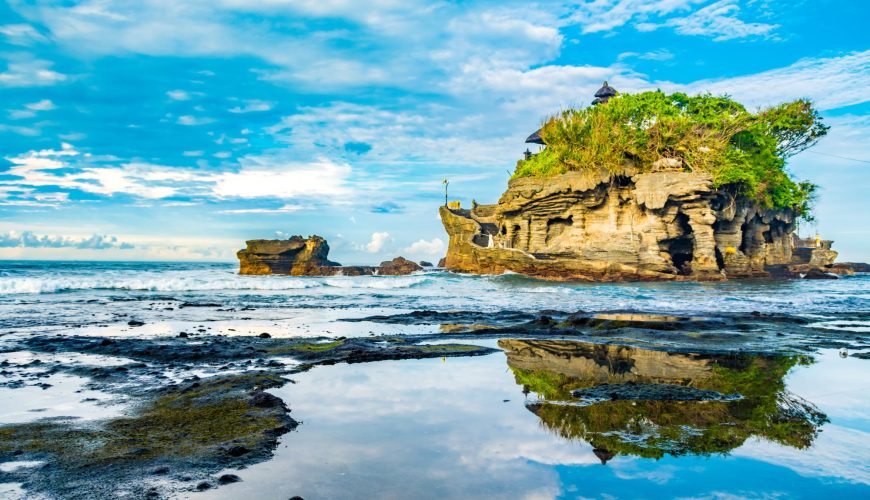
Tanah Lot is one of the most photographed temples in Bali.
The temple is dramatically situated on a rock formation surrounded by the sea. At high tide, the temple can appear almost separated from the mainland.
Sunset is particularly popular because the setting sun creates spectacular colors behind the temple.
Because of its popularity, the area can become very busy. Travelers who prefer a quieter atmosphere should consider arriving earlier and exploring the surrounding area before sunset.
Uluwatu Temple
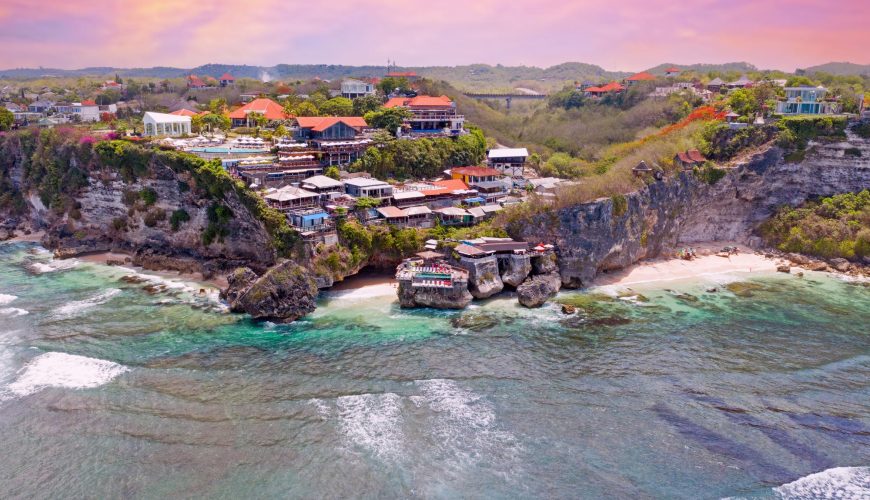
Another spectacular temple is Uluwatu Temple, located dramatically on cliffs above the Indian Ocean.
The temple is particularly famous for its panoramic ocean views.
The cliffs and surrounding coastline make Uluwatu one of the most impressive locations in southern Bali.
Visitors should be careful around the cliffs and follow local regulations.
Balinese Fire Dance and Cultural Performances
A Bali round trip should include at least one traditional cultural performance.
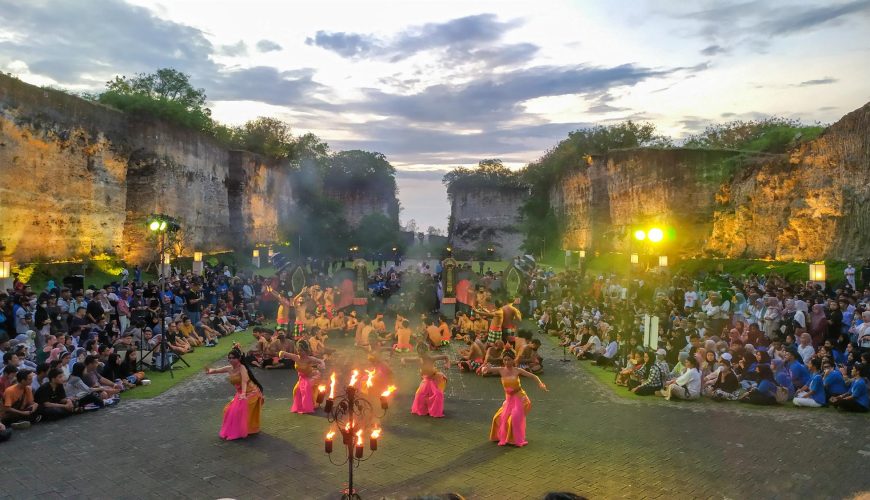
The Kecak dance is particularly famous and is often performed at sunset in the Uluwatu area.
The performance combines chanting, dance and storytelling and provides an atmospheric introduction to Balinese performing arts.
Other traditional dances include the Legong and Barong.
Bali’s Beaches
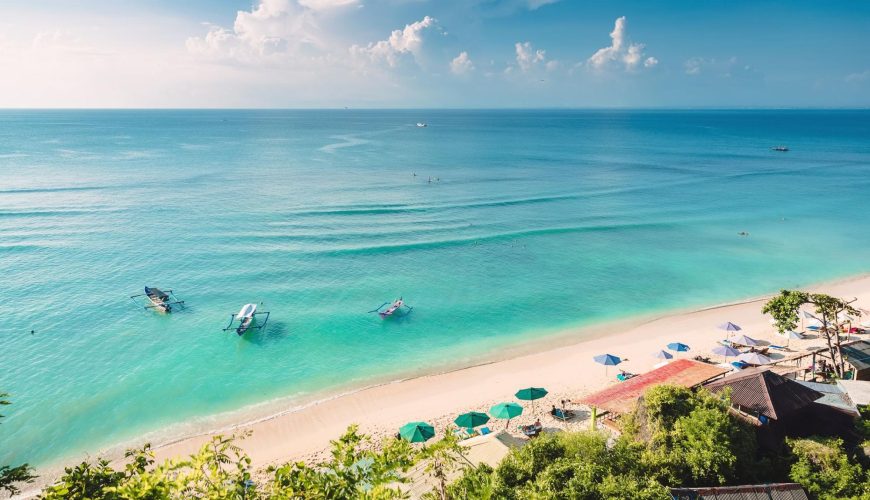
After several days of sightseeing, relaxing by the sea is an ideal way to complete a Bali round trip.
The island has a wide variety of beaches, each with a different atmosphere.
Tanjung Benoa
Tanjung Benoa is located in southern Bali and is known for its sandy beach, resorts and water sports.
It is particularly suitable for travelers who want a comfortable beach resort combined with easy access to other southern attractions.
Activities may include:
- Swimming
- Parasailing
- Jet skiing
- Banana boats
- Other water sports
Nusa Dua
Nusa Dua is known for its large international resorts, landscaped grounds and beaches.
It is particularly suitable for travelers looking for a more tranquil and upscale resort environment.
Seminyak
Seminyak combines beaches with restaurants, boutiques, cafés and stylish hotels.
It is a good choice for travelers who want more activity and nightlife.
Jimbaran
Jimbaran is famous for its beach and seafood restaurants.
An evening meal on the beach can be a memorable way to end a day of sightseeing.
Sanur
Sanur has a more relaxed atmosphere and is particularly popular with families and travelers who prefer a quieter beach destination.
Bali for Active Travelers
Bali is not only a destination for sightseeing and relaxation.
The island offers numerous opportunities for active travel.
Hiking
Volcanic mountains provide spectacular hiking opportunities.
Mount Batur is particularly well known for sunrise hikes.
More experienced hikers may also consider Mount Agung, although conditions and access should always be checked locally.
Cycling
Cycling tours through rural areas and rice terraces provide a wonderful way to see a different side of Bali.
Routes can pass through villages, plantations and agricultural landscapes.
Surfing
Bali is internationally famous for surfing.
Popular surfing destinations include areas around:
- Kuta
- Canggu
- Uluwatu
- Sanur
Conditions vary considerably depending on the location and season.
Diving and Snorkeling
The waters around Bali offer excellent opportunities for diving and snorkeling.
The island’s coastline and nearby islands provide access to coral reefs and marine life.
Wellness and Spa in Bali
Bali has become one of Asia’s best-known wellness destinations.
Traditional Balinese massages, spa treatments, yoga and meditation are widely available.
Ubud is particularly associated with wellness and yoga, while many luxury resorts throughout the island operate their own spas.
For many travelers, combining a cultural round trip with several days of wellness and relaxation is an attractive option.
Balinese Cuisine
Food is an important part of the Bali experience.
Traditional dishes worth trying include:
Nasi Goreng
Fried rice served with vegetables, egg and often chicken or seafood.
Mie Goreng
Fried noodles prepared with vegetables, egg and various toppings.
Nasi Campur
Rice served with a selection of vegetables, meat, sauces and other side dishes.
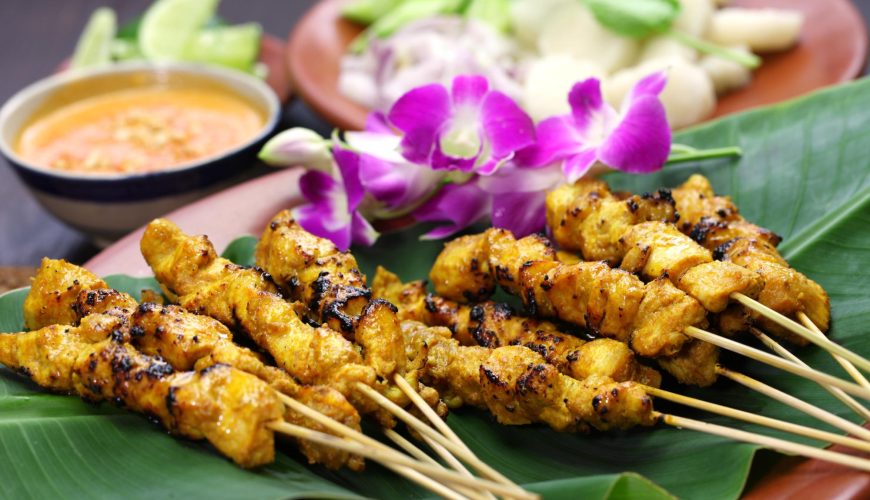
Satay
Grilled skewers served with sauces, often including peanut sauce.
Gado-Gado
A vegetable dish accompanied by peanut sauce.
Babi Guling
Traditional Balinese-style roasted pork, particularly associated with festive occasions.
Fresh tropical fruit, coconut and local spices are also prominent in Balinese cuisine.
Balinese Culture and Religion
Religion is inseparable from everyday life in Bali.
Small offerings can be seen outside homes, shops and hotels. Temple ceremonies are common, and visitors may encounter processions or religious celebrations while traveling around the island.
Travelers should approach these traditions with respect.
When entering a temple, appropriate clothing is expected. In many cases, visitors are required to wear a sarong or similar garment.
Do not enter restricted areas or interrupt ceremonies for photographs.
A Bali round trip becomes much more meaningful when travelers take the time to understand the island’s cultural traditions rather than simply photographing its attractions.
What to Wear in Bali
Lightweight clothing is appropriate for the tropical climate.
For temple visits, however, more conservative clothing is recommended.
Useful items include:
- Lightweight trousers or long skirts
- Shirts covering the shoulders
- Comfortable walking shoes
- Sandals
- Sun protection
- Hat
- Rain jacket during the rainy season
- Swimwear for beach days
A sarong is useful and can often be rented or provided at temples.
Getting Around Bali
Transportation is an important consideration when planning a Bali round trip.
Distances may look short on a map, but traffic can make journeys surprisingly long.
Private drivers are widely used by tourists and can be an efficient option for sightseeing.
Organized tours often use comfortable, air-conditioned coaches or minibuses.
Taxis and app-based transport are also available in many tourist areas.
For longer itineraries, travelers should avoid planning too many attractions on the same day.
The experience is much more enjoyable when there is sufficient time for stops, meals and spontaneous discoveries.
Should You Rent a Car in Bali?
Independent travelers may consider renting a car, but driving conditions can be challenging.
Traffic in tourist areas can be heavy, roads can be narrow and motorcycles are extremely common.
For many international visitors, hiring a driver is more convenient than driving themselves.
A private driver can also provide local knowledge and make it easier to visit several attractions in one day.
Bali Round Trip: Suggested 10-Day Itinerary
Here is an example of a comfortable itinerary.
Day 1 – Arrival in Bali
Arrive at Denpasar International Airport and transfer to your hotel.
Depending on your arrival time, spend the remainder of the day relaxing.
Day 2 – Ubud
Explore Ubud Market and Ubud Palace.
In the afternoon, discover the surrounding countryside or visit the Monkey Forest.
Day 3 – Ubud and Cultural Bali
Visit the traditional villages of Mas and Celuk.
Continue to Goa Gajah and Tirta Empul Temple.
Day 4 – Rice Terraces and Temples
Explore Bali’s countryside and rice terraces.
Continue to Tanah Lot, one of the island’s most famous sea temples.
Day 5 – Ubud to Southern Bali
Travel toward the coast.
Depending on the itinerary, stop at additional temples or cultural attractions before arriving at your beach resort.
Day 6 – Beach Day
Relax at the hotel and enjoy the beach.
Optional activities include a spa treatment or water sports.
Day 7 – Uluwatu
Visit Uluwatu Temple and enjoy spectacular views of the Indian Ocean.
In the evening, experience a traditional Balinese dance performance.
Day 8 – Beach and Leisure
Enjoy a relaxed day at the beach.
Day 9 – Explore Southern Bali
Visit Jimbaran, Nusa Dua, Sanur or another coastal destination.
Day 10 – Departure
Transfer to Denpasar Airport for your flight home.
For longer tours, additional destinations such as northern Bali, eastern Bali or Mount Batur can be incorporated.
Bali Round Trip with a Beach Extension
One of the best ways to organize a Bali vacation is to divide the journey into two parts.
Part 1: Touring
Spend several days visiting:
- Ubud
- Temples
- Rice terraces
- Traditional villages
- Markets
- Cultural attractions
- Natural landscapes
Part 2: Beach Stay
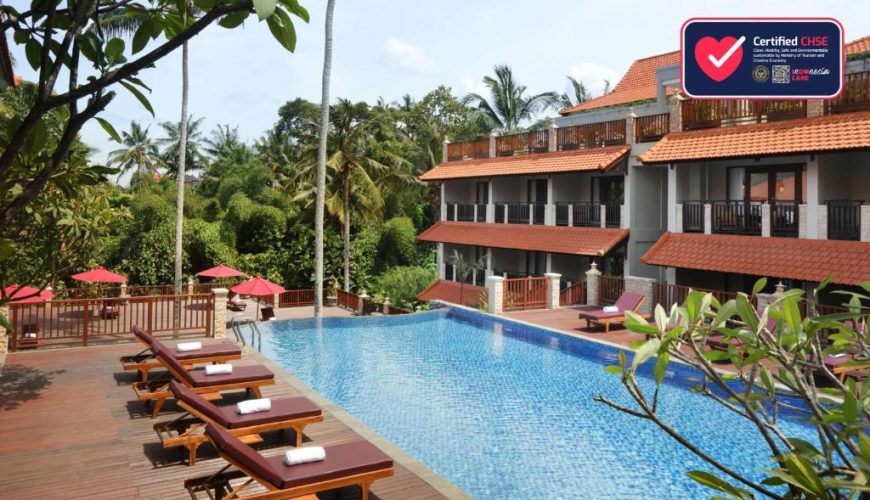
Finish the journey with several nights at a beach resort.
This structure has a major advantage: sightseeing takes place at the beginning of the vacation, while the final days are dedicated entirely to relaxation.
For travelers arriving after a long international flight, this can also be reversed, with a short beach stay first followed by the round trip.
Bali for Couples
Bali is one of the world’s most popular destinations for couples.
Romantic experiences include:
- Sunset at Tanah Lot
- Dinner overlooking the ocean
- Private pool villas
- Spa treatments
- Rice terrace walks
- Sunset at Uluwatu
- Traditional dance performances
- Private excursions
- Beach resorts
The island offers everything from affordable boutique hotels to exclusive luxury villas.
Bali for Families
Bali is also suitable for family holidays.
Children can enjoy:
- Beaches
- Swimming pools
- Water sports
- Monkey Forest
- Cultural attractions
- Cycling excursions
- Wildlife experiences
- Boat trips
Families should avoid overloading the itinerary with long daily journeys.
A slower pace with several nights in each location is generally more enjoyable.
Bali for Seniors
Bali can also be enjoyed comfortably by older travelers, particularly when the itinerary is well organized.
Air-conditioned transportation, comfortable hotels and private transfers make sightseeing easier.
However, some temples and attractions involve steps, uneven paths or slippery surfaces.
Travelers with limited mobility should check individual attractions and hotel facilities before booking.
What Makes a Bali Round Trip Special?
The greatest attraction of a Bali round trip is the contrast between different experiences.
One day you might walk through a traditional village surrounded by rice fields. The next morning you could visit a sacred temple, followed by a Balinese cooking experience or a spa treatment.
Later in the journey, you can watch the sunset over the Indian Ocean from a dramatic cliff and finish the vacation on a tropical beach.
Bali combines these experiences within a relatively small geographic area.
That makes the island particularly suitable for travelers who want culture, nature and relaxation in one journey.
Practical Bali Travel Tips
Respect Local Customs
Balinese culture is deeply connected to religion. Dress appropriately when visiting temples and respect ceremonies.
Allow Extra Travel Time
Traffic can be unpredictable. Never schedule important activities too tightly.
Carry Cash
Although cards are widely accepted in tourist areas, smaller businesses and local markets may still prefer cash.
Protect Yourself from the Sun
The tropical sun can be strong even on cloudy days.
Drink Responsibly
Stay hydrated, particularly during sightseeing and outdoor activities.
Book Popular Hotels Early
The best resorts and villas can sell out during peak periods.
Start Early
Many major attractions are considerably more pleasant before the busiest hours.
Is Bali Expensive?
Bali can accommodate a wide range of budgets.
Travelers can find inexpensive accommodation and local restaurants, while the island also has some of Asia’s most luxurious resorts and private villas.
Costs depend heavily on:
- Hotel category
- Travel season
- Transportation
- Private excursions
- Dining
- Activities
- Spa treatments
- Length of stay
A professionally organized round trip can be particularly convenient because transportation, sightseeing and accommodation are coordinated in advance.
Why Combine Culture and Beach?
A pure beach holiday can become repetitive, while a sightseeing tour can become exhausting.
The combination solves both problems.
During the first part of the trip, travelers discover Bali’s temples, villages, landscapes and culture.
During the final part, they can simply relax.
This is one of the strongest arguments for a Bali round trip with a beach stay.
It offers variety without requiring travelers to organize every detail themselves.
Bali Round Trip – A Journey Full of Contrasts
Bali is a destination where spirituality, nature, culture and tropical relaxation come together.
Explore the lively streets of Ubud, discover traditional crafts in Mas and Celuk, walk among ancient trees in the Monkey Forest and visit sacred temples such as Tirta Empul and Tanah Lot.
Admire the rice terraces, experience traditional Balinese dance and enjoy spectacular views from Uluwatu.
Then leave the sightseeing behind and spend several days beside the sea.
Whether you are traveling as a couple, with family, as an active traveler or simply looking for a fascinating cultural holiday, Bali offers extraordinary possibilities.
A carefully planned Bali round trip allows you to experience much more than the famous beaches. It introduces you to the traditions, landscapes and people that make the island unique.
Bali is not simply a destination to visit. It is an island to experience.

Comment (0)