




TAX STRATEGY & RELOCATION | INTERNATIONAL COMPARISON
Tax-Friendly Countries Compared: UAE, Mauritius, Nevada, Bahamas, Uruguay and Switzerland
Which country works best for your company, your residence and your assets? An honest comparison across six criteria — tax burden, real estate prices, staffing costs, bureaucracy, safety and quality of life — without the sales pitch.
Let us be clear about what this guide is and what it is not. It is not a guide to tax evasion. Tax evasion is illegal in every country in this comparison and in every country you might be leaving. This guide is about legal tax optimisation through legitimate relocation of residence, incorporation and asset structuring in jurisdictions with more favourable tax environments. That is legal, widely practised and, for internationally active entrepreneurs, freelancers, digital nomads and high-net-worth individuals, a perfectly legitimate strategic decision.
The six locations in this comparison — the United Arab Emirates, Mauritius, Nevada (USA), the Bahamas, Uruguay and Switzerland — are the most discussed options among European entrepreneurs for good reasons. All six have genuine advantages. All six also have drawbacks and risks that most marketing brochures conveniently omit. This guide covers both. At the end, you will find a clear framework for matching the right jurisdiction to the right personal and business profile.
| Important legal notice
This guide is for general information purposes only and does not constitute tax, legal or financial advice. Every individual situation requires professional advice from qualified tax advisers and lawyers in the relevant countries. Tax laws change frequently. All information reflects knowledge as of 2025/2026. |
What is in this guide
- Why relocate? The fundamentals and preconditions
- The six criteria explained
- UAE — United Arab Emirates: zero tax, luxury price tag
- Mauritius: Africa’s most attractive tax and residency model
- Nevada (USA): tax efficiency with a US address
- Bahamas: the Caribbean classic with no income tax
- Uruguay: South America’s safest and most welcoming country
- Switzerland: lump-sum taxation and the world’s best quality of life
- Side-by-side comparison: all six countries at a glance
- Recommendations: which jurisdiction for which profile
- Visit first, decide second: why a scouting trip is essential
1. Why relocate? The fundamentals and preconditions
The tax burden in Germany, Austria and Switzerland is among the highest in the world. In Germany, self-employed individuals and business owners pay a top marginal rate of 45 percent on income above EUR 58,000, plus solidarity surcharge. Add trade tax, corporate income tax and social security contributions, and the effective total burden for a GmbH can approach 30 percent of profit; for sole traders at the top bracket, over 50 percent of income disappears in taxes. Austria and Switzerland follow similar structures, with slightly different rates.
For those who want to exit this system legally, two things must happen: relinquish tax residency in the home country and establish genuine tax residency somewhere else. This sounds simpler than it is. Germany, for example, has an extended limited tax liability rule: individuals who leave Germany for a low-tax jurisdiction can remain subject to German tax for up to ten years if they retain significant economic interests in Germany. The careful management of deregistration, the genuine relinquishment of German residence and thorough documentation of the new foreign residence are not administrative formalities — they are legally critical steps that require professional guidance.
Key preconditions for a successful relocation
- Genuine centre of life: the new residence must be real — real accommodation, real physical presence (most jurisdictions require at least 183 days per year), real daily life
- Substance for the company: a letterbox company with no real business activity at the new location is not tax-recognised; a place of business, employees or at least regular documented presence is required
- Clean deregistration: full relinquishment of home-country residence including vehicle registration, bank accounts, club memberships and any other ties
- Exit taxation: on departure, unrealised gains on shareholdings (e.g. GmbH shares) may trigger an exit tax in Germany above certain thresholds — plan for this before you leave
- Double taxation treaties: check which DTTs exist between home and target country and how they affect specific income streams
Bürgenstock Resort
2. The six criteria explained
| Criterion | What is assessed |
| Taxes | Income tax, corporate tax, capital gains tax, inheritance tax, VAT, wealth tax |
| Real estate prices | Purchase and rental prices for residential and commercial property; market access for foreigners |
| Staffing costs | Minimum wages, payroll costs, social security, availability of skilled talent |
| Bureaucracy | Company formation, visa processes, residence permits, official communication, digitalisation |
| Safety | Crime index, political stability, rule of law, property rights protection |
| Quality of life | Climate, infrastructure, healthcare, education, cultural life, language |
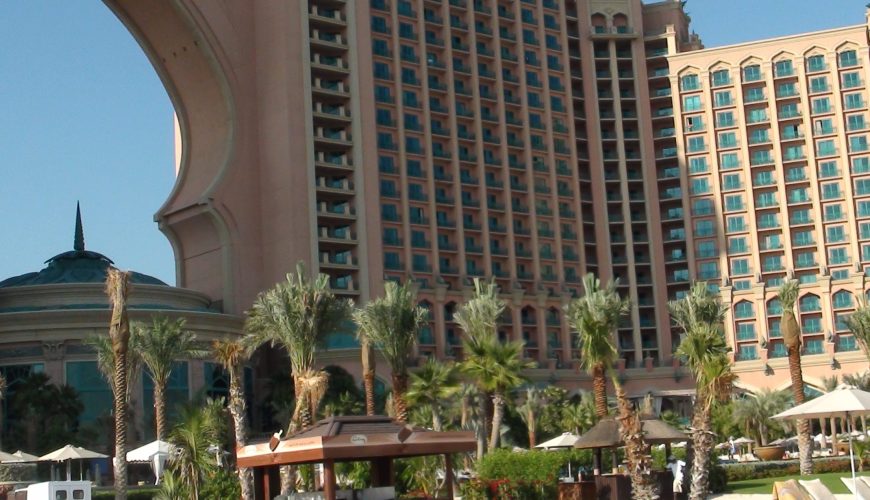
3. UAE — United Arab Emirates: zero tax, luxury price tag
| 🇦🇪 United Arab Emirates (Dubai / Abu Dhabi)
No income tax. No capital gains tax. No inheritance tax. Corporate tax of 9% on profits above AED 375,000 (approx. EUR 92,000) introduced in 2023. VAT of 5%. For most self-employed individuals and entrepreneurs with international income, the effective tax rate is close to zero. |
Taxes
The UAE have been the most popular tax jurisdiction for European entrepreneurs for decades, and the reason is straightforward: zero income tax, zero capital gains tax, zero inheritance tax. Since 2023, a corporate tax of 9 percent applies, but only on profits exceeding AED 375,000 (approximately EUR 92,000) per year — everything below is tax-free. Free zone companies in one of the UAE’s 45-plus free zones (DMCC, Dubai Internet City, Jebel Ali and others) often retain full tax exemption on qualifying income even under the new regime.
Residency and visa
A residence visa is required to establish tax residency. It is obtainable through a free zone company formation or through property purchase above AED 750,000 (approx. EUR 185,000). The Golden Visa grants 10-year residency for investments above AED 2 million (approx. EUR 490,000). Standard visa processing takes two to four weeks.
Real estate prices
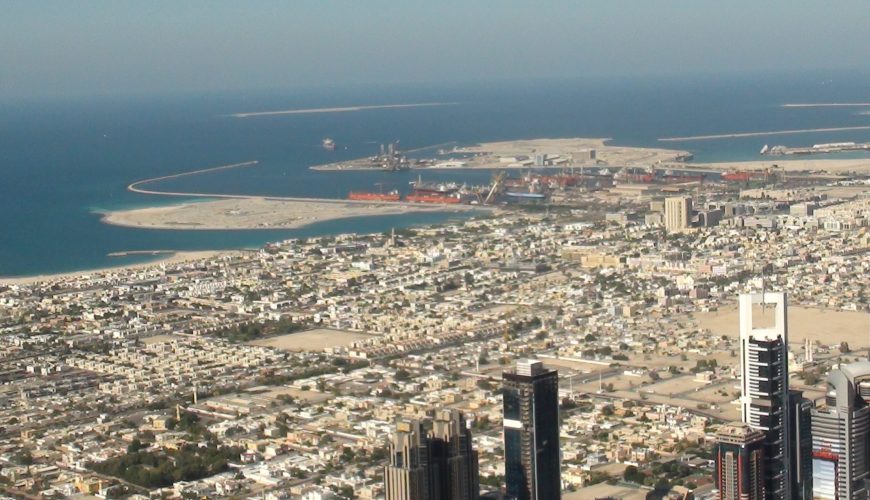
Dubai has become one of the world’s most expensive property markets. Premium locations (Downtown Dubai, Palm Jumeirah, Dubai Marina) command EUR 7,000 to 25,000 per square metre. More accessible areas (Jumeirah Village Circle, Business Bay) start at EUR 3,500 to 5,000/m². Monthly rent for a well-appointed two-bedroom apartment: EUR 2,500 to 5,000 in central locations, from EUR 1,500 in outer districts. Abu Dhabi is slightly more affordable; Sharjah considerably cheaper.
Staffing and quality of life
The UAE offer a vast international talent pool from over 180 countries. Qualified professionals from Asia and Eastern Europe often work at rates significantly below European equivalents, with minimal employer social security obligations. The trade-off: strict visa requirements for every employee create administrative overhead. Quality of life is world-class in terms of infrastructure, international schools, healthcare and leisure — but summer temperatures regularly reach 48°C, and social restrictions (alcohol limited to licensed venues, limited political freedoms) are a genuine consideration for many.
| Criterion | UAE Rating | Details |
| Income tax | ★★★★★ | 0% — no income tax |
| Corporate tax | ★★★★☆ | 9% above EUR 92k; free zones often 0% |
| Real estate | ★★☆☆☆ | Very expensive; Dubai EUR 3,500–25,000/m² |
| Staffing costs | ★★★★☆ | Low; no EU minimum wage; flexible market |
| Bureaucracy | ★★★★☆ | Fast and digital; free zone complexity requires advice |
| Safety | ★★★★★ | Among the safest countries in the world |
| Quality of life | ★★★★☆ | Luxury infrastructure; heat and cultural restrictions apply |
4. Mauritius: Africa’s most attractive tax and residency model
| 🇲🇺 Mauritius
15% flat income tax. 15% corporate tax. No capital gains tax. No inheritance tax. Strong network of double taxation treaties. Residency accessible through multiple straightforward routes. |
Taxes
Mauritius is the most tax-efficient jurisdiction in Africa and one of the most transparent financial centres in the world. The income tax rate is a flat 15 percent across all income levels — a striking contrast to the progressive brackets of European tax systems. Under the non-domicile principle, foreign-sourced income that is not remitted to Mauritius is fully exempt from Mauritian income tax. No capital gains tax, no inheritance tax, no wealth tax.
Mauritius has an extensive network of double taxation treaties with over 45 countries, including India, China and numerous African nations. For entrepreneurs doing business in Africa or Asia, Mauritius as a holding company location is particularly attractive precisely because of this treaty architecture.
Residency options
The Retired Non-Citizen Permit requires a minimum monthly transfer of USD 1,500 into Mauritius. The Premium Visa for freelancers and remote workers is straightforward to obtain. The Occupation Permit allows investors (minimum investment USD 50,000) and professionals to live and work. Property purchase above USD 375,000 in an Integrated Resort Scheme (IRS) automatically qualifies for permanent residency.
Real estate, staffing and quality of life
Prime coastal areas (Grand Baie, Tamarin, Beau Champ) command EUR 300,000 to 3 million for villas and quality apartments. Monthly rent for a comfortable two-bedroom apartment: EUR 800 to 2,500 depending on location. Foreigners may only purchase in designated zones (IRS, PDS, RES). Minimum wage is approximately EUR 400 to 500 per month — dramatically below European levels. Local professionals in law, accountancy and IT are available and generally well-trained; availability of highly specialised talent is limited. Official languages are English and French.
| Criterion | Mauritius Rating | Details |
| Income tax | ★★★★☆ | 15% flat; foreign income often exempt |
| Corporate tax | ★★★★☆ | 15%; favourable holding structures possible |
| Real estate | ★★★☆☆ | Mid-range; EUR 300k–3m in coastal areas |
| Staffing costs | ★★★★★ | Very low; minimum wage approx. EUR 400–500/month |
| Bureaucracy | ★★★★☆ | Relatively efficient; English/French |
| Safety | ★★★★☆ | Stable democracy; low violent crime rate |
| Quality of life | ★★★★☆ | Tropical island paradise; good infrastructure; island isolation |
5. Nevada (USA): tax efficiency with a US address and legal certainty
| 🇺🇸 Nevada, USA
No state income tax. Federal income tax 10–37%. No state corporate income tax. Highly business-friendly legislation. US legal system as global gold standard for contract law and property rights. |
Taxes
Nevada is one of seven US states with no state income tax. Residents pay only federal income tax, not an additional state layer. There is no state corporate income tax in Nevada. Federal corporate tax (C-Corp) is 21 percent. Capital gains tax at federal level ranges from 0 to 20 percent depending on income and holding period. Important: Nevada is only directly relevant as a tax residence for US citizens, green card holders and legally resident foreigners. For Europeans without US residency rights, Nevada is not a direct tax haven but rather a location for establishing a US company presence.
The Nevada LLC — the most popular structure for non-US persons
A Nevada LLC can be formed by non-US persons without US residency. The key characteristic: an LLC with exclusively foreign members, no US business activities and no US-sourced income is federally tax-transparent — meaning profits are not taxed in the US if the owner resides in a low-tax jurisdiction. This structure is legal but requires careful compliance: annual reports, EIN registration, potentially US tax returns and professional tax management. It is not a shortcut; it is a structure that works only when properly maintained.
Real estate and cost of living
Las Vegas and Reno, Nevada’s economic centres, have experienced significant property price increases in recent years. Single-family homes in Las Vegas: USD 350,000 to 800,000 in the mid-market, above USD 1 million in premium areas (Summerlin, Henderson). Reno is slightly more affordable at USD 400,000 to 600,000. Monthly rent for a two-bedroom apartment: USD 1,500 to 3,000. Cost of living is lower than coastal US cities but higher than Latin America or Asia.
| Criterion | Nevada Rating | Details |
| Income tax | ★★★☆☆ | No state tax; federal up to 37%; only relevant for US residents |
| Corporate tax | ★★★★☆ | No state corp tax; federal 21%; LLC often tax-transparent |
| Real estate | ★★★☆☆ | Mid-range; Las Vegas USD 350k–800k |
| Staffing costs | ★★★☆☆ | US federal minimum USD 7.25/hr; Nevada higher |
| Bureaucracy | ★★★★☆ | LLC formation very straightforward; US legal system excellent |
| Safety | ★★★★☆ | Good; US rule of law is global standard |
| Quality of life | ★★★★☆ | Good infrastructure; Las Vegas character polarises |
6. Bahamas: the Caribbean classic with no income tax
| 🇧🇸 Bahamas
No income tax. No corporate tax. No capital gains tax. No inheritance tax. VAT of 10%. Residency through Annual Residency Permit or Permanent Residency available. |
Taxes
The Bahamas is one of the oldest and most recognised tax-free jurisdictions in the Caribbean. There is no income tax, no corporate tax, no capital gains tax and no inheritance tax. The only significant tax is a 10 percent VAT. For private individuals with international income, the Bahamian tax structure is close to ideal — provided you fulfil genuine residency requirements and exit your home country’s tax system cleanly.
Residency
The Annual Residency Permit costs USD 1,000 per year and requires annual renewal. Permanent Residency is effectively guaranteed with property purchases above USD 750,000, or through investments above USD 1.5 million. The Bahamas has no formal tax treaty with most European countries, which creates complexities when deregistering from home-country tax obligations.
Real estate
Nassau (New Providence) and the Exuma Cays are the most sought-after locations. Luxury ocean-front villas: USD 1.5 to 20 million. Quality condominiums: USD 400,000 to 2 million. Monthly rent for a comfortable Nassau apartment: USD 2,000 to 5,000. The Bahamas is among the most expensive Caribbean destinations — cheaper than Monaco, but significantly pricier than Uruguay or Mauritius.
Genuine risks to consider
The Bahamas has appeared on various international grey and blacklists from FATF and EU tax monitoring bodies over the years. Infrastructure outside Nassau is limited. Healthcare is island-level, not European standard. Hurricane risk is real and materially relevant for property owners — insurance costs are substantial. The economy is small and tourism-dependent, which limits employment and business development opportunities.
| Criterion | Bahamas Rating | Details |
| Income tax | ★★★★★ | 0% income tax |
| Corporate tax | ★★★★★ | 0% corporate tax |
| Real estate | ★★☆☆☆ | Expensive; Nassau from USD 400k for apartments |
| Staffing costs | ★★★☆☆ | Mid-range; limited local specialist talent |
| Bureaucracy | ★★★☆☆ | Slow; grey list status can create banking issues |
| Safety | ★★★☆☆ | Nassau has meaningful crime rates; outer islands safe |
| Quality of life | ★★★★☆ | Spectacular setting; infrastructure and hurricane risk are real |
7. Uruguay: South America’s safest and most welcoming country for new residents
| 🇺🇾 Uruguay
Income tax on Uruguayan-sourced income: 0–36%. Foreign income tax-free for the first 10 years for new residents (Tax Holiday). No inheritance tax. Corporate tax 25%. Very low cost of living. South America’s most stable democracy. |
Taxes — the 10-year foreign income exemption
Uruguay operates a territorial tax system: only income generated within Uruguay is subject to Uruguayan income tax. Foreign-sourced income — meaning all income earned outside Uruguay — is completely tax-free for new residents during the first ten years of residency. This is an extraordinarily attractive offer for international entrepreneurs and digital nomads who generate their income abroad and are primarily looking for a tax-efficient residential base.
After the ten-year holiday period, foreign income is taxed at 12 percent — still dramatically below European rates. No inheritance tax, no wealth tax on foreign assets. For those willing to commit to Latin America as a genuine home, Uruguay’s combination of fiscal generosity and political stability is unmatched in the region.
Residency — the most accessible in South America
Uruguay is the most straightforward country in South America for obtaining legal residency. The Residencia Temporaria (temporary residency) is obtainable within a few months with no minimum investment — proof of regular income of approximately USD 1,500 per month suffices. After three years, Permanent Residency is granted. Uruguayan citizenship is possible after five years, and Uruguay accepts dual nationality.
Real estate and cost of living
Uruguay is the most affordable country in this comparison. Montevideo, the capital, offers quality apartments from USD 80,000 to 300,000. Punta del Este, the international resort destination, is pricier: USD 200,000 to 2 million for beachfront property. Monthly rent in Montevideo: USD 600 to 1,500 for a two-bedroom apartment in a good neighbourhood. Groceries, restaurants and services are significantly cheaper than Europe.
Safety and quality of life
Uruguay consistently ranks as the safest country in South America — first on the Global Peace Index for the region. A stable democracy with functioning institutions, a free press, low corruption and genuine rule of law make Uruguay the most reliable address in Latin America. The private healthcare system (Mutualistas) provides European-quality coverage at around USD 100 to 200 per month. The downsides are real: cultural life is limited compared to European cities, the climate is cool and changeable, and Montevideo is not a global hub in the way Dubai or Zurich is.
| Criterion | Uruguay Rating | Details |
| Income tax | ★★★★★ | Foreign income tax-free for 10 years; then 12% |
| Corporate tax | ★★★☆☆ | 25% on Uruguayan-sourced income |
| Real estate | ★★★★★ | Very affordable; Montevideo from USD 80k |
| Staffing costs | ★★★★★ | Very low; good education levels; available talent |
| Bureaucracy | ★★★☆☆ | Moderate; residency takes months; Spanish required |
| Safety | ★★★★★ | Safest country in South America; stable institutions |
| Quality of life | ★★★☆☆ | Solid but unspectacular; cool climate; limited global connectivity |
8. Switzerland: lump-sum taxation and the world’s best quality of life
| 🇨🇭 Switzerland
Lump-sum taxation (forfait fiscal) for wealthy foreigners who do not work in Switzerland: tax assessed on the cost of living, not on income. Most favourable cantons: Zug, Schwyz, Obwalden. Consistently ranked number one globally for quality of life. |
Taxes — the lump-sum regime
Switzerland is not a tax haven in the conventional sense — it levies taxes and is an OECD member. But it offers one uniquely powerful instrument for wealthy foreign nationals who do not engage in gainful employment in Switzerland: the lump-sum tax (Pauschalbesteuerung or forfait fiscal). Under this regime, tax is not calculated on actual income or wealth, but on the cost of living in Switzerland — at a minimum equal to seven times the annual rent paid for the property in which the person lives.
In favourable cantons such as Zug, Schwyz or Obwalden, very wealthy individuals can be taxed on a base of CHF 250,000 to 500,000, regardless of whether their worldwide income amounts to millions or tens of millions. The effective tax rate on global wealth can therefore be a fraction of a percent — entirely legally, in a country with impeccable institutions.
The lump-sum regime is available only to foreign nationals moving to Switzerland for the first time, or returning after at least ten years of absence, who do not engage in any paid employment in Switzerland. It is not available to Swiss citizens. Not all cantons offer it — Zurich abolished it in 2009.
Real estate prices
Switzerland is one of the world’s most expensive real estate markets without exception. In Zurich and Geneva, apartments cost CHF 15,000 to 30,000 per square metre. In Zug (the most popular tax canton): CHF 12,000 to 20,000/m². Villa rental prices in desirable locations: CHF 5,000 to 15,000 per month. Foreign nationals without a Category C settlement permit are subject to the Lex Koller legislation, which significantly restricts property purchase by foreigners in many cantons.
Quality of life and staffing
Switzerland tops virtually every global quality-of-life ranking: Mercer’s Quality of Living Survey, the Global Peace Index, the Economist Intelligence Unit — consistent number one. World-class healthcare, outstanding infrastructure, centuries of political stability, the highest legal certainty in Europe, multilingual environment (German, French, Italian, Romansh) and proximity to the rest of Europe make Switzerland the most compelling choice for Europeans who want to reduce their tax burden without substantially changing their lifestyle. The price for this is equally straightforward: staffing costs are among the highest in the world, with cantonal minimum wages reaching CHF 23 per hour, and real estate prices that require serious capital.
| Criterion | Switzerland Rating | Details |
| Income tax | ★★★★☆ | Lump-sum for wealthy foreigners; otherwise 20–40% |
| Corporate tax | ★★★☆☆ | Canton Zug: approx. 11.9%; overall 12–22% by canton |
| Real estate | ★☆☆☆☆ | Very expensive; Zurich/Geneva CHF 15,000–30,000/m² |
| Staffing costs | ★☆☆☆☆ | Very high; cantonal minimum wages up to CHF 23/hr |
| Bureaucracy | ★★★★☆ | Efficient and reliable; German/French |
| Safety | ★★★★★ | Highest safety and rule of law globally |
| Quality of life | ★★★★★ | Consistent global number one; comes at a price |
Badrutt’s Palace Hotel
9. Side-by-side comparison: all six countries at a glance
| Criterion | UAE | Mauritius | Nevada | Bahamas | Uruguay | Switzerland |
| Income tax | 0% | 15% flat | 0% state | 0% | 0% (10 yrs) | Lump sum |
| Corporate tax | 9% (>92k) | 15% | 21% federal | 0% | 25% | 11–22% |
| Real estate | ★★☆☆☆ | ★★★☆☆ | ★★★☆☆ | ★★☆☆☆ | ★★★★★ | ★☆☆☆☆ |
| Staffing costs | ★★★★☆ | ★★★★★ | ★★★☆☆ | ★★★☆☆ | ★★★★★ | ★☆☆☆☆ |
| Bureaucracy | ★★★★☆ | ★★★★☆ | ★★★★☆ | ★★★☆☆ | ★★★☆☆ | ★★★★☆ |
| Safety | ★★★★★ | ★★★★☆ | ★★★★☆ | ★★★☆☆ | ★★★★★ | ★★★★★ |
| Quality of life | ★★★★☆ | ★★★★☆ | ★★★★☆ | ★★★★☆ | ★★★☆☆ | ★★★★★ |

10. Recommendations: which jurisdiction for which profile?
| Profile | Recommendation | Why |
| Digital nomad, income under EUR 200k | Uruguay | Lowest cost of living, easiest residency in South America, 10-year foreign income exemption |
| Entrepreneur with international company, EUR 200k–1m | UAE (Dubai) | Zero tax, excellent business infrastructure, global connectivity, free zone options |
| Wealthy private individual, assets over EUR 5m | Switzerland (Canton Zug) | Lump-sum tax, highest quality of life, political stability, proximity to Europe |
| Africa/Asia business operations, holdings | Mauritius | Extensive DTT network, 15% flat tax, tropical quality of life, stable democracy |
| US company without US residency | Nevada LLC | Efficient corporate structure, US legal certainty, prestigious US address |
| Caribbean lifestyle, assets over USD 2m | Bahamas | Zero tax, luxury lifestyle, sailing culture — but factor in infrastructure and hurricane risk |
| Family with children, safety as priority | Uruguay or Switzerland | Uruguay: affordable and safe in South America; Switzerland: world’s best schools and infrastructure |
No perfect tax structure exists. There is only the structure that best fits your personal situation, your business model and your own priorities — and that is implemented cleanly with professional support.
Grand Bahama Handbuch
Bahamas Luxusreise – 700 Inseln, drei unvergessliche Adressen.
Immobilien auf Grand Bahama
11. Visit first, decide second: why a scouting trip is essential
Anyone seriously considering a residency or company relocation to one of these six countries should do one thing before making the decision: go there. Not as a tourist passing through for a long weekend, but as a prospective resident. A reconnaissance trip of at least two to four weeks — ideally staying in a serviced apartment or short-term rental in the neighbourhood where you might actually live — is not an optional add-on to the planning process. It is the planning process.
No tax advantage compensates for living in a place that feels wrong. If the climate does not suit you, if the language is a daily obstacle, if the neighbourhood does not work for your family, or if the cultural atmosphere remains permanently foreign, your quality of life suffers — and with it, your productivity, your business performance and your wellbeing. No spreadsheet captures this. Only being there does.
What a good scouting trip should include
- Live like a resident, not a tourist: stay in an apartment in the target neighbourhood, not in a resort hotel. Shop in local supermarkets, visit a doctor’s practice, take public transport, eat at neighbourhood restaurants on a Wednesday evening
- Test the commute and the routine: if you need to be near an international school, a specific business district or an airport — go there, time it, walk it, feel it
- Meet the community: connect with expat networks, join relevant Facebook or WhatsApp groups before you arrive, arrange coffees with other relocated European entrepreneurs who live there already
- Account for all seasons: if you visit Dubai only in November, you have not experienced the summer. If you visit Uruguay only in January (peak summer), you have not experienced the grey winter months. Try to experience or at least research the full seasonal range
- Compare neighbourhoods: in Dubai, Downtown versus Jumeirah versus Business Bay are very different experiences. In Montevideo, Pocitos versus Carrasco versus Ciudad Vieja feel like different cities. In Switzerland, Zug versus central Zurich versus a lakeside village are entirely distinct options
Recommended scouting trips by destination
| Destination | Recommended duration | Ideal accommodation | Best time to go |
| UAE (Dubai) | 2–3 weeks | Serviced apartment in Dubai Marina or Business Bay | October to April (comfortable temperatures) |
| Mauritius | 3–4 weeks | Villa or apartment in Grand Baie or Tamarin | May to October (dry and cool season) |
| Nevada (Las Vegas/Reno) | 2 weeks | Extended-stay hotel in Summerlin or Henderson | March to May or September to November |
| Bahamas (Nassau) | 2–3 weeks | Boutique hotel or apartment in Cable Beach | November to April (dry season) |
| Uruguay (Montevideo) | 3–4 weeks | Apartment in Pocitos or Carrasco | November to March (southern summer) |
| Switzerland (Zug/Zurich) | 2–3 weeks | Serviced apartment in Zug or Zurich Seefeld | May to September or December (festive atmosphere) |
Many professional relocation advisers offer structured scouting trips — typically a one-week programme combining office visits with local tax advisers and lawyers, property viewings, school tours, expat networking events and neighbourhood walks. These cost between EUR 3,000 and 8,000 depending on the destination and the provider. Measured against the scale of the decision you are about to make, it is one of the most rational investments available.
| Book a hotel in the right neighbourhood first
For the first two or three nights of any scouting trip, book a quality hotel in the area where you think you might want to live — not in the tourist centre, not at the airport. Then move into a short-term apartment rental for the remainder of the stay. The contrast between hotel-tourism and genuinely inhabiting a neighbourhood is significant, and you need to feel the latter before you can decide anything. |
All six jurisdictions in this comparison offer legitimate and genuinely attractive options for tax optimisation, company incorporation and residency relocation. None is perfect, and none is right for everyone. What they share is this: the path to any of them requires professional guidance, a genuine change of life and the disciplined completion of all tax obligations in the country you are leaving. Done properly, the options are real. Done carelessly, the consequences are serious. The smartest first step is always the same: book the trip, go there and find out whether you actually want to live there.

Comment (0)