
WINTER TRAVEL GUIDE | SCANDINAVIA
Sweden, Norway or Finland? The Complete Guide to Scandinavian Winter Holidays
Sleeping in the world’s original ICEHOTEL, driving your own husky sled through silent Arctic forest, watching the Northern Lights from a glass igloo, ski touring beneath the midnight sun: Scandinavia in winter is one of the world’s great travel experiences. But which country, and which experience, is right for you?
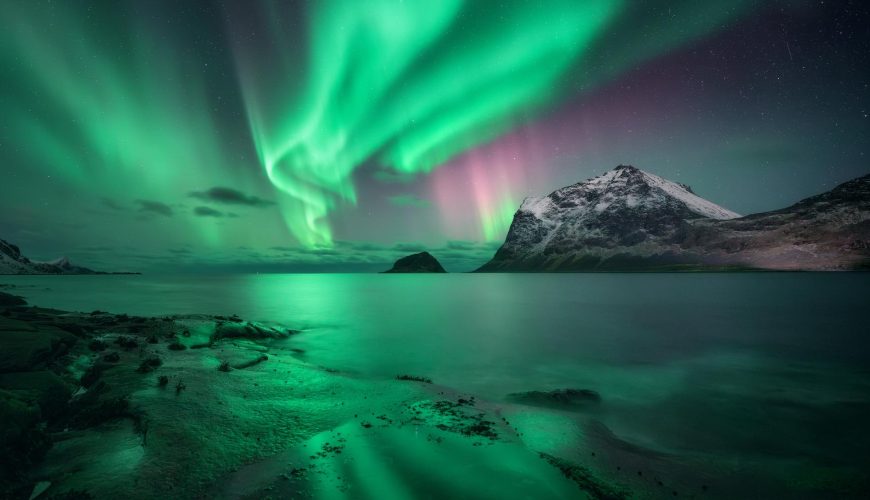
There is a moment, unique to the far north, when you step outside in the deep Scandinavian winter and the world is completely silent. The temperature is minus twenty. The snow absorbs every sound. The sky above the pine forest is the deepest black you have ever seen, and then — without warning — a curtain of green light moves across it, dips towards the treeline, ripples like silk and disappears. If you have planned your trip well, you are standing on a frozen lake on a husky sled, and the dogs are very still, ears up, watching the same thing you are watching. That is what Scandinavia in winter is for.
But the question most travellers face before they book is deceptively complicated: Sweden, Norway or Finland? All three countries share the Arctic latitude, the Sami cultural heritage, the Northern Lights, the husky farms and the deep winter landscape. All three have ice hotels, reindeer sledding, snowmobiling and cross-country skiing. But each has a distinctly different character, a different travel infrastructure and a different set of experiences that it does better than the others. This guide separates them honestly — explaining what each country does uniquely well, which activities are best where, which hotels are worth the long journey north, how to get there, what languages you will encounter and how to plan a round trip that combines more than one country.
What is in this guide
- The Scandinavian winter at a glance: when, why and what to expect
- Sweden: the ICEHOTEL, Abisko Aurora Sky Station and Swedish Lapland
- Norway: fjords, Tromso, Lofoten and the world’s best Northern Lights hunting
- Finland: reindeer, glass igloos, Rovaniemi and the happiest country on earth
- The experiences compared: husky sledding, ice hotels, reindeer and ski
- Northern Lights: where to go and when to maximise your chances
- Ice hotels and unique Arctic accommodation across all three countries
- Winter sport: alpine skiing, cross-country and ski touring
- Top hotels and lodges for a Scandinavian winter holiday
- Languages: what to expect in Sweden, Norway and Finland
- Getting there: airports, routes and connections
- Round trip itineraries: combining two or three countries
- Best time to visit: month by month guide
1. The Scandinavian winter at a glance: when, why and what to expect
| Feature | Sweden | Norway | Finland |
| Arctic region name | Swedish Lapland | Norwegian Arctic / Finnmark | Finnish Lapland |
| Main hub (Arctic) | Kiruna / Abisko | Tromso / Alta | Rovaniemi / Saariselka |
| Northern Lights season | Oct–Mar (best: Dec–Feb) | Oct–Mar (best: Dec–Feb) | Aug–Apr (best: Dec–Feb) |
| Snow guaranteed | Late Nov – early Apr | Late Nov – Mar (varies) | Nov – Apr |
| Key unique experience | ICEHOTEL Jukkasjärvi | Fjords + Hurtigruten cruise | Santa Claus Village; glass igloos |
| Best for skiing | Are (alpine); Riksgransen | Trysil; Geilo; Hemsedal | Levi; Ruka; Yllas |
| Best for huskies | Kiruna, Abisko | Tromso, Alta | Rovaniemi, Inari |
| Language | Swedish; English universal | Norwegian; English universal | Finnish; Swedish; English universal |
| Capital city | Stockholm | Oslo | Helsinki |
The Scandinavian winter season for Arctic experiences typically runs from late November to late March. The sweet spot for most activities — enough snow, reasonable daylight hours and the best Northern Lights probability — is January to March. December has the magic of early snowfall and Christmas atmosphere but the shortest days. April is increasingly popular for ski touring under the midnight sun in Norwegian and Swedish Lapland, when temperatures are rising but snow remains deep.
| Book as early as possible
The most popular experiences — a night in the ICEHOTEL’s art suites, a guided husky expedition, a glass igloo at Kakslauttanen — sell out many months in advance. For December and January dates, booking in spring of the same year is recommended. The ICEHOTEL art suites for winter 2026/27 opened for reservations in spring 2026. |
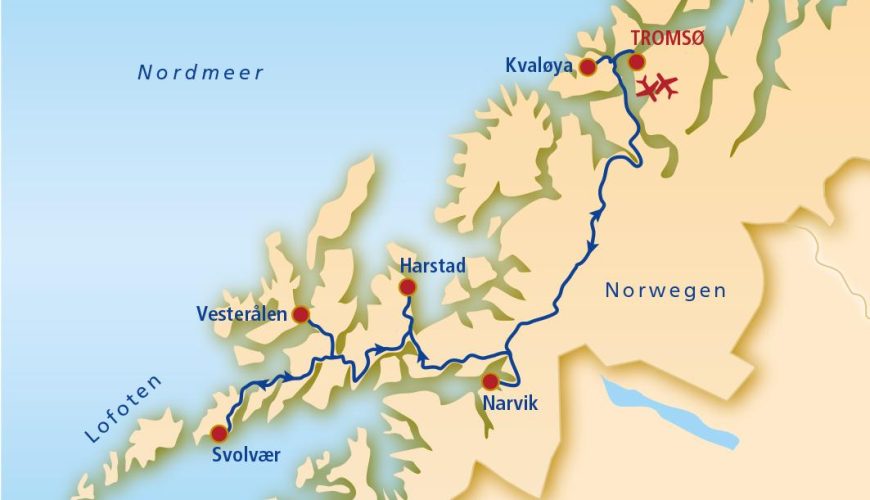
Norway Round Trip
2. Sweden: the ICEHOTEL, Abisko Aurora Sky Station and Swedish Lapland
| 🇸🇪 Sweden
Swedish Lapland | ICEHOTEL | Abisko | Kiruna | Sami Culture Sweden’s winter offering is anchored by two world-class experiences found nowhere else: the original ICEHOTEL in Jukkasjärvi, rebuilt every winter from blocks of ice cut from the frozen Torne River, and the Abisko Aurora Sky Station, which sits beneath the ‘Blue Hole’ — a microclimate that keeps the sky unusually clear even when surrounding areas are overcast. Swedish Lapland is UNESCO World Heritage listed for both its wilderness and its living Sami culture, which visitors can engage with through reindeer herding experiences, traditional cooking and craft workshops. |
The ICEHOTEL, Jukkasjärvi
The world’s first ice hotel was built in Jukkasjärvi, a small village 200 kilometres north of the Arctic Circle, in 1989. Every winter since, it has been rebuilt from scratch using ice blocks harvested from the Torne River — a structure of extraordinary scale and artistry, with individually designed art suites created by international artists and sculptors, an ice chandelier in the entrance hall, an Absolut Icebar, a chapel where real winter weddings take place and, since 2016, a year-round ‘permanent’ wing with mechanical cooling that allows the hotel to exist in summer too. The temporary rooms are kept at a constant minus five degrees Celsius; guests sleep in thermal sleeping bags on beds of ice covered with reindeer hides.
ICEHOTEL 36 opened in December 2025, revealing a new collection of art suites including — in an extraordinary feat of ice artistry — a full-size grand piano made entirely of ice. The experience of sleeping in an art suite is genuinely unlike anything else available in European accommodation: the rooms are silent, perfectly cold, softly lit and entirely unlike any hotel room you have ever been in. A warm Arctic sleeping bag ensures comfort even at these temperatures. In the morning, the hotel serves hot lingonberry juice outside your room to wake you gently.
Abisko Aurora Sky Station
Abisko National Park, accessed by the Abisko Aurora Sky Station cable car, is consistently rated as one of the best places in the world to observe the Northern Lights. The reason is geographical: a microclimate called the Blue Hole creates a persistent opening in the cloud cover over the park, meaning clear skies are more frequent here than almost anywhere else in Scandinavia at the same latitude. The Sky Station itself is a research and observation centre on the mountain ridge above the park, and guided aurora experiences are available from October to March. The Abisko Tourist Station — a simple but atmospheric lodge in the park — is the ideal base for aurora-focused visitors.
Swedish Lapland key experiences
- Husky sledding: Kiruna and Jukkasjärvi are popular starting points; multi-day expeditions across frozen lakes and through pine forest available; guests can learn to mush their own team
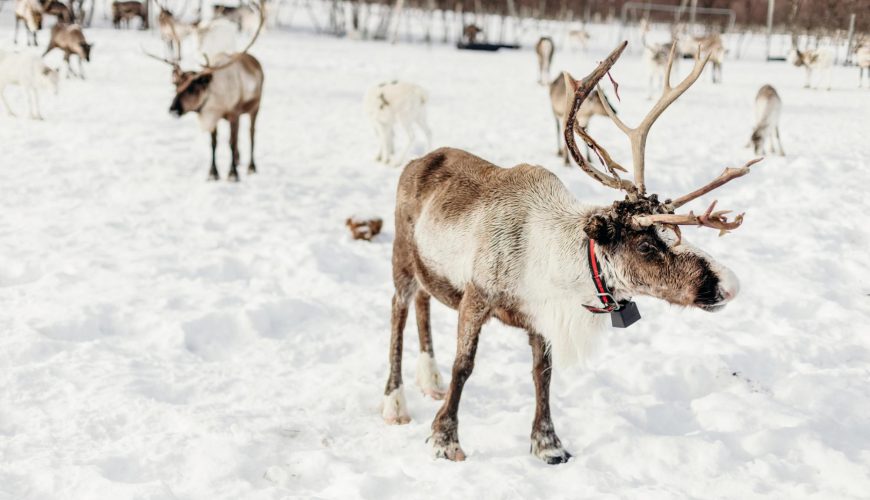
- Reindeer sledding with Sami guides: authentic cultural experience; Nutti Sami Siida near the ICEHOTEL is one of the most respected operators
- Snowmobiling: guided tours through Lapland wilderness from Kiruna; solo permits available with licence
- Ice sculpting: workshops at the ICEHOTEL; try your hand at the art form that builds the rooms you sleep in
- Jokkmokk Winter Market: centuries-old Sami cultural event in February; traditional handicrafts, food and reindeer racing
- Skiing: Are (eastern Lapland) is Sweden’s premier alpine resort; Riksgransen offers midnight sun skiing in spring
Top hotels in Swedish Lapland
- ICEHOTEL, Jukkasjärvi: art suites from approx. EUR 500/night; warm rooms also available at lower prices; book months in advance
- Treehotel, Harads: design tree cabins in the forest near Lulea; the Mirrorcube and UFO cabins are among the most photographed hotel rooms in Scandinavia
- Arctic Baths, Harads: floating spa hotel on the Lule River; outdoor pools and baths accessible even in deep winter
- Abisko Tourist Station: simple lodging in the national park; the best base for Northern Lights at Abisko Sky Station
3. Norway: fjords, Tromso, Lofoten and the world’s best Northern Lights hunting
| 🇳🇴 Norway
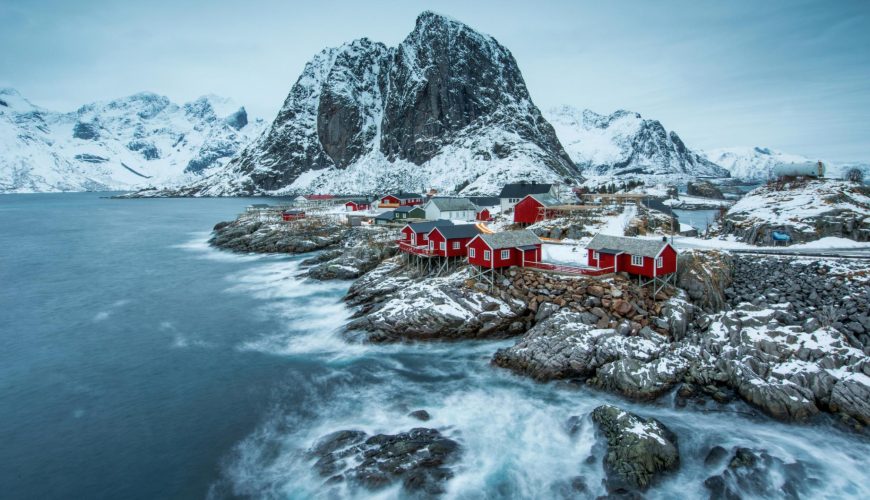
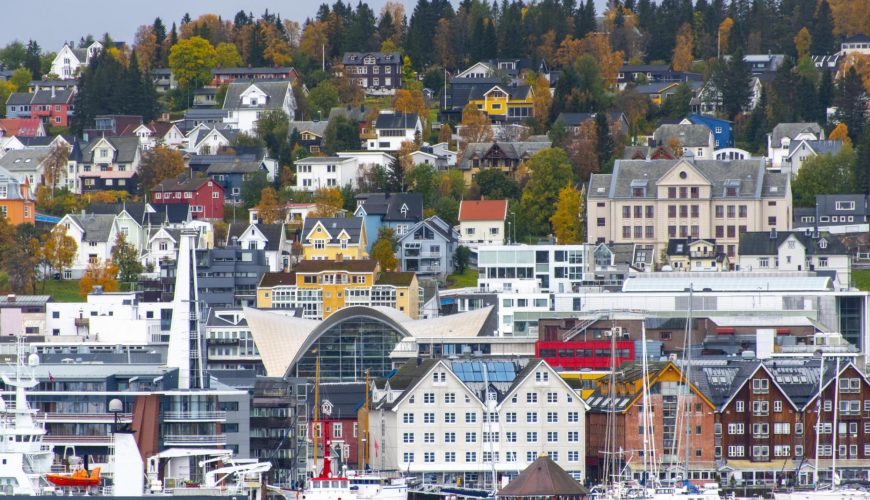
Tromso | Lofoten Islands | Hurtigruten | Svalbard | Fjords in Winter Norway offers the most dramatically varied winter landscape of the three countries: from the neon-lit wooden houses of Tromso reflected in the dark fjord to the impossibly photogenic red fishing cabins of the Lofoten Islands standing above the Arctic sea. Norway is also the only Scandinavian country with a year-round coastal voyage — the legendary Hurtigruten ferry — that allows travellers to combine the Northern Lights experience with a journey through one of the most spectacular coastlines on earth. Svalbard, the Arctic archipelago 78 degrees north, is a genuine frontier experience for the most adventurous. |
Tromso: the Arctic capital
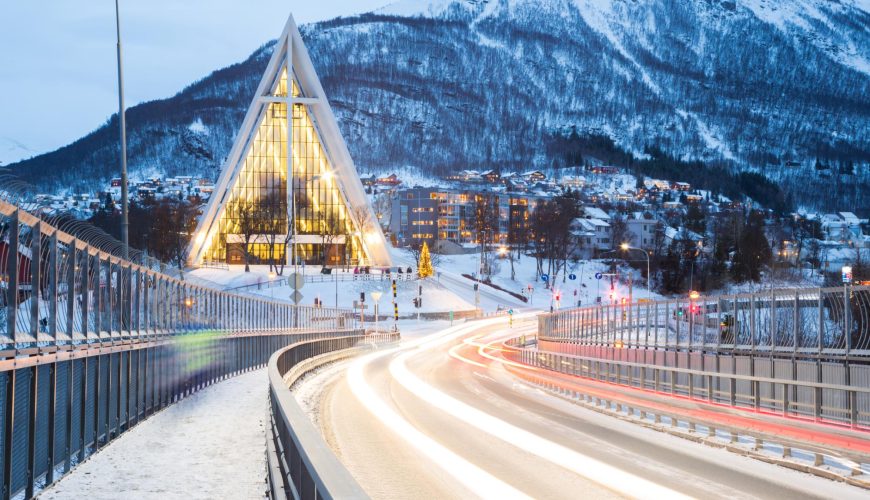
Tromso, situated 350 kilometres north of the Arctic Circle, is frequently called the Paris of the North — a hyperbole that nevertheless captures something real about the city’s unexpectedly cosmopolitan character. It has a university, a thriving bar and restaurant scene, excellent museums (the Polaria and the Tromso University Museum’s Sami collections are both outstanding), and it sits beneath the aurora oval in a position that gives it excellent Northern Lights visibility. Tromso is the best single-city base for a Norwegian Arctic winter holiday, combining urban comfort with immediate access to husky farms, reindeer camps, whale watching tours and snowmobile expeditions into the surrounding mountains.
Lofoten Islands
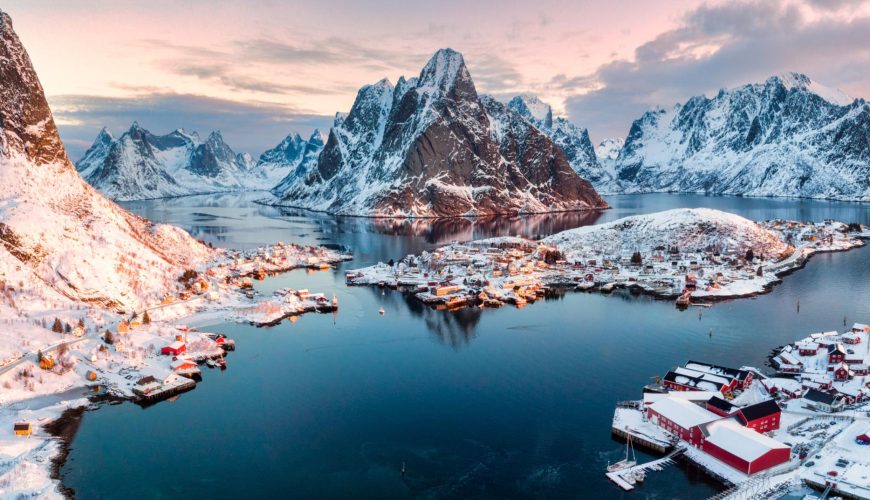
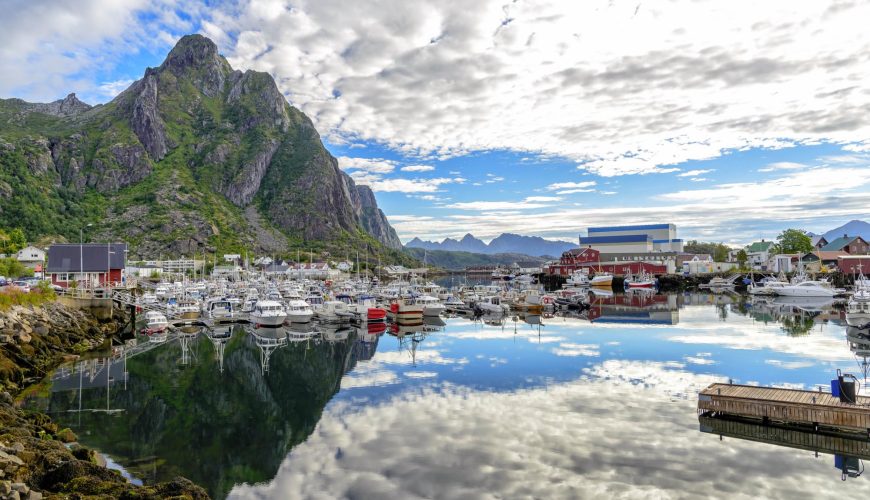
The Lofoten Islands in winter are one of the most extraordinary visual experiences available in European travel. The characteristic red and yellow fishing huts (rorbuer) that cluster around the islands’ harbours, the dramatic mountain peaks rising directly from the sea, the fishing boats and the possibility — on a clear night — of watching the Northern Lights reflected in the dark water of the fjords: Lofoten in January or February is a genuinely transformative landscape. The islands also have a small but growing winter sports scene, with skiing directly above the fishing villages and surfing at Unstad (one of Europe’s northernmost surf spots) attracting a small but devoted community year-round.
The Hurtigruten coastal voyage
The Hurtigruten coastal ferry operates year-round between Bergen and Kirkenes (11 days for the full voyage), stopping at 34 ports along the Norwegian coast. In winter, the voyage combines fjord scenery with the possibility of Northern Lights viewing from the deck — and the combination of a warm ship with Arctic landscapes outside is one of the most relaxed ways to experience the Norwegian winter without the physical demands of husky or snowmobile tours. Havila also operates on the same route as a more sustainable alternative. The Bergen–Kirkenes round voyage takes approximately 12 days.
Norwegian winter key experiences
- Whale watching, Tromso: orca and humpback whale season November to January in the waters off Skjervoy and Andoya; one of the most accessible wild whale encounters in the world
- King crab safari, Kirkenes: fishing for enormous king crabs through ice holes in the frozen fjord; unique to the Varanger region near Russia
- Dogsled, Tromso and Alta: Alta is particularly known for championship-level husky sledding; Tromso offers accessible day and multi-day tours
- Skiing: Trysil (largest resort in Norway), Hemsedal (most challenging), Geilo (classic Norwegian ski town) and Voss are all outstanding winter resorts
- Svalbard: guided snowmobile expeditions to polar bear territory; an extreme Arctic experience for the genuinely adventurous
Top hotels in Norway
- Kirkenes Snow Hotel: rebuilt every year from snow and ice; reindeer suite; full programme of dog sledding and king crab excursions included
- Malangen Resort, Tromso: luxury fjordside lodges specifically designed for Northern Lights viewing; glass-fronted rooms
- Manshausen, Lofoten: island resort with sea cabins standing on stilts above the water; no cars, no roads; completely isolated
- Fretheim Hotel, Flam: classic Norwegian mountain hotel in the Sognefjord; access to Norway’s most dramatic fjords
4. Finland: reindeer, glass igloos, Rovaniemi and the happiest country on earth
| 🇫🇮 Finland
Rovaniemi | Levi | Saariselka | Kakslauttanen | Sauna Culture Finland is the most family-friendly and the most romantically complete Scandinavian winter destination. Rovaniemi is officially Santa Claus’s home — his village sits on the Arctic Circle — and the wider Finnish Lapland experience combines reindeer farm visits, husky safaris, glass igloo sleeping and some of Europe’s most accessible Northern Lights viewing into a package that is more polished and more immediately bookable than its Swedish or Norwegian equivalents. Finland’s other great contribution to winter travel is the sauna — not a luxury add-on but a genuine cultural ritual, and the finest sauna experiences in the world are found here. |
Rovaniemi and Santa Claus Village
Rovaniemi, the capital of Finnish Lapland and the world’s only official hometown of Santa Claus, sits precisely on the Arctic Circle and is the most visited winter destination in Finland. Santa Claus Village — a year-round theme park and resort on the Arctic Circle line — offers reindeer and husky rides, glass igloos for Northern Lights viewing, snowmobile tours and, for younger visitors, the complete Santa experience. Beyond the village, Rovaniemi itself is an architecturally interesting city — rebuilt by Alvar Aalto after its destruction in World War II — with the Arktikum museum (Arctic nature and Sami culture) among the finest museums in Scandinavia.
Kakslauttanen Arctic Resort — glass igloos and log cabins
Kakslauttanen Arctic Resort, 250 kilometres north of Rovaniemi near Saariselka, is the most famous glass igloo resort in the world. The glass igloos — bubble-shaped cabins with transparent domed roofs — allow guests to watch the Northern Lights from their beds without leaving the warmth of the heated room. The resort also offers traditional log cabins, a snow igloo village, a Finnish smoke sauna (one of the largest in the world), a reindeer farm, husky safaris and snowmobile tours. It is the most complete single-resort Arctic experience in Scandinavia and books out quickly — reservations months in advance are essential.
Levi and the Finnish ski resorts
Finnish Lapland’s ski resorts are consistently rated among Europe’s most family-friendly. Levi, Finland’s largest ski resort, offers 43 slopes including floodlit evening skiing, a comprehensive beginner infrastructure and immediate proximity to husky farms and reindeer experiences. Ruka and Yllas are strong alternatives with their own character. Finnish ski resorts do not offer the alpine drama of the Norwegian or Swedish mountain resorts, but they excel in accessibility, family orientation and the combination of on-piste skiing with off-piste Arctic activities.
Finnish sauna culture
Finland has approximately 3 million saunas for a population of 5.5 million — one sauna for every two people. The sauna is not a luxury here but a deeply embedded cultural ritual, taken seriously as a social, physical and almost spiritual practice. The traditional Finnish sauna sequence — heat until you cannot bear it, then plunge through a hole cut in the frozen lake, then return to heat — is one of the most invigorating physical experiences available in winter travel, and Finnish Lapland lodges do it properly. No Scandinavian winter trip is complete without experiencing it.
Top hotels in Finland
- Kakslauttanen Arctic Resort, Saariselka: glass igloos and log cabins; smoke sauna; world-famous; book well in advance
- Santa Claus Holiday Village, Rovaniemi: glass igloos on the Arctic Circle; Aurora cabins with automated Northern Lights alarm
- Levin Iglut (Levi Igloos): design glass igloo resort in the Levi ski area; combines skiing with Northern Lights sleeping
- Arctic SnowHotel, Rovaniemi: rebuilt each winter from snow and ice; ice restaurant; full Arctic activity programme
Finland Round Trip
5. The experiences compared: husky sledding, ice hotels, reindeer and ski
| Experience | Best in Sweden | Best in Norway | Best in Finland |
| Husky sledding | Kiruna, Abisko (multi-day expeditions; UNESCO Lapland) | Tromso, Alta (combined with whale watching and Northern Lights) | Rovaniemi, Inari (family-friendly; accessible day tours) |
| Ice hotel | ICEHOTEL Jukkasjärvi (world’s original; annual art suites; grand piano 2025/26) | Kirkenes Snow Hotel (snow not ice; spectacular reindeer suite) | Arctic SnowHotel Rovaniemi (ice restaurant; full activity programme) |
| Reindeer sledding | Nutti Sami Siida, Jukkasjärvi (most authentic Sami experience) | Tromso and Alta with Sami guides | Rovaniemi farms (most accessible; Santa Village integration) |
| Glass igloos / aurora sleeping | Abisko Tourist Station (cabin access to Sky Station) | Malangen Resort, Tromso (glass-fronted fjord lodges) | Kakslauttanen (world’s most famous glass igloos); Santa Claus Village |
| Alpine skiing | Are (Sweden’s premier resort) | Trysil, Hemsedal, Voss (Norway’s biggest and best) | Levi, Ruka (most family-friendly) |
| Cross-country skiing | Swedish Lapland trails (vast network; Laponian wilderness) | Norwegian mountain hut network (Hytta network) | Finnish forests (extensive and flat; good for beginners) |
| Snowmobiling | Swedish Lapland forests | Svalbard; Kirkenes; Tromso mountains | Rovaniemi; Saariselka; widely available |
| Ice fishing | Available everywhere | Kirkenes (king crab safari is a Norwegian speciality) | Widely available; traditional Finnish winter activity |
| Sauna culture | Good but standard | Good but standard | World’s best; smoke sauna; lake plunge essential |
6. Northern Lights: where to go and when to maximise your chances
The Northern Lights (Aurora Borealis) are caused by charged particles from the sun interacting with gases in the atmosphere — a phenomenon best visible in the aurora oval, a ring-shaped zone around the magnetic pole that passes through northern Scandinavia. The key variables for observation are solar activity, darkness and clear skies.
Best locations by country
- Sweden — Abisko: the Blue Hole microclimate gives Abisko the highest probability of clear skies in Scandinavia; the Aurora Sky Station provides professional observation conditions; best October to March
- Norway — Tromso, Alta, Lofoten: Tromso has the best combination of access, accommodation and Northern Lights infrastructure; Alta has strong aurora frequency; Lofoten adds dramatic landscape when the lights do appear
- Finland — Saariselka, Inari, Rovaniemi: Finland’s remote Lapland wilderness offers excellent dark skies; glass igloo accommodation has made aurora viewing more comfortable and accessible here than anywhere else
Timing
The Northern Lights season runs from late August to mid-April, but the practical viewing window is October to March — when nights are long enough and dark enough for consistent viewing. The equinoxes (late September and late March) are statistically the most active periods for auroral activity, but the lights can appear on any clear, dark night throughout the season. A minimum of three nights at a destination is recommended to maximise chances; weather can block viewing for multiple consecutive nights.
Standing on the frozen surface of a Swedish lake at two in the morning, watching green and violet light ripple across the sky while your husky team lies in the snow around you: this is not something you plan. This is something that happens when you are in the right place, at the right time, having done the work to get there.
7. Ice hotels and unique Arctic accommodation across all three countries
| Hotel | Country | Type | Unique feature | Price (guide) |
| ICEHOTEL, Jukkasjärvi | Sweden | Ice hotel (annual rebuild + permanent) | World’s first; art suites by international artists; ice chapel | Art suite from EUR 500/night |
| Treehotel, Harads | Sweden | Design tree cabins | Mirrorcube; UFO; Bird’s Nest; Dragonfly cabins | From EUR 600/night |
| Arctic Baths, Harads | Sweden | Floating spa hotel | Outdoor pools on the Lule River; crown-shaped float | From EUR 400/night |
| Kirkenes Snow Hotel | Norway | Snow hotel | Rebuilt annually; reindeer suite; king crab safari base | From EUR 350/night |
| Malangen Resort | Norway | Luxury fjord lodge | Northern Lights viewing rooms; private hot tubs | From EUR 400/night |
| Manshausen | Norway | Sea stilt cabins | Island resort; no roads; complete isolation; Lofoten | From EUR 500/night |
| Kakslauttanen | Finland | Glass igloo + log cabin | World’s most famous glass igloos; smoke sauna | Igloo from EUR 600/night |
| Santa Claus Village | Finland | Aurora cabin + glass igloo | On the Arctic Circle; Santa experience; aurora alarm | From EUR 300/night |
| Arctic SnowHotel | Finland | Snow hotel | Ice restaurant; reindeer suits on the beds; near Rovaniemi | From EUR 200/night |
| Sleeping in an ice or snow hotel
Room temperature inside ice and snow hotels is typically between minus 5 and minus 8 degrees Celsius. This sounds extreme but is very manageable with the thermal sleeping bags provided. Most guests report sleeping better than expected — the cold is dry, the rooms are absolutely silent and the novelty creates a memorable night. A warm changing room and warm breakfast area are always available. Ear plugs can help with the unfamiliar sound of absolute silence. |
8. Winter sport: alpine skiing, cross-country and ski touring
Alpine skiing
| Resort | Country | Vertical | Slopes | Character |
| Are | Sweden | 890 m | 100+ km | Sweden’s premier resort; international atmosphere; good for advanced skiers |
| Riksgransen | Sweden | Limited | Small | Midnight sun spring skiing; off-piste focus; extreme northerly location |
| Trysil | Norway | 780 m | 70+ km | Norway’s largest resort; family-friendly; well-organised |
| Hemsedal | Norway | 800 m | 50+ km | Norway’s most challenging; après-ski culture; good off-piste |
| Geilo | Norway | 520 m | 35 km | Classic Norwegian resort; also excellent cross-country |
| Voss | Norway | 800 m | 40 km | Gateway to fjords; world-class extreme sports scene |
| Levi | Finland | 325 m | 43 slopes | Finland’s largest resort; superb for families; aurora activities nearby |
| Ruka | Finland | 280 m | 34 slopes | Strong skiing + husky/reindeer combo; good for mixed groups |
Cross-country and ski touring
Cross-country skiing is the true Nordic sport — practised by locals of all ages and abilities across all three countries. Norway has the most developed hut-to-hut network (Hytta system), allowing multi-day ski tours through mountain wilderness with overnight stays in staffed or self-service mountain huts. Swedish Lapland offers vast, uncrowded cross-country terrain through UNESCO-listed wilderness. Finnish forests provide the gentlest terrain, ideal for beginners or families.
Ski touring — uphill on skins, then downhill on backcountry skis — is increasingly popular in Norwegian and Swedish mountains. The Lyngen Alps east of Tromso are widely considered among the finest ski touring terrain in Europe, combining dramatic mountain scenery with excellent snow conditions and accessible guides.
9. Top hotels and lodges for a Scandinavian winter holiday
Beyond the unique ice and igloo properties, here is a selection of the best conventional hotels and lodges for each country:
Sweden
- Ice Hotel 365, Jukkasjärvi: year-round operation including warm rooms; the best base for ICEHOTEL and surrounding activities
- Camp Ripan, Kiruna: highly rated activity hotel; all-season nature and Arctic programmes; good family option
- Abisko Tourist Station: basic but atmospheric; inside the national park; best location for aurora viewing at Abisko
Norway
- Tromso Ice Domes: boutique glass dome resort near Tromso with Northern Lights focus
- Svinoya Rorbuer, Svolvaer, Lofoten: traditional red fisherman’s cabin accommodation; authentic Lofoten experience
- Juvet Landscape Hotel: world-famous design hotel with floor-to-ceiling windows facing Norwegian forest; featured in Ex Machina
- Hurtigruten MS Fridtjof Nansen or MS Roald Amundsen: hybrid-powered expedition ships with expedition team and aurora watching on deck
Finland
- Saariselka Tunturi Wilderness Hotel: high-quality lodge in the wilderness north of Rovaniemi; excellent aurora location
- Hotel Levi Panorama: ski-in ski-out at Levi resort; good Northern Lights visibility from the mountain
- Hotel Aakenus, Rovaniemi: well-regarded base hotel in the city; close to Santa Claus Village and Arktikum museum
10. Languages: what to expect in Sweden, Norway and Finland
One of the great practical advantages of Scandinavian travel for English-speaking visitors is the extraordinary level of English proficiency across all three countries. Sweden, Norway and Finland consistently rank among the world’s top nations for English as a second language, and in tourist-facing environments — hotels, restaurants, activity operators, airports — English is effectively the default language. You will rarely encounter a situation in which a lack of Swedish, Norwegian or Finnish creates a real problem.
| Language | Country | Notes for travellers |
| Swedish (Svenska) | Sweden | Spoken throughout; similar to Norwegian; English virtually universal in tourist areas and cities |
| Norwegian (Norsk) | Norway | Two official written forms (Bokmål and Nynorsk); spoken form varies by region; English excellent |
| Finnish (Suomi) | Finland | Linguistically unrelated to Swedish or Norwegian; notoriously complex; Swedish also official; English universal |
| Sami languages | All three (Arctic areas) | Several distinct languages spoken by the indigenous Sami people; guides at Sami cultural sites often explain in English |
A few words of the local language are always appreciated. ‘Tack’ (thank you in Swedish), ‘Takk’ (Norwegian) and ‘Kiitos’ (Finnish) go a long way, as does an awareness that Finnish culture in particular values silence and directness in a way that can initially feel reserved to visitors from more conversational cultures. This is not unfriendliness — it is respect, and understanding it makes Finland significantly more enjoyable.
11. Getting there: airports, routes and connections
| Destination | Airport | From London | From Frankfurt | From New York |
| Stockholm, Sweden | ARN (Arlanda) | 2.5 hrs direct | 2 hrs direct | 8.5 hrs direct |
| Kiruna, Swedish Lapland | KRN | Via Stockholm (1.5 hrs) | Via Stockholm | Via Stockholm |
| Oslo, Norway | OSL (Gardermoen) | 2 hrs direct | 1.5 hrs direct | 8 hrs direct |
| Tromso, Norway | TOS | Via Oslo (1.5 hrs) or direct (seasonal) | Via Oslo | Via Oslo |
| Helsinki, Finland | HEL | 2.5 hrs direct | 2.5 hrs direct | 9 hrs direct |
| Rovaniemi, Finland | RVN | Via Helsinki (1 hr) or seasonal direct | Via Helsinki | Via Helsinki |
| Lofoten, Norway | SVJ (Svolvaer) or EVE | Via Oslo (1.5 hrs) | Via Oslo | Via Oslo |
The most practical routing for most European visitors is to fly to the national capital (Stockholm, Oslo or Helsinki) and connect onward to the Arctic region. Kiruna, Tromso and Rovaniemi all have airports with regular domestic connections, and the flight time from the capital to the Arctic is typically 60 to 90 minutes. Train connections are available from Stockholm to Kiruna (18 hours by overnight sleeper — a scenic journey in its own right) and from Helsinki to Rovaniemi (8 hours by train, the most comfortable option).
| Overnight train to Lapland
The overnight sleeper from Stockholm to Kiruna or Narvik (Norway) — operated by SJ and Vy — is one of the great underrated train journeys of Europe. You board in Stockholm in the evening, wake up above the Arctic Circle surrounded by snow-covered pine forest, and arrive in Kiruna in time for breakfast before your first activity. It eliminates a flight, reduces your carbon footprint and adds a memorable travel experience. |
12. Round trip itineraries: combining two or three countries
| Itinerary | Duration | Route | Highlights |
| Swedish Lapland Focus | 5–7 nights | Stockholm → Kiruna/Jukkasjärvi → Stockholm | ICEHOTEL, husky sledding, Abisko aurora, reindeer with Sami |
| Norway Arctic Classic | 7–10 nights | Oslo → Tromso → Lofoten → Oslo | Whale watching, husky, fjords, Lofoten rorbuer, Northern Lights |
| Finnish Lapland Magic | 5–7 nights | Helsinki → Rovaniemi → Saariselka → Helsinki | Glass igloos, Santa Village, husky, reindeer, smoke sauna |
| Scandinavia Grand Tour | 14–18 nights | Stockholm → Kiruna → Tromso → Alta → Rovaniemi → Helsinki | ICEHOTEL + Norwegian Arctic + Finnish glass igloos + sauna |
| Northern Lights Express | 10–12 nights | Rovaniemi → Tromso → Abisko → Stockholm | Best aurora locations across all three countries in sequence |
| Family Lapland | 5–7 nights | Helsinki → Rovaniemi (Santa Village + Kakslauttanen) | Perfect for families with children; gentle activities; glass igloos |
The Scandinavia Grand Tour combining all three countries is the most rewarding itinerary for first-time visitors with enough time, but requires careful logistics. The crossing from Swedish Lapland to Norwegian Tromso is relatively straightforward (bus or short domestic flight), and the crossing from northern Norway to Finnish Lapland via bus or car is well-serviced. The key is not to rush — each country rewards slow travel, and the activities (husky expeditions, aurora watching) require flexibility for weather conditions.
13. Best time to visit: month by month guide
| Month | Snow | Northern Lights | Daylight | Best for |
| October | Building | Good (long nights) | Short but some daylight | First aurora views; fewer crowds; lower prices |
| November | Good cover | Excellent | Very short (3–4 hrs at latitude 70°) | Early season; quiet; best for experienced Arctic travellers |
| December | Excellent | Excellent (polar night) | Near-zero above Arctic Circle | Polar night experience; Christmas atmosphere; ICEHOTEL opens |
| January | Peak | Excellent | 1–3 hours of twilight | Coldest month; best snow conditions; peak ICEHOTEL season |
| February | Peak | Excellent | Growing (4–6 hrs) | Best overall: good snow, good aurora, some daylight; Jokkmokk Market |
| March | Very good | Good (nights shortening) | Longer days (8+ hrs) | Excellent skiing; spring light on snow; still cold enough for ice activities |
| April | Late season | Limited (too bright) | Midnight sun approaching | Midnight sun skiing; ski touring; nature awakening; much warmer |
February is the single best month for a balanced Scandinavian winter holiday: the snow is at its deepest, the Northern Lights are excellent, daylight hours are returning (giving beautiful golden light on the snow in midday), and the ICEHOTEL and igloo properties are at peak operation. January is better for those prioritising complete polar night darkness and the coldest, most intense Arctic experience. March suits skiers and those wanting spring-like conditions with still-reliable snow.
Angebote Deutscher Reiseveranstalter
Sweden, Norway and Finland each do the Scandinavian winter differently, and each does something the others cannot match. Sweden has the world’s original ICEHOTEL and the clearest Northern Lights sky at Abisko. Norway has the fjords, the whales and the Hurtigruten voyage that no landlocked Lapland experience can replicate. Finland has the world’s finest glass igloos, the deepest sauna culture and Rovaniemi’s peculiar magic of being Santa Claus’s actual home. The question is not which country is best — it is which experience you want most. The answer to that question is the beginning of the best winter holiday you will ever have.
Comment (0)