






CYCLING GUIDE ITALY | TUSCANY
Cycling and E-Biking Tuscany: Florence, Siena, Chianti, the Coast and Everything Between
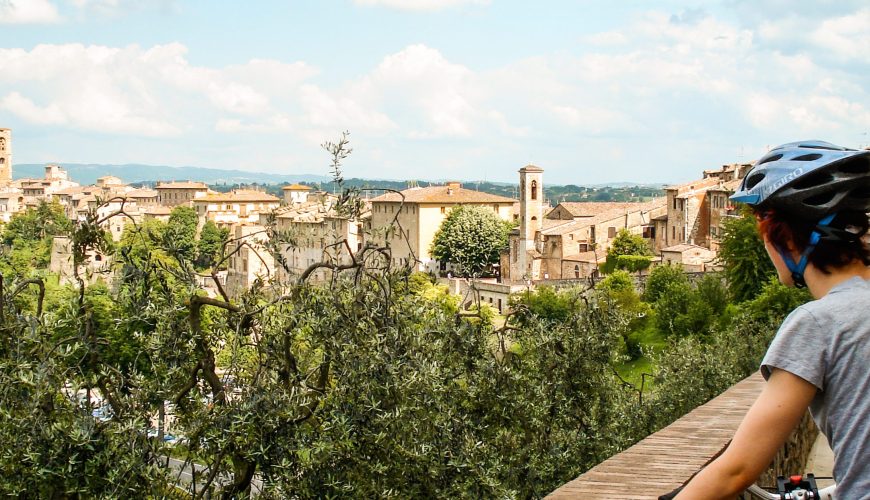
There is no better way to understand Tuscany than from a bicycle seat. The olive groves, the vine rows, the medieval hilltowns, the long white road lined with cypresses that disappears over the ridge — these things exist in a car as images. On a bike, they become an experience that stays with you.
Tuscany on a bicycle is one of those travel experiences that sounds straightforward until you start planning it and realise how many decisions are involved. Which route? How many days? Is an e-bike necessary, or will a regular road bike do? Which towns are worth stopping in? Where do you sleep? Can you actually drink wine at lunch and still make it over the next hill? This guide is designed to answer all of those questions honestly, with specific routes, honest assessments of the terrain, practical recommendations for e-bike rental and luggage logistics, and a clear case for why September in the Chianti is one of the finest travel experiences available anywhere in Europe.
The short answers: the Chianti route from Florence to Siena is the classic for good reason; an e-bike is recommended for anyone who is not a regular cyclist, and emphatically recommended for anyone over 55 or travelling with a partner of mixed fitness levels; September and October are significantly better than summer; and yes, you can absolutely drink wine at lunch — that is precisely the point of cycling between wine producers rather than driving past them.
What is in this guide
- Why Tuscany is the finest cycling destination in Italy
- The Chianti Classic: Florence to Siena in 5–7 days
- The Maremma and Argentario coast route
- The Via Francigena: cycling the medieval pilgrim road
- Pisa, Lucca and the Versilia coast
- E-bike versus road bike: an honest assessment
- Wine estates along the routes: cycling with tastings
- Where to stay: agriturismi, bike hotels and medieval borghi
- Luggage transfers, navigation and practical logistics
- Getting to Tuscany from the UK and Europe
- Best time to cycle Tuscany: month by month
1. Why Tuscany is the finest cycling destination in Italy
Italy has no shortage of places to cycle. The Dolomites are spectacular. The lakes are beautiful. Puglia is flat and fascinating. But Tuscany has something that none of the others quite match: density. Within a 60-kilometre radius of Siena, you have three UNESCO World Heritage Sites, one of the world’s most celebrated wine regions, a dozen medieval hilltowns that look unchanged since the 14th century, Renaissance art in quantities that would fill any other country’s national museums, and food — the bistecca, the ribollita, the pici, the pecorino — that is simply among the best in the world. No other cycling destination in Italy, and very few in Europe, packs this much into this small a space.
The other thing Tuscany has is infrastructure. The agriturismo system — working farms that rent rooms and serve meals — is more developed here than anywhere else in Italy, and it was made for cyclists: you arrive in the afternoon, park your bike in a locked shed, drink the estate’s own wine with dinner and set off the next morning with a packed lunch they made at six. The roads, while genuinely hilly, are well-surfaced and carry relatively little traffic outside the main summer weekends. And the waymarking on established routes — the Chianti trail, the Via Francigena, the Arno cycle path — has improved dramatically over the past decade.
Tuscany is not a cycling destination that forgives laziness. The hills are real, the distances are longer than they look on maps, and the heat in July is genuinely dangerous for full-day riding. Respect it, plan it properly, and it will give you some of the finest days you have ever spent on a bicycle.
2. The Chianti Classic: Florence to Siena in 5–7 days
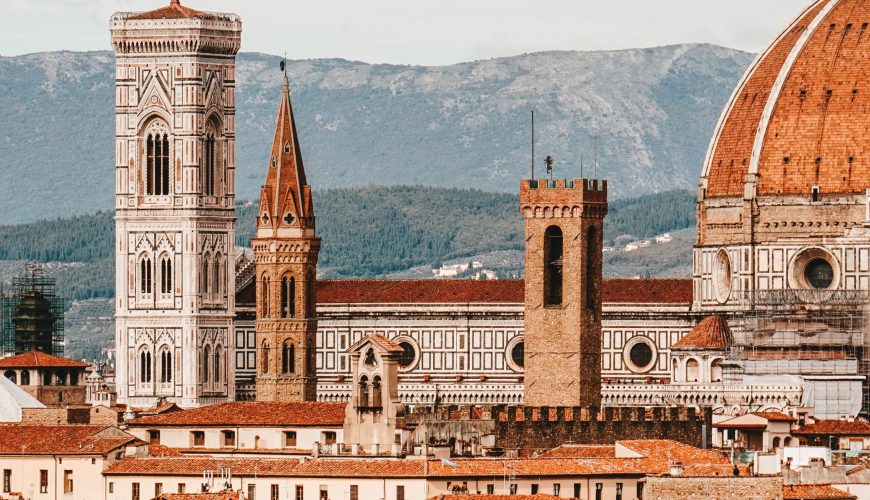
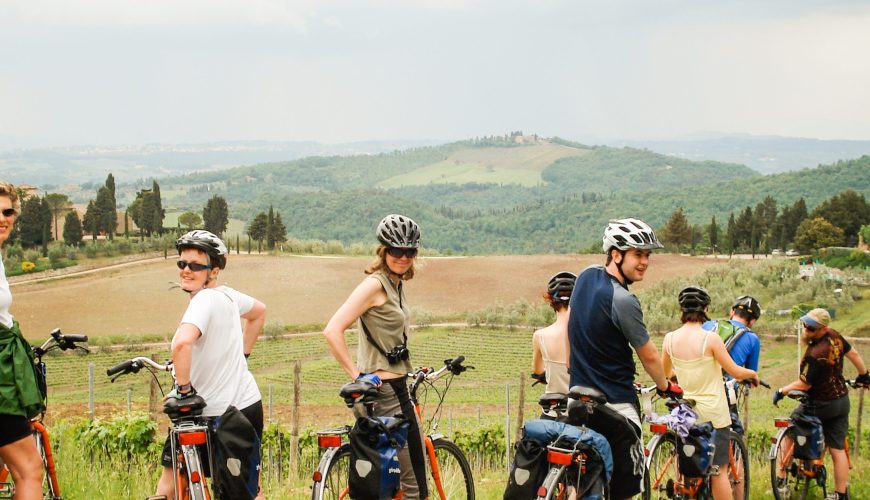
The route from Florence to Siena through the Chianti Classico wine region is the definitive Tuscan cycling itinerary — the one that appears on every list, inspires the most photography and delivers, consistently, the landscape that people imagine when they think of Tuscany. The route is approximately 140 kilometres in total, crossing 2,500 to 2,800 metres of elevation over five to seven days, and passes through the main Chianti Classico communes of Greve, Panzano, Castellina, Radda and Gaiole before descending into the Val d’Arbia and arriving at Siena.
Grand Tour of Tuscany – Pisa – Siena – Florence
| Stage 1–2: Florence to Greve in Chianti (35 km, 600m elevation)
The route leaves Florence from the Piazzale Michelangelo — the hilltop square with the city panorama — and immediately commits to the hills, climbing south through the suburban fringe and into the first vineyards at Impruneta. By the time you reach Greve in Chianti (the effective capital of Chianti Classico), you are already in a different world: a triangular central piazza lined with arcaded buildings, the Falorni salumeria where the Chianti producers sell their wines directly, and a view south down the Greve valley that explains without any further words why people have been making wine here for seven centuries. Stay two nights in Greve or the hamlet of Panzano above it. |
| Stage 3: Greve to Radda in Chianti via Panzano (40 km, 900m elevation)
The hardest day of the route, and the most rewarding. The climb out of Panzano is steep and long enough that even confident cyclists will feel it; on an e-bike it is simply enjoyable. Castellina in Chianti, at the top, is one of those Tuscan towns that looks exactly as medieval as it is, with an Etruscan tomb just outside the walls and wine estates in every direction. Radda in Chianti, the afternoon’s destination, is smaller and less visited than Castellina — which makes it, in the opinion of most returning visitors, the better place to spend the night. The restaurant Osteria Il Borgo does a pici al ragù that justifies the climb on its own. |
| Stage 4: Radda to Gaiole and Castello di Brolio (35 km, 700m elevation)
Gaiole in Chianti is the third of the three main Chianti communes and the quietest. The Castello di Brolio, a short detour south of Gaiole, is the ancestral estate of Baron Bettino Ricasoli — the man who, in the 1870s, developed the modern recipe for Chianti by specifying the blend of Sangiovese, Canaiolo and Malvasia that would define the wine for the next century. The castle and winery are open for visits, the wines are very good and the view from the castle walls across the surrounding countryside is among the finest on the entire route. |
| Stage 5–6: Into Siena (30 km, 400m elevation)
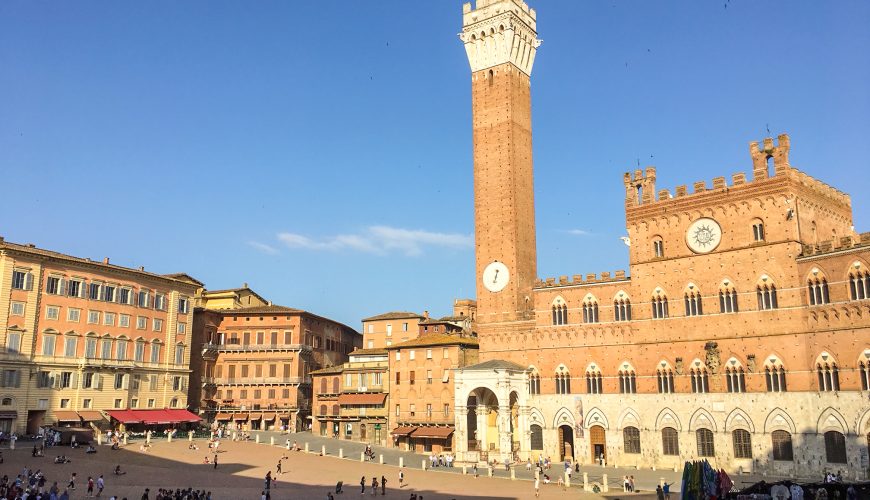
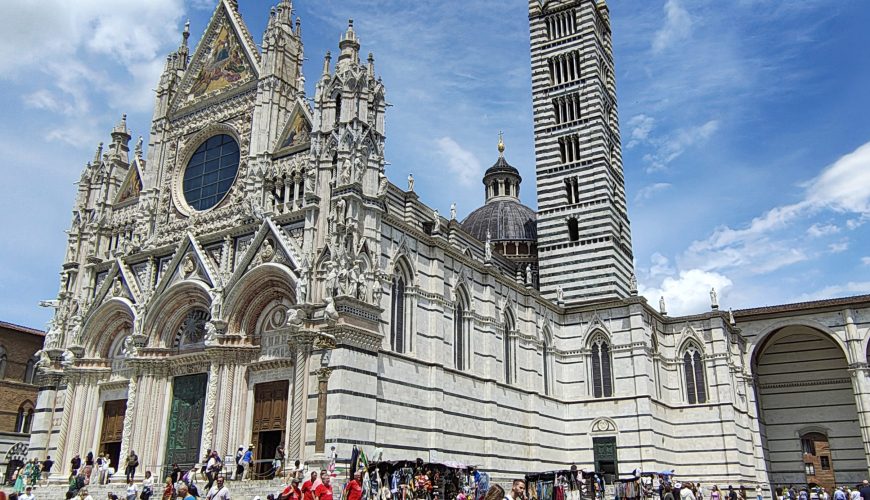
The final stage drops south and west through the gentler landscape of the Crete Senesi — the clay hills south of Siena that look, in the right afternoon light, completely unlike anything else in Europe: bare, smooth, almost lunar, with isolated farmhouses and lone cypress trees marking the ridgelines. Siena arrives with its skyline of medieval towers and the extraordinary Piazza del Campo — one of the finest public spaces in the world — waiting at the end of the descent. Allow at least a full day in Siena before flying or training home. |
| Stage | Distance | Elevation | Difficulty | E-bike setting |
| Florence – Greve | 35 km | 600m | Moderate | Level 2–3 on climbs |
| Greve – Radda | 40 km | 900m | Hard | Level 3 on main climb |
| Radda – Gaiole – Brolio | 35 km | 700m | Moderate-Hard | Level 2–3 |
| Brolio – Siena | 30 km | 400m | Moderate | Level 1–2 |
| Total | 140 km | 2,600m | Moderate-Hard | Very manageable with e-bike |
3. The Maremma and Argentario coast route
The Maremma is the Tuscany that most visitors never reach — the wide, flat, slightly wild coastal region south of Grosseto that was marshland until Mussolini’s drainage works in the 1930s and is now a landscape of pine forests, sandy beaches, nature reserves, Etruscan tuff-stone cities and, in season, the Morellino di Scansano red wine that is the Maremma’s answer to Chianti. It is also, crucially for cyclists, significantly flatter than the Chianti — making it the logical choice for less confident riders or for those wanting to combine beach time with cycling.
| Grosseto to Talamone via the Maremma Nature Park (50 km, 300m elevation)
The Parco Regionale della Maremma — the Uccelina Park — is one of Italy’s finest coastal nature reserves, with cycle paths running through pine forest along the edge of the sea. Talamone, at the southern tip, is a fishing village with a 15th-century fortress on the headland and one of the better fish restaurants on this stretch of coast. Flat to gently rolling: suitable for all fitness levels. |
| Maremma coast to Monte Argentario (45 km, 400m elevation)
The Argentario peninsula — connected to the mainland by three narrow causeways — is the most glamorous stretch of the Tuscan coast. The road around the headland is genuinely spectacular, climbing above the sea through Mediterranean scrub with views of the Giglio and Giannutri islands. Porto Santo Stefano and Porto Ercole, the two main towns, have the slightly aristocratic air of places that have been used to yachts for a long time. The seafood is outstanding. |
| Coast to Pitigliano and the Etruscan cities (60 km, 800m elevation)
Inland from the coast, the southern Maremma contains one of the great hidden sights of Tuscany: the tuff-stone cities of Pitigliano, Sorano and Sovana, built on steep volcanic rock outcrops and connected by the Vie Cave — deep channels cut through the tuff by the Etruscans, some of them 20 metres deep and 2,000 years old. Cycling through a Via Cava feels exactly as extraordinary as it sounds. |
4. The Via Francigena: cycling the medieval pilgrim road
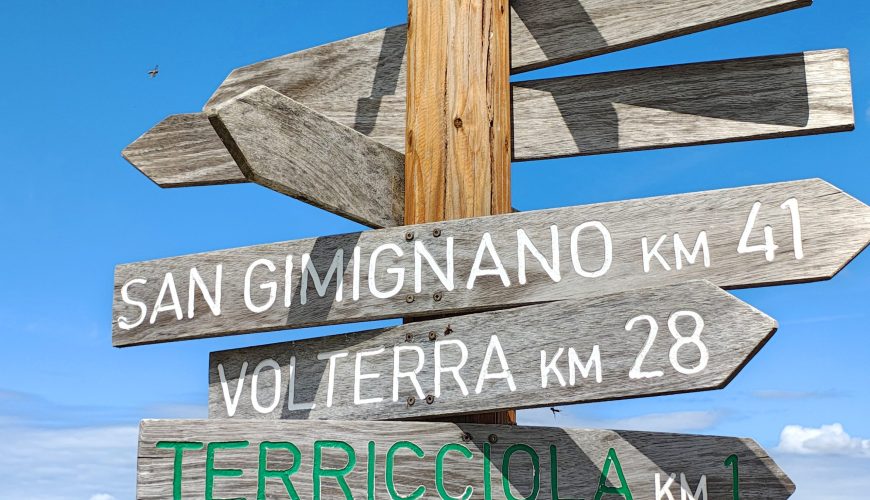
The Via Francigena is the medieval pilgrim route from Canterbury to Rome, passing through France, Switzerland and the length of Italy. In Tuscany, the route runs for approximately 230 kilometres from Lucca through San Gimignano, Monteriggioni, Siena and the Val d’Orcia to the Lazio border at Radicofani — and it has become, over the past decade, one of the most rewarding long-distance cycling routes in Italy, combining historical interest, natural beauty and a hospitality infrastructure built around pilgrims and walkers that works equally well for cyclists.
Via Francigena highlights for cyclists
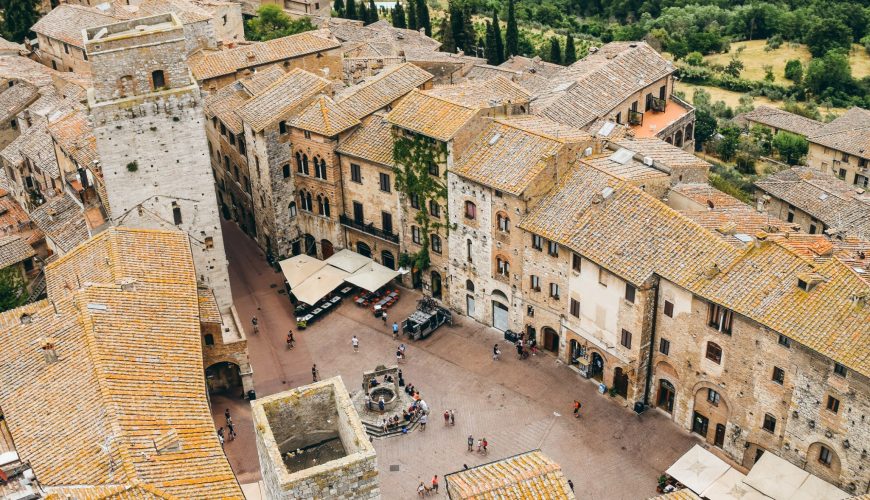
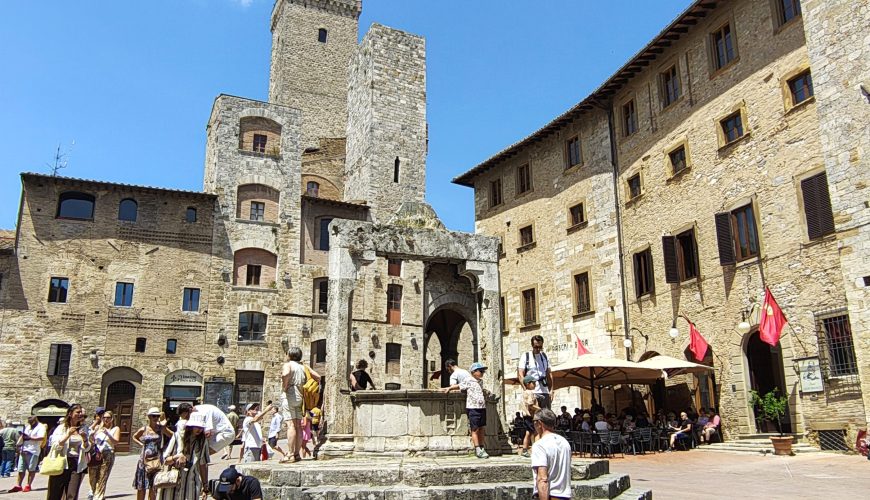
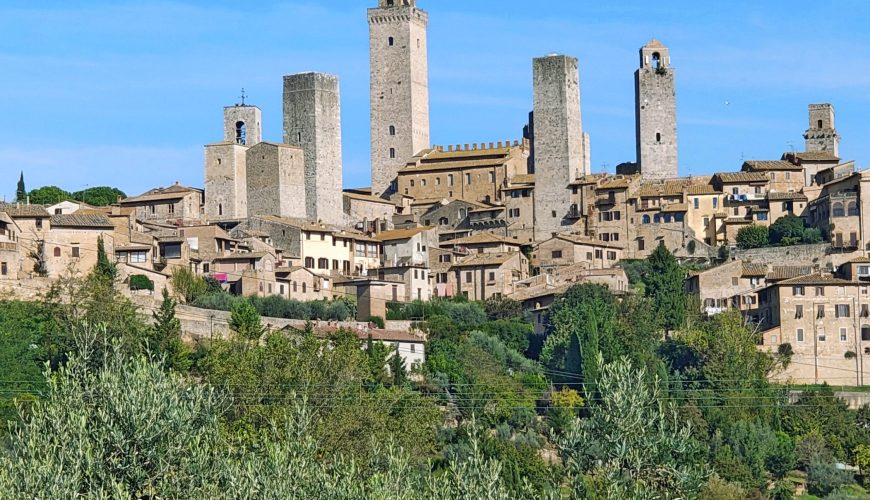
- San Gimignano: the medieval Manhattan of Tuscany, with 14 surviving tower houses that the city’s competing families built as status symbols; UNESCO World Heritage; the local Vernaccia white wine is excellent and sold directly by producers
- Monteriggioni: a perfectly preserved medieval ring wall that appears without warning on a hilltop in the middle of the Val d’Elsa — one of those genuinely startling Tuscan moments
- Abbazia di Sant’Antimo: a Romanesque abbey in the Brunello di Montalcino valley; the monks sing Gregorian chant daily at 7:15am and at Vespers; one of the most atmospheric stops on the entire route
- Bagno Vignoni: the thermal spring village where the Renaissance pool is the piazza — a large open basin of steaming sulphurous water in the centre of town; smaller thermal pools are available for bathing nearby
- Pienza: the ideal Renaissance city, built in the 1460s by Pope Pius II on a single humanist plan; the best pecorino in Tuscany is made here and sold from every shop front
5. Pisa, Lucca and the Versilia coast
The Arno Cycle Path: Florence to Pisa (80 km, 150m elevation)
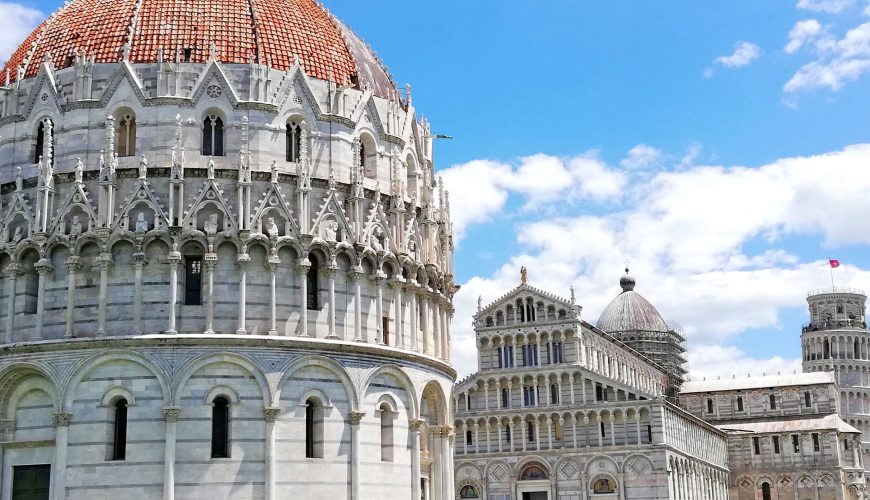
The cycle path along the Arno from Florence to Pisa is the flattest multi-day cycling option in Tuscany and the most accessible for beginners or families. The route follows the river through Empoli — worth stopping for the excellent Collegalli wine estate — San Miniato (the truffle capital of Tuscany, where the town’s annual truffle market in November is one of the finest food events in Italy) and Pontedera, before arriving in Pisa at the Piazza dei Miracoli. The Leaning Tower of Pisa is one of those rare landmarks that is genuinely more impressive in person than in photographs.
Lucca: cycling on the city walls
Lucca is 20 kilometres north of Pisa and is, in the considered opinion of most people who visit both, the more enjoyable city. The Renaissance ramparts that encircle the medieval centre have been converted into a four-kilometre tree-lined promenade that serves simultaneously as public park and cycling circuit — wide enough for two bikes to pass comfortably, with views across the tiled rooftops on one side and the Apuan Alps on the other. It is one of the most pleasant urban cycling experiences in Italy and entirely unique to Lucca.
The Versilia coast
The Versilia coast north of Pisa — Viareggio, Forte dei Marmi, Marina di Pietrasanta — is the traditional summer playground of the Florentine bourgeoisie and has a particular character: very good restaurants, wide sandy beaches, a strong tradition of beach clubs (stabilimenti balneari) with sun loungers and afternoon aperitivo, and the extraordinary backdrop of the Apuan Alps rising steeply behind the coast with their white marble quarries visible from the beach. A coastal cycle path runs much of the Versilia length.
6. E-bike versus road bike: an honest assessment
The question of whether to use an e-bike in Tuscany is more nuanced than the marketing materials suggest. Here is an honest breakdown:
| Profile | Recommendation | Reason |
| Regular cyclist, fit, under 50 | Road bike or gravel bike | Chianti hills are genuinely enjoyable on a regular bike for fit riders; e-bike reduces the challenge unnecessarily |
| Occasional cyclist, any age | E-bike strongly recommended | Makes the hills manageable; allows you to arrive at estates and restaurants without being destroyed; transforms the experience |
| 55+ or mixed-fitness couple | E-bike essential | Allows both partners to cover the same ground regardless of fitness difference; prevents the tour from becoming a strain |
| Family with older children (12+) | E-bikes for adults, standard bikes for fit teenagers | Keeps the group together; children often have more energy on climbs than parents |
| Competitive cyclist / training trip | Road bike on quiet routes | The Chianti roads are used by serious cyclists; the Eroica gravel routes are world-famous among enthusiasts |
One practical note on e-bike range: a standard 500Wh battery will cover 60 to 100 kilometres with 800 to 1,200 metres of climbing, depending on rider weight, assistance level and temperature. For the stages described in this guide (30 to 45 km per day with 600 to 900m elevation), a single charge is more than sufficient. Most agriturismi and bike hotels have charging facilities; always confirm when booking.
| E-bike rental in Tuscany
Florence has the best e-bike rental infrastructure: Florence by Bike and Tuscany Bike Tours both offer quality e-bikes from approximately EUR 45–60 per day. Self-guided tour operators including Butterfield & Robinson, Exodus Travels and specialist Italian cycling companies offer all-inclusive e-bike touring packages including bike, luggage transfers, accommodation and route notes from approximately EUR 2,500–4,000 per person per week. |
7. Wine estates along the routes: cycling with tastings
The combination of cycling and wine tasting requires some logistical thought — mainly that tasting four estates in an afternoon on a bike is not advisable. The practical approach that works well is: one tasting per day, ideally at lunchtime with food, at an estate that is either directly on your route or a short detour from it. Most Chianti Classico estates have realised that cyclists are excellent customers (they spend the night locally, eat locally and buy bottles for the luggage transfer service to deliver to their hotel) and have become increasingly cyclist-friendly.
Recommended estates on the Chianti route
- Fontodi, Panzano: one of the great Chianti estates; book ahead; cycle directly from Greve; the Flaccianello is one of the best Super Tuscans produced
- Badia a Coltibuono, near Radda: historic abbey estate; excellent tasting room; cyclist-friendly; wine school if you want to go deeper
- Castello di Ama, near Gaiole: cutting-edge wine meets contemporary art installations scattered through the estate; unusual and memorable
- Castello di Brolio, south of Gaiole: the historic Ricasoli estate; wine museum; shop; panoramic terrace
Recommended estates on the Via Francigena
- Biondi-Santi, Montalcino: the estate that created Brunello di Montalcino; now owned by EPI group but retaining its identity; book well ahead
- Casanova di Neri, Montalcino: more accessible than Biondi-Santi; excellent Brunello; welcoming to individual visitors
- Avignonesi, Montepulciano: known for Vino Nobile and the extraordinary Occhio di Pernice Vin Santo; cycle-friendly
8. Where to stay: agriturismi, bike hotels and medieval borghi
Accommodation choices in Tuscany can make or break a cycling trip. The right agriturismo — well-situated, genuinely welcoming, with excellent food — elevates the whole experience. The wrong one, however charming it looks in photographs, can mean a 10-kilometre detour off-route, no food available and a locked bike shed.
- Agriturismi: Working farm estates that offer rooms and meals. The best in the Chianti — Borgo il Melone near Greve, Podere Castellare near Radda, La Guardiola near Castelnuovo Berardenga — have locked bike storage, e-bike charging, dinner using estate-grown ingredients and wine, and the general warmth of people who have been welcoming cyclists for years. Prices EUR 90–200 per room per night, almost always including dinner or an excellent breakfast.
- Bike hotels: Specifically designed around cycling guests, with workshop facilities, drying rooms, early breakfast, packed lunches and luggage transfer coordination. The Hotel Frances near Siena and Salvioli Sport Hotel in Greve are solid options. Useful as start and end points rather than mid-route.
- Monastery accommodation: Along the Via Francigena, monasteries and convents offer simple, inexpensive accommodation (EUR 35–60 per person) in exchange for respect for house rules. The Abbazia di Sant’Antimo does not offer accommodation but the surrounding village does; Monteoliveto Maggiore has a pilgrim hostel.
- Boutique hotels in the borghi: Castellina, Radda and Montalcino all have excellent small hotels in historic buildings. These tend to be more expensive (EUR 180–350 per night) but offer the experience of sleeping within medieval walls.
Toscana Resort Castelfalfi – Das ultimative Refugium für diskreten Luxus & Aktiv-Erlebnisse
Rosewood Castiglion del Bosco
Baglioni Resort Alleluja, Punta Ala, Toskana, Italien
Argentario Golf Resort & Spa, Toskana, Italien
9. Luggage transfers, navigation and practical logistics
Luggage transfers
Luggage transfer services — where your main bag is collected from your accommodation each morning and delivered to the next stop — are essential for any serious cycling tour in Tuscany. Carrying significant luggage on an e-bike drains the battery faster and changes the handling; riding with a daypack carrying only the essentials (water, sun cream, rain jacket, snacks, phone) is the correct approach. Specialised operators including Luggage Mule Italy and Italy Cycling Guide coordinate transfers on all the main routes; costs are approximately EUR 20–30 per transfer per bag.
Navigation
- Komoot: the best app for pre-planning and GPS navigation on Tuscan cycling routes; large community of route uploads specific to the Chianti and Via Francigena; excellent offline maps
- Garmin Edge devices: the preferred tool for more experienced cyclists who want a dedicated GPS unit rather than a phone; Tuscany routes are well-represented in the Garmin Connect community
- Official Via Francigena app: GPS tracks, pilgrim passport information and accommodation database for the historic route
- Printed maps: the Kompass 1:50,000 maps for Chianti Classico and Siena province are excellent supplements to digital navigation, particularly in areas with poor phone signal
Other practical notes
- Water: carry at least 1.5 litres; in summer 2 litres; many agriturismi and churches have outdoor water fountains (fontanelle) where you can refill for free
- Sunscreen: the Tuscan sun is strong even in spring; SPF 50 and a cycling cap are non-negotiable from May onwards
- Mechanical support: basic puncture repair kit essential; most bike hotels have tools; in a genuine breakdown, the mechanic network in Chianti towns is reliable
10. Getting to Tuscany from the UK and Europe
| Option | Route | Journey time | Bike logistics |
| Flight to Florence (FLR) | Direct from London, Amsterdam, Paris, Zurich | 1.5–2 hours | Bike as sports luggage; e-bike battery restrictions apply (max 160Wh airside) |
| Flight to Pisa (PSA) | easyJet, Ryanair from many European airports | 1.5–2.5 hours | Same as Florence; often cheaper; good start point for Arno route |
| Train (Frecciarossa) | Paris or Zurich – Milan – Florence | 4–6 hours from Paris | Bike spaces bookable; recommended for own-bike travellers |
| Car | Via Brenner (A22) or Mont Blanc tunnel | Variable | Ideal for e-bike transport; parking expensive in Florence city centre |
For travellers bringing their own e-bike, the train through the Alps — whether via the Gotthard or the Brenner — is the most practical option. The Frecciarossa high-speed trains from Milan to Florence have dedicated bike spaces that can be reserved; the journey from Milan to Florence takes under two hours. Important: if flying with an e-bike battery, check the airline’s specific lithium battery policy — most airlines do not accept batteries above 160Wh in the hold, and most modern e-bike batteries are 400–750Wh. In practice, most e-bike tourers in Tuscany rent bikes locally or use tour operators that provide them.
11. Best time to cycle Tuscany: month by month
| Month | Temperature | Cycling conditions | Character |
| March–April | 12–18°C; spring flowers | Excellent: cool, clear, green landscape | Quiet; low prices; some mud on gravel tracks after rain |
| May–June | 18–26°C; warm and sunny | Best overall: warm but not hot; long days | Increasingly busy; Chianti at its greenest; book accommodation early |
| July–August | 28–36°C; very hot | Challenging: morning only; heat exhaustion risk | Peak season; expensive; crowded; not recommended for full-day riding |
| September–October | 18–26°C; grape harvest | Outstanding: harvest atmosphere; warm sea; perfect temperatures | Best month overall: harvest, lower prices, still warm |
| November–February | 8–14°C; rain possible | Limited: waterproofs essential; some routes muddy | Very quiet; cheapest; truffle season; not for multi-day tours |
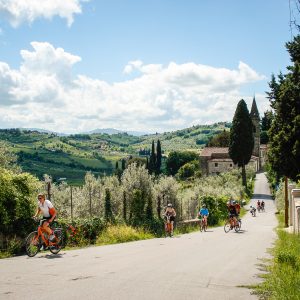
September deserves particular emphasis. The vendemmia — the grape harvest — transforms the Chianti in ways that no other month replicates. The vine rows, which were green in spring and dusty green in summer, turn amber, red and gold. Tractors move between estates with loads of harvested Sangiovese. The agriturismi press their own juice in the evenings and serve it with dinner alongside the previous year’s Chianti. The temperature is perfect for full-day cycling. The main tourist buses have gone. And the agriturismi, grateful for the business after a crowded summer, are at their most welcoming.
If you can only visit Tuscany by bicycle once, visit it in September. If you have already been in September, go back in October for the Val d’Orcia and the truffle woods of San Miniato. If you have done both, you already know this and do not need to be told.
The best thing about cycling Tuscany — more than the views, more than the wine, more even than the food — is the pace. A bicycle forces you into the landscape rather than past it. The climb to Radda in Chianti takes genuine effort even with electrical assistance; arriving at the top, looking south at the Val d’Arbia and Siena’s towers on the horizon, you have earned the view in a way that no other form of transport provides. That earning — the physical connection between effort and reward — is what separates cycling travel from every other kind. Tuscany, of all places, rewards the effort.
Comment (0)