
The Definitive Guide to Swiss Rail Travel: Premium Panoramic Trains, the Rhaetian Railway Network, and Maximizing the Swiss Travel Pass
Switzerland represents the absolute gold standard of global rail transportation. For international travelers, cultural explorers, and alpine adventurers, the Swiss railway ecosystem is far more than a functional transit network. It is a living engineering monument, an architectural marvel, and a panoramic window into some of the most dramatic mountain landscapes on Earth.
Operated by the Swiss Federal Railways (SBB) alongside an interconnected web of private regional rail operators, this fully synchronized infrastructure allows passengers to glide from the glacial peaks of the Canton of Valais to the palm-lined, Mediterranean-style shores of Lake Geneva and Ticino without a single logistical hitch.
For any traveler planning a comprehensive exploration of the Swiss Alps, navigating this dense transit matrix efficiently requires deep strategic insights. How do you integrate world-famous scenic expresses into a single chronological journey? What makes the narrow-gauge Rhaetian Railway network a designated UNESCO World Heritage site? How can you utilize the all-inclusive Swiss Travel Pass to eliminate ticketing friction while maximizing your budget? This definitive, SEO-optimized guide delivers actionable data, expert route planning frameworks, and deep insider knowledge to unlock the ultimate Swiss rail holiday.
1. The Clockwork Principle: Understanding the Integrated Timed Schedule (ITF)
The legendary punctuality and efficiency of Swiss trains are not accidental; they are the direct mathematical output of a structural masterclass known as the Integrale Taktfahrplan (ITF), or the Integrated Timed Schedule. Introduced to create a unified public transit layout, the system dictates that trains on every single line across the country run at minimum on an exact hourly or half-hourly loop, arriving and departing at identical minutes past the hour.
Urban centers and mountain terminuses act as synchronized transfer hubs. Long-distance InterCity expresses, regional narrow-gauge trains, alpine postal buses, and lakeside passenger steamers all converge at these central stations just before the hour or half-hour marks.
Passengers step off one platform, walk a few paces to the opposite track, and board their connecting line within a tightly calculated, stress-free window of four to eight minutes. The entire country operates like a finely tuned mechanical watch, completely removing the logistical anxiety of missed connections and making independent rail travel exceptionally smooth.
2. The Rhaetian Railway (RhB): An Architectural Masterpiece of Alpine Engineering
In the eastern canton of Graubünden, alpine rail travel shifts into a spectacular rhythm handled by the Rhaetian Railway (RhB). Operating a 384-kilometer network of core narrow-gauge lines using a 1,000-millimeter track width, the RhB is a pioneering masterclass in civil engineering.
Unlike traditional mountain railways that rely heavily on rack-and-pinion cogwheel systems to scale steep inclines, the classic red trains of the RhB navigate extreme mountain terrain almost entirely through adhesion—relying purely on the friction between steel wheels and steel rails.
The Albula and Bernina Lines: UNESCO World Heritage Landmarks
In 2008, the historic Albula and Bernina corridors of the Rhaetian Railway were officially inscribed onto the UNESCO World Heritage list, making them one of only a handful of rail lines worldwide to receive this status. This designation honors the structural lines as human design triumphs that blend into the high-alpine environment.
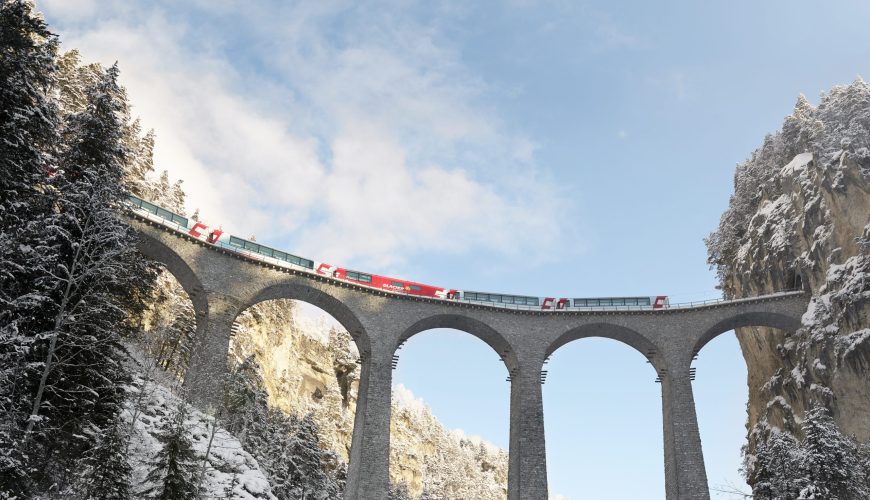
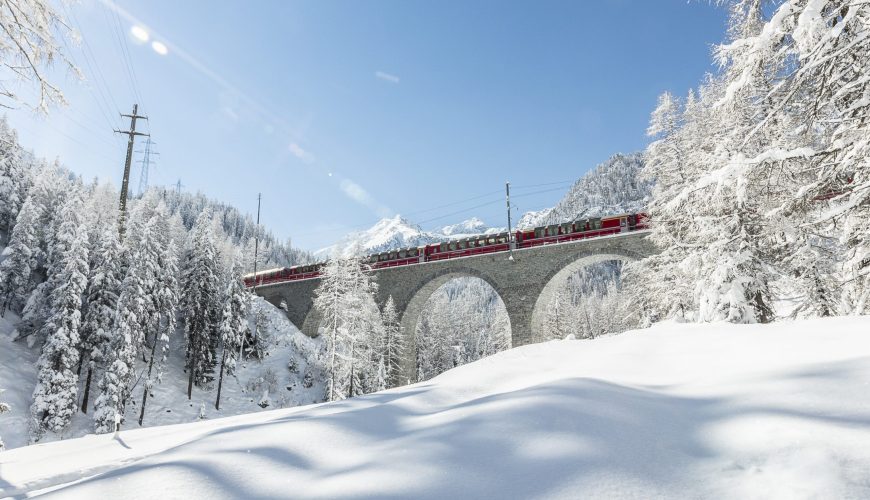
- The Albula Line (Thusis to St. Moritz): Spanning roughly 60 kilometers, this line scales over 1,000 meters in elevation. To maintain a manageable gradient without cogwheels, early 20th-century engineers cut an intricate system of curved viaducts, helical galleries, and spiral return tunnels directly into the sheer granite rock. The crowning symbol of this line is the Landwasser Viaduct near Filisur. This 65-meter-high, limestone pillar bridge curves elegantly across a deep mountain chasm, leading the train straight out of thin air into the sheer, vertical rock face of the unlit Landwasser Tunnel. [1]
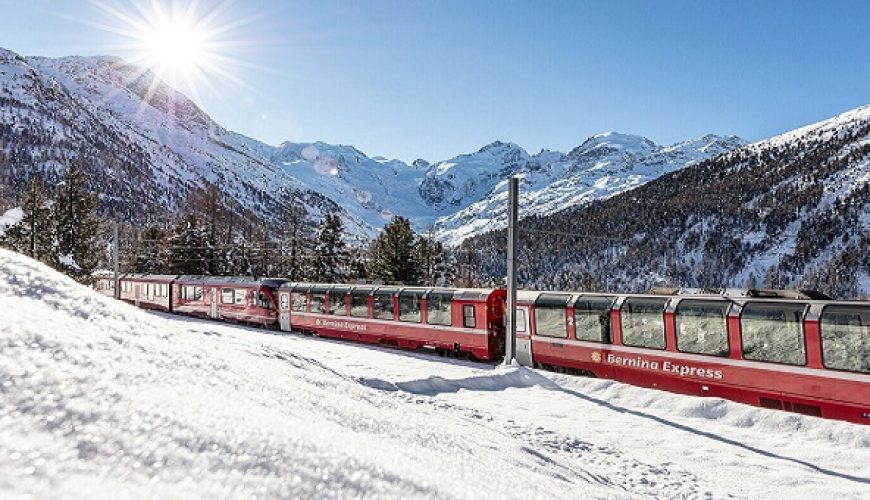
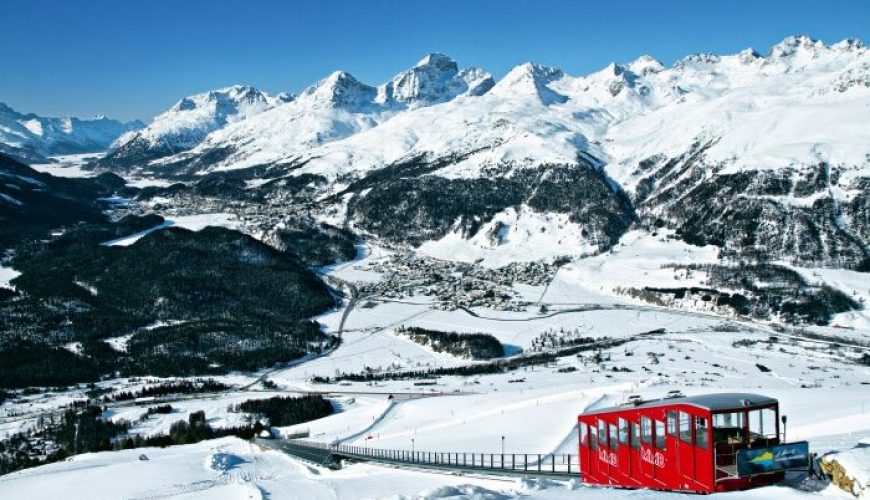
- The Bernina Line (St. Moritz to Tirano, Italy): This breathtaking route serves as the spectacular southwards extension crossing the high Alpine divide. It stands as one of the steepest adhesion lines on earth, handling dramatic gradients of up to 70 per mille. The train climbs out of the Engadin Valley up to the windswept pass station of Ospizio Bernina at 2,253 meters above sea level—the highest high-speed through-station in Europe. From this frozen world, the tracks plunge via tight switchbacks into the Mediterranean climate of Italy’s Valtellina valley. A key highlight of this descent is the Brusio Spiral Viaduct, a magnificent nine-arched stone loop where the train completes a full 360-degree circular descent to shed elevation in a confined valley space. [2]
The Gourmino Dining Car: Nostalgic Fine Dining at Altitude
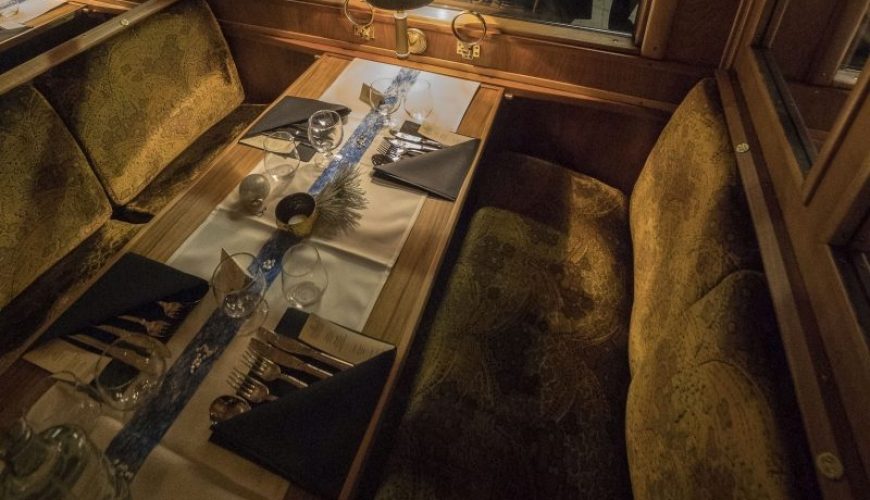
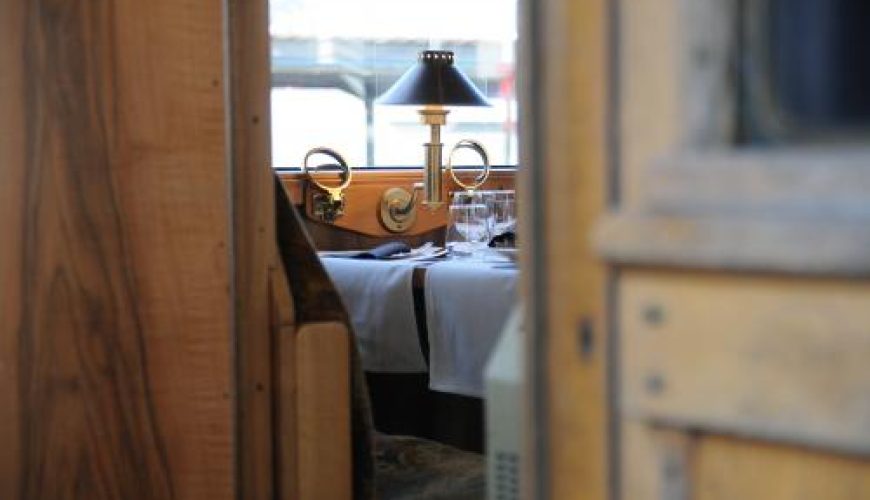
The Rhaetian Railway carefully preserves the heritage of premium European travel, most notably through its legendary Gourmino dining cars. These beautifully restored, deep royal-blue salon carriages date back to the 1930s, preserving the elegant atmosphere of the Belle Époque.
Inside these wood-paneled dining spaces, passengers enjoy a top-tier gastronomic experience. While dramatic gorges, snow-covered valleys, and historic villages roll past the windows, a dedicated onboard kitchen team prepares traditional regional specialties from scratch.
From rich Graubünden capuns and cured mountain meats to delicate walnut tarts, the Gourmino experience seamlessly combines historic rail culture with fine regional dining.
3. The Legendary Swiss Panoramic Trains: A Visual Feast
To maximize the visual impact of the country’s landscapes, Switzerland deployed a fleet of specialized panoramic trains. These carriages feature curved glass windows that wrap high into the roofline, offering unobstructed views of soaring peaks, deep gorges, and pristine alpine forests.
The Glacier Express: The Slowest Express Train in the World
Connecting the upscale mountain resorts of Zermatt, at the base of the iconic Matterhorn, with St. Moritz or Chur since 1930, the Glacier Express is an unforgettable rail journey. The train takes roughly eight hours to cover 291 kilometers of track. Far from a drawback, this leisurely pace is a premium feature, allowing passengers to take in an engineering feat that spans 291 bridges and 91 tunnels. [3, 4]
- The Oberalp Pass Crossing: The highest point of the journey is reached at the crest of the Oberalp Pass, climbing to 2,033 meters above sea level. Here, utilizing the rack-and-pinion system of the Matterhorn Gotthard Bahn, the panoramic train scales steep rock walls, passing frozen high-altitude lakes and dramatic snowfields. [5, 6]
- The Rhine Gorge (Ruinaulta): Often referred to as the “Grand Canyon of Switzerland,” this dramatic limestone chasm was carved out by the prehistoric Flims Rockslide. The Glacier Express tracks track directly along the churning waters of the Anterior Rhine, flanked by towering, chalk-white rock formations that are completely inaccessible by car or tour bus.
- Premium Onboard Comfort: Passengers in First and Second class enjoy multi-course meals prepared fresh in the onboard galley and served directly to their panoramic seats. For the ultimate luxury rail experience, the exclusive Excellence Class provides guaranteed window seats, access to a private Glacier Bar, a dedicated concierge, and a refined 5-course regional tasting menu with curated wine pairings. [7]
The Bernina Express: From Eternal Glaciers to Italian Palms
The Bernina Express delivers an incredible geographical and cultural contrast on a four-and-a-half-hour north-to-south journey. Running from Chur or St. Moritz down to the palm-fringed town of Tirano in Italy, the train bridges two distinct European climates. [8]
- The Glacier Views of Alp Grüm: After clearing the highest elevations of the pass, the train stops briefly at Alp Grüm (2,091 meters). Perched on a cliff edge, this station offers a panoramic view of the Palü Glacier, its turquoise lagoon, and the deep valleys of the Poschiavo region.
- Mediterranean Transition: Less than an hour after rolling past high glaciers, the train enters the sun-drenched town square of Tirano. The alpine fir trees and snowbanks give way to olive trees, open-air Italian cafés, and Renaissance historic facades.
The GoldenPass Express: Revolutionary Engineering on the Riviera
The GoldenPass Express is a technological milestone in modern rail history. It connects Central Switzerland (Lucerne and Interlaken in the Berner Oberland) directly to the vineyards of Montreux on the Swiss Riviera along Lake Geneva without requiring a single train transfer.
For over a century, a seamless connection was impossible due to a major track infrastructure variance: the line from Interlaken to Zweisimmen uses standard-gauge tracks, while the onward line down to Montreux uses narrow-gauge lines.
Thanks to an innovative, newly engineered variable gauge bogie system, the GoldenPass Express solves this challenge. Upon arriving in Zweisimmen, the train passes over a specialized track transition ramp. Within seconds, the carriages dynamically adjust their wheel width and body height while in slow motion, transitioning from narrow to standard gauge seamlessly.
The ensuing journey takes passengers past deep alpine lakes, through the luxury resort town of Gstaad, and finishes with a dramatic descent toward Lake Geneva.
4. Unlocking the Swiss Travel Pass: The All-in-One Transit Architecture
For international visitors, the country offers a flexible, comprehensive transit ticket: the Swiss Travel Pass. This unified pass serves as a single digital token that replaces individual point-to-point tickets, making travel completely frictionless. [9]
                  ======================================
                   THE ALL-IN-ONE SWISS TRAVEL PASS
                  ======================================
  [Unlimited Rail Access]   ---->  [Comprehensive Postal Bus] ----> [Lakeside Steamers]
   - All SBB InterCity Core          - Remote Alpine Valleys          - Historic Paddle Fleets
   - Panoramic Network Lines         - High Mountain Passes           - Deep Glacial Lakes
           ||                                                              ||
           \/                                                              \/
  [Urban Transit Systems]   ---->  [Free Museum Admission]   ----> [Mountain Reductions]
   - 90+ Municipal Networks          - 500+ Cultural Sites            - 50% Off Top Peaks
                  ======================================
Core Program Inclusions and Privileges
The Swiss Travel Pass functions as a general pass across multiple modes of transport:
- Unlimited National Rail Access: Complete freedom of travel across the entire mainline rail network operated by the SBB, along with private regional providers like the Rhaetian Railway, the BLS, and the Matterhorn Gotthard Bahn.
- Comprehensive Postal Bus Access: Unlimited boarding privileges on the yellow PostBus lines, which connect remote mountain passes, hiking trailheads, and rural villages not reached by rail.
- Lakeside Steamers and Ferries: The pass serves as a valid ticket for scheduled passenger ships navigating major bodies of water, including Lake Lucerne, Lake Thun, Lake Brienz, Lake Zurich, and Lake Geneva.
- Urban Transit Networks: Free usage of trams, urban buses, and S-Bahn commuter trains across more than 90 Swiss cities and towns.
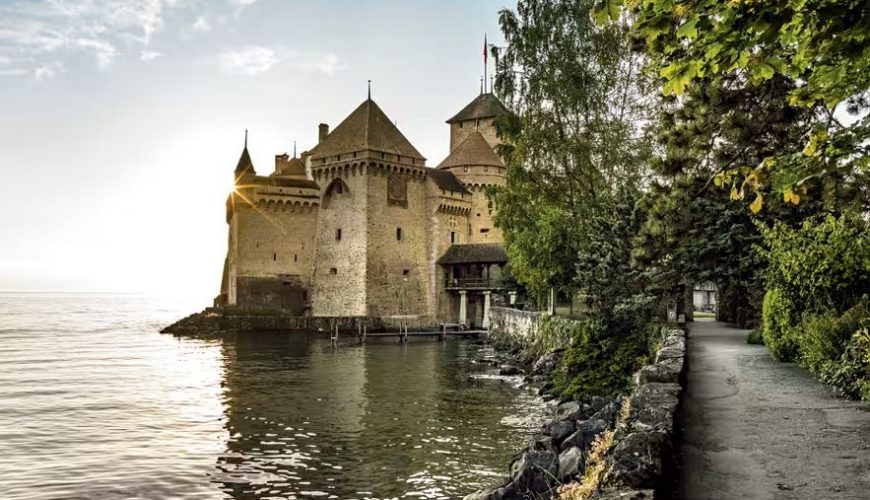
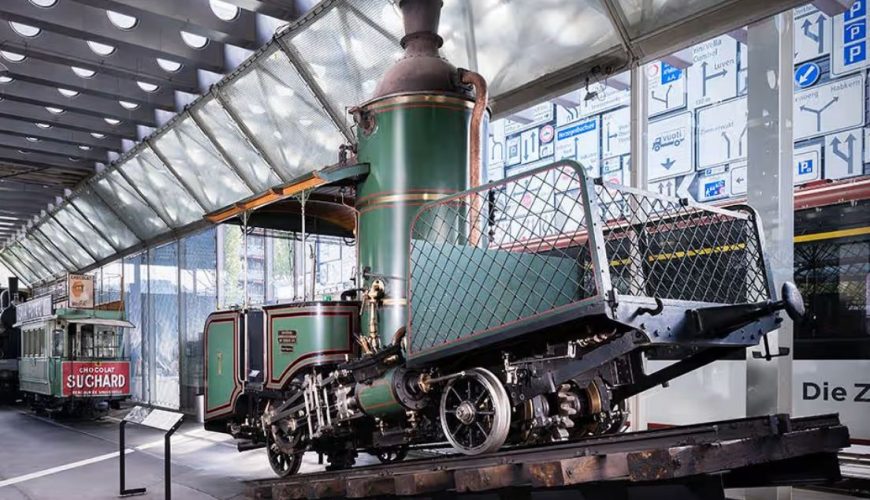
- The National Museum Pass: Free entry into more than 500 museums, castles, and historical sites nationwide, including the Swiss Museum of Transport in Lucerne and Chillon Castle in Montreux.
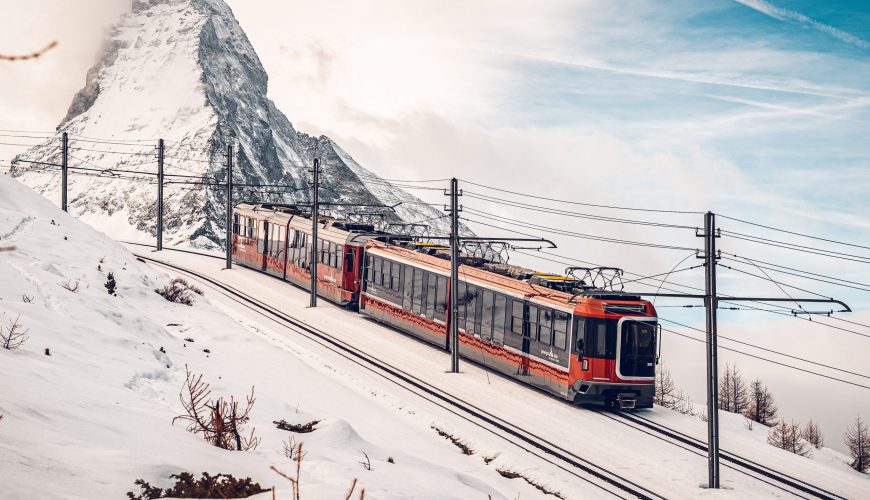
- Mountain Excursion Benefits: While trips up to the peaks of Rigi, Stanserhorn, and Stoos are fully covered by the pass, most other mountain cable cars and cogwheel railways (such as the historic Gornergrat Railway in Zermatt or the Jungfraubahn to the Top of Europe) offer a 50% discount to pass holders.
Tier Structure and Comfort Classes
The Swiss Travel Pass is available for fixed periods of 3, 4, 6, 8, or 15 consecutive days. For travelers who plan to alternate travel days with extended hiking or skiing stops, the Swiss Travel Pass Flex allows you to use your designated travel days flexibly within a one-month window. [10]
The pass is offered in both First Class and Second Class configurations. While Second Class on Swiss trains offers excellent comfort, cleanliness, and spacious seating, First Class upgrades provide a noticeably quieter environment. It features a wider 2+1 seating layout, extra legroom, expanded luggage storage bays, and a relaxed atmosphere during peak travel hours.
Important Seat Reservation Policy Notes
While the Swiss Travel Pass allows you to simply step onto almost any regular scheduled train without a formal ticket, the premium panoramic lines require a vital exception. The Glacier Express and Bernina Express have an obligatorily mandated seat reservation fee. This seat supplement must be paid in advance to secure your specific panoramic window seat allotment, varying in price based on the travel season. The underlying fare ticket remains completely covered by your Swiss Travel Pass.
5. A Perfect Master Itinerary: The Winter Train Experience
To experience the full capability of the Swiss rail system during its most beautiful winter season, this planned 7-day circular itinerary connects the country’s finest scenic routes.
Day 1: Arrival in Lucerne and the Swiss Museum of Transport
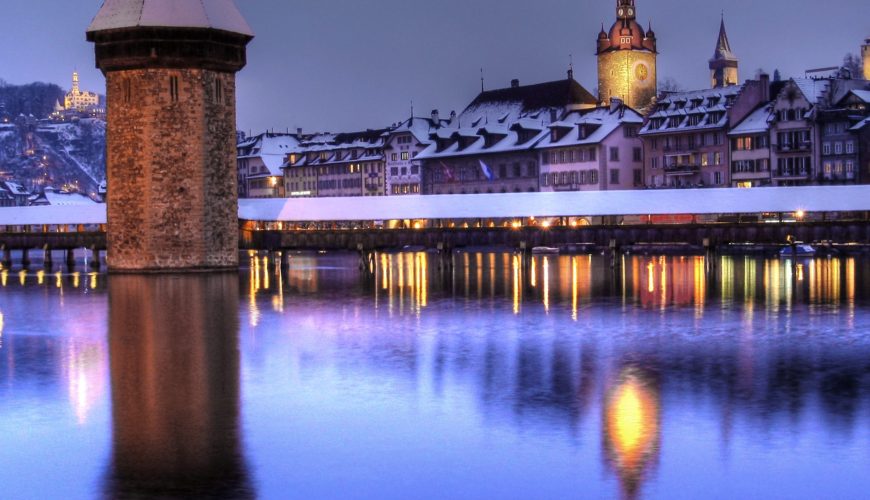
- Route: Arrive in Lucerne via the direct airport train from Zurich or Geneva. After checking into your lakeside boutique hotel, head to the Swiss Museum of Transport (Verkehrshaus). As Europe’s most diverse transport museum, it features large exhibitions tracing the history of rail engineering, early aviation, and modern space exploration. Cap off your evening with a walk across the historic, illuminated Chapel Bridge.
Day 2: Over the Brünig Pass to the Swiss Riviera
- Route: Board the sleek Lucerne-Interlaken Express in the morning. The train climbs past sheer rock walls and alpine waterfalls over the Brünig Pass into the Bernese Oberland. After a brief transit stop in Interlaken, step onto the innovative GoldenPass Express. Watch the automated track-gauge adjustment in Zweisimmen before descending through mountain terrain toward Montreux on Lake Geneva. Palm trees grow here against a backdrop of snow-capped peaks, making a late-afternoon walk along the lakeside promenade to Chillon Castle an ideal way to end the day. [11]
Day 3: Ascending into the Car-Free Alpine Base of Zermatt
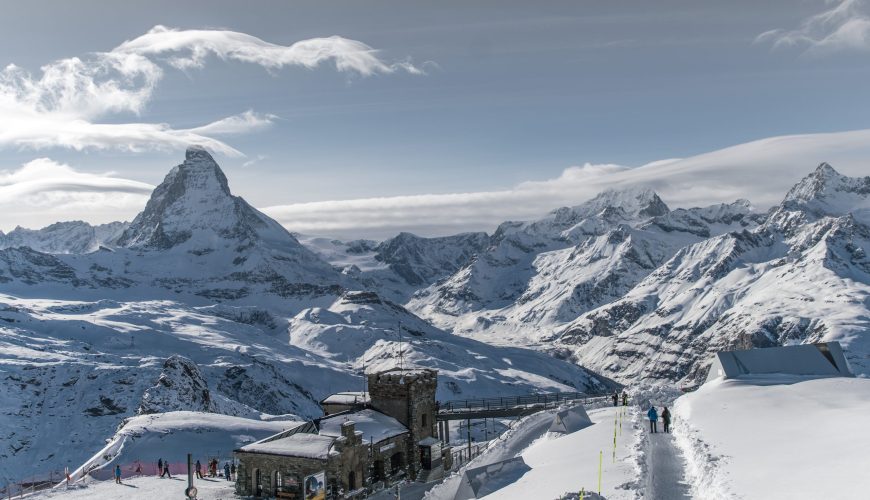
- Route: Travel through the broad Rhône Valley on an SBB InterRegio train to Visp. Here, switch to the narrow-gauge tracks of the Matterhorn Gotthard Bahn, which winds through the steep, narrow rock walls of the Matter Valley. By midday, you will reach the car-free mountain village of Zermatt, surrounded by an incredible panorama of 38 peaks rising above 4,000 meters. In the afternoon, ride the electric cogwheels of the Gornergrat Railway up to the 3,089-meter observation terrace for an open view of the Matterhorn.
Day 4: The Full Glacier Express Premium Journey
- Route: Board the Glacier Express for an iconic eight-hour journey across the heart of the Swiss Alps. The panoramic train travels through the 15-kilometer Furka Base Tunnel, climbs the switchbacks of the Oberalp Pass, and winds through the white limestone cliffs of the Rhine Gorge. A hot lunch is served right at your seat as you take in the views. Arrive in the evening in Chur, Switzerland’s oldest city, featuring an atmospheric, car-free old town. [12]
Day 5: The Bernina Express and a Glacier Fondue Experience
- Route: Depart Chur on the Bernina Express, traveling south along the UNESCO-protected Albula line and over the Landwasser Viaduct. The train climbs up to the Bernina Pass before making its dramatic descent to the Italian town of Tirano. Enjoy a fresh espresso and an old-town walk before starting the return climb in the afternoon. Step off the train at the remote station of Alp Grüm. Here, inside a historic stone mountain lodge overlooking the Palü Glacier, enjoy a traditional Swiss cheese fondue before catching the evening panoramic connection back to Chur. [13]
Day 6: Historic Gourmino Festive Special to Arosa
- Route: Spend your morning on a guided historical walking tour through the winding stone alleys of Chur. In the late afternoon, step into a beautifully preserved piece of rail history: an exclusive run of the vintage Gourmino Dining Car on the steep Arosa Line. The train climbs 1,000 meters over a distance of just 26 kilometers, crossing the iconic Langwieser Viaduct. A seasonal three-course dinner is prepared and served on board as the vintage train travels through the winter night—a perfect finale blending rail heritage and fine dining.
Day 7: Mainline Return and Departure
- Route: Enjoy a final breakfast in Chur before boarding a fast, double-decker SBB InterCity train. The line runs along the shores of Lake Walen and Lake Zurich, returning you smoothly to Zurich Airport or border exit stations like Basel and Konstanz for your journey home.
6. Practical Travel Advice for a Flawless Swiss Rail Vacation
To ensure your journey runs smoothly, keep these practical, expert-approved travel tips in mind:
- Deploy the SBB Mobile App: This mobile application is an invaluable tool for independent travelers. It provides real-time platform changes, precise connection schedules, and current delay notifications across all transport operators in the country. It also features a digital platform sector layout, showing you exactly where first- and second-class cars will stop on the platform, along with estimated passenger crowding data for upcoming departures.
- Streamline Your Luggage Logistics: Managing heavy suitcases through train platforms and tight transfer windows can be tiring. Travelers can take advantage of the SBB’s national luggage transfer service. You can drop off your bags at almost any major rail hub, and they will be delivered directly to your destination hotel. This lets you travel light during the day with just a small daypack, maximizing your comfort in the panoramic cars.
- Smart Onboard Dining Choices: While premium panoramic expresses feature full dining cars and seat-side service, dining options on standard domestic InterCity trains can be limited. It is a good idea to pick up supplies beforehand at your departure station. Larger Swiss railway hubs feature well-stocked RailCity shopping zones with supermarkets (such as Coop, Migros, or Denner) that remain open late and on Sundays, offering fresh sandwiches, salads, and local snacks at standard local prices.
7. The Last Word on Slow Travel through the Alps
A rail holiday through Switzerland is far more than a practical alternative to driving or flying. It is a rewarding embrace of slow travel, where the journey itself becomes the highlight of your vacation. The country’s blend of technological innovation—from the variable gauge wheels of the GoldenPass Express to the historic spiral tunnels of Graubünden—coupled with its absolute reliability, creates a truly unique travel experience.
With the flexibility of the Swiss Travel Pass and the precision of Swiss timing, every mile on the tracks is a pleasure. Whether you are taking in the alpine views from the Excellence Class of the Glacier Express or enjoying a traditional fondue in a vintage Gourmino dining car, traveling by train through Switzerland offers a spectacular new perspective on the world. [14]
To help refine your upcoming Swiss rail itinerary, sharing a few extra details will allow me to narrow down your options:
- Your preferred travel season (are you looking for a magical winter journey through the snow, or do you prefer exploring the alpine passes in spring or summer?)
- Your ideal accommodation style (do you lean toward historic, traditional alpine hotels or modern wellness resorts?)
- Your culinary focus (would you like to emphasize upscale dining experiences on board the trains, or sample local gastronomy in the old towns along your route?)
Comment (0)