


ATHENS TRAVEL GUIDE | ACROPOLIS | LUXURY HOTELS | SPORT | MOTORHOME GREECE
Athens: Your Gateway to Ancient Greece — The Complete Guide for Overseas Visitors
The Parthenon. Souvlaki at midnight in Monastiraki. The marble stadium where the modern Olympics began. The Aegean gleaming 14 floors below your hotel terrace. Athens is 3,500 years old and absolutely, irreversibly alive.
Most overseas visitors to Europe put Athens on their itinerary and then, somehow, arrive without quite believing what they are about to see. The Acropolis, in photographs, looks like a noble ruin. In person — approached from the Monastiraki metro station on a clear morning, with the city still quiet below and the white marble catching the early light — it is something else entirely: a physical presence that connects you, across 2,500 years, to the specific people who built it. Phidias, the sculptor. Iktinos and Kallikrates, the architects. Pericles, who commissioned the whole project and watched from the Agora below as it rose.
Athens rewards the overseas visitor who arrives with time and curiosity rather than a checklist. The city is not simply a backdrop for the Acropolis — it is a fully functioning, sprawling, chaotic, delicious, occasionally baffling Mediterranean capital of 3.2 million people, with neighbourhoods as distinct as Paris’s arrondissements, a restaurant scene that has transformed itself in the last decade, a coastline of remarkable beaches 30 minutes from the city centre, and a passion for basketball and football that has nothing to do with ancient history and everything to do with being Greek in the 21st century.
This guide is written specifically for visitors from the United States, Canada, Australia, New Zealand, Japan, South Korea, Latin America and Asia who are including Athens in a European itinerary. It covers everything from getting from Athens International Airport to your hotel, to booking Acropolis tickets from the other side of the world, to playing golf 20 minutes from Syntagma Square, to renting a motorhome and driving the Peloponnese, to the payment security you need when booking online from abroad. On sportmeeting.de you will find organised tours and round trips through Greece from Germany’s leading specialist operators, open to international visitors.
In this guide
- Why Athens belongs on your European itinerary
- Athens in context: what 3,500 years of history actually means on the ground
- The Acropolis: how to visit, what to look for, what to know
- The Acropolis Museum: one of Europe’s great museum buildings
- Athens neighbourhood by neighbourhood
- The best day trips from Athens
- The Athens Riviera: beaches, resorts and the azure Saronic Gulf
- Where to stay: luxury hotels with Acropolis views
- Golf and tennis in and around Athens
- Greek sport: Panathinaikos, Olympiakos and the basketball obsession
- Greece by motorhome: renting from Athens and driving the country
- Organised tours from Athens: what the specialist operators offer
- Getting to Athens from overseas
- Booking securely from abroad: payment safety on sportmeeting.de
- When to come and practical information
- Plan your Athens and Greece trip on sportmeeting.de
1. Why Athens belongs on your European itinerary
The practical case for Athens as part of a European trip is straightforward: it is only 3 hours by air from every major European hub, which means it fits into a multi-city European itinerary without eating your entire schedule in transit. The combination of Athens (3 nights minimum; 5 nights ideal) with Rome, Barcelona, Paris or Istanbul creates a European trip with a depth that no single-city visit can match.
But the deeper case for Athens is this: if you are coming to Europe to understand where Western civilisation came from — and for visitors from English-speaking countries built on British legal, philosophical and democratic traditions, this is not an abstract question — then Athens is where that story starts. Not in Rome, where the Romans borrowed Greek ideas and gave them political form. Not in Paris, where the Enlightenment developed Greek ideas into modernity. In Athens, where democracy was invented (not perfectly, not for everyone, but invented here first), where Socrates asked the questions that philosophy has been answering ever since, where the theatre was conceived as a public art form, where the Olympic Games began.
Standing on the Acropolis and looking down at Athens, you understand something that no book quite communicates: this is not a place that influenced Western civilisation. It is the place where Western civilisation started.
2. Athens in context: 3,500 years of history on the ground
Athens is unusual among the world’s great historical cities in that its ancient monuments are not separated from the city in an archaeological zone or museum precinct. They are in the city, surrounded by the city, embedded in the urban fabric. You walk from your hotel in Monastiraki, turn a corner, and find yourself standing next to the Tower of the Winds — a 1st-century BCE octagonal marble tower that told time using water, wind direction and sunlight, and that still stands perfectly, being slowly cleaned by the atmospheric pollution of the 4.3 million cars in greater Athens.
| Period | What Athens was | What you can still see |
| Mycenaean (1400–1100 BCE) | First fortified settlement on the Acropolis rock; Bronze Age warrior culture | Remnants of Mycenaean walls on the Acropolis; Bronze Age finds in National Museum |
| Archaic (700–480 BCE) | Emerging city-state; Solon’s democratic reforms; first great temples | Kerameikos cemetery (most evocative ancient site in Athens; often overlooked) |
| Classical/Golden Age (461–404 BCE) | Pericles; the Parthenon; Athenian democracy; Socrates; Sophocles; Thucydides | The Acropolis; the Agora; Dionysus Theatre; Hephaestus Temple (best-preserved ancient Greek temple in the world) |
| Hellenistic/Roman (338 BCE–395 CE) | Political decline; cultural influence maintained; Roman emperors rebuild Athens | Hadrian’s Arch; Hadrian’s Library; Olympieion (largest Greek temple); Tower of the Winds |
| Byzantine/Ottoman (395–1822 CE) | Provincial city; Parthenon becomes church, then mosque | Byzantine churches in Monastiraki; Tzistarakis Mosque (now a museum) |
| Modern Greece (1822–present) | Independence; capital since 1834; 1896 Olympics; 2004 Olympics | Panathenaic Stadium (marble; 1896); Olympic Stadium (Calatrava roof; 2004); Acropolis Museum (2009) |
3. The Acropolis: how to visit, what to look for, what to know
The Acropolis requires a plan. In July and August, over 15,000 people visit per day, and without a timed ticket booked in advance, you may wait 90 minutes in the sun at the entrance. From North America, Australia and Asia, you are booking tickets while the site is asleep in Greece; do this at least two weeks ahead in peak season.
The four buildings you are there to see
- The Parthenon (447–432 BCE): Designed by Iktinos and Kallikrates under Phidias’s supervision; dedicated to Athena Parthenos (Athena the Virgin); Doric order; 46 exterior columns; the deliberate curvature of the columns and stylobate (floor platform) corrects for the optical illusion that makes perfectly straight verticals look slightly concave — a refinement that no other ancient building achieved at this scale. The frieze (originally painted; fragments in Athens and London) depicted the Panathenaic procession — the festival held every four years in which the whole city marched to the Acropolis
- The Erechtheion (421–406 BCE): The building with the Caryatids — the six draped female figures who serve as columns on the south porch. Five originals are in the Acropolis Museum (the sixth is in the British Museum in London); the figures on the building are high-quality replicas. The Erechtheion stood on the most sacred ground of the Acropolis — the spot where Athena and Poseidon competed for patronage of the city, and where Athena planted the original olive tree
- The Propylaea (437–432 BCE): The ceremonial entrance gateway to the Acropolis; the physical and psychological transition from the secular city below to the sacred precinct above; its architect, Mnesikles, solved the problem of building a symmetrical entrance on an asymmetrical rock with a technical ingenuity that has been admired by architects ever since
- The Temple of Athena Nike (427–424 BCE): The small Ionic temple at the southwest corner; its sculpted frieze depicts the Battle of Marathon and other Persian War victories; the parapet shows Nike (Victory) adjusting her sandal — one of the most graceful sculptural gestures in Greek art, and now in the Acropolis Museum
| Acropolis ticket — everything you need to know
Standard ticket: EUR 20 (April–October); EUR 10 (November–March). Combination ticket: EUR 30 (valid 5 days; includes Acropolis + 7 other sites: Ancient Agora, Dionysus Theatre, Kerameikos, Hadrian’s Library, Olympieion, Roman Agora, Lykeion). Book online at etickets.tap.gr — the official Greek Ministry of Culture ticketing platform. Do not buy through third-party resellers (they charge significantly more for the same ticket). Best visiting times: opening time (8:00 a.m.) or after 5:00 p.m. when the direct sun is less intense and the light is warmer. Avoid 11:00 a.m.–3:00 p.m. in summer — marble at 40°C with direct sun is genuinely dangerous. |
4. The Acropolis Museum: one of Europe’s great museum buildings
The Acropolis Museum, designed by Swiss-American architect Bernard Tschumi and opened in 2009 after decades of planning and controversy, solves a problem that had never been satisfactorily solved before: how to build a modern museum directly above an ancient city without obscuring the archaeology beneath it. The solution — a building raised on 100 reinforced concrete pillars above the excavated 5th-century neighbourhood, with glass floors through which you can see the ancient streets — is one of the most elegant architectural concepts in recent European museum history.
- Ground floor: The Acropolis Slopes gallery; finds from the sanctuaries, spring houses and dwellings on the slopes of the Acropolis; the glass floor above the excavations; chronologically arranged from Bronze Age to Roman period
- First floor: The Archaic gallery; the Kore and Kouros statues (the painted stone figures of maidens and youths from the 6th century BCE); the Calf Bearer; the original Caryatids from the Erechtheion (five of the six; breathtaking up close)
- Top floor (Parthenon Gallery): The reconstructed Parthenon frieze on a glass structure the exact dimensions of the Parthenon’s upper level; the surviving original marble sections alternate with white plaster casts of the sections now in London, Paris and elsewhere; the floor-to-ceiling windows look directly at the Parthenon 300 metres away — the museum’s most powerful spatial experience
- Practical: EUR 15 (adults); open daily except Monday; Friday evening (until 10:00 p.m.) is the least crowded; the rooftop restaurant is open for lunch and dinner with unobstructed Acropolis views — worth a reservation
5. Athens neighbourhood by neighbourhood: a walker’s guide
Athens is a city of distinct neighbourhoods — not always architecturally distinct (large parts of Athens were built in the same hurried post-WWII modernist style), but experientially distinct in their character, pace and the kind of Athenian life they represent.
| Neighbourhood | Character | Walk there for |
| Monastiraki | The beating heart of tourist Athens; markets, souvlaki, backpackers, ancient ruins above and below | The flea market (especially Sunday morning); the best souvlaki in Athens; Hadrian’s Library; Monastiraki Square at night |
| Plaka | The old Athens neighbourhood below the Acropolis; touristy but genuinely beautiful in its maze of whitewashed lanes | Anafiotika (a Cycladic island village transplanted to the Acropolis slopes in the 19th century; magical and almost always quiet); the small Byzantine churches |
| Psirri | Street art, bars, bouzouki clubs, restaurants in renovated neoclassical buildings; the Athens that young Athenians actually use | Night out; live music (rebetiko, the Greek blues, is played in basement clubs here); art galleries |
| Syntagma | Administrative and commercial centre; Parliament; main square; major transport hub | Evzone guards (the soldiers in traditional dress guarding the Parliament; formal changing ceremony Sunday 11:00 a.m.) |
| Kolonaki | The elegant hill neighbourhood; galleries, designer boutiques, the Benaki Museum, the Museum of Cycladic Art | Benaki Museum (the finest private collection of Greek art across all periods); Lykavittos Hill for the city panorama |
| Koukaki | Gentrifying neighbourhood between the Acropolis Museum and Filopappou Hill; quiet cafés, local restaurants | Breakfast at a Koukaki café; the Filopappou Hill walk (best free Acropolis view in Athens; 20 minutes from Monastiraki) |
| Exarchia | University neighbourhood; political, anarchist, literary; bookshops, record stores, small concert venues | The National Archaeological Museum (the finest collection of ancient Greek art in the world; on the Exarchia edge); the neighbourhood’s atmosphere is best experienced in daylight |
6. The best day trips from Athens
| Destination | Distance | Best transport | What makes it worth the trip | Time needed |
| Cape Sounion | 70 km S | Bus from Areos Park (2 hrs) or rental car (1 hr) | The Temple of Poseidon (440 BCE) on a cliff above the Aegean; Lord Byron carved his name on a column in 1810; at sunset the light on the marble and the sea below is extraordinary | Half day; time departure for sunset |
| Delphi | 180 km NW | Bus (3 hrs) or tour; car best | The sanctuary of Apollo where the ancient world came for prophecy; the Charioteer (one of the finest surviving bronze statues of the classical period) in the museum; the theatre and stadium on the mountainside | Full day; start early |
| Epidaurus | 155 km SW | Bus (2.5 hrs) or car | The best-preserved ancient Greek theatre in the world (360 seats; 4th century BCE); the acoustics — a whisper from the stage is audible at the top row — are the most famous in the ancient world; summer performances (July–August) are an unmissable experience | Full day; evening if attending a performance |
| Mycenae and Nafplio | 120 km SW | Car or tour (2 hrs) | The Bronze Age citadel of Agamemnon; the Lion Gate (1250 BCE; the oldest monumental sculpture in Europe); the Treasury of Atreus (beehive tomb); Nafplio is Greece’s most beautiful small town | Full day; stay overnight if possible |
| Marathon | 42 km NE | Bus (1 hr) or rental car | The burial mound of the 192 Athenians who died defeating the Persian army in 490 BCE; the small museum; the run that gave marathon running its name; not spectacular but historically resonant | Half day; combine with a swim at nearby Schinias beach |
7. The Athens Riviera: beaches, resorts and the Saronic Gulf
The Athens Riviera — the Saronic Gulf coastline running south from Faliro to Cape Sounion — is the part of Athens that most first-time overseas visitors do not know exists. Thirty minutes by tram from Syntagma Square, the coast offers clean, warm water (Mediterranean temperatures peak at 26°C in August), a series of beach clubs ranging from affordable public beaches to the exclusive Astir Beach, and a coastal atmosphere that is entirely different from the archaeological intensity of the city centre.
- Glyfada: The most developed beach suburb; mix of restaurants, bars, shopping and beach clubs; 30 minutes by tram from Syntagma; the beach here is organised and clean; good for a half-day break from sightseeing
- Lake Vouliagmeni (Limni Vouliagmenis): A brackish natural lake connected to the sea; constant water temperature of 22°C year-round; used therapeutically for joint and skin conditions; surrounded by a rocky landscape of eroded limestone; entry approximately EUR 13; 35 minutes from Athens by car
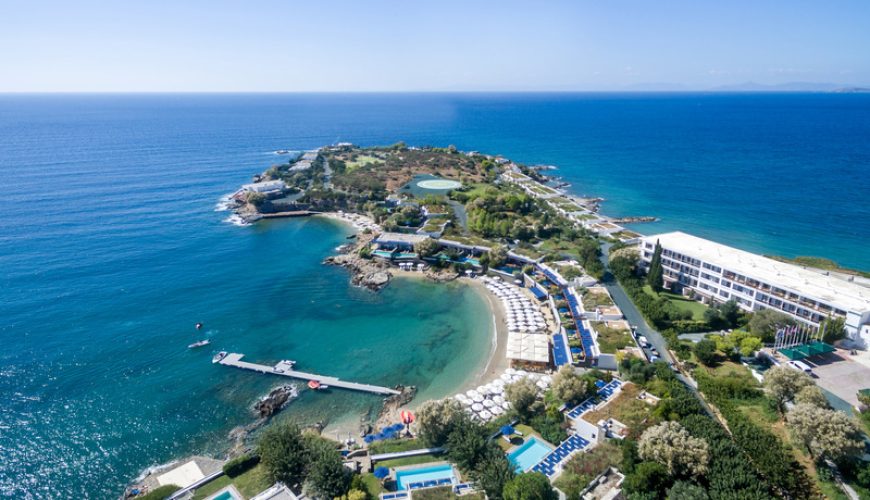
- Astir Beach (Vouliagmeni): The most exclusive beach club on the Riviera; attached to the Four Seasons Astir Palace resort; pine-shaded private beach; day entry approximately EUR 30–80 depending on season; restaurants and bars at beach level
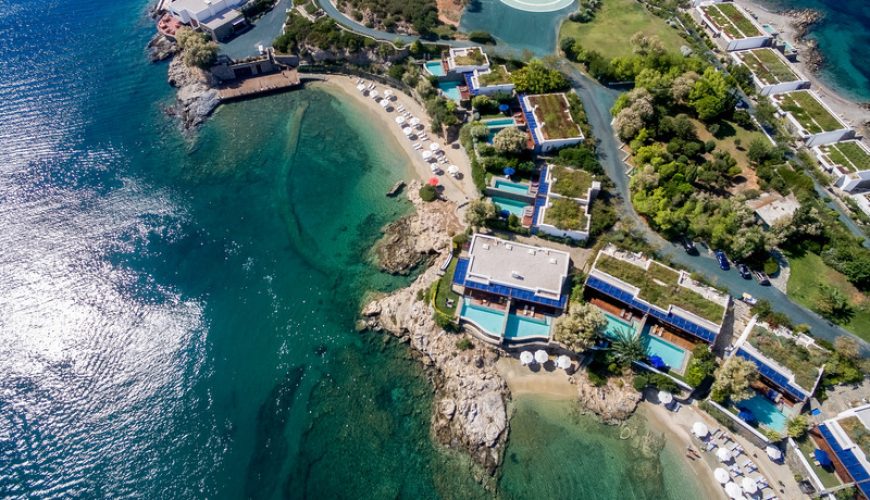
- For overnight stays: The Four Seasons Astir Palace Beach Hotel in Vouliagmeni — 35 km south of Athens — is the finest beach resort in Attica; private beach, five pools, six restaurants, own jetty; for visitors who want to combine a cultural base in Athens with beach time on the Riviera, a split itinerary (3 nights in Athens, 3 nights Astir Palace) is a frequently recommended option
8. Where to stay: luxury hotels with Acropolis views and beyond
| Hotel Grande Bretagne ★★★★★ — Syntagma Square, Athens
The Grand Dame of Greek hospitality. The Grande Bretagne has occupied its position on Syntagma Square since 1874, hosted Churchill, Onassis and every Greek head of state since independence, and has been the operational and social centre of Athens for foreign visitors for 150 years. The GB Roof Garden restaurant offers a direct Acropolis view and is considered one of the best hotel dining experiences in the city. The rooftop pool overlooking the square and the Acropolis is the hotel’s most-photographed feature. For overseas visitors who want to stay at the address that carries the weight of modern Greek history, there is no equivalent. From approximately EUR 350–800 per night for standard rooms; suites significantly more. |
| Hotel Electra Palace ★★★★★ — Nikodimou Street, Plaka
The Electra Palace in the Plaka neighbourhood — in a quiet lane 300 metres from the Acropolis Museum — offers what is widely considered the finest Acropolis view from a hotel pool in Athens: the rooftop pool looks directly at the illuminated Parthenon, and on evenings when the sound-and-light show is running, the experience is extraordinary. For first-time visitors to Athens who want to be as close as possible to the ancient city, the Electra Palace’s combination of location, view and quality is difficult to beat. From approximately EUR 200–450 per night. |
| Four Seasons Astir Palace Beach Hotel ★★★★★ — Vouliagmeni, Athens Riviera
35 kilometres south of Syntagma Square on the Athens Riviera; the finest beach resort in Attica. The original Astir Palace opened in the 1960s as the playground of Greek shipping magnates and visiting royalty; the Four Seasons took management in 2019 after a complete renovation. Three private beaches, five pools, six restaurants, a full Four Seasons spa and a jetty for water sports. For overseas visitors who want to pair a cultural visit to Athens with genuine beach and resort time, the split itinerary — city hotel for the first half, Astir Palace for the second — is widely recommended by travel agents specialising in Greece. From approximately EUR 500–1,500 per night. |
| Hotel | Category | Best for | Price range/night |
| NJV Athens Plaza | 5★ Syntagma | Business and leisure; central; Acropolis rooftop bar | EUR 180–350 |
| Periscope Hotel | Boutique 4★ Kolonaki | Design travellers; quiet; rooftop terrace | EUR 120–200 |
| Athens Was | Boutique 4★ Monastiraki | Acropolis balcony views; young/design-forward; central | EUR 100–180 |
| Hotel Herodion | 4★ Makrigianni | Walking distance to Acropolis Museum; pool; calm | EUR 120–220 |
| The Plaka Hotel | 4★ Plaka | Rooftop Acropolis view; traditional neighbourhood | EUR 130–250 |
Grand Resort Lagonissi
9. Golf and tennis in and around Athens
Golf
Athens is not a traditional golf destination — but the reality is that the city has a perfectly good 18-hole course 15 kilometres south of Syntagma Square, and one of the finest golf resorts in Europe (Costa Navarino, with four 18-hole courses) is a 3.5-hour drive away on the Peloponnese. For overseas visitors who build golf into their European itineraries, this combination is worth knowing.
| Golf Course | Distance from Athens | Holes | Green fee | Character |
| Glyfada Golf Club | 15 km S (Glyfada) | 18 holes | EUR 40–60 | The most accessible Athens course; on the Riviera; public; good condition; combine with a beach day in Glyfada |
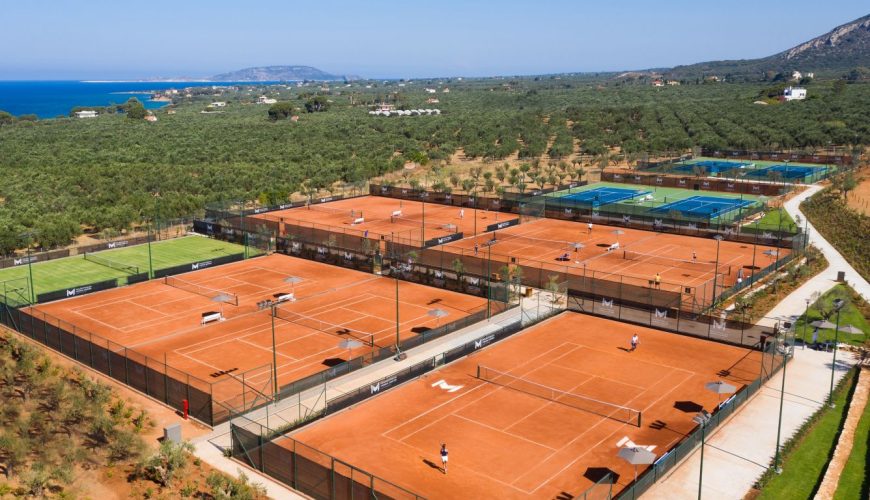
| Costa Navarino (Navarino Dunes/Bay/Hills/International) | 345 km SW (Peloponnese) | 4 × 18 holes (72 holes total) | EUR 90–160 | One of Europe’s best golf resorts; four championship courses; W and Romanos hotels; spectacular setting |

Tennis
- Athens Lawn Tennis Club (ALTC, est. 1895): One of the oldest tennis clubs in Greece; clay courts in the Kolonaki neighbourhood; guest play possible with hotel recommendation or member introduction
- Olympic Tennis Centre (Faliro): The tennis facility built for the 2004 Olympics remains operational; clay and hard courts; open to the public; one of the most historically interesting places to play a set of tennis on Earth — on the same courts where Federer, Hewitt and Henman competed in the Olympic draw
- Four Seasons Astir Palace tennis courts: Available to hotel guests; clay courts on the Riviera estate; coaching available
10. Greek sport: Panathinaikos, Olympiakos and the basketball obsession
Sport in Greece is tribal in a way that can be startling to overseas visitors who are accustomed to more subdued sporting cultures. The rivalry between Olympiakos (from Piraeus, the port city adjacent to Athens) and Panathinaikos (from Athens itself) runs across football, basketball, water polo and almost every other competitive sport. It is not simply a sporting rivalry — it reflects a deeper social and class division between port-city and capital that has been part of Athenian life for a century.
Football
- Olympiakos Piraeus: Greece’s most successful club (over 47 Super League titles) and the only Greek club to win a major European trophy (Conference League, 2024); the Karaiskakis Stadium in Piraeus (31,000 seats) is one of the most atmospheric football grounds in southern Europe; tickets from approximately EUR 15
- Panathinaikos: 28 league titles; reached the 1971 European Cup Final (losing to Ajax); OAKA (Olympic Stadium, 72,000 capacity); tickets from EUR 15
- AEK Athens: 13 league titles; founded in 1924 by Greek refugees from Constantinople; the new Opap Arena (32,000 seats) opened in 2022 and is the finest modern football stadium in Greece
Basketball — the national religion
Basketball in Greece is not a secondary sport. Panathinaikos Basketball has won six EuroLeague titles (the European Champions League of basketball) and is one of the most successful clubs in the history of European basketball. Olympiakos Basketball has won three. A EuroLeague game in Athens — October to April season — is one of the loudest, most intense sporting atmospheres in Europe; tickets start from approximately EUR 15 and are available at the arena box office or online.
11. Greece by motorhome: renting from Athens and driving the country
Greece is one of the most rewarding motorhome destinations in Europe — a fact that is well known to German and Dutch travellers and almost unknown to visitors from North America and Australia. The road network, comprehensively improved in the years before the 2004 Olympics, now connects all major destinations with motorways; the camping infrastructure includes hundreds of well-equipped sites; and the freedom to stop wherever a coastal view demands it, or to park by a beach that appears on no map, is the central pleasure of Greece by motorhome.
| Rental company | Pickup location | Vehicles | Price/day | Note |
| Hellas Camper | Athens (airport pickup possible) | Vans to large motorhomes | EUR 70–160 | Established Greek specialist; good English support; hellascamper.gr |
| Drive2Greece | Athens city | Compact to luxury | EUR 80–180 | Athens-based; airport transfer to depot available; drive2greece.com |
| Roadsurfer | Athens (via European network) | Modern fleet; well-maintained | EUR 100–180 | German company; professional fleet; roadsurfer.com; English interface |
| Indie Campers | Athens | Converted vans; good digital experience | EUR 70–150 | Easy online booking; good app; indiecampers.com |
Three classic motorhome routes from Athens worth planning: The Peloponnese Circuit (7–10 days; Athens → Corinth → Mycenae → Nafplio → Epidaurus → Olympia → Pylos/Costa Navarino → Sparta → Monemvasia → back to Athens; approximately 800 km) is the single most historically rich motorhome route in Greece. The Northern Greece Route (10–14 days; Athens → Delphi → Meteora → Thessaloniki → Chalkidiki beaches → back; approximately 1,200 km) adds the extraordinary Meteora rock monasteries and the best beaches in mainland Greece. The Northwest Greece Route (8–10 days; Athens → Delphi → Parga on the Ionian coast → Ioannina → Meteora → back) covers the most dramatic and least-visited landscapes of the country.
12. Organised tours from Athens: what the specialist operators offer
For overseas visitors who want the historical and cultural context of Greece provided by expert guides — rather than pieced together from audio guides and guidebooks — organised cultural tours from Germany’s leading specialist operators offer an option that is not easily replicated by independent travel. These operators run tours for international visitors alongside German-speaking travellers, with English-language support available.
| Operator | Greece/Athens programme | Group size | Best for |
| Studiosus | Athens cultural city tours; Classical Greece round trips (Athens + Delphi + Epidaurus + Mycenae + Olympia) with PhD archaeologist guides; the deepest available cultural experience | 12–20 | Visitors who want genuine academic depth in what they see and hear |
| Gebeco | Greece round trips; Athens + Peloponnese + Greek islands; well-balanced programme; good for first-time Greece visitors who want structure and highlights | 12–20 | First-time Greece visitors; balanced cultural programme |
| Hauser Exkursionen | Active Greece; walking tours in Attica; Peloponnese hiking; Athens as base for nature tours | 6–14 | Active visitors; hikers; those wanting a physical dimension to their cultural travel |
| Lernidee | E-bike tours; Athens Riviera by e-bike; Peloponnese e-bike round trip; Kap Sounion sunset ride | 8–16 | Cyclists; active travellers; people who want to cover distance at their own pace with electric assistance |
13. Getting to Athens from overseas
| From | Routing | Flight time | Best carrier | Note |
| New York (JFK) | Via Frankfurt, London, Paris or Amsterdam → Athens | 10–12 hrs total | Lufthansa via FRA; British Airways via LHR; KLM via AMS | No direct US–Athens flights currently; Frankfurt connection is smoothest; Lufthansa has excellent ATH service |
| Los Angeles (LAX) | Via Frankfurt or London → Athens | 14–16 hrs total | Lufthansa via FRA; British Airways via LHR | West Coast adds 3–4 hours; overnight transatlantic then morning connection works well |
| Toronto (YYZ) | Via Frankfurt, London or Amsterdam → Athens | 11–13 hrs total | Air Canada via FRA or LHR; Lufthansa | Air Canada–Lufthansa partnership offers smooth Toronto–Frankfurt–Athens routing |
| Miami (MIA) | Via Frankfurt or London → Athens | 11–13 hrs total | Lufthansa via FRA; British Airways via LHR | Miami has good European connections; Lufthansa nonstop MIA–FRA then ATH |
| Mexico City (MEX) | Via Madrid or Frankfurt → Athens | 14–16 hrs total | Iberia via MAD then Aegean to ATH; Lufthansa via FRA | Iberia hub through Madrid with onward Aegean connection works well |
| São Paulo (GRU) | Via Lisbon, Madrid or Frankfurt → Athens | 16–18 hrs total | TAP via LIS; Iberia via MAD; Lufthansa via FRA | TAP Portugal via Lisbon is often the most convenient South American routing to Greece |
| Sydney (SYD) | Via Singapore, Dubai or Frankfurt → Athens | 22–25 hrs total | Singapore Airlines via SIN; Emirates via DXB | Singapore Airlines via SIN–FRA or via SIN–ATH direct (seasonal); Emirates via DXB is reliable |
| Tokyo (NRT/HND) | Via Frankfurt or Helsinki → Athens | 14–16 hrs total | ANA or JAL via FRA; Finnair via HEL | Finnair’s Helsinki hub is the fastest Japan–Athens routing; HEL–ATH is 3 hours |
| Seoul (ICN) | Via Frankfurt or Helsinki → Athens | 13–15 hrs total | Korean Air via FRA; Finnair via HEL | Korean Air ICN–FRA then FRA–ATH; Finnair HEL–ATH is short final leg |
| Singapore (SIN) | Via Frankfurt or direct (seasonal) → Athens | 12–14 hrs total | Singapore Airlines | Singapore Airlines seasonal direct SIN–ATH in summer; Frankfurt connection otherwise |
Athens International Airport Eleftherios Venizelos is 27 kilometres east of Syntagma Square. Metro Line 3 (blue line) connects the airport directly to Syntagma in 45 minutes for EUR 10 (return EUR 18) — the easiest and most comfortable airport transfer in Athens. Taxis operate on fixed-rate zones: airport to central Athens is approximately EUR 40–50 during the day and EUR 55–65 at night (midnight to 5 a.m.). Uber operates in Athens and is generally slightly cheaper than metered taxis.
14. Booking securely from abroad: payment safety on sportmeeting.de
| Secure Online Booking from the USA, Canada, Australia, Japan and Asia — What You Need to Know
Booking European travel from outside Europe raises legitimate questions about payment security, consumer protection and what happens if something changes. Here is what overseas visitors should know when booking through sportmeeting.de: Payment security: sportmeeting.de uses SSL/TLS encrypted payment processing for all transactions. Credit card payments are processed through established European payment gateways (Stripe, PayPal or direct bank transfer options) with full PCI DSS compliance. Your card details are never stored on the sportmeeting.de server. Currency: All prices on sportmeeting.de are quoted in Euros (EUR). Your bank or card provider will apply the conversion to your home currency at the prevailing rate at the time of transaction. For overseas visitors, a credit card with no foreign transaction fees is recommended (many US, Canadian, Australian and Japanese cards offer this). Consumer protection (EU regulations): Bookings made through sportmeeting.de with German-licensed tour operators (Studiosus, Gebeco, Hauser, Lernidee, Wikinger and others) are covered by the EU Package Travel Directive — one of the strongest consumer protection frameworks in the world for travel. This means: you are entitled to a full refund if the operator cancels your tour; you have the right to transfer your booking to another person; and in the event of operator insolvency, your payments are protected by the mandatory German travel bond (Reisepreissicherungsschein). Insolvency protection: All licensed German tour operators must provide an insolvency protection certificate (Sicherungsschein) from an approved provider. This certificate protects your payment in the event of operator insolvency — your money is ringfenced. Ask for this certificate at the time of booking. Flight bookings: Flights are not included in most sportmeeting.de packages (you book flights separately). For overseas visitors booking transatlantic or transpacific flights, book directly with airlines or through established booking platforms (Expedia, Kayak, Google Flights) for maximum flexibility and consumer protection. Cancellation and changes: European tour packages have clearly defined cancellation terms regulated by EU law. Read the booking conditions carefully; most operators offer tiered cancellation penalties that reduce as the departure date recedes. Contact for overseas visitors: sportmeeting.de support is available in German and English. For North American, Australian and Asian visitors, email contact is the most efficient method; response times are typically within 24 hours on German business days.
15. When to come and practical information
Practical information for overseas visitors
16. Plan your Athens and Greece trip on sportmeeting.deAthens is the beginning of an understanding of Europe that stays with you. The visitor who has stood on the Acropolis and connected the marble under their feet with the democracy and philosophy that originated on this hill carries something back from that experience that no classroom provides. Whether you are planning 3 days in Athens as part of a larger European circuit, or a 14-day Greece round trip that takes in the Peloponnese, Delphi and Meteora, or a motorhome adventure along the Ionian coast — sportmeeting.de brings together the options from Germany’s leading specialist operators in one bookable, secure platform.
The ancient Athenians had a word — xenia — for the obligations of hospitality: the duty of a host to a stranger, and the duty of a stranger to honour that hospitality. Greece has been practising xenia for 3,000 years. When you arrive in Athens and the taxi driver from the airport asks where you are from and genuinely wants to know, when the taverna owner in Monastiraki recommends the dish you did not order because it is better than what you did, when a stranger on the Metro shows you which stop to get off for the Acropolis — that is xenia, still operating, across three millennia, in the ordinary transactions of a city that has been welcoming strangers longer than almost anywhere on Earth. sportmeeting.de helps you plan the visit. Athens will handle the welcome. Athen Rundreise: Geschichte, Tophotels, Sport und Wohnmobilreisen durch GriechenlandA warm welcome to travellers from Norway, USA, UAE, Netherlands, Italy and all over Europe and the world
Hjertelig velkommen – Varmt välkommen – Hjertelig velkommen – Sydämellisesti tervetuloa – Serdecznie witamy – Bienvenue chaleureuse – Hartelijk welgekomen – ¡Bienvenidos de coração! – Un caloroso benvenuto – A warm and hearty welcome – Cœur de bienvenue – Srdečně vítáme – Srdečne vítame – Szívélyes üdvözlet – Srdačno dobrodošli – Topel dobrodošli – Късно добре дошли – Bun venit călduros – Kalossorisma – Kordialmente bonbini – Herzlich Willkommen – A warm American welcome
.
|
Comment (0)