


INDIA TRAVEL GUIDE | BEATLES ASHRAM RISHIKESH | YOGA | CULTURE | SPIRITUALITY
India and the Beatles Ashram: A Travel Guide to Rishikesh, the White Album and the Journey of a Lifetime
In February 1968, four musicians from Liverpool traded Savile Row for kurtas and marigold garlands and walked through dense Himalayan forest to a hilltop ashram above the Ganges. What they wrote there changed music forever. Today you can stand in the same rooms.
There is a room in a ruined ashram on the banks of the Ganges where the walls are covered in murals of four young men with moustaches, flowers and the particular look of people who have discovered something important. The room is called the Beatles Gallery. The ashram, formally known as Chaurasi Kutia, is now called the Beatles Ashram. And what happened in this forest above Rishikesh in the spring of 1968 — what was written in these meditation cells and rehearsed in this lecture hall — was the White Album: 30 songs, the most diverse and most analysed record in the history of popular music, written by four people sitting by a river in northern India at the foot of the Himalayas.
This guide is for two kinds of traveller. The first is the India first-timer who wants to understand what India has to offer — the Taj Mahal and the Golden Triangle, the palaces of Rajasthan, the backwaters of Kerala, the burning ghats of Varanasi — and wants to plan a trip that covers as much of this extraordinary country as possible in two or three weeks. The second is the traveller who has a specific question: what exactly happened in Rishikesh in 1968, where is the ashram, can you still visit it, and what does it feel like to stand where John Lennon sat and wrote ‘Dear Prudence’ while Mia Farrow’s sister refused to leave her room? The answer to the second question is yes, you can, and it feels like nothing else you have ever experienced as a traveller.
In this guide
- India: the most intense journey you will ever take
- The Golden Triangle: Delhi, Agra and Jaipur
- Rajasthan: the India of the imagination
- Rishikesh: the yoga capital of the world
- The Beatles Ashram: the full story
- What was written in Rishikesh: the White Album songs
- Donovan, Mike Love and the other famous guests
- Visiting the Beatles Ashram today: practical guide
- Varanasi: the oldest living city on Earth
- Kerala: the green south
- India tour itineraries: how to plan your trip
- Getting to India
- Visas and entry requirements
- When to go: India’s seasons
- Find your India tour on sportmeeting.de
1. India: the most intense journey you will ever take
India is not a destination. It is an experience — and an experience that makes every other travel experience feel slightly underlit by comparison. The scale is the first thing: 3.3 million square kilometres, 1.44 billion people, 22 official languages and hundreds of dialects, six major religions practised simultaneously in the same city on the same street. The sensory density is the second thing: the smell of incense and diesel and marigolds; the sound of temple bells and car horns and a man calling the morning prayer; the colour of a sari market in Jaipur, which is like standing inside a painter’s palette.
India demands something from its visitors. It demands patience, openness and a willingness to let go of the expectation that things will go as planned. In return, it offers experiences that cannot be replicated anywhere else on Earth: the Taj Mahal at sunrise, genuinely one of the most beautiful things that human beings have built. The burning ghats of Varanasi, where the cycle of life and death is conducted in public, without ceremony, without apology. The Ganga Aarti at Rishikesh, where priests wave fire at a river and thousands of people are moved to tears. And the Beatles Ashram, where the walls of a ruined meditation hall carry the faces of the four people who came here in 1968 and wrote songs that are still being listened to every second of every day somewhere on this planet.
India changes you. Not in the clichéd way that travel brochures promise change. In the specific, cellular way that a place changes you when it shows you something you had not previously known was possible.
2. The Golden Triangle: Delhi, Agra and Jaipur
The Golden Triangle — the three cities of Delhi, Agra and Jaipur, each approximately 200 kilometres from the others — is where most first-time India visitors begin, and it is a genuinely excellent beginning. The three cities together give you the Mughal Empire at its architectural zenith (Delhi’s Red Fort and Jama Masjid; Agra’s Taj Mahal and Agra Fort), the Hindu Rajput princely culture (Jaipur’s Amber Fort, City Palace and Jantar Mantar), and the living chaos of modern Indian urban life in three completely different registers.
Delhi
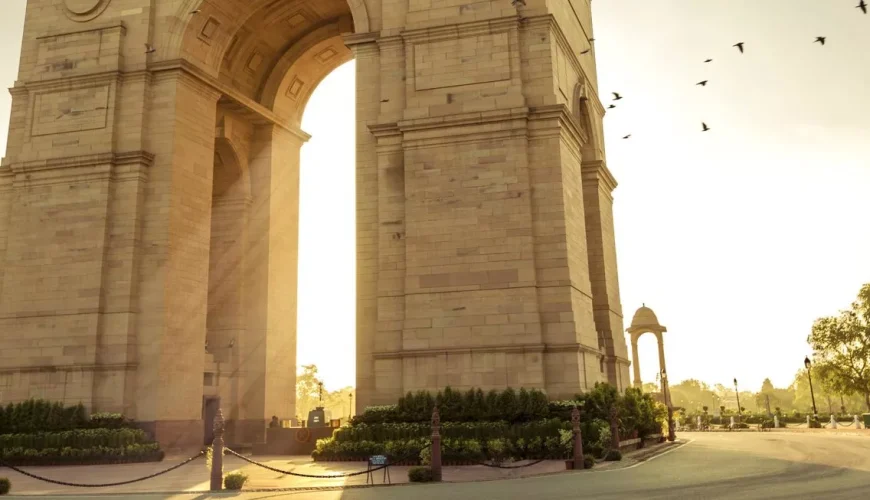
Delhi is eight cities built on top of each other, and the experience of it depends entirely on which Delhi you find first. Old Delhi — the Mughal city of narrow lanes, the Chandni Chowk bazaar, the Jama Masjid (the largest mosque in India, capacity 25,000), the Red Fort and the spice market at Khari Baoli — is the most sensory-intense urban environment in India. New Delhi — the British colonial capital, with its wide Lutyens avenues, the India Gate, the Parliament building and the Diplomatic Enclave — is an entirely different city that happens to occupy the same geography. The airport brings you into a third Delhi: the new glass towers of Gurgaon and Aerocity, which could be anywhere in the world and feel nowhere in particular.
Agra and the Taj Mahal
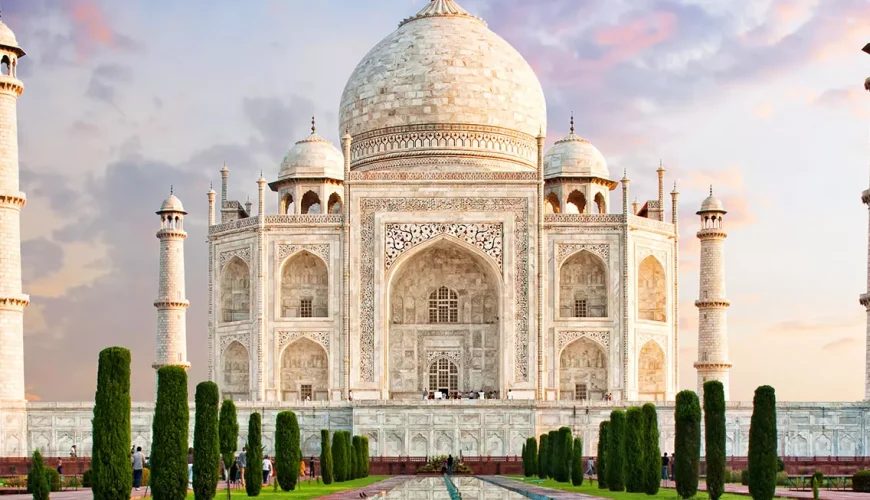
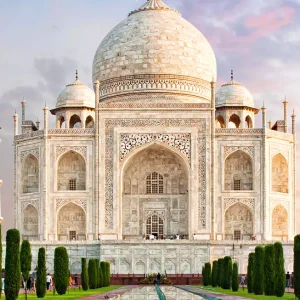
The Taj Mahal is one of the very few things in the world that lives up to its reputation. The white marble mausoleum built by Shah Jahan for his wife Mumtaz Mahal between 1632 and 1653 is larger than almost every photograph suggests, more beautiful in different lights than any single image captures, and more moving — when you understand what it is and why it was built — than a building has any right to be. The sunrise visit (arrive for opening at 6 a.m., before the tour buses) is the only time you can experience something approaching solitude at the Taj.
Jaipur
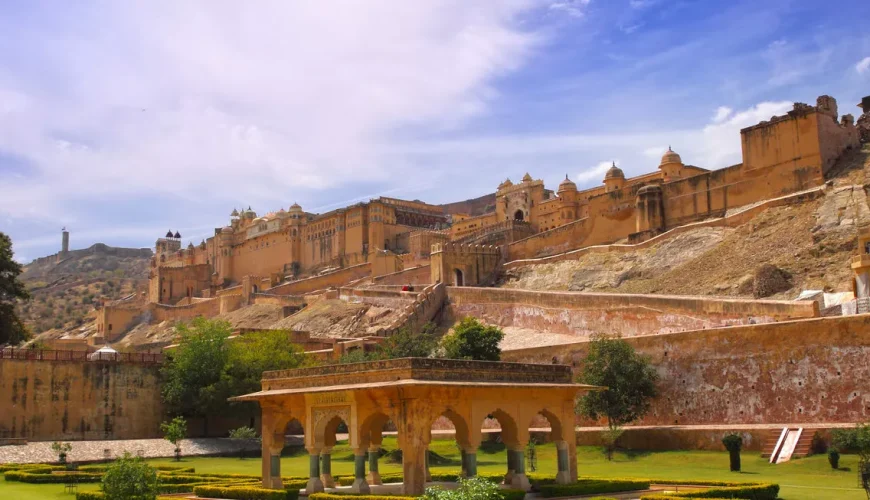
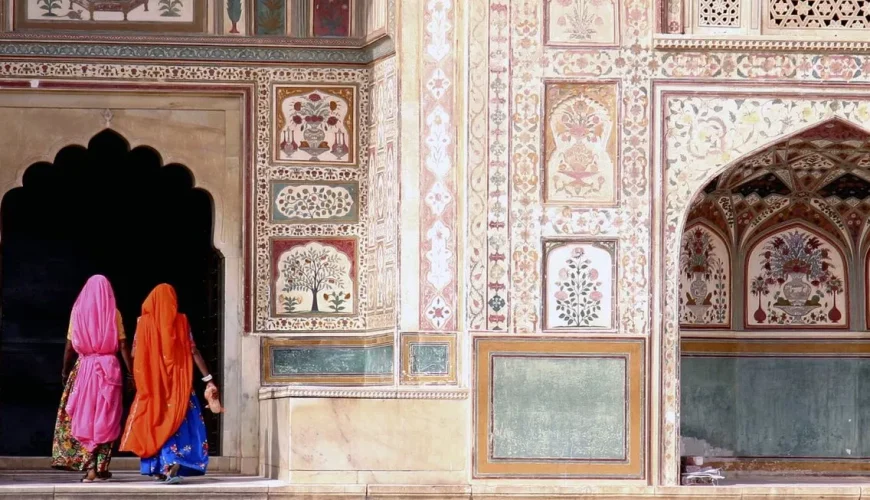
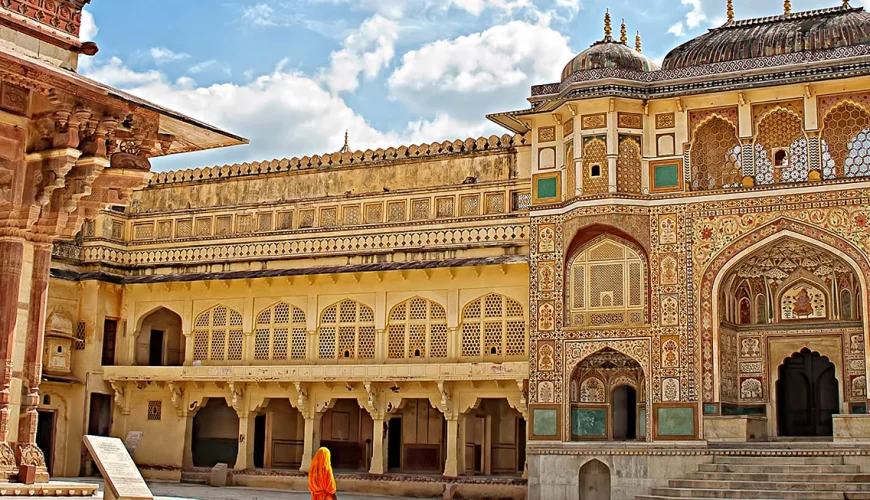
Jaipur is the Pink City — though the pink is actually a warm terracotta orange, applied to the old city’s facades in 1876 as a welcome for the Prince of Wales. The Amber Fort, 11 kilometres from the city on a hillside above an artificial lake, is the most impressive fort in Rajasthan; the elephant ride up to the gate (now replaced by jeeps for ethical reasons) has been superseded by a walk that is more intimate and equally impressive. The City Palace, still partly occupied by the Maharaja of Jaipur’s family, is open to visitors and houses one of the finest collections of royal Indian textiles and armour in the country.
3. Rajasthan: the India of the imagination
If the Golden Triangle is India’s introduction, Rajasthan is its main event. The desert state northwest of Delhi — larger than Germany — is the India that most people picture before they arrive: camel trains against desert dunes, maharaja palaces converted to luxury hotels, colourful textile markets, fortified hilltop cities, and a hospitality tradition that dates back to the Rajput warrior clans who built these forts and palaces over a thousand years of intermittent conflict and spectacular peace.
| City | What it offers | One thing not to miss |
| Jodhpur | The Blue City; Mehrangarh Fort — the most dramatically situated fort in India | Standing on the fort battlements looking down at 100,000 blue-painted houses |
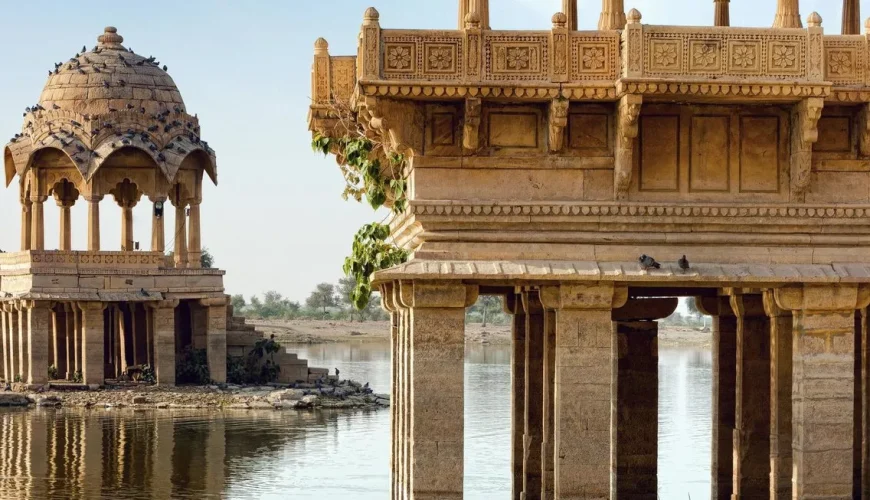
| Udaipur | The most romantic city in India; Lake Pichola; the City Palace; the Taj Lake Palace Hotel floating on the water | Boat ride on Lake Pichola at sunset, looking back at the City Palace |
| Jaisalmer | The Golden City; a living fort town of yellow sandstone; the Thar Desert | Camel trek into the sand dunes at dawn; absolute silence and stars |
| Pushkar | The holy lake; the only Brahma temple in the world; the November camel fair | Morning puja at the lakeside ghats; the camel fair if the timing works |
| Ranthambore | Best Bengal tiger safari in northern India; tigers relatively habituated to jeeps | Dawn game drive in Zone 3 or 4; tiger sightings rate approximately 70% per visit |
4. Rishikesh: the yoga capital of the world
Rishikesh sits at the point where the Ganges leaves the Himalayas and enters the plains of northern India. The river here is young, fast, cold and transparent — nothing like the wide brown waterway it becomes by the time it reaches Varanasi and eventually the Bay of Bengal. The Himalayan foothills rise steeply on both banks. The forest is dense. And along the river, on both sides, a continuous chain of ashrams, yoga schools, meditation centres, temples and guest houses has grown up over the past century into what is now the most concentrated centre of yoga practice and instruction in the world.
Rishikesh is unusual among Indian holy cities in that it functions simultaneously for two completely different audiences: the Hindu pilgrims who come because the Ganges here is considered particularly sacred (bathing in the river washes away sin; drinking its water in small quantities is considered medicinal by devout Hindus), and the international visitors — from every country in Europe, North America and increasingly East Asia — who come for yoga teacher training, meditation retreats, Ayurvedic treatments and, since 2015, the Beatles Ashram.
What to do in Rishikesh
- Ganga Aarti at Triveni Ghat and Parmarth Niketan: Every evening at sunset, priests perform the fire ceremony for the Ganges — waving burning torches, ringing bells, singing prayers. Thousands gather on the ghats. It is one of the most moving public rituals in India; free to attend; no reservation required.
- Laxman Jhula and Ram Jhula: The two pedestrian suspension bridges across the Ganges, connecting the different neighbourhoods of Rishikesh. From Laxman Jhula, looking upstream towards the mountains, you see the river and the ashrams in their most photogenic configuration.
- White-water rafting: The Ganges between Shivpuri and Rishikesh offers Class II–IV rapids (depending on season and water level); half-day and full-day rafting trips are one of the most popular activities for younger travellers visiting Rishikesh.
- Yoga and meditation: Dozens of ashrams and studios offer classes ranging from a single morning session to month-long teacher training programmes. Parmarth Niketan, Sivananda Ashram and Omkarananda Ashram are among the best established; English-language classes available at all.
5. The Beatles Ashram: the full story
| Chaurasi Kutia / Beatles Ashram — Rishikesh, Uttarakhand
Official historical name: Chaurasi Kutia (Hindi: ’84 huts’). Current name: Beatles Ashram (since 2015 when it was opened to the public). Location: On the east bank of the Ganges, opposite the main town of Rishikesh, within the Rajaji Tiger Reserve forest. Administration: Uttarakhand Forest Department. Entry fee: INR 600 for foreign visitors (approximately EUR 6 / GBP 5.50). Opening hours: Daily 8:00–17:00. Local guides available at entrance: recommended. |
Before 1968: the ashram under Maharishi Mahesh Yogi
Maharishi Mahesh Yogi founded his ashram at Rishikesh in the 1950s and named it Chaurasi Kutia — 84 huts — after the number of individual meditation cells he had built into the hillside above the Ganges. He had developed Transcendental Meditation (TM) from classical Vedic mantra practices into a systematic technique that could be taught to non-Hindus, stripped of religious content, as a secular practice for stress reduction and personal development. By the mid-1960s he had attracted international attention, first in India, then in the United States and Europe.
The meeting: August 1967
George Harrison, the Beatle most committed to Indian culture — he had learned the sitar from Ravi Shankar since 1966 and had studied Hindu philosophy and the Vedas — arranged for the group to attend a Transcendental Meditation seminar by Maharishi Mahesh Yogi in Bangor, Wales, in late August 1967. The timing was immediately significant: the day after they arrived, Brian Epstein, the Beatles’ manager, was found dead of an accidental drug overdose in his London home. The Beatles left Bangor for London. But the connection with the Maharishi had been made, and plans began for a longer stay at his ashram in India.
February 1968: arrival in Rishikesh
In February 1968, the Beatles travelled to Rishikesh to attend a Transcendental Meditation training course at the ashram of Maharishi Mahesh Yogi. The visit received widespread media attention. The band’s interest was led by George Harrison’s commitment, and it changed Western attitudes about Indian spirituality and encouraged the study of Transcendental Meditation.
George Harrison and John Lennon arrived first, on 15 February 1968. Paul McCartney and Ringo Starr followed a few days later. They came dressed in kurtas and strung with marigold garlands, and they walked through the forest on the hillside above the Ganges to the ashram compound — a cluster of whitewashed meditation cells, a lecture hall, the Maharishi’s clifftop bungalow (equipped, incongruously, with an electric fireplace and a helicopter landing pad), and the dining hall where 60-plus TM students gathered for meals.
They were joined by at least 60 other TM students, including musicians Donovan, Mike Love of the Beach Boys and flautist Paul Horn. The media had also descended: photographers and journalists camped outside the ashram gates, hoping for glimpses of the world’s most famous band in a forest in northern India. The Beatles, for the most part, were inside meditating — sometimes for up to 8 hours a day — and writing.
6. What was written in Rishikesh: the White Album songs
The stay at the Maharishi’s ashram was the most productive songwriting period in the Beatles’ career. The discipline of meditation, the removal from London and its distractions, and the unusual communal creative environment produced a torrent of new songs — most of which would appear on the double album released in November 1968 simply as The Beatles, universally known as the White Album.
| Song | Written by | Story |
| Back in the U.S.S.R. | Paul McCartney | McCartney’s parody of Chuck Berry’s ‘Back in the U.S.A.’ and the Beach Boys; written with help from Mike Love |
| Dear Prudence | John Lennon | Written for Prudence Farrow (Mia’s sister), who meditated so intensively she refused to leave her room; the song was Lennon’s plea for her to come outside |
| Ob-La-Di, Ob-La-Da | Paul McCartney | McCartney wrote the lyrics in Rishikesh; the title came from a phrase used by a Nigerian singer he had met in London |
| Blackbird | Paul McCartney | Inspired by the civil rights movement in the US; written during McCartney’s time in Rishikesh |
| Rocky Raccoon | Paul McCartney | Written with Donovan’s assistance in Rishikesh; a playful narrative song McCartney composed in one evening |
| Julia | John Lennon | Lennon’s song for his mother; he learned the fingerpicking guitar style used in the song from Donovan during their time together at the ashram |
| Sexy Sadie | John Lennon | Originally titled ‘Maharishi’ — a bitter song written when Lennon became convinced of the Maharishi’s misconduct; title was changed before recording |
| Bungalow Bill | John Lennon | Inspired by a fellow ashram guest who went on a tiger hunt; the song became one of the most overtly anti-hunting statements in pop music |
| Mother Nature’s Son | Paul McCartney | Inspired by a Maharishi lecture on nature; McCartney wrote it sitting alone in the sun on the ashram grounds |
Beyond the White Album, songs written in Rishikesh appeared elsewhere: ‘Something’ and ‘Here Comes the Sun’ (both George Harrison, both on Abbey Road) draw on the spiritual themes and meditative calm of the India period. John Lennon’s ‘Across the Universe’ was begun at the ashram. The India experience was not just a source of songs; it changed the way the Beatles — particularly Harrison — heard music and thought about composition.
7. Donovan, Mike Love and the other famous guests
Donovan
Donovan Leitch, the Scottish singer-songwriter whose folk-psychedelic style had made him one of Britain’s most distinctive voices of the late 1960s, was among the most important of the non-Beatles guests at Rishikesh. His contribution to the Beatles’ music was direct and specific: he taught John Lennon the fingerpicking guitar technique — the gentle, alternating bass-note pattern — that Lennon used in ‘Dear Prudence’ and ‘Julia’. ‘Julia’ is, in its guitar texture, Donovan’s technique played by Lennon for his dead mother. Donovan also wrote songs during the Rishikesh stay that appeared on his 1968 album ‘The Hurdy Gurdy Man’, produced by George Harrison.
Mike Love of the Beach Boys
Mike Love, the lead vocalist and founding member of the Beach Boys, was one of the most committed TM practitioners among the famous guests. He had been practising Transcendental Meditation since 1966, considerably longer than any of the Beatles, and had personally encouraged the group’s interest in the Maharishi. Love stayed longer than most — he was among the last of the famous guests to leave. His presence contributed to the creative cross-pollination that produced ‘Back in the U.S.S.R.’ — McCartney’s conscious parody of the Beach Boys’ sound — and influenced the direction of the Beach Boys’ own album ‘Friends’ (1968), which drew heavily on themes of meditation and spiritual development.
Mia Farrow and Prudence Farrow
The actress Mia Farrow and her sister Prudence attended the Rishikesh retreat. Prudence Farrow became one of the most committed meditators at the ashram — so committed that she rarely left her room, concerned that any interruption might break the state of consciousness she was developing. John Lennon’s response was to write her a song and perform it outside her window. ‘Dear Prudence’ is one of the most beautiful songs on the White Album and exists because a woman in a meditation cell in a forest in India was too deeply inside her own mind to come outside and say hello.
Paul Horn
The jazz flautist Paul Horn recorded his landmark album ‘Inside the Taj Mahal’ during this same India visit — recording in the Taj Mahal’s interior acoustics in the middle of the night. Horn’s album, along with the Beatles’ Rishikesh period, is one of the founding documents of what would later be called New Age music. Horn also recorded meditation flute at the Rishikesh ashram itself; some of this material was later released as ‘Inside’ (1973).
8. Visiting the Beatles Ashram today: practical guide
The Beatles Ashram is one of the most unusual visitor sites in India — not because it is grand or well-maintained, but precisely because it is neither. The ashram was abandoned in 1997 and left to the forest. By the time it was reopened to visitors in 2015, the jungle had been reclaiming it for nearly two decades. Trees grow through the floors of the meditation cells. Vines cover the lecture hall. The Maharishi’s clifftop bungalow is roofless. But the structures are still standing, still identifiable, still marked with the murals and graffiti and street art that artists have added since the site opened.
| Visiting the Beatles Ashram — complete practical information
Location: East bank of the Ganges, Rishikesh; within Rajaji Tiger Reserve forest; approximately 2km from Laxman Jhula bridge. Getting there: Tuk-tuk or motorcycle taxi from Laxman Jhula (10 minutes; agree fare before departure: INR 100–200). Entry fee: INR 600 for foreign visitors (approx. EUR 6 / GBP 5.50). Opening hours: Daily 8:00–17:00. Guides: Available at entrance; strongly recommended (INR 200–400 tip expected; provides essential context for identifying buildings and understanding what happened where). Time needed: 2–3 hours for a thorough visit. Photography: Permitted throughout; some of the most atmospheric photography in India available here. What to wear: Closed shoes (uneven terrain; wet in places); light cotton clothing; hat. What to bring: Water; sunscreen; small notes for guide tip. Best time to visit: 8:00–10:00 before heat and crowds; or 15:00–17:00 when afternoon light is atmospheric. |
What you will see
- Meditation cells (Chaurasi Kutia): 84 stone cells built into the hillside; the cells where Beatles and other guests meditated for hours daily; some are intact, some partially collapsed; the scale of the compound is larger than most visitors expect
- The Beatles Gallery: A room in the former yoga hall with large murals depicting all four Beatles alongside the Maharishi; photographs of the band during the 1968 stay; the single most photographed room in the ashram
- The Maharishi’s clifftop bungalow: The building where Maharishi conducted his lectures and private consultations; helicopter landing pad still visible on the roof; remarkable position above the river
- Street art and murals: Since opening, the ashram walls have been covered in contributed murals — Lennon’s face, Om symbols, psychedelic patterns, quotes from Beatles songs; the art has transformed the ruins into an open-air gallery
- The guest houses: The buildings where the Beatles and their companions lived; unmarked but identifiable with a guide; the rooms are empty shells but the layout is clear
| Combine with the Ganga Aarti
The Beatles Ashram in the morning, Laxman Jhula bridge walk in the early afternoon, and the Ganga Aarti ceremony at Parmarth Niketan or Triveni Ghat at sunset: this is the perfect Rishikesh day. The contrast between the ruined ashram in the forest and the living ceremony on the river ghats gives you both the historical and the living versions of Rishikesh’s spiritual character. |
9. Varanasi: the oldest living city on Earth
Varanasi is the city that has been continuously inhabited for longer than any other on Earth — at least 3,000 years, possibly more. It sits on the Ganges in Uttar Pradesh and is the holiest city in Hinduism. The great burning ghat — Manikarnika Ghat — burns day and night, 365 days a year, as bodies are cremated on open pyres beside the river. This is not hidden or enclosed. It happens in full view of the river, of the boats that pass by, of the visitors who watch from a respectful distance. It is the most direct encounter with mortality available to a traveller in the modern world.
A dawn boat ride on the Ganges in Varanasi — starting before sunrise, drifting along the ghats as the city wakes up, watching the bathers and the priests and the flower sellers and, in the distance, the smoke rising from Manikarnika — is one of the defining travel experiences in India. It requires nothing of the visitor except presence and the willingness to watch something that does not happen anywhere else.
10. Kerala: the green south
Kerala is everything that northern India is not. Green where the north is golden; Christian and Muslim and Hindu in roughly equal measure where the north is predominantly Hindu; with a political tradition of elected communist governments and the highest literacy rate in India; and with a cuisine — coconut milk, curry leaves, black pepper, cardamom, seafood — that is completely unlike anything eaten in Delhi or Rajasthan. Travellers who do both north and south India in a single trip almost invariably find the contrast between the two revelatory.
- Kerala Backwaters (Alleppey/Alappuzha): The network of lagoons, canals and lakes through which traditional rice boats — converted to floating guest rooms — travel overnight; one of the most distinctive accommodation experiences in India; book the full-day or overnight houseboat package rather than the two-hour tourist cruise
- Fort Cochin (Kochi): The old colonial quarter of Kochi with its Portuguese, Dutch and British layers; the Chinese fishing nets at the harbour (still in daily use; the most photographed sight in Kerala); Mattancherry spice market; the Pardesi Synagogue (one of the oldest active synagogues in the Commonwealth)
- Munnar tea plantations: High-altitude tea country in the Western Ghats; 1,600–2,000m; cooler than the coast; the landscape of manicured green terraces has a similarly meditative quality to the Nuwara Eliya tea country in Sri Lanka
11. India tour itineraries: how to plan your trip
| Itinerary | Days | Route | Best for |
| Classic Golden Triangle | 10–12 | Delhi → Agra → Jaipur → Delhi | First-timers; cultural visitors; compact |
| Golden Triangle + Rishikesh | 14–16 | Delhi → Agra → Jaipur → Rishikesh (Beatles Ashram) → Delhi | Culture + spirituality; Beatles fans; yoga seekers |
| Rajasthan deep dive | 14–18 | Delhi → Jaipur → Jodhpur → Udaipur → Jaisalmer → Pushkar → Delhi | Palace enthusiasts; photography; second India trip |
| North India + Varanasi | 16–18 | Delhi → Agra → Jaipur → Rishikesh → Varanasi → Delhi | Spiritual travellers; Ganges-seekers; full cultural immersion |
| Kerala and south India | 10–12 | Kochi → Backwaters → Munnar → Periyar → Kovalam | Relaxation; nature; cuisine; very different India |
| India complete | 21–28 | Golden Triangle + Rajasthan + Rishikesh + Varanasi OR South India | Serious India travellers; those with time to do it properly |
12. Getting to India
| From | Routing | Total time | Airlines | Note |
| London (LHR) | Direct to Delhi (DEL) | ~8.5 hrs | British Airways, Air India, Virgin Atlantic | Multiple daily non-stops; BA and Air India direct |
| Frankfurt (FRA) | Direct to Delhi (DEL) | ~7.5 hrs | Lufthansa, Air India | Fastest connection from continental Europe |
| Munich (MUC) | Direct to Delhi (DEL) | ~8 hrs | Lufthansa nonstop | Excellent non-stop service year-round |
| Zürich (ZRH) | Via Dubai or Doha → Delhi | ~10–11 hrs | Emirates, Qatar Airways | Qatar Airways via DOH is consistently excellent |
| Vienna (VIE) | Via Dubai → Delhi | ~10 hrs | Emirates | Emirates VIE–DXB–DEL; strong product |
| For Rishikesh specifically
Fly into Delhi (DEL). From Delhi to Rishikesh: private transfer approximately 5–6 hours by road; or fly to Dehradun (DED) — 30-minute flight from Delhi — and transfer 1 hour to Rishikesh. Most India tour operators include transfers to Rishikesh from Delhi as part of the itinerary. The road journey through Haridwar and along the Ganges is itself interesting. |
13. Visas and entry requirements
Citizens of Germany, Austria, Switzerland and the United Kingdom are eligible for India’s e-Tourist Visa (eTV), which must be applied for online before travel. The e-Visa cannot be obtained on arrival.
| Visa type | Validity | Entries | Cost | Processing time |
| e-Tourist Visa 30 days | 30 days from entry | Up to 2 entries | USD 25 (~EUR 23 / GBP 20) | Usually 72 hrs; apply 4–5 days before |
| e-Tourist Visa 1 year | 1 year from issue date | Multiple (max 90 days per stay) | USD 40 (~EUR 37 / GBP 32) | Usually 72 hrs |
| e-Tourist Visa 5 years | 5 years from issue date | Multiple (max 90 days per stay) | USD 80 (~EUR 73 / GBP 63) | Usually 72 hrs |
- Apply at: indianvisaonline.gov.in (official government website; avoid third-party sites that charge additional fees)
- Documents needed: Valid passport (minimum 6 months validity from entry date); digital passport photo; scan of passport data page; credit or debit card for payment
- Entry restriction: eTV entry is permitted only through designated airports and seaports — all major international airports qualify; land border crossings do not
- Health: No mandatory vaccinations for entry from Europe; Hepatitis A and B, Typhoid and Tetanus recommended; Yellow Fever certificate required if arriving from a yellow fever endemic country
14. When to go: India’s seasons
| Season | Months | North India | Rishikesh | South India / Kerala |
| Cool dry season | Oct–Feb | Best: 15–28°C; clear; comfortable | Best: 10–22°C; river clear; Beatles Ashram ideal | Good: 24–30°C; dry; post-monsoon fresh |
| Hot season | Mar–May | Heating rapidly; 30–45°C by May; dusty | Warming; 20–32°C; manageable March–April | Good: Kerala coast pleasant; hills cooler |
| Monsoon | Jun–Sept | Heavy rain; flooding possible; not recommended | River full and fast; lush green; some closures | Best for Kerala: waterways full; backwaters beautiful |
October to March is the window that most India itineraries target, and for good reason: the heat is manageable across all of northern India, the Beatles Ashram is open and accessible, the Ganges at Rishikesh is clear and beautiful, and the tourist infrastructure is at its best. November and December are the peak months for first-time visitors — prices are higher but the experience is at its most straightforward. January and February can be cold at night in Rishikesh (the temperature drops to 5–8°C after dark) but are ideal for the Beatles Ashram visit, replicating something of the conditions in which the band arrived in February 1968.
15. Find your India tour on sportmeeting.de
India is not a trip you plan in an afternoon. The distances, the visa requirements, the choice of itinerary and the selection of the right operator for your style of travel all benefit from considered preparation. sportmeeting.de brings together India touring programmes from Germany and Europe’s leading specialist operators — all comparable in one place, bookable directly.
| India tours and Beatles Ashram itineraries — find yours on sportmeeting.de
On sportmeeting.de you will find India round trips from leading specialist operators: • Studiosus: deepest cultural content; Indologists and art historians as guides • Intrepid Travel: sustainable; local guides; small groups; best value • Marco Polo: small groups; insider India; off-the-beaten-track • Hauser Exkursionen: active India; Himalayan trekking; Ladakh; Rajasthan on foot • Bavaria Fernreisen: tailor-made individual itineraries; private driver tours All itineraries directly comparable: route, duration, group size, departure dates, price. Includes itineraries featuring Rishikesh and the Beatles Ashram. → Find your India tour on sportmeeting.de |
The Beatles came to Rishikesh in 1968 looking for something. They found it — or at least they found the songs that came from looking for it, which may amount to the same thing. The ashram they sat in is still there, ruined and beautiful and covered in murals, in a forest above the Ganges. You can stand in the rooms where ‘Dear Prudence’ was conceived, and ‘Julia’, and ‘Blackbird’. You can watch the Ganges from the same bank where George Harrison learned to meditate properly for the first time. And then you can go and see the Taj Mahal, and the palaces of Rajasthan, and the burning ghats of Varanasi, and the backwaters of Kerala. India gives you everything, if you give it time. sportmeeting.de helps you plan how much time to give.
more as 8000 tours and round trips world wide
Luxury Loops
Ayurveda – 5,000 Years of Healing in Sri Lanka & India
INDIA Round Trip
Booking Request
- Complete Financial Safeguard: Every holiday investment is legally bonded and protected from start to finish through the German Travel Security Fund (DRSF).
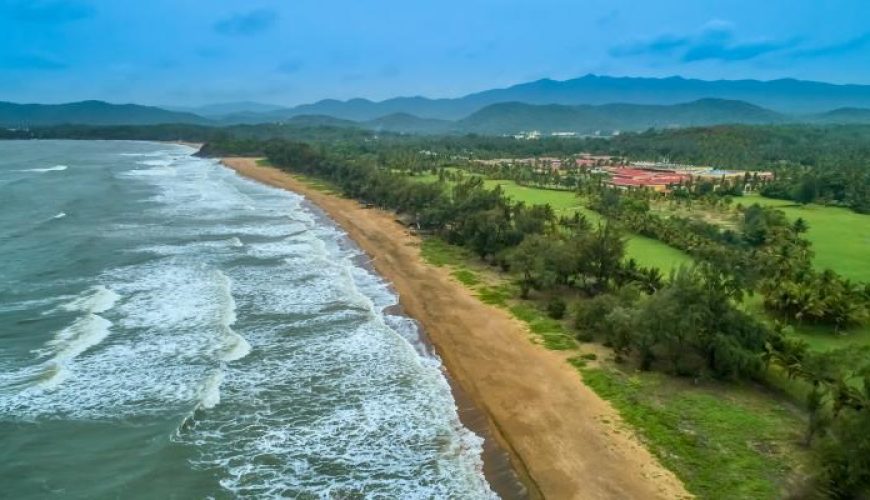
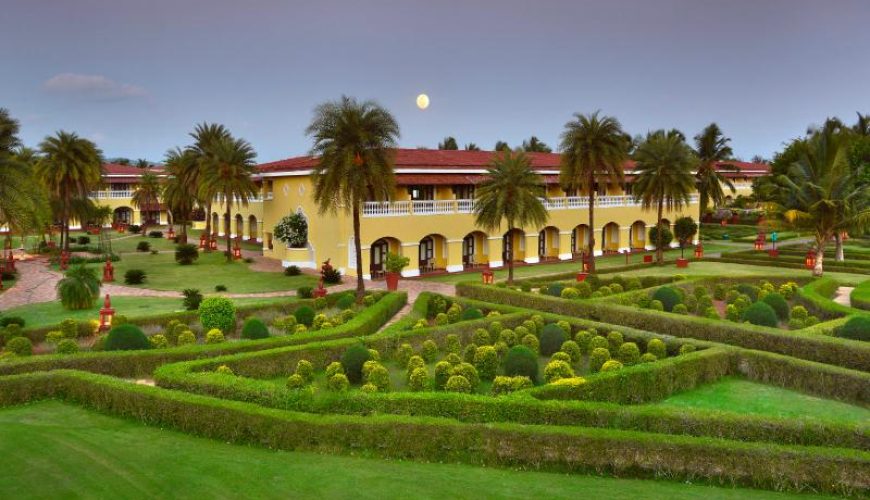
The Lalit Golf and Spa Resort Goa, Goa, India.
The Lalit Golf and Spa Resort Goa is situated on the beautiful Raj Baga Ocean side in the south of Goa in India, encompassed by the Bedouin Ocean, the Talpone Waterway, and the Sahyadri mountain range. It borders the renowned Palolem Oceanside, quite possibly the most flawless, lovely, and separated oceanside in Goa. The air terminal is roughly 56 km away. The oceanside lodging has an inn safe, a cash trade, and endless room and clothing administrations. It likewise has a bar, bistro, stylist, and café with a natural climate and a great many contributions. Your business needs will be taken special care of with the best offices.

Comment (0)