

France · Motorhome & Campervan · Road Trip Guide · 2026
From the lavender fields of Provence and the châteaux of the Loire Valley to the surf beaches of Brittany and the jagged peaks of the Alps – France is Europe’s most camper-friendly country, with over 5,000 Aires de Camping-Car, 8,000 campsites and a road network made for road trips.
Why France? – the most camper-friendly country in Europe
No country in Europe does motorhoming quite like France. With a network of over 5,000 official Aires de Camping-Car – dedicated motorhome stopovers found in virtually every village, town and city – you never have to worry about where to sleep. A recent 2026 survey counts 3,917 aires across the country, of which 1,108 are still completely free. The average serviced aire costs just €13.62 per night. Add 8,000 campsites, 2,200 France Passion farm stops and some of the most spectacular driving roads in Europe, and France becomes not just a destination but a way of life on four wheels.
The country’s staggering geographic variety is its greatest asset. Within a single tank of diesel you can drive from cider orchards in Normandy to sun-baked vineyards in the Rhône Valley, or from Atlantic surf beaches in the Landes to the turquoise coves of the Côte d’Azur. France’s diverse landscape – alpine peaks, volcanic plateaux, Atlantic cliffs, Mediterranean coastline, lush river valleys – means every motorhome trip reveals a completely different country. No wonder French industry analysts estimate double-digit growth in motorhome rentals through 2030.
Hire a motorhome in France 2026 – browse vehicles on mobilcamper.de
All vehicle types · Airport pick-up in Paris, Lyon, Marseille, Nice & more
«Travelling by motorhome turns the whole of France into your backyard. Thousands of purpose-built Aires mean you rarely need to plan where to sleep – letting you chase lavender blooms, food markets or surf forecasts on a whim.»
6 reasons France is perfect for a motorhome road trip
- 5,000+ Aires de Camping-Car: Free or low-cost overnight stops in every corner of the country
- Outstanding roads: Quiet D-roads through châteaux country, dramatic Alpine passes, cliff-hugging coastal routes
- Food & wine culture: A different regional cuisine every 100 km – and you park right next to the market
- One-way rental: Collect in Paris, return in Nice, Bordeaux or Lyon – no retracing your route
- Year-round travel: Ski runs in winter, lavender in July, harvest festivals in autumn
- Crit’Air sticker: A simple €3.76 vignette gives access to all French city LEZs – no surprises
Vehicle Types – from compact campervan to luxury motorhome
The French rental market offers a vehicle for every travel style and group size. All of the types below are available through mobilcamper.de, with transparent pricing and no hidden fees:
Budget · 2 people
Compact Campervan (Van Conversion)
A converted van – usually a VW Transporter, Citroën Jumpy or Renault Trafic – with a fold-flat bed, small kitchenette and fridge. Under 2 metres tall, so exempt from motorway height restrictions and classified as a car at toll booths. Perfect for couples and urban exploring. From approx. €60–90/day.
Comfort · 2–3 people
Panel Van / Hitop Camper
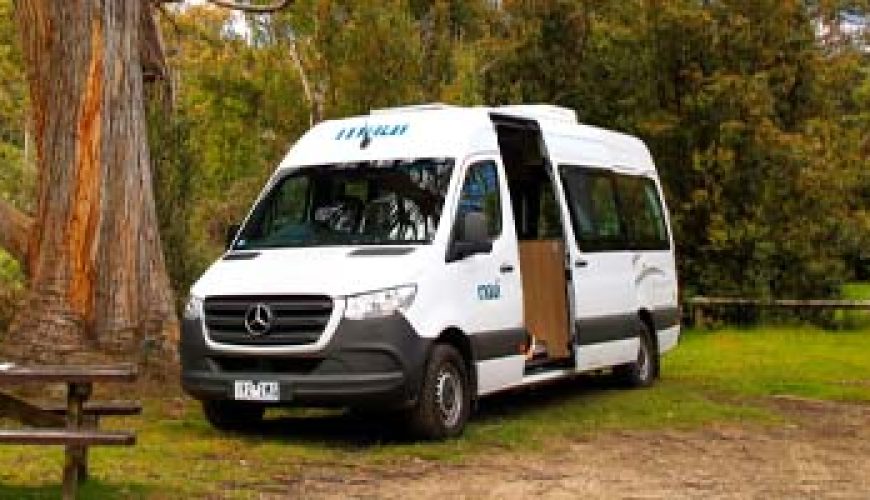
A raised-roof van offering stand-up height, fixed or convertible bed, equipped kitchen and a compact shower/WC unit. The bestseller for French road trips – manoeuvrable enough for Provençal village lanes, comfortable enough for three weeks on the road. From approx. €80–120/day.
Family · 3–5 people
Semi-Integrated / Overcab Motorhome
A C-class motorhome built on a truck cab chassis. Overcab sleeping area, full kitchen, shower and WC, dinette and seating for the family. The most popular rental category in France. Excellent for campsite-based touring. From approx. €110–170/day in peak season.
Premium · 4–6 people
Fully Integrated / Low-Profile Motorhome
Coach-built with a streamlined exterior, large garage bay, island bed, full bathroom and a well-equipped kitchen. The most comfortable option on the road. Ideal for longer journeys, the Alps or the Riviera where comfort matters as much as the view. From approx. €150–250/day.
Which vehicle type suits which route?
- Compact Campervan: Paris, Alsace, Loire Valley, Côte d’Azur city stops, Corsica (narrow roads)
- Hitop/Panel Van: Brittany coast, Normandy, Atlantic run – anywhere with tight lanes
- Overcab Motorhome: Provence, Dordogne, Languedoc, most standard French touring routes
- Fully Integrated: Alps, Pyrenees (wider mountain roads), Rhône Valley, extended multi-week tours
Browse all vehicle types for France – book on mobilcamper.de, prices from €60/day.
Airport Pick-Up – collect your motorhome and go
France has rental depots in every major city, most within a short transfer from the airport or train station. You can book your vehicle in advance through mobilcamper.de and arrange a specific pick-up time directly at the depot. One-way rentals between cities are widely available – collect in Paris, return in Marseille, no problem.
Main gateway
Paris (CDG / Orly)
France’s most-connected international airport. Ideal starting point for a national tour – Loire châteaux to the south, Normandy beaches to the north-west, Champagne to the east. Depots near CDG accessible by shuttle or taxi. Note: drive out of Paris, don’t drive in.
South gateway
Marseille (MRS)
Fly in to the Mediterranean and head straight for Provence: Aix-en-Provence, the Luberon, the Camargue, the Gorges du Verdon. Strong depot presence in the Aix-Marseille area. Perfect start for a Provence-to-Riviera route.
Riviera start
Nice (NCE)
Gateway to the Côte d’Azur, Monaco and the Maritime Alps. Start the Alpine route inland or head west along the Riviera towards Marseille. Nice is also the embarkation point for Corsica ferries (Bastia/Ajaccio).
South-west hub
Bordeaux (BOD)
Start point for the Atlantic coast route and the Dordogne. Drive north into the Loire Valley or south towards the Pyrenees and Basque Country. Well-served depot network around Bordeaux city.
Central hub
Lyon (LYS)
France’s gastronomic capital is ideally placed for routes into the Alps, Provence, Burgundy and the Auvergne. Depot access by taxi or bus from Lyon Saint-Exupéry airport (~15 km, approx. €30).
West gateway · UK link
Calais / Eurotunnel
The classic entry point for British travellers arriving by ferry or Eurostar. Start the Normandy D-Day beaches route immediately, or head south to Brittany, the Loire or Bordeaux. Depot pick-up near port available on booking.
The Best Motorhome Routes in France – from coast to mountain
France’s diversity is almost absurd: medieval fortresses, UNESCO coastlines, volcanic craters, vineyard valleys and ski resorts all co-exist within a single country. Here are eight routes that showcase the best of it:
Route 1: Normandy & Brittany – D-Day Coast to Celtic Atlantic
Start in Calais or Paris and head north-west into Normandy. The D-Day landing beaches – Utah, Omaha, Gold, Juno, Sword – are among the most moving historical sites in Europe. Continue to Mont Saint-Michel (sleep in the massive free motorhome car park and watch the tides roll in at dawn), then cross into Brittany. St-Malo’s walled city, the pink granite cliffs of the Côte de Granit Rose, the prehistoric megalith alignments at Carnac and the oyster farms of the Gulf of Morbihan make this one of France’s great road trips. Recommended duration: 10–14 days. Distance: approx. 1,200 km.
Normandy & Brittany highlights
- D-Day Beaches & Memorial Museum (Caen): Utah, Omaha and Pointe du Hoc – essential, emotional, unforgettable
- Mont Saint-Michel: Sleep in the free overnight aire and wake up with tidal island views all to yourself
- St-Malo: Walled corsair city, walk the ramparts, swim from Plage du Sillon
- Côte de Granit Rose: Pink boulders tumbling into a turquoise sea near Perros-Guirec
- Carnac: 5,000-year-old standing stone alignments – largest megalithic site in the world
- Quiberon Peninsula: Wild Atlantic surf on the west coast, sheltered sailing bays on the east
Route 2: Loire Valley – Châteaux & Vineyard Country
Downstream from Orléans to Saumur (280 km, 6–8 days), the Loire Valley is France at its most theatrical. UNESCO-listed châteaux line both banks of the river and most provide dedicated motorhome parking on their grounds. Chambord (the largest), Chenonceau (spanning the River Cher), Villandry (extraordinary kitchen gardens) and Amboise (Leonardo da Vinci’s final home) are the headline acts. The Muscadet and Saumur wine appellations run alongside. Drive slowly, stop often.
Route 3: Provence & Lavender Route
Start in Aix-en-Provence and head north into the Luberon – hilltop villages of golden stone, open-air markets and lavender fields (peak bloom late June to mid-July). Loop via the Gorges du Verdon – Europe’s Grand Canyon, with 700-metre cliffs above impossibly turquoise water – then south to the Camargue, where white horses, flamingos and salt pans meet the Mediterranean. Recommended duration: 10–14 days. Distance: approx. 900 km.
Provence must-sees
- Luberon villages: Gordes, Roussillon (ochre cliffs), Bonnieux, Lourmarin – each more beautiful than the last
- Lavender fields: Valensole Plateau and Sault – late June to mid-July for peak colour
- Gorges du Verdon: Drive the Route des Crêtes for cliff-top views, kayak the gorge floor
- Les Baux-de-Provence: Ruined medieval fortress village, Carrières de Lumières art projections
- Camargue: Flamingos, white horses, rice paddies and the ancient city of Arles
- Cassis: Emerald calanques (limestone inlets), excellent local white wine, pretty harbour
Route sorted? Book your motorhome for France on mobilcamper.de – all pick-up points available.
Route 4: French Riviera & Côte d’Azur
Nice to Menton via Antibes, Cannes, Monaco and Eze – the glamorous 60 km of coastline that defined European luxury. The key is timing: arrive at the best views before the tour coaches and leave by noon. Sleep in quiet aires in the hills above the coast rather than on the expensive beachside sites, and descend each morning fresh. The hinterland – Mercantour National Park, medieval Entrevaux, the lavender hills of the Var – offers dramatic landscapes and almost no crowds.
Route 5: French Alps – Col de l’Iseran & Mont Blanc
One of the world’s great driving adventures. From Lake Geneva (Thonon-les-Bains) south via Chamonix and the Mont Blanc massif, over the Col de l’Iseran (2,770m – the highest paved pass in the Alps), down through Briançon to the turquoise Lake Serre-Ponçon and into Provence. The hairpin descents are drama on a cinematic scale, and they’re completely manageable in a standard 3.5-tonne motorhome with careful use of engine braking. Recommended duration: 10–14 days. Best: July–September.
Route 6: Atlantic Coast – Dune du Pilat to Biarritz
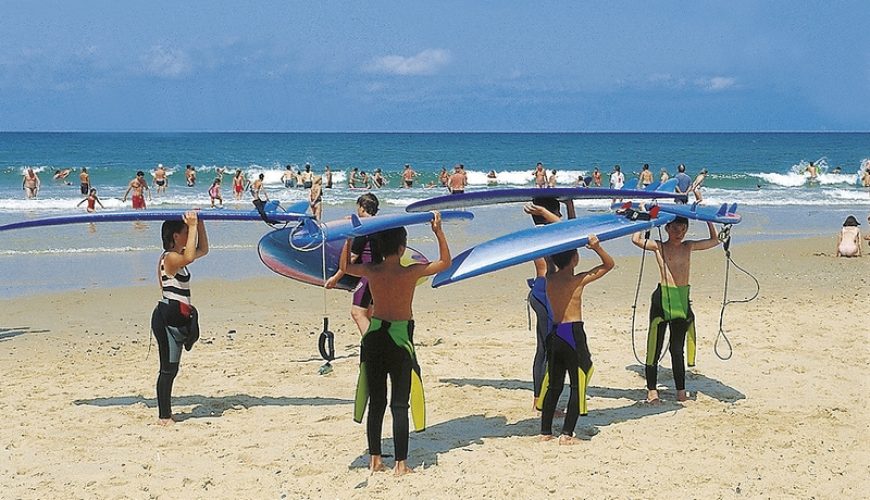
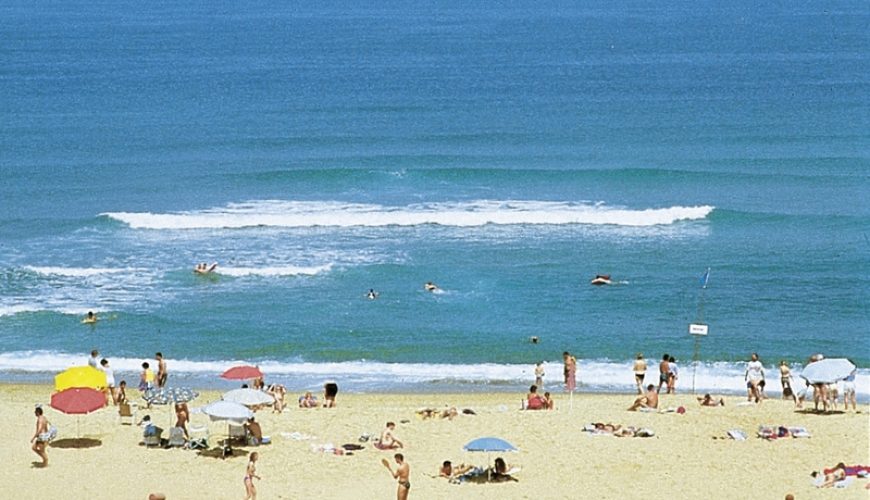
From the oyster shacks of Arcachon Bay (Europe’s largest), climb the Dune du Pilat (Europe’s tallest sand dune, 110 metres), then follow the pine-backed Landes coast south through Hossegor – France’s surf capital – to Biarritz, where the Basque Country begins. The beaches are vast, the waves Atlantic-sized and the campsites excellent. Highly recommended in April–June before the summer crowds arrive.
Route 7: Alsace Wine Route & Black Forest Loop
One of France’s most intimate and beautiful drives: the Route des Vins d’Alsace runs 170 km from Marlenheim to Thann through a ribbon of medieval villages, half-timbered houses and Riesling vineyards. Strasbourg (UNESCO city centre) is the grand finale. Easy to combine with a cross-border loop into Germany’s Black Forest and back via the Rhine. Perfect in June–July for the wine festivals, or October for the vendange (harvest).
Route 8: Corsica – Full Island Loop
France’s most dramatic island destination requires a ferry from Nice or Toulon (2.5–5 hours). The 850 km island loop takes in the wild Cap Corse peninsula, Calvi’s citadel, the maquis-scented west coast, Ajaccio (Napoleon’s birthplace), the pink granite coves around Porto, and the Bavella needles in the south. Roads are narrow and winding – a compact campervan or panel van is strongly recommended. Recommended duration: 10–14 days. Book ferries early; July–August spots sell out months in advance.
«In France, the route is never just a means of getting from A to B. The road itself is the destination – another village, another patisserie, another view.»
Aires de Camping-Car – 5,000 places to sleep for almost nothing
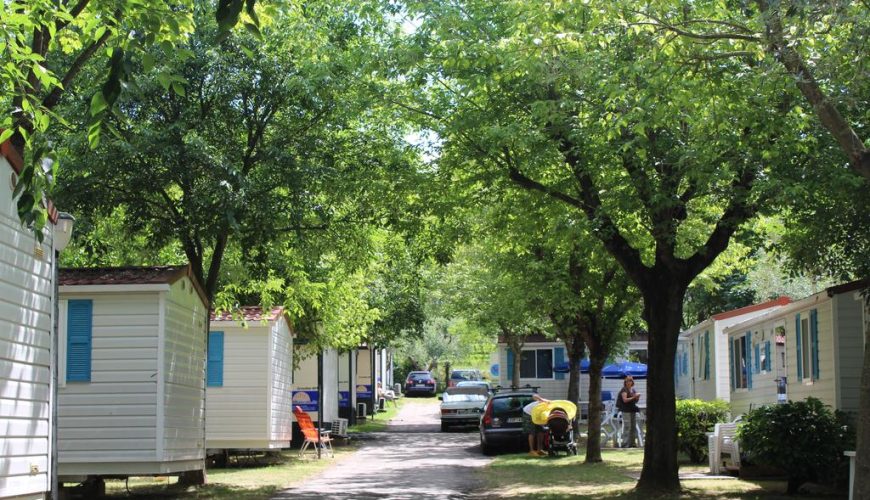
The Aire de Camping-Car (or Aire de Service) is uniquely French and one of the main reasons the country tops every motorhomer’s wish list. An aire is a purpose-built overnight stop specifically for motorhomes – typically offering a level, marked pitch, a fresh water point (borne), a grey water disposal drain and a chemical toilet emptying point. Many also offer electric hook-up. They are found in village car parks, next to tourist offices, in city suburbs and on clifftops with million-euro views.
A 2026 survey of the French aire network found 3,917 aires in total, of which 1,108 remain completely free. Paid aires average just €13.62 per night for a serviced pitch. This makes France not only one of the most beautiful countries in Europe for motorhomers, but also one of the most affordable.
Using Aires de Camping-Car – what you need to know
- Apps: Park4Night, Campercontact, Caramaps and WikiCamps all carry up-to-date aire listings with user reviews
- Payment: Many paid aires use a coin-operated borne – carry €1 and €2 coins at all times
- Maximum stay: Most aires have a 24- or 48-hour maximum stay rule (often signposted)
- Wild camping: Not permitted on the coast, in protected natural areas or near historic monuments. Outside these zones, sleeping inside a legally parked vehicle is tolerated in France
- France Passion: An annual membership scheme (€35) giving access to 2,200 farm, vineyard and craft-producer stopovers – a highlight for food lovers
- Motorway aires: Service areas appear every 30–40 km on French autoroutes, most with dedicated motorhome dump points, fresh water and paid electricity tokens
Nature, Food & Culture – the real reasons to go slow
A motorhome road trip through France is never just about the driving. It’s about pulling up next to a Tuesday morning market in a Provençal square and buying tomatoes still warm from the vine. It’s about parking beside a Loire château as the evening light turns the stone gold. And it’s about France’s extraordinary natural parks, which together protect a quarter of the country’s land area.
National & Regional Natural Parks
Alps · Haute-Savoie
Écrins & Vanoise National Parks
Écrins is France’s largest national park: glaciers, ibex, chamois and the south face of the Meije above La Grave. Vanoise protects the high plateau between Tarentaise and Maurienne valleys. Both are accessible by motorhome via well-signed routes.
Provence · Alpes-Côte d’Azur
Mercantour National Park
The southern Alps at their most dramatic. Wolves, golden eagles, high-altitude lakes and painted rock shelters from the Bronze Age. Motorhome aires at Isola (from €15.86/night in 2026) and St-Martin-Vésubie provide perfect bases.
Brittany · Wild Atlantic
Armorique Regional Park
Crozon Peninsula, Monts d’Arrée moorland and the island of Ouessant combine to make the wildest corner of Brittany. Little-visited even in July, with excellent free aires on the peninsula headlands.
Auvergne
Volcans d’Auvergne Regional Park
Extinct volcanoes, crater lakes, medieval fortress towns and some of France’s best cheese. The Puy-de-Dôme summit road is open to motorhomes outside peak hours. Deeply underrated and wonderfully quiet.
Food & Wine Culture on the Road
The great pleasure of a French motorhome trip is eating the way the locals eat: buying directly from producers. France Passion farm stops include working vineyards, sheep’s cheese farms, apple orchards producing cidre bouché and oyster fisheries on the Atlantic coast. Turn up, buy something, sleep for free. A glass of Sancerre tasted in the cellar where it was made, a plate of Bresse chicken in a village restaurant where the chef is also the mayor, freshly baked croissants from the boulangerie at 7am – these are experiences a hotel simply cannot deliver.
Regional food highlights by route
- Normandy: Camembert, Livarot, Calvados, moules marinières, pain d’épices
- Brittany: Galettes de sarrasin, Kouign-amann, salted butter caramel, oysters from the Belon
- Loire Valley: Rillettes du Mans, Tarte Tatin, Sancerre, Muscadet, goat’s cheese (Crottin de Chavignol)
- Bordeaux & Dordogne: Foie gras, confit de canard, Périgord truffles, Bordeaux Supérieur
- Provence: Aïoli, socca, daube provençale, tapenade, rosé from the Var
- Alsace: Tarte flambée (Flammkuchen), choucroute garnie, Munster cheese, Riesling, Gewurztraminer
Costs & Budget – a realistic breakdown for 2026
Sample costs for 2 people · 14 days · Provence–Riviera route (Marseille → Nice):
| Cost item | Low season (Oct–May) | Peak season (Jul–Aug) |
|---|---|---|
| Panel van / hitop camper (14 days) | €840 | €1,400 |
| Overcab motorhome (14 days) | €1,540 | €2,380 |
| Fuel (diesel, 14 days, ~100 km/day) | €140 | €160 |
| Aires & campsites (avg. €14/night) | €196 | €280 |
| Motorway tolls (selective use) | €40 | €60 |
| Food (self-catering + markets) | €420 | €500 |
| Restaurants & cafés (5–6 meals out) | €180 | €240 |
| Attractions & entry fees | €100 | €150 |
| Flights to/from France (budget airline) | €120 | €280 |
| Travel insurance (2 people) | €80 | €80 |
| Reserve / contingency | €100 | €200 |
| Total (panel van, 2 people, 14 days) | approx. €2,216 | approx. €3,350 |
How to keep costs down
- Travel May–June or September–October: Prices 20–35% lower, far fewer crowds, same landscapes
- Use free aires: 1,108 free aires across France – apps like Park4Night filter by “free” to find them
- France Passion membership (€35): Unlocks 2,200 free farm stopovers – pays for itself in two nights
- Avoid motorways where possible: D-roads are slower but free, more scenic and take you through villages with morning markets
- ACSI Camping Card: Off-peak discount card for 3,300 European campsites – useful for shoulder season
- Book early via mobilcamper.de: Summer vehicles sell out by January – early booking means better choice and lower prices
Check prices for your dates – all vehicle categories available on mobilcamper.de.
Organised Group Tours – France with a guide, not a map
The motorhome is the most independent way to see France – but it’s not the only way. For travellers who prefer to leave the planning, driving and logistics to someone else, organised group tours offer a well-structured alternative. Tour operators run small-group (8–20 people) escorted itineraries with accommodation, transport, a professional guide and most meals included.
Organised tours make particular sense for solo travellers who want company, for first-time visitors who feel overwhelmed by France’s scale, and for travellers with limited time who want to see the highlights efficiently without missing anything. Specialist operators run thematic programmes – wine and gastronomy tours, art history itineraries through Impressionist Normandy, World War II heritage routes, cycling-and-luggage-transfer tours along the Loire.
Most popular format
Small-Group Coach Tour
8–16 passengers, English-speaking guide, fully inclusive accommodation in 3–4 star hotels, breakfast and most dinners included. Operators such as Insight Vacations, Trafalgar and Europamundo offer France programmes from 8 to 21 days. From approx. €2,200/person for 10 days.
Active travellers
Cycling & Walking Tours
Self-guided or guided cycling along the Loire à Vélo (800 km marked cycle route through châteaux country) or the Canal du Midi. Luggage transferred between overnight stops; accommodation booked in advance. Combines perfectly with a campervan hire for the first or last few days.
Popular group tour itineraries in France
- Classic France: Paris – Loire Valley – Bordeaux – Carcassonne – Provence – Nice (14 days)
- Normandy & D-Day: Honfleur – Bayeux – D-Day Beaches – Mont Saint-Michel – St-Malo (7–10 days)
- Provence & Riviera: Avignon – Luberon – Gorges du Verdon – Cannes – Nice (8–10 days)
- Alsace & Burgundy: Strasbourg – Colmar – Dijon – Beaune – Lyon (7–9 days)
- Corsica walking tour: GR20 ridge route or coastal trails, maquis villages (8–14 days)
«A guided tour shows you the best of France in two weeks. A motorhome shows you the France that two weeks couldn’t contain. Choose according to your spirit.»
Entry, Driving Rules & Essential Tips – everything you need to know
Best time to visit France by motorhome
Season by season
- April – June (Spring): Best overall. Wildflowers in Provence, lavender preparation, châteaux gardens in full bloom, far fewer tourists than summer. Aires uncrowded.
- July – August (Peak summer): Warm to hot (25–38°C in the south), all attractions open, busy coasts. Book well in advance. Prices peak. Best for Alpine passes (all open) and Atlantic surfing.
- September – October (Autumn): Harvest time – vendange in Bordeaux and Alsace, truffle season in the Périgord, golden Normandy orchards. Superb quality, lower prices, mild weather.
- November – March (Winter): Ski season in the Alps and Pyrenees; many campsites and lower-altitude aires close. Suitable for the South (Riviera stays mild at 12–16°C) and cultural city breaks.
Driving rules for motorhomes in France
Key rules & requirements for motorhomers
- Drive on the right – priority à droite applies at unmarked junctions (give way to traffic joining from the right)
- Speed limits: Motorways 130 km/h (110 km/h in rain); dual carriageways 110 km/h; main roads 80 km/h; urban areas 50 km/h. Motorhomes over 3.5 tonnes: 110/100/80/50 km/h
- Tolls (péages): France’s autoroutes are tolled. Budget €1–3 per 10 km on major routes. Pay by card at most booths. An Eurotoll transponder (available from mobilcamper.de on request) speeds up passage
- Crit’Air vignette (€3.76): Required to drive in low-emission zones in Paris, Lyon, Marseille, Toulouse, Grenoble, Strasbourg and others. Order at certificat-air.gouv.fr before travel
- Compulsory equipment: Two warning triangles, one high-vis vest per occupant (accessible from the cab), first-aid kit, fire extinguisher. Headphone ban while driving is enforced
- Winter tyres: Compulsory on certain mountain roads Nov 1–Mar 31 (signposted). Snow chains required on others
- Breathalyser: Carrying one is no longer legally required but is sensible
- Paris low-emission zone: ZFE-m covers most of Paris intramuros – campervans classified as cars (under 3.5t) need a valid Crit’Air 1 or 2 sticker to enter on weekdays
Entry requirements for non-EU visitors
France is part of the Schengen Area. Citizens of the EU, UK, US, Canada, Australia and New Zealand do not require a visa for stays under 90 days. From mid-2026 the EU’s ETIAS (European Travel Information and Authorisation System) is expected to apply to visa-exempt non-EU nationals – check the official etias.eu website before travel. A valid passport (6 months’ validity beyond planned return) is required. UK driving licences remain valid in France post-Brexit.
mobilcamper.de · Motorhome Hire France · All Vehicle Types · All Airports · 2026
Your French road trip starts on mobilcamper.de.
Compact campervan or luxury motorhome, one-way or return, airport pick-up in Paris, Nice, Marseille, Bordeaux or Lyon – book your France motorhome hire and hit the road.

Comment (0)