

The Nuraghe: More than 7,000 mysterious stone towers from the Bronze Age – nowhere else in Europe will you find a civilisation as enigmatic and architecturally extraordinary as the Nuragic people of Sardinia.
What is a nuraghe? – An introduction
Anyone visiting Sardinia for the first time will sooner or later encounter one of these strange stone towers – solitary on a hilltop, surrounded by macchia scrubland or at the edge of an olive grove. Tall, dark, built from basalt or granite blocks without mortar, hollow inside with a spiral staircase. These are nuraghe – and they represent one of the most enigmatic legacies of European prehistory.
A nuraghe (plural: nuraghi, or in English nuraghe towers) is a tower-like megalithic structure built by the so-called Nuragic civilisation between approximately 1800 and 500 BC. With over 7,000 surviving examples – estimates suggest as many as 30,000 originally existed – Sardinia holds the densest concentration of prehistoric monumental architecture in all of Europe. No other people, no other culture, has left behind so many monumental stone structures in such a small geographic area.
“The nuraghe are the greatest mystery of European prehistory – a high civilisation without writing, yet with a building technique that has survived three and a half thousand years.”
What exactly the nuraghe were – fortresses, temples, seats of power, astronomical observatories or a combination of all of these – remains a matter of scholarly debate. What is clear: the Nuragic people were not primitive tribespeople. They were a highly organised society with extensive trade networks across the entire Mediterranean, advanced bronze-working skills and an architectural tradition that arose without written language or metal tools.
History of the Nuragic civilisation
The Nuragic civilisation is not a single homogeneous period but a development spanning more than a thousand years. Archaeologists broadly distinguish three phases:
The Early Phase – Simple Tower Nuraghe (1800–1500 BC)
The earliest nuraghe are simple single towers – circular, built from large unworked stone blocks, with a single chamber and a domed roof constructed using the so-called corbelling technique. Horizontal stone layers are placed progressively inward, tapering toward a stable ceiling – an engineering masterpiece achieved without mortar, formwork or metal instruments. These early towers typically stand 10–15 metres tall and remain structurally sound after 3,500 years.
The Golden Age – Complex Nuraghe (1500–1000 BC)
During the height of Nuragic culture, the most impressive structures appeared: multi-tower complexes with a central keep (mastio), surrounding secondary towers, inner courtyards, wells and entire villages of circular stone huts around the perimeter. The most celebrated example is Su Nuraxi di Barumini – a UNESCO World Heritage Site since 1997. From this period also come the famous bronzetti – small bronze figurines of warriors, chieftains, gods and animals, considered among the most significant works of art from European prehistory.
The Decline (1000–500 BC)
With increasing Phoenician and later Carthaginian presence along Sardinia’s coasts, Nuragic culture gradually eroded. Coastal towns came under foreign influence while the nuraghe in the interior continued to be inhabited for centuries longer. The Roman conquest of Sardinia in 238 BC effectively ended the Nuragic civilisation as an independent force – though many towers were still used as shelters, churches and stone quarries well into the medieval period.
Fascinating facts about the Nuragic civilisation
- The Nuragic people hadno written language– their entire history is reconstructed through archaeology alone
- Sardinianbronzettihave been found at sites as far as Greece and Cyprus – proof of wide-ranging Mediterranean trade
- The corbelling technique is so structurally sound that many towers remain fully intact after 3,500 years
- Some nuraghe complexes had up to500 circular huts– fully functioning small towns
- The origin of the word “nuraghe” is unclear – possibly from a pre-Indo-European root meaning “hollow” or “cavity”
- The Nuragic people are considered unrelated to any other known Bronze Age population in Europe
The finest nuraghe sites near Cagliari
Cagliari, Sardinia’s capital, is not only a vibrant cultural city in its own right – it is also the ideal base for day trips to the island’s most significant nuraghe sites. Most of the following can be reached within 30–90 minutes.
Su Nuraxi di Barumini – UNESCO World Heritage Site
Su Nuraxi is the most significant and impressive nuraghe complex on Sardinia, and since 1997 the only nuraghe inscribed on the UNESCO World Heritage List. The central tower originally stood over 18 metres tall; approximately 14 metres survive today. Around the main tower cluster four secondary towers, an inner courtyard with a well, and the ruins of an extensive village of several hundred circular stone huts.
The site was excavated between 1950 and 1957 by Sardinian archaeologist Giovanni Lilliu – one of the most important post-war excavations in Europe. Guided tours in Italian, English and other languages are available daily; the visit takes approximately one hour. Admission approx. €15.
Nuraghe Antigori
Perched on a rocky promontory above the Tyrrhenian Sea, Nuraghe Antigori is one of the most dramatically situated archaeological sites on the island. From here the Nuragic people commanded an unobstructed view of approaching ships across the sea. Particularly significant: Mycenaean pottery sherds were found at this site – direct evidence of Bronze Age trade between Sardinia and the Greek world. The nuraghe lies close to the ancient Roman city of Nora and can easily be combined into a single day trip.
Nora – Ancient City with Nuragic Origins
Nora is primarily known as a Phoenician Roman city, but settlement of the area dates back to the Nuragic period. The ancient site occupies a peninsula directly on the sea – with theatre, mosaics, thermal baths and temple ruins. Several smaller nuraghe in the immediate vicinity demonstrate the continuity of settlement over millennia. A half day excursion from Cagliari combines nuraghe, Phoenician history and Roman archaeology in a single seaside location.
Nuraghe Monastir
One of the best preserved and most easily accessible nuraghe in the Cagliari region. The single tower is in excellent condition and open to visitors inside – ideal for a quick stop between the airport and city sightseeing. The surrounding land shows traces of a Nuragic village settlement. Free access, no admission charge.
Tomba dei Giganti – Sa Domu ‘e S’Orcu
Not a nuraghe in the strict sense, but an essential element of Nuragic culture: the Tombe dei Giganti (Giants’ Graves) are megalithic collective burial chambers constructed by the same people who built the nuraghe. Sa Domu ‘e S’Orcu near Senorbì is one of the best-preserved examples: a long, narrow burial chamber fronted by a magnificent standing stone with a distinctive semicircular upper section. The name “Giants’ Graves” arose because later Sardinian farmers believed only giants could have built such structures.
Nuraghe sites near Forte Village Resort
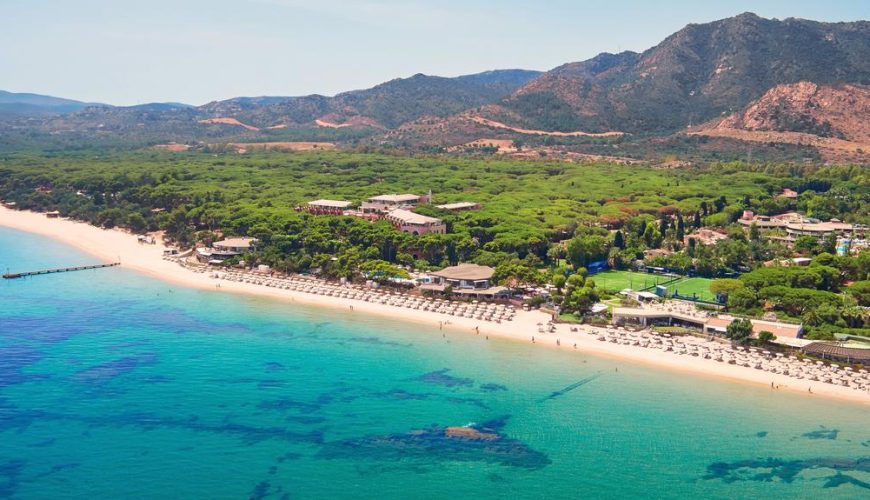
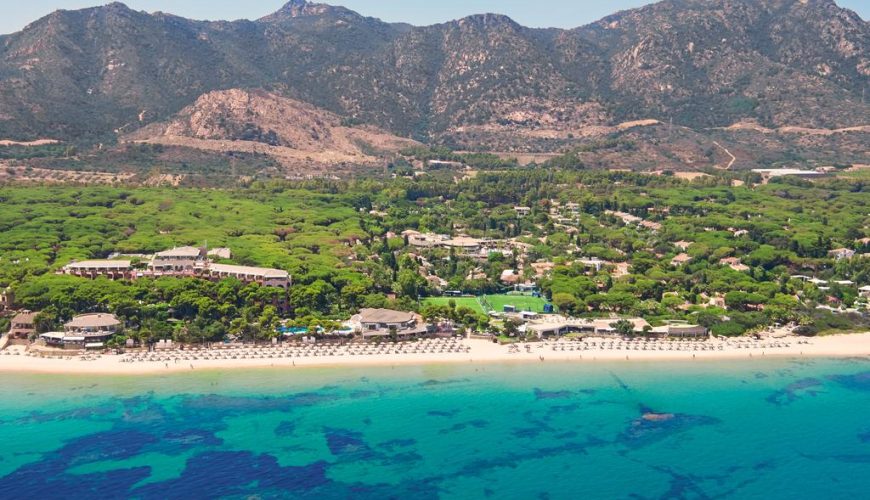
Forte Village Resort lies at Santa Margherita di Pula on Sardinia’s south-western coast – approximately 23 miles from Cagliari. The surrounding area is not only celebrated for its magnificent beaches but for an extraordinary density of prehistoric and ancient sites. Guests of the Forte Village enjoy the rare privilege of combining one of Europe’s finest luxury resorts with some of the most significant archaeological sites in the entire Mediterranean.
Nuraghe Antigori – on the doorstep
Nuraghe Antigori – described in the Cagliari section above – lies within minutes of the Forte Village by car and represents the natural first cultural excursion for history-minded guests. The sea-view tower with its Mycenaean finds offers a vivid impression of the strategic importance of nuraghe as coastal watchtowers and centres of long-distance trade.
Nora – Ancient City by the Sea
Nora is the ideal half-day excursion for Forte Village guests – the Phoenician-Roman city lies just a few kilometres away, directly on the sea. Theatre, mosaics, temples and thermal baths are well preserved; the backdrop of the blue Mediterranean makes every visit exceptional. The small museum in Pula contains finds from Nora and the surrounding area including objects from the Nuragic period.
Su Nuraxi di Barumini – the great day trip
Even from the Forte Village, Su Nuraxi is reachable in just over an hour – a rewarding day trip that combines UNESCO World Heritage with Sardinian landscape. The resort offers guests on request guided excursions to the island’s most important sites; Su Nuraxi features regularly on the programme. The return journey can take in the hilltop village of Las Plassas with its Norman tower and the rolling Marmilla landscape.
Further major nuraghe across Sardinia
Those wishing to explore beyond the south will find spectacular sites across the entire island. Here is a selection of the most significant.
| Site | Region | Special feature | Distance from Cagliari |
|---|---|---|---|
| Su Nuraxi, Barumini | Marmilla | UNESCO World Heritage, largest complex | approx. 37 miles |
| Nuraghe Losa | Abbasanta, Central Sardinia | Three-tower complex, excellently preserved | approx. 62 miles |
| Nuraghe Santu Antine | Torralba, Sassarese | “King of the Nuraghe”, 18 m tall | approx. 115 miles |
| Nuraghe Arrubiu | Orroli, Ogliastra | Five-tower complex, distinctive red basalt | approx. 50 miles |
| Complesso Nuragico di Palmavera | Alghero, North-West | With village; near Alghero beaches | approx. 134 miles |
| Serra Orrios | Dorgali, Nuoro | Largest surviving Nuragic village | approx. 87 miles |
| Nuraghe Is Paras | Isili, Sarcidano | Tallest surviving corbelled dome | approx. 44 miles |
Museums of Nuragic culture
The archaeological finds from the nuraghe are distributed across several museums on the island. A museum visit complements any site tour and places the civilisation in its broader historical context.
The most important museums
- Museo Archeologico Nazionale di Cagliari:The most important archaeological museum on Sardinia. Holds an outstanding collection of Nuragic bronzetti, ceramics and jewellery. Piazza Arsenale, Cagliari. Admission approx. €5.
- Museo Civico di Barumini – Casa Zapata:Directly adjacent to Su Nuraxi. Displays finds from the excavation and provides an excellent overview of Nuragic civilisation. Ideal preparation or follow-up to the site visit.
- MAN – Museo Archeologico Nazionale di Nuoro:In the heart of Sardinia, with one of the finest bronzetti collections on the island.
- Museo Civico G. A. Sanna, Sassari:North-western Sardinia, with significant finds from the Nuragic and Phoenician periods.
- Museo Antiquarium Arborense, Oristano:Particularly relevant for nuraghe of central Sardinia.
Forte Village Resort – luxury meets archaeology
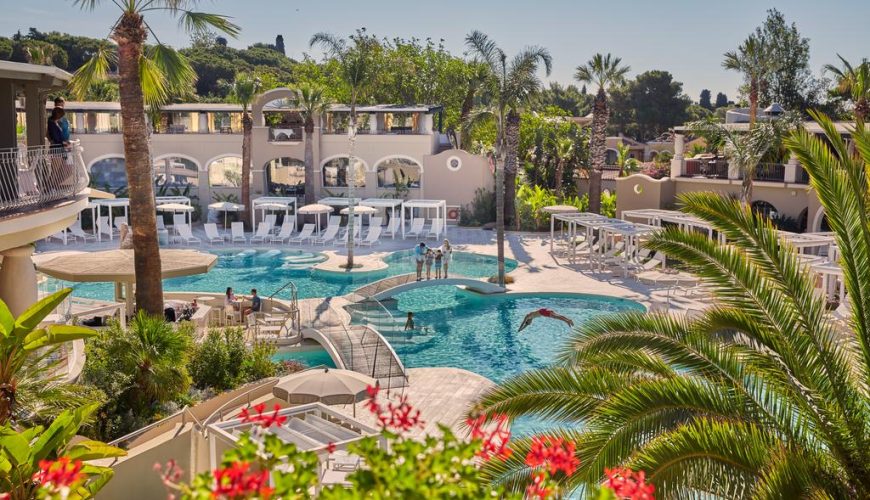
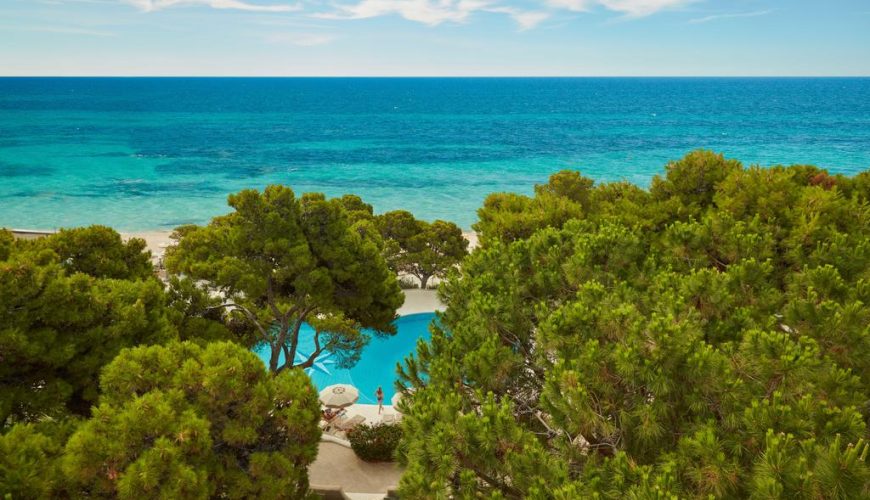
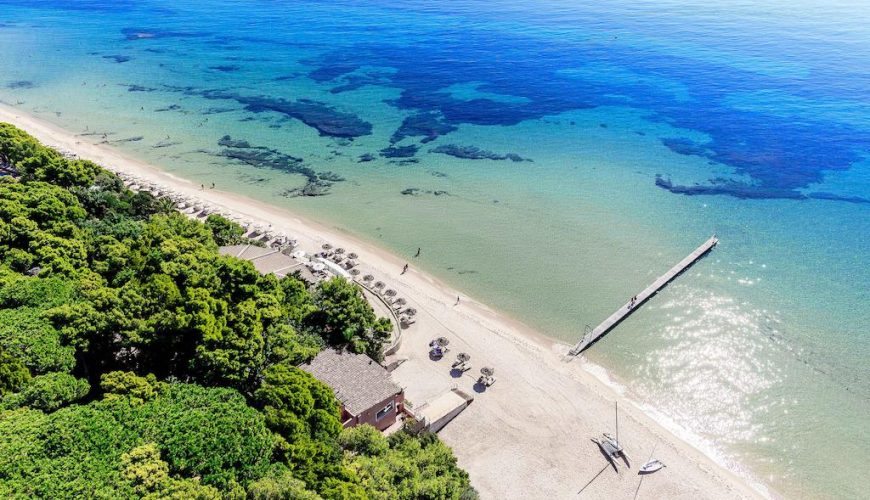
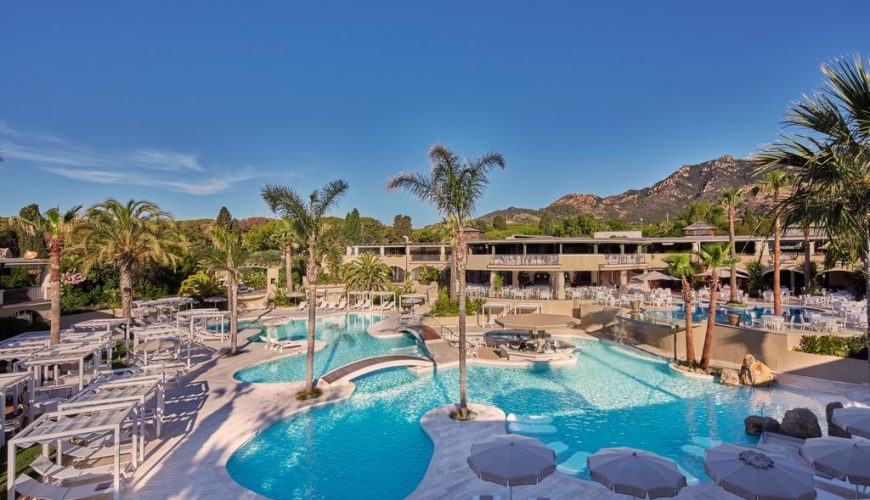
The Forte Village Resort at Santa Margherita di Pula is widely considered one of the finest resorts in Europe, having been awarded “Best Resort in the World” on numerous occasions. It lies on one of Sardinia’s most beautiful sandy beaches, set within a park of eucalyptus and pine – and it is simultaneously the ideal base for nuraghe tours in the surrounding area.
Forte Village Resort – at a glance
- Location:Santa Margherita di Pula, south-western Sardinia · approx. 23 miles from Cagliari
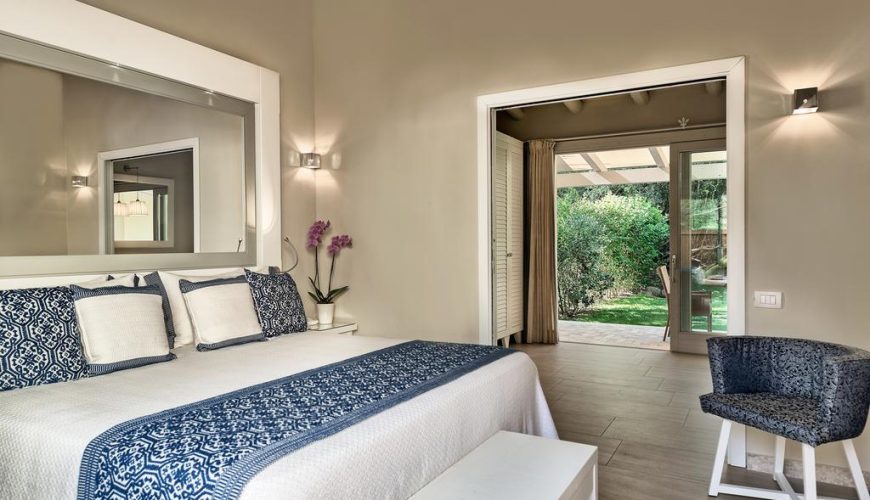
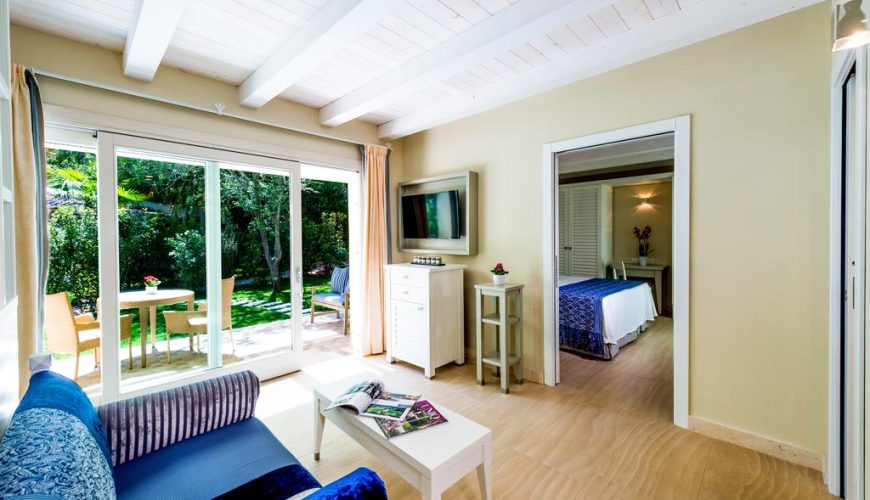
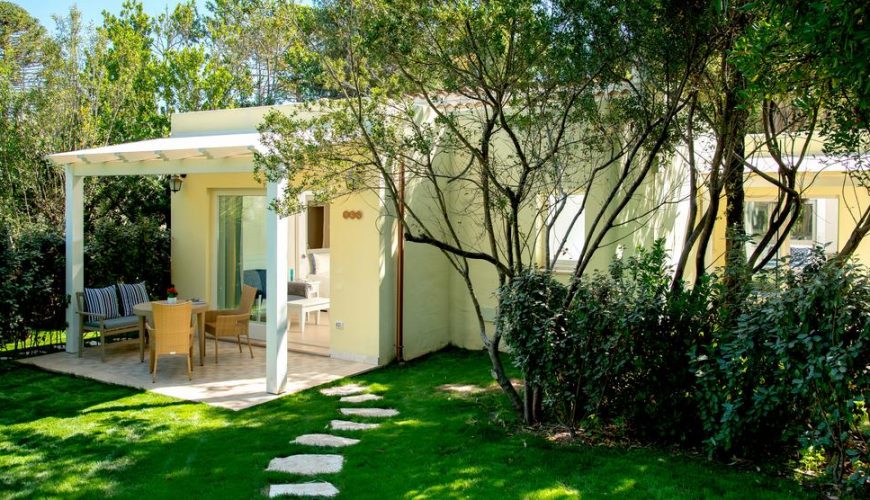
- Category:Five-star luxury resort with multiple hotel buildings and bungalows
- Beach:Private beach with fine white sand, directly at the resort
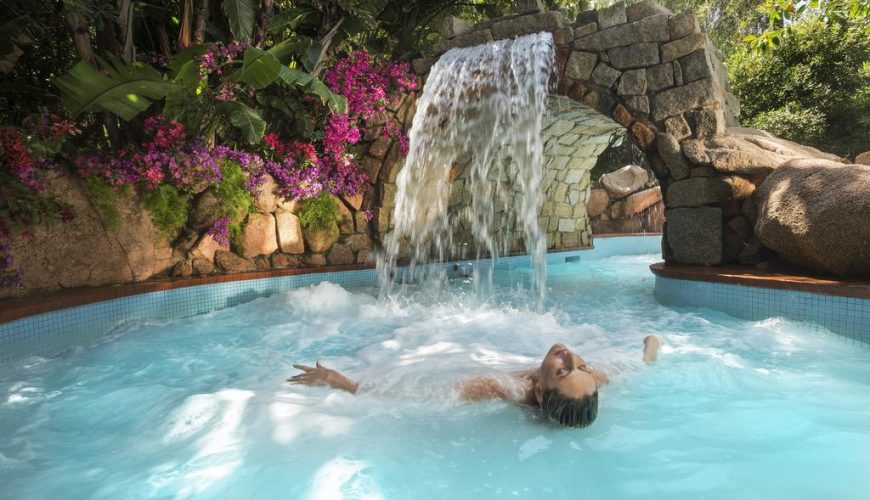
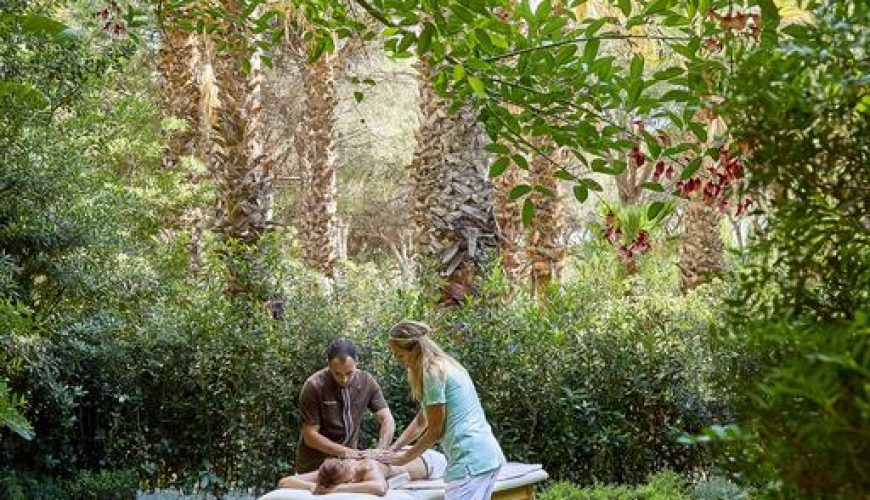
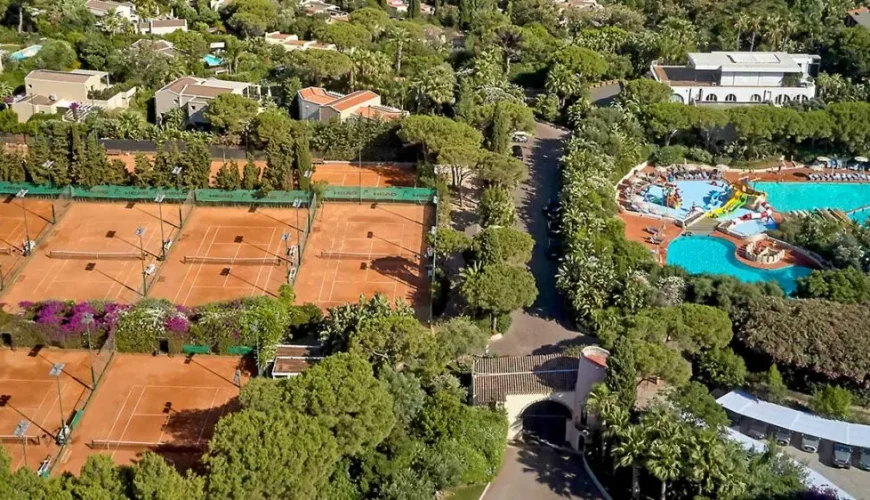
- Sport: Thalasso spa, tennis academy (16 courts), golf (Is Molas, 15 min.), Chelsea FC Football Academy, water sports, cycling/e-bike
- Dining:Over 20 restaurants and bars
- Families:Outstanding children’s programme – one of Europe’s most family-friendly resorts
- MICE & Weddings:Conference centre for up to 1,500 delegates, dedicated wedding service
- Season:May to October
- Website:forte-village.de
The combination of a world class resort and the proximity of Nuraghe Antigori and the ancient city of Nora makes Forte Village one of those rare destinations where relaxation and genuine cultural depth are simultaneously possible. The resort organises guided excursions to the principal sites on request – including Su Nuraxi – for guests who wish to explore Sardinia’s prehistoric heritage without the effort of independent planning.
Flights to Sardinia from the UK, US & Europe
Sardinia has three international airports. For Cagliari and Forte Village, Cagliari-Elmas Airport (CAG) is the natural choice – just 4 miles from the city centre and 23 miles from Forte Village Resort.
| Departure airport | Destination | Flight time | Airlines |
|---|---|---|---|
| London Gatwick (LGW) | Cagliari (CAG) | approx. 2 h 45 min | easyJet, Ryanair, TUI |
| London Heathrow (LHR) | Cagliari (CAG) | approx. 2 h 50 min | British Airways (via Rome) |
| Manchester (MAN) | Cagliari (CAG) | approx. 3 h 10 min | TUI, Jet2 (seasonal) |
| Frankfurt (FRA) | Cagliari (CAG) | approx. 2 h 30 min | Ryanair, Condor, Eurowings |
| New York (JFK) | Cagliari via Rome/Milan | approx. 12–14 h | Various + ITA Airways |
| Vienna (VIE) | Cagliari (CAG) | approx. 2 h 15 min | Ryanair, Austrian |
| Zurich (ZRH) | Cagliari (CAG) | approx. 2 h 10 min | Edelweiss Air, Swiss |
| Paris CDG | Cagliari (CAG) | approx. 2 h 05 min | Air France, Transavia |
Flight tips
- Direct flights to Cagliari are mainlyseasonal (April–October)– outside this window, connections via Rome (FCO) or Milan (MXP).
- Price comparison: skyscanner.com, kayak.com, google.com/flights.
- Charter packages: TUI and Jet2 Holidays often offer good-value packages from UK regional airports.
- Spring herb and nuraghe season:April–June flights are considerably cheaper than July–August – and the island is at its most beautiful.
- Airport transfer from CAG: car hire at the terminal (recommended); taxi to Cagliari city centre approx. €15–20; bus shuttle available.
Ferries to Sardinia – routes & operators
For travellers arriving by car, or those who simply love the experience of sailing into a harbour at dawn, the overnight ferry is one of the Mediterranean’s great pleasures. Sardinia is served by several Italian and French ports.
| Route | Duration | Operators | Notes |
|---|---|---|---|
| Civitavecchia → Cagliari | approx. 14–16 h (night) | Tirrenia, GNV | Direct; overnight ferry ideal |
| Genoa → Cagliari | approx. 20 h | Tirrenia, GNV | Ideal with car; relaxed crossing |
| Naples → Cagliari | approx. 16 h | Tirrenia | Seasonal; beautiful Mediterranean crossing |
| Civitavecchia → Olbia | approx. 7–9 h | Grimaldi, Moby | For northern Sardinia; fastest option |
| Toulon → Porto Torres | approx. 10–12 h | Corsica Ferries | For travellers from France |
| Piraeus (Athens) → Cagliari | approx. 36–40 h | ANEK Lines (seasonal) | Greece–Sardinia direct |
Ferry tips
- Booking: directferries.com, ferries.gr, or directly with Tirrenia (tirrenia.it) and GNV (gnv.it).
- A cabin on the night ferry is well worth the supplement – from approx. €30–60 per person; considerably more restful than a reclining seat.
- Taking a car to Sardinia: Genoa–Cagliari with vehicle from approx. €130–180 (car + 2-berth cabin for 2 persons).
- In summer (July–August), book early – cabins and car spaces sell out weeks in advance.
- From Genoa (Germany connection): drive to Genoa (approx. 6–8 hours from Germany) + overnight ferry = relaxed arrival in Sardinia.
Car hire – essential for nuraghe tours
For nuraghe tours, a hire car is absolutely necessary. Most sites lie away from public transport routes, on farm tracks or in small villages with no bus connections. Su Nuraxi, Nuraghe Arrubiu and Serra Orrios are practically impossible to reach without a vehicle.
Car hire essentials
- Providers:All major international companies at Cagliari-Elmas Airport (Hertz, Avis, Europcar, Sixt). Local providers often 20–30% cheaper.
- Prices:Small car from approx. €25–45/day (shoulder season) / €50–90/day (July–August). Fully comprehensive insurance strongly recommended.
- Roads:Main roads well surfaced; access tracks to remote nuraghe sometimes gravel – a standard small car suffices but some ground clearance helps.
- Driving licence:EU and UK licences accepted. Minimum age usually 21.
- Navigation:Google Maps works well; for remote sites, maps.me with offline Sardinia maps is recommended.
- Booking comparison
Suggested nuraghe touring routes by hire car
Self-drive itineraries
- Route 1 – Southern Classic (1 day):Cagliari → Nuraghe Monastir → Su Nuraxi Barumini → Nora → Forte Village. Approx. 100 miles.
- Route 2 – Coast & Culture (1 day):Forte Village → Nora → Nuraghe Antigori → Cagliari (Archaeological Museum) → return. Approx. 62 miles.
- Route 3 – Central Sardinia (2 days):Cagliari → Su Nuraxi → Nuraghe Is Paras (Isili) → Nuraghe Arrubiu (Orroli) → Serra Orrios (Dorgali) → Nuoro (museum). Approx. 175 miles.
- Route 4 – Island Grand Tour (5–7 days):All major nuraghe from south to north – Su Nuraxi via Nuraghe Losa to Santu Antine and Palmavera near Alghero.
Practical information – everything you need to know
Entry requirements
Documents & formalities
- Sardinia is part of Italy and the EU –national ID cardsufficient for EU citizens; passport required for UK, US and Australian visitors.
- European Health Insurance Card (EHIC / GHIC for UK)covers emergency treatment in Italian public hospitals.
- Travel insurance with medical repatriation cover strongly recommended, especially for hiking and mountain routes.
- No visa required for UK, US, Canadian or Australian citizens for stays up to 90 days.
Currency, costs & climate
- Currency:Euro (€). ATMs in all towns; carry cash for small village sites and farm-gate herb stalls.
- Best time for nuraghe visits:April–June and September–October. Pleasant temperatures (18–26 °C), no heat stress, sites uncrowded.
- July/August: Very hot (30–38 °C) – plan nuraghe visits in the early morning (8–10 am) or late afternoon.
- Site admission:Su Nuraxi approx. €15; other sites €3–8 or free.
- Daily budget per person (excluding accommodation):Budget: €40–60; mid-range: €80–130; Forte Village: premium category.
Language, emergencies & useful contacts
- Language:Italian. English spoken in tourist areas; basic Italian appreciated in villages.
- Emergency numbers:112 (general EU) · 118 (ambulance) · 115 (fire) · 1530 (coastguard)
- Electricity:230V / 50Hz, Type C and F sockets. UK visitors need a travel adapter; US visitors need both adapter and voltage converter.
- Time zone:CET/CEST – 1 hour ahead of UK GMT/BST; 6 hours ahead of US Eastern time.
- Sardinia Tourism:sardegnaturismo.it
- Cagliari Tourism:cagliari.turismo.it
- Forte Village Resort:forte-village.de
- Cagliari Airport:cagliariairport.it
- Tirrenia Ferries
Benefits for Clubs – TeamCoin Sponsoring
Sardinia Nature Travel Blog · Independent travel guide for culture, nature and beaches in Sardinia
Last updated: March 2026 · All information provided without guarantee · Admission prices and opening times subject to change
Comment (0)