

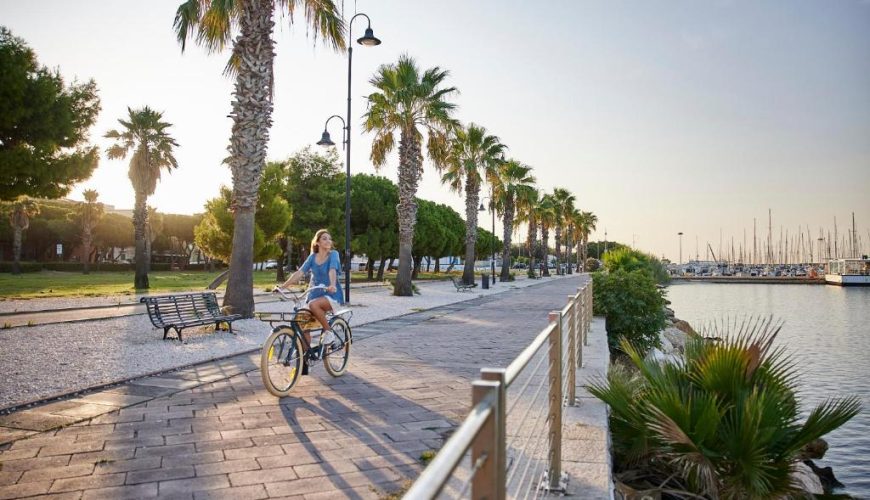
Between ancient bastions and crystal-clear water lies Sardinia’s capital – a city where world history, authentic cuisine and a laid-back beach culture coexist on a single hilltop.
Cagliari – the city Mediterranean travellers overlook
When travellers dream of Sardinia, they picture turquoise coves, white sand and the glamorous villas of the Costa Smeralda. Cagliari rarely features in that first image – and that is precisely what makes it so special. While tourist streams sweep across the island’s beaches, Sardinia’s capital preserves an authenticity that has long since vanished from many Mediterranean cities.
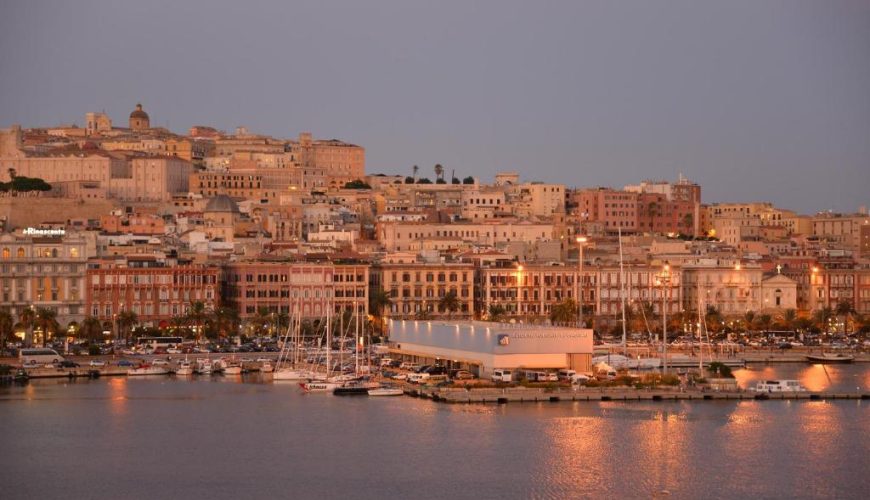
Cagliari sits in the south of Sardinia, sheltered in a wide gulf, overlooking millennia of history from a limestone hill. The Phoenicians established a trading post here, the Carthaginians expanded it, the Romans made it the capital of the province of Sardinia, the Pisans built the medieval fortified quarter, the Spanish left their Baroque architecture – and today Cagliari is a vibrant, southern-Italian-feeling city where daily life still plays out on piazzas and in markets.
“Cagliari is Sardinia’s best kept secret – a real, living city that hasn’t yet been discovered, despite existing for 2,500 years.”
For travellers, Cagliari is an ideal base: the airport is just 4 miles from the centre, the main sights are walkable, and from here the most important nuraghe sites, ancient Roman cities, magnificent beaches and the world-famous Forte Village Resort are all within an hour’s drive.
2,500 years on a single hill
The history of Cagliari is a succession of rulers who arrived, built and left traces – traces that are still readable in the city’s fabric today, like pages of an open history book.
Phoenicians, Carthaginians & Romans (800 BC – AD 456)
The first settlers on the hill above the Gulf of Cagliari were Phoenicians from present-day Lebanon, who founded a trading post called Krly around 800 BC. The Carthaginians took over the settlement and developed it into an important Mediterranean harbour. With the Roman conquest of Sardinia in 238 BC, Caralis – as the Romans called it – became the capital of the province of Sardinia. The Romans left behind an amphitheatre, thermal baths, an aqueduct and the basic street layout still visible in the city today.
Pisans, Aragonese & Spanish (AD 1000–1700)
In the Middle Ages, Cagliari was fiercely contested. In the 13th century the Pisans erected a powerful fortified complex on the hill – the Castello quarter of today – with towers, walls and a cathedral that still dominates the skyline. After the Aragonese conquest of 1326, Cagliari remained part of the Spanish Crown for over 400 years; the Baroque style of many churches and palaces reflects this period. In 1720 Sardinia passed to the House of Savoy, and in 1861 became part of unified Italy.
The 20th century
During the Second World War, Cagliari was heavily bombed – over 80% of the old city was destroyed. Post-war reconstruction significantly shaped the cityscape; only the Castello quarter survived largely intact, giving an authentic impression of medieval Cagliari. The post-war decades brought economic growth through tourism, petrochemicals and the service sector.
The main sights
Castello – the medieval heart
The Castello quarter on the limestone hill is Cagliari’s oldest and most impressive district. Narrow lanes, ochre-yellow facades, Romanesque-Gothic churches and Renaissance palaces crowd within the Pisan city walls. From the bastions – particularly from the Bastione di Saint Remy – the views across the city, the gulf and on clear days to the Italian mainland are extraordinary. The Bastione di Saint Remy with its cafés and elegant terrace area is one of the most popular evening gathering places in the city.
Cathedral of Santa Maria – Sardinia’s most significant church
At the heart of the Castello quarter rises the Cathedral of Santa Maria di Castello, begun in the 13th century by the Pisans as a Romanesque church and expanded over the centuries with Gothic, Baroque and Neoclassical elements. Particularly noteworthy: the carved pulpits from the 12th century (originally made for Pisa Cathedral and later transferred to Cagliari) and the crypt with the remains of early Sardinian kings and bishops. Free entry; open daily.
Roman Amphitheatre
Cut directly into the limestone rock, this 2nd-century AD amphitheatre is one of the best-preserved Roman structures on the island. It once held up to 10,000 spectators for gladiatorial combat and animal hunts. Today it serves – after controversial renovations – as an open-air venue for concerts and performances. Its setting at the foot of the Castello hill, surrounded by Mediterranean greenery, makes any visit particularly atmospheric.
National Archaeological Museum & Art Gallery
The Museo Archeologico Nazionale di Cagliari holds the world’s most important collection of Nuragic bronzetti – small bronze figurines of warriors, gods and animals from the Sardinian Bronze Age, considered among the most significant works of art from European prehistory. The adjacent Pinacoteca Nazionale displays paintings from the Spanish period. Both museums occupy the Citadella complex on the Castello hill. Admission approx. €5 each.
Mercato di San Benedetto – Italy’s largest covered market
With over 600 traders across two floors, the Mercato di San Benedetto is one of the largest covered markets in Italy – and one of Cagliari’s most vital spaces. Ground floor: fresh fish straight from the gulf, seafood, bottarga and Sardinian specialities. Upper floor: vegetables, fruit, cheese, meat and spices. A visit in the early morning – when the fishermen deliver their catch – is an unforgettable experience of authentic Sardinian daily life. Free entry; open Mon–Sat until approx. 1.30 pm.
Sanctuary of Nostra Signora di Bonaria
High on its own hill overlooking the harbour, the pilgrimage church of Bonaria gave its name to the Argentine capital Buenos Aires – Sardinian emigrants brought the devotion to the Virgin Mary with them to South America. The church and its small museum contain remarkable medieval artworks. The early Christian catacombs in the Stampace quarter, reachable by guided tour, provide insight into Christianity’s earliest presence on the island.
Sardinian cuisine in Cagliari
Cagliari is one of the most gastronomically interesting cities in Italy – because Sardinian food is so radically different from what you find on the mainland. It is old, archaic, rooted in peasant tradition yet capable of extraordinary complexity of flavour.
What to eat in Cagliari
Bottarga: The “gold of Sardinia” – dried and pressed grey mullet or tuna roe, shaved thinly over pasta or grated on toast. Intense, salty, incomparable. Cagliari is the centre of bottarga production; the best purchases are made at the San Benedetto market.
Malloreddus: Sardinia’s national pasta – small ridged gnocchetti, usually served with a saffron sauce and salsiccia sarda (Sardinian sausage). Available in every good restaurant; handmade they are in a class of their own.
Porceddu: Suckling pig on a spit, slow-roasted over myrtle wood – the quintessential celebration dish. Found in specialist grill restaurants and at local festivals.
Fregola con arselle: Fregola – coarsely rolled, toasted durum wheat pasta – with clams (arselle) in a light tomato and white wine broth. The classic Cagliari dish par excellence.
Culurgiones: Hand-formed ravioli filled with potato, pecorino and mint, sealed with a distinctive ear-of-wheat pattern. Found in many restaurants throughout Cagliari.
Seadas: The Sardinian dessert: fried pastry filled with fresh pecorino and lemon zest, generously drizzled with bitter honey. Sounds unusual; tastes extraordinary.
Where to eat well in Cagliari
Restaurant recommendations by quarter
- Castello quarter:Rustic trattorias with wooden tables and handmade pasta – ideal for lunch after the city walk. Prices moderate (€12–20 main course).
- Marina quarter:Directly by the harbour, the fish restaurant scene concentrates here. Fresh seasonal fish, seafood and bottarga dishes. Particularly atmospheric in the evening.
- Villanova:Cagliari’s liveliest evening neighbourhood with wine bars, modern trattorias and the most mixed clientele in the city. Ideal for aperitivo culture.
- Stampace:The most traditional quarter with the city’s oldest restaurants. The place for a genuine home-cooking lunch.
- San Benedetto market:On the upper floor at midday, freshly prepared seafood dishes are available directly from the adjacent traders. Cheap, authentic, memorable.
Sardinian wines & drinks
Sardinia produces some of Italy’s most compelling wines. In Cagliari, do not miss: Vermentino di Sardegna (fresh white wine, perfect with fish), Cannonau (Sardinian Grenache – full-bodied, dark-fruited, reportedly one of the world’s healthiest red wines), Vernaccia di Oristano (an oxidative white wine, sherry-like, unique in Italy) and Mirto – the traditional Sardinian digestif made from myrtle berries, indispensable after dinner.
Beach & nature – Poetto and the lagoons
Cagliari is one of the few European capital cities with its own city beach – and what a beach it is. The Poetto stretches for 5 miles of white sand from the suburb of Quartu Sant’Elena to Capo Sant’Elia, just 10 minutes from the city centre by bus. The Poetto is the Cagliarians’ living room beach – joggers in the morning, families at noon, bar-goers in the evening.
Directly behind the Poetto lies the Stagno Molentargius – a saltwater lagoon of outstanding ornithological significance. It is home to one of Europe’s largest flamingo colonies: thousands of pink flamingos nest here and can be observed at very close range from the perimeter paths. The park is a protected nature reserve and easily reached on foot or by bike from Capo Sant’Elia.
Beaches & nature around Cagliari
- Poetto:5-mile city beach, swimming season May–October, several beach bars and restaurants
- Stagno Molentargius:Flamingo lagoon, free nature park, cycling paths, birdwatching
- Capo Carbonara (Villasimius, 31 miles):One of Sardinia’s finest marine protected areas with exceptionally clear water
- Mari Pintau (12 miles):Small natural beach with turquoise water, less crowded than Poetto
- Chia (37 miles):Extensive dunes, flamingo lagoon, turquoise sea – one of the island’s most beautiful beaches
- Nora beach (22 miles):Directly beside the ancient Roman city – history and swimming combined
Hotels in Cagliari – for every taste
Cagliari offers a growing hotel landscape ranging from elegant city hotels in the historic centre to comfortable properties near the beach. For cultural travellers, a location in the old town or Marina quarter is ideal; those prioritising the beach choose a property by the Poetto or in Quartu Sant’Elena.
Hotel La Ghirlanda
A small, stylish boutique hotel in the heart of the Castello quarter – housed in a restored 18th-century palazzo. Just 12 rooms, each individually furnished with Sardinian textiles and antique pieces. Rooftop terrace with panoramic views over the gulf. Breakfast with local produce. Ideal for cultural travellers who want to explore Cagliari on foot.
T Hotel Cagliari
The only five-star hotel in central Cagliari – a modern high-rise with generous rooms, a rooftop pool with city views, a spa area and two restaurants. Comfortable, central and with all the amenities of an international luxury hotel. Particularly popular with business travellers and MICE delegates. Direct proximity to all major sights.
Hotel Regina Margherita
Classic city hotel on Viale Regina Margherita, one of Cagliari’s most elegant boulevards. Neo-classical interior, 99 rooms, restaurant serving Sardinian cuisine and a bar. Walking distance to the Bastione di Saint Remy, Marina quarter and Castello. The dependable choice for classically oriented comfort in a prime location.
Caesar’s Hotel
Cagliari’s best beach hotel – directly on the Poetto with its own stretch of beach and sea views from almost every room. Rooftop pool, seafood restaurant and a relaxed beach club atmosphere make it the first choice for travellers who want to combine sightseeing with a beach holiday. Just 10 minutes by bus to the city centre.
Holiday apartments & short-term rentals in Cagliari
For families, longer stays or travellers who prefer self-catering, a holiday apartment is often the better alternative to a hotel. Cagliari has a wide selection, from simple studios to generous villas with private pools.
Holiday apartments in Cagliari – overview
- Best areas: Old harbour area (authentic, quiet, walking distance to restaurants), Stalis (slightly quieter, sandy beach), Villanova (lively, local, most atmospheric in the evenings)
- Booking platforms: www.ferienhaus.guide
- Prices:Studios from approx. €60–80 per night (shoulder season); 2-bed apartment €80–130; villa with pool from €150 – 30–50% higher in July/August
- Booking tips:Air conditioning is essential in summer; ask about parking (impossible in the Castello quarter – choose Marina or the city outskirts for hire cars); clarify distance to the beach carefully
- Shopping:Several well-stocked supermarkets in the city centre; fresh fish at the old harbour directly from the fishermen
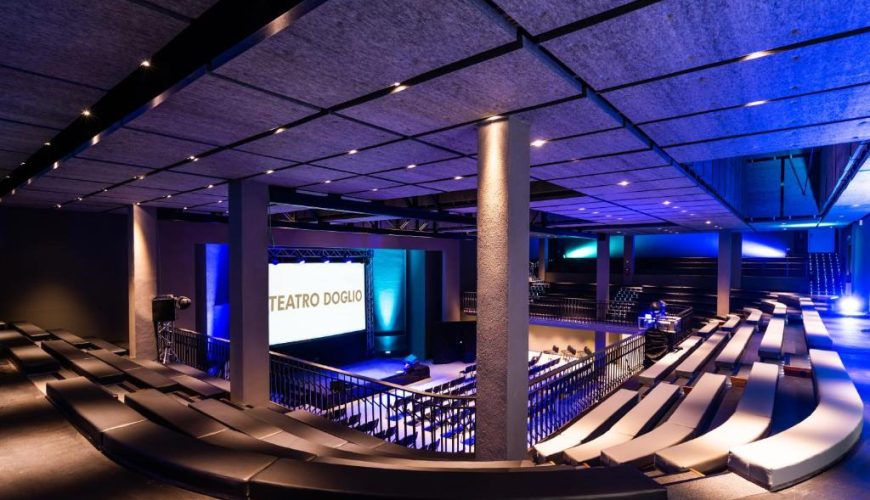
Forte Village & Palazzo Doglio – luxury in and around Cagliari
The Forte Village group operates two outstanding properties in the Cagliari area – one in the city itself, one 23 miles along the coast. Together they represent the finest accommodation the region has to offer.
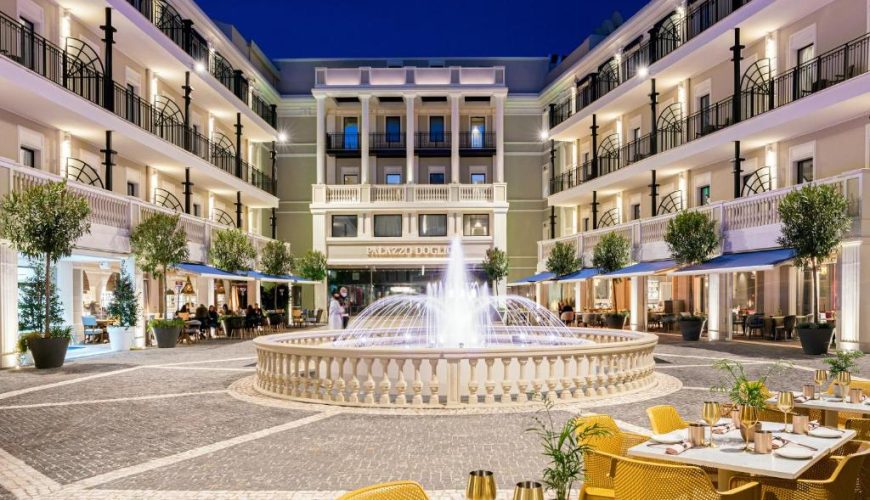
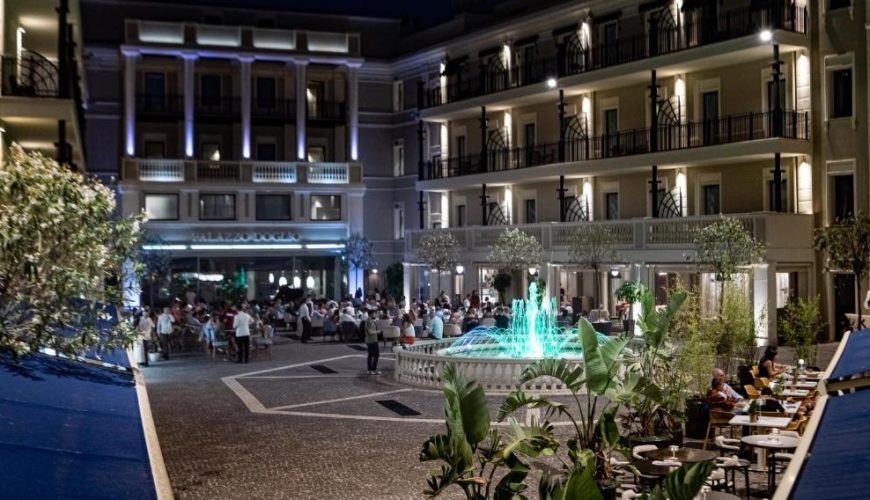
Palazzo Doglio – Cagliari’s finest city hotel
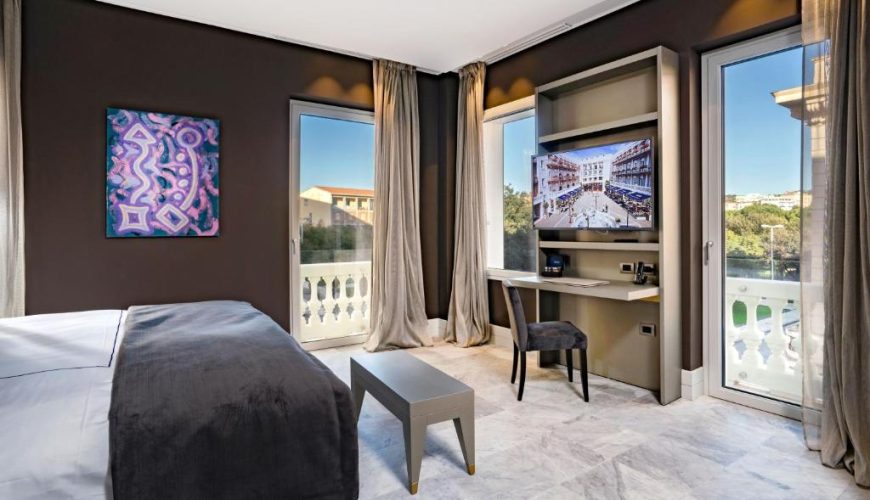
The Palazzo Doglio is the most luxurious city hotel in Cagliari and the urban flagship of the Forte Village group. The five-star property occupies one of the city’s most significant historic palaces – carefully restored and equipped with modern luxury without compromising the building’s 18th-century character. High ceilings, fine furnishings, original architectural details and contemporary art create an ambience unique in Sardinia.
Palazzo Doglio – at a glance
- Location:Historic city centre, near the Castello quarter and harbour · Cagliari
- Category:5-star luxury city hotel · Forte Village group
- Rooftop restaurant & terrace:One of the finest viewpoints in the city – panoramic views over Cagliari and the gulf
- Cuisine:Sardinian tradition meets modern creativity; wine list focused on Sardinian producers
- Spa & wellness:Full spa area for rest and recovery after city exploration
- Conferences & events:Dedicated event space for MICE and corporate functions
- Website: forte-village.de – request for by booking@forte-village.de
Forte Village Resort – 23 miles from Cagliari
Just 23 miles along the south-western coast lies the Forte Village Resort at Santa Margherita di Pula – named best resort in the world more than thirty times. Golf, tennis, thalasso spa, Chelsea FC Football Academy, over 20 restaurants and one of the island’s finest private beaches await guests who make the 40-minute drive from the city.
Forte Village Resort – at a glance
- Location: Santa Margherita di Pula · 23 miles from Cagliari
- Category: 5-star luxury resort · multiple “Best Resort in the World” awards
- Sport: Tennis academy (16 courts), golf (Is Molas, 15 min.), cycling/e-bike, Chelsea FC Football Academy, water sports
- Wellness: Acquaforte Thalasso Spa, Clarins Beauty, multi-day cure programmes
- MICE & Weddings: Conference centre for up to 1,500 delegates; dedicated wedding service
- Season:May to October · Website: fortevillageresort.com
The natural combination: 2–3 nights at Palazzo Doglio in Cagliari for sightseeing, the fish market and Sardinian cuisine – then move to Forte Village for beach days, sport and wellness. The 40-minute drive between the two properties makes this one of the most satisfying holiday combinations on the island.
Flights to Cagliari – from the UK, US & Europe
Cagliari-Elmas Airport (CAG) is just 4 miles from the city centre – one of the most conveniently located airports in Italy. Bus, taxi and car hire are available directly at the terminal.
| Departure | Flight time | Airlines (seasonal) |
|---|---|---|
| London Gatwick (LGW) | approx. 2 h 45 min | easyJet, Ryanair, TUI |
| London Heathrow (LHR) | approx. 2 h 50 min | British Airways (via Rome) |
| Manchester (MAN) | approx. 3 h 10 min | TUI, Jet2 (seasonal) |
| Frankfurt (FRA) | approx. 2 h 30 min | Ryanair, Condor, Eurowings |
| New York (JFK / EWR) | approx. 12–14 h | Various + ITA Airways via Rome |
| Vienna (VIE) | approx. 2 h 15 min | Ryanair, Austrian |
| Zurich (ZRH) | approx. 2 h 10 min | Edelweiss Air, Swiss |
| Paris CDG | approx. 2 h 05 min | Air France, Transavia |
Flight tips
- Direct flights to Cagliari are mainlyseasonal (April–October); outside this window connections via Rome (FCO) or Milan (MXP).
- UK visitors: easyJet and Ryanair offer the most frequent and affordable connections from London.
- Best booking window: 3–5 months ahead for summer; spring and autumn often available at short notice.
- Airport transfer: bus to city centre approx. 15 min / €1.30; taxi approx. €15–20; car hire directly at the terminal.
Ferries to Sardinia – routes & operators
For travellers arriving by car, or those who enjoy the Mediterranean crossing, the overnight ferry is one of travel’s great pleasures. The nearest ferry port to Cagliari is Cagliari Harbour itself – served by direct routes from mainland Italy.
| Route | Duration | Operators | Notes |
|---|---|---|---|
| Civitavecchia → Cagliari | approx. 14–16 h (night) | Tirrenia, GNV | Daily; overnight ferry ideal |
| Genoa → Cagliari | approx. 20 h | Tirrenia, GNV | Ideal with car; relaxed crossing |
| Naples → Cagliari | approx. 16 h | Tirrenia | Seasonal; beautiful crossing |
| Palermo → Cagliari | approx. 13 h | Tirrenia | Seasonal |
| Toulon → Porto Torres | approx. 10–12 h | Corsica Ferries | For travellers from France |
Ferry tips
- A cabin on the overnight ferry is strongly recommended – from approx. €30–60 supplement per person.
- With a car via Genoa: drive to Genoa from Germany/Austria (approx. 6–8 hours) + overnight ferry = relaxed arrival in Cagliari.
- In summer (July/August): book early – cabins and car spaces sell out quickly.
- From Cagliari harbour to city centre: 10 minutes on foot or by taxi.
Practical information – everything you need
Entry requirements
- Sardinia is part of Italy and the EU.National ID cardsufficient for EU citizens.
- UK citizens:Valid passport required; visa-free for stays up to 90 days.
- US / Canadian / Australian citizens:Passport required; visa-free up to 90 days.
- European Health Insurance Card (EHIC / GHIC for UK):Covers emergency treatment in Italian public hospitals.
- Travel insurance with medical repatriation is strongly recommended.
Currency, climate & practicalities
- Currency:Euro (€). ATMs throughout the city; credit cards well accepted in hotels and restaurants; markets often prefer cash.
- Time zone:CET/CEST – 1 hour ahead of UK GMT/BST; 6 hours ahead of US Eastern.
- Climate:Hot dry summers (July–August up to 35 °C); pleasant spring and autumn (18–26 °C). Best time for city sightseeing: April–June and September–October.
- Language: Italian. English widely spoken in tourist areas; a few words of Italian go a long way in local trattorias.
- Electricity: 230V / 50Hz, Type C and F sockets. UK visitors need a travel adapter; US visitors need adapter and voltage converter.
- Emergency numbers: 112 (general) · 118 (ambulance) · 113 (police) · 115 (fire)
- Cagliari Tourism: cagliari.turismo.it
- Sardinia Tourism: sardegnaturismo.it
- Cagliari Airport: cagliariairport.it
- Forte Village & Palazzo Doglio: booking@forte-village.de – request now
Comment (0)