

The Ultimate Thailand Travel Guide: Seamless Round Trips, Deep Cultural Immersion, and Tropical Beach Resorts
Thailand remains one of the world’s most captivating, dynamic, and accessible travel destinations. Situated in the heart of Southeast Asia, the Kingdom effortlessly bridges the gap between ancient spiritual traditions and hyper-modern western comfort. For global travelers, adventurers, and beach lovers alike, this multifaceted nation offers a highly sophisticated tourist network. It allows for a seamless transition from deep historical exploration to total tropical relaxation.
The bedrock of Thai society is deeply rooted in Theravada Buddhism. This spiritual foundation shapes an exceptionally warm, welcoming national character. The famous Thai smile is far from a mere marketing cliché; it is an authentic reflection of Sanuk (the pursuit of joy) and Mai Pen Rai (the philosophy of letting things go).
Planning a comprehensive overland journey through this diverse kingdom requires careful strategic choices. Which historic royal capitals are non-negotiable? How can you optimize transit between the central plains and the misty mountain ranges of the North? What health precautions are essential for varying tropical microclimates, and how do you navigate entry regulations, currency exchanges, and regional flight extensions? This master guide provides all the actionable data, verified frameworks, and expert insights required to craft your ultimate Thailand travel itinerary.
1. Defining the Core Route: Top Regions and Essential Sights
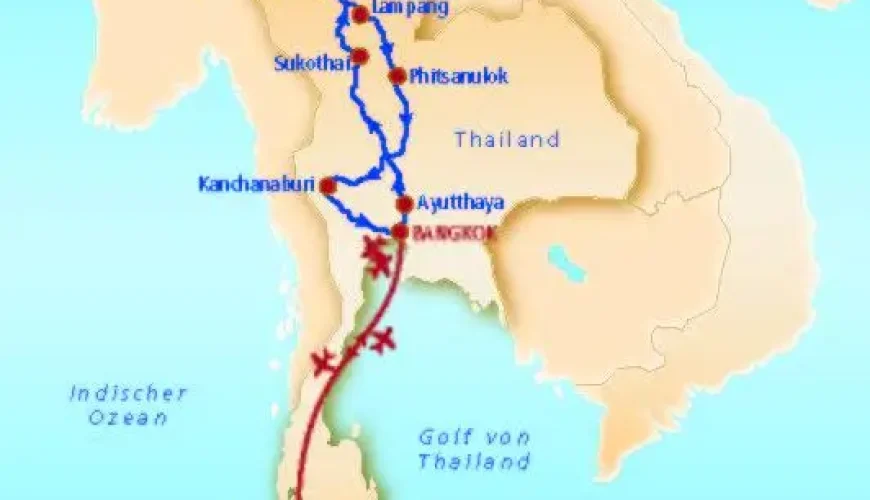
An optimized, logistically sound Thailand round trip typically moves chronologically from south to north through the cultural core, before utilizing domestic flight corridors to drop into the tropical island networks of the deep south. This classic trajectory ensures that you experience the historical evolution of the Thai state before retreating to the coast for beach relaxation.
Bangkok: The Vibrant, Contrasting Capital on the Chao Phraya
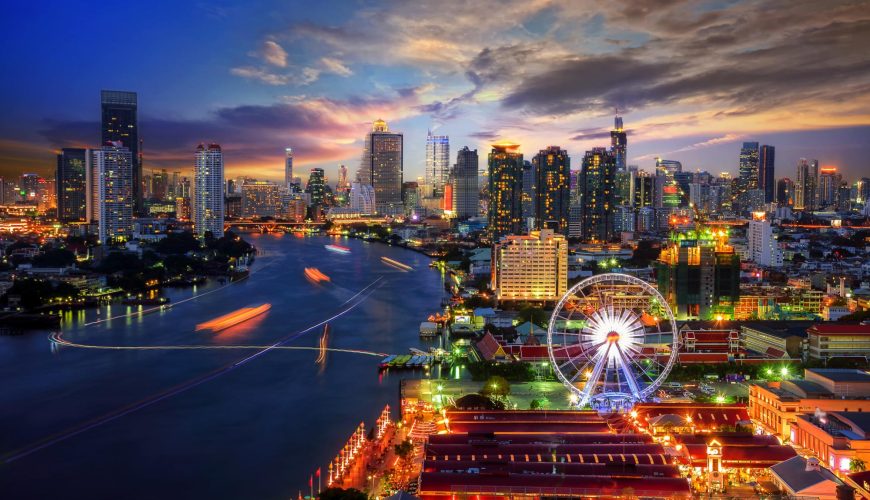
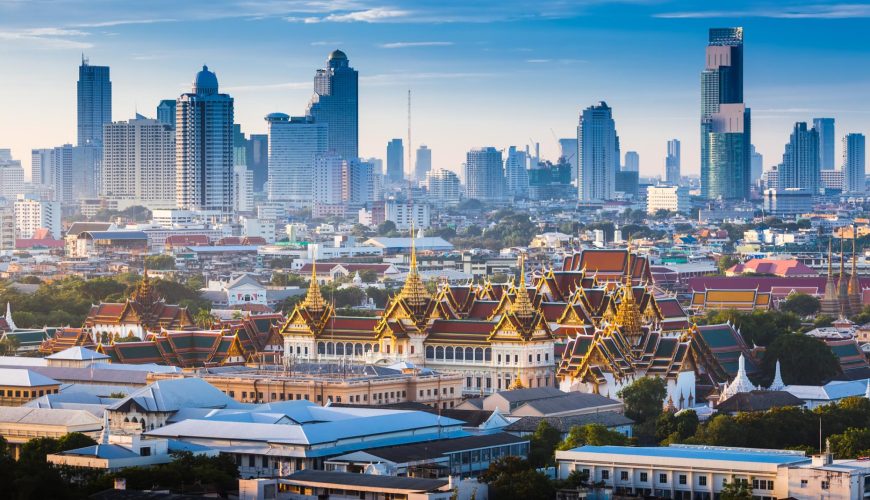
The metropolitan capital of Bangkok—known locally as Krung Thep—is the economic, political, and spiritual engine of the nation. Serving as the primary international aviation gateway, it drops travelers straight into an intoxicating blend of sensory inputs. It is a metropolis defined by extreme structural contrasts: glittering, centuries-old monastic complexes stand shoulder-to-shoulder with hyper-modern skyscrapers, luxury mega-malls, and multi-level elevated mass transit systems.
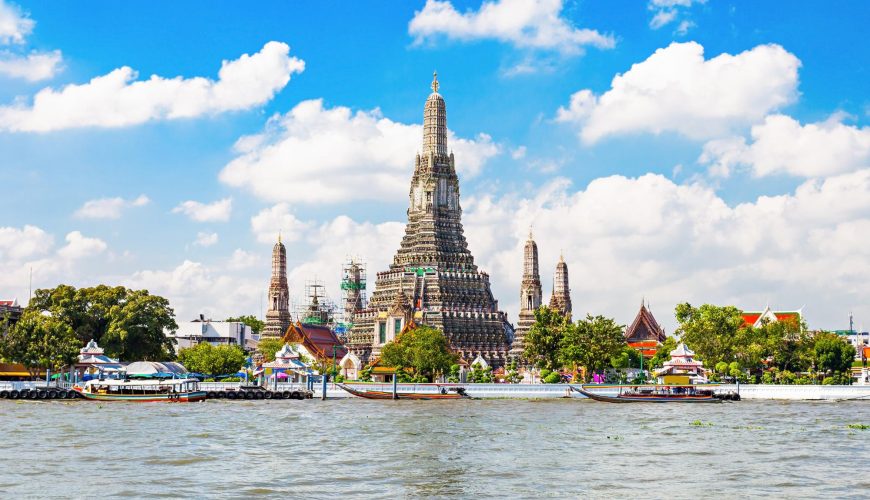
The city is logistically split by the winding Chao Phraya River. On the West Bank lies Thonburi, home to historic klongs and Wat Arun. Express boats connect this area to the East Bank, which contains the historic royal core, including the Grand Palace and Wat Pho.
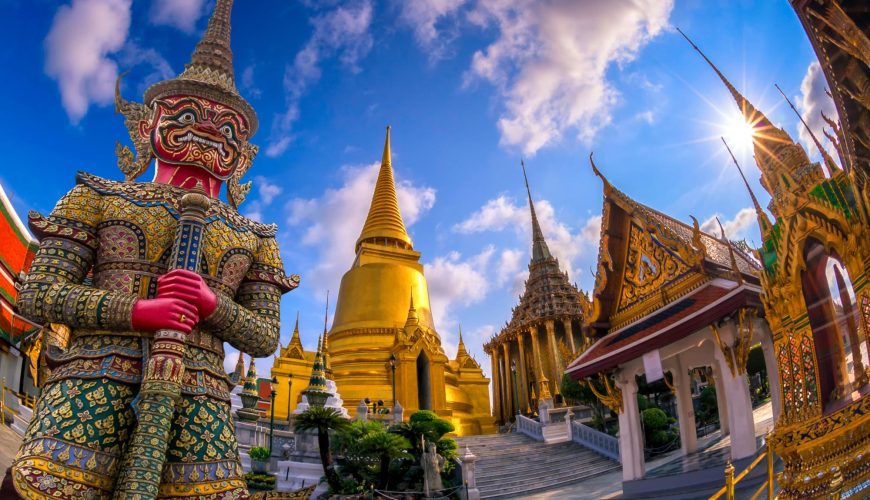
- The Grand Palace and Wat Phra Kaeo: This monumental, walled architectural complex served as the official residence of the Kings of Siam from 1782 onward. The grounds are a masterclass in classic Rattanakosin architectural design, featuring gilded spires, mosaic-encrusted pillars, and sprawling murals depicting the Ramakien epic. Hidden within the compound is Wat Phra Kaeo, the Temple of the Emerald Buddha. Carved from a single block of jade, this sacred icon is the ultimate religious palladium of the Thai nation.
- Wat Arun (The Temple of Dawn): Rising majestically from the west bank of the Chao Phraya River, Wat Arun is an iconic landmark of the city’s skyline. Its central, Khmer-style prang stands over 70 meters high and is encrusted with millions of fragments of colorful Chinese porcelain and pottery shards. Clambering up its steep central staircases provides sweeping panoramic views over the river corridor.
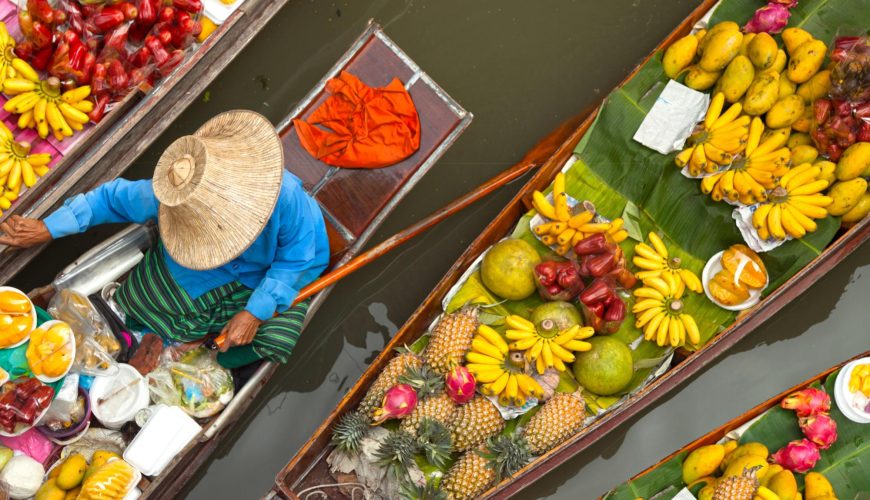
- The Thonburi Klongs (Canals): To witness the historic, aquatic lifestyle of old Bangkok, a longtail boat cruise through the labyrinthine canals of Thonburi is essential. Floating past wooden stilt houses, local fruit vendors paddling small canoes, and quiet neighborhood shrines reveals why early European traders labeled the city the “Venice of the East.”
The Maeklong Railway Market: A Surreal Retail Phenomenon
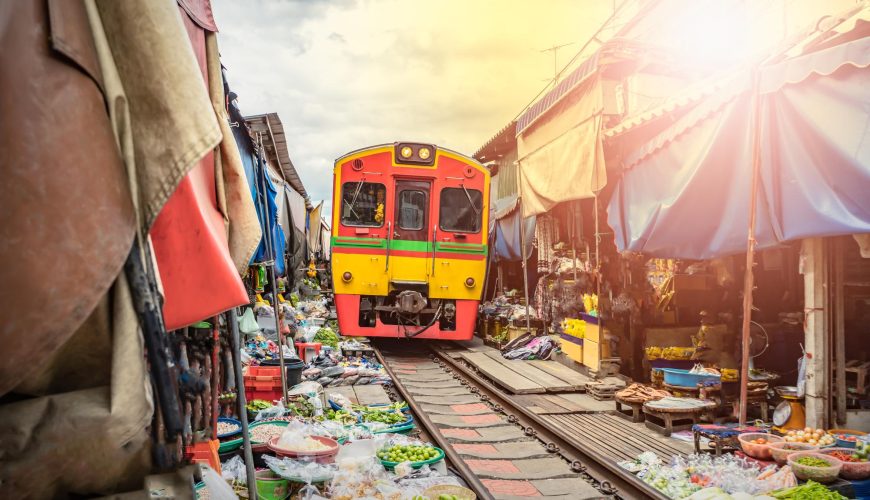
Located roughly 80 kilometers southwest of the capital in Samut Songkhram province, the Maeklong Railway Market offers one of the most unusual shopping experiences in Asia. Locally named Talad Rom Hup (the Umbrella-Pull-Down Market), this bustling bazaar sells fresh seafood, regional spices, and tropical fruits directly on top of an active, operational railway track.
When the regional train sounds its warning siren, a coordinated dance occurs: vendors instantly drop their canvas awnings, retract their wheeled display tables by mere inches, and step back. The train glides through the market center, clearing baskets of fresh produce by a matter of centimeters. The moment the final carriage passes, the awnings are re-erected, and standard trade resumes instantly without a single pause.
Kanchanaburi and the River Kwai: Jungle Wilderness and Dark History
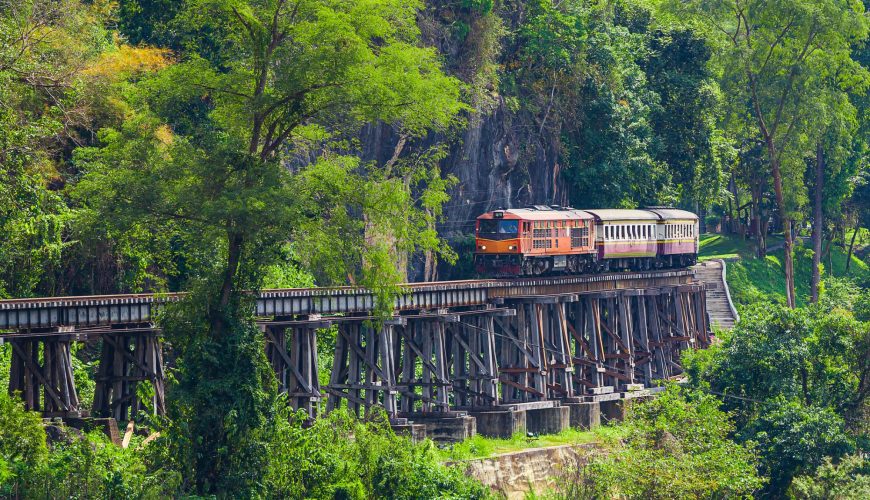
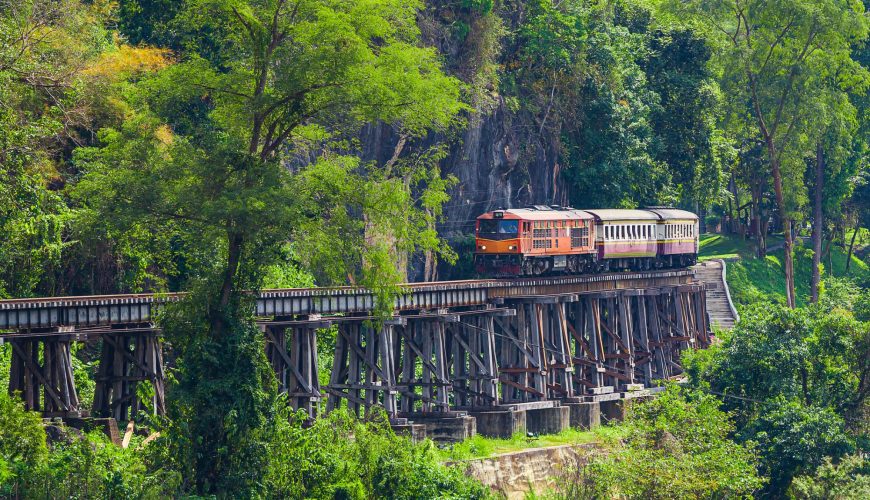
West of Bangkok lies Kanchanaburi Province, a region where dense, primary jungle environments and dramatic limestone landscapes intersect with poignant World War II historical landmarks. The area is defined by the construction of the infamous Death Railway, built under brutal conditions by Allied prisoners of war and Asian conscript laborers under Japanese occupation.
- The Bridge on the River Kwai: This steel-and-concrete structure stands as the central living monument of the region’s wartime history. Travelers can traverse the bridge on foot or ride the slow-moving regional train across it. The adjacent Thailand-Burma Railway Centre offers an expertly curated museum experience that details the human cost of the railway’s construction.
- Erawan National Park: A short journey from the provincial capital leads to one of Thailand’s most celebrated natural reserves. The park’s main draw is the Erawan Waterfall, a seven-tiered cascade that tumbles through thick tropical forest. The pools are filled with clear, emerald-tinted water fed by limestone springs, making them ideal for swimming alongside native garra rufa fish.
Ayutthaya: The Ruined Splendor of the Second Royal Capital
Founded in 1350, Ayutthaya grew to become one of the wealthiest, most cosmopolitan trading hubs on Earth, welcoming merchants from Europe, Persia, and China to its island-city setting. This glorious golden age ended abruptly in 1767 when the city was sacked and razed by invading Burmese forces. Today, the Ayutthaya Historical Park is protected as a UNESCO World Heritage site, showcasing monumental brick ruins that hint at its past glory.
The historical park features two distinct highlights: Wat Mahathat, famous for its brick stupas and assembly halls located in the city center, and Wat Chaiwatthanaram, an ancient temple layout arranged symmetrically right along the riverside.
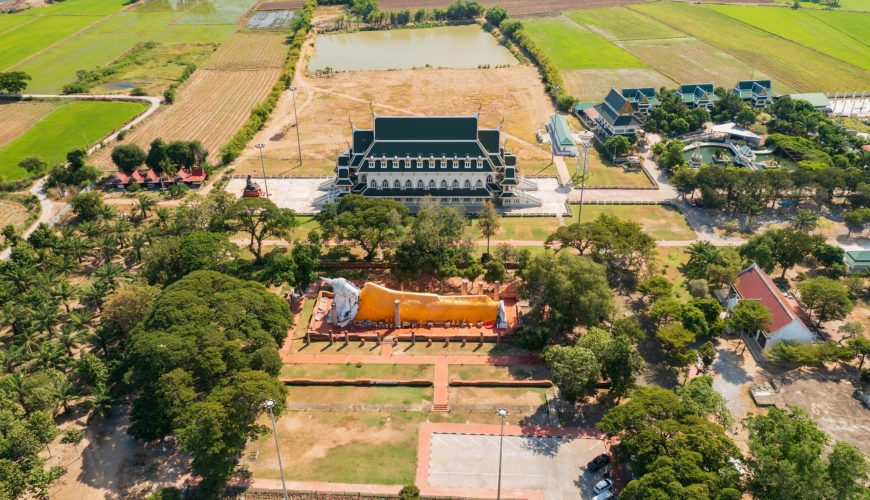
- Wat Mahathat: This central monastic ruin houses one of Thailand’s most famous images: a sandstone Buddha head beautifully encased within the growing root system of a sacred banyan tree. The seamless blend of nature and spiritual art has made it a global symbol of Thai archaeological heritage.
- Wat Chaiwatthanaram: Resting directly on the banks of the Chao Phraya River, this grand complex is designed in a traditional Khmer style. Its towering central prang is surrounded by smaller satellite towers, representing Mount Meru—the cosmic center of the universe in Buddhist cosmology. The site is spectacular during the late afternoon, as the setting sun casts a deep orange glow across the ancient brickwork.
Phitsanulok: Inside a Traditional Bronze-Casting Foundry
Positioned as a strategic bridge between the flat central plains and the northern highlands, Phitsanulok is home to Wat Phra Si Rattana Mahathat, which houses the Phra Buddha Chinnarat—widely considered the most beautiful and iconographically perfect bronze Buddha image in Thailand.
To understand how this sacred art is kept alive, a visit to the local Buranathai Buddha Bronze Casting Foundry is invaluable. Here, visitors can shadow local master artisans as they use ancient lost-wax casting techniques. This multi-step process involves sculpting clay cores, coating them in beeswax, encasing them in plaster moulds, and pouring molten bronze at high temperatures to create massive, intricate religious statues that are later polished and covered in genuine gold leaf.
Sukhothai: The Cradle of Thai Civilization
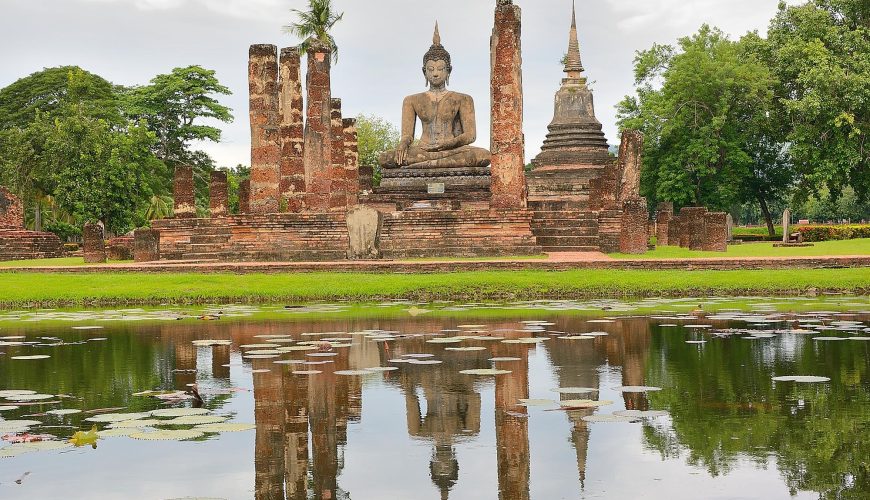
Sukhothai, translating directly to “The Dawn of Happiness,” was the first truly independent kingdom of Siam, flourishing during the 13th and 14th centuries. It was here that King Ramkhamhaeng created the modern Thai alphabet and established the foundational aesthetics of classical Thai art and architecture.
The Sukhothai Historical Park is characterized by an open, serene atmosphere. The best way to explore its vast terrain is by renting a bicycle. This allows you to pedal along quiet paths, past artificial lily ponds, manicured lawns, and elegant, walking Buddha statues that showcase the grace of Sukhothai artistic design.
Chiang Mai: The Cultural Heart and Mountain Capital of the North
Flanked by the misty mountains of Northern Thailand, Chiang Mai was founded in 1296 as the capital of the independent Lanna Kingdom (The Land of a Million Rice Fields). The city maintains a distinct, laid-back charm quite different from Bangkok. Its historic old town is still clearly defined by a square moat and remnants of ancient brick defensive walls, inside of which sit over 300 active Buddhist temples.
The geographic layout transitions from the high altitude peak of Doi Suthep down to the old walled city perimeter, finishing at the riverside night bazaars specializing in regional crafts.
- Wat Phra That Doi Suthep: Perched on a mountain peak over 1,000 meters above sea level, this temple is Chiang Mai’s most sacred shrine. Reaching the golden central cloister requires climbing a grand 306-step staircase flanked by mosaic-tiled Naga serpents. On a clear day, the mountain terrace offers sweeping views of the valley below.
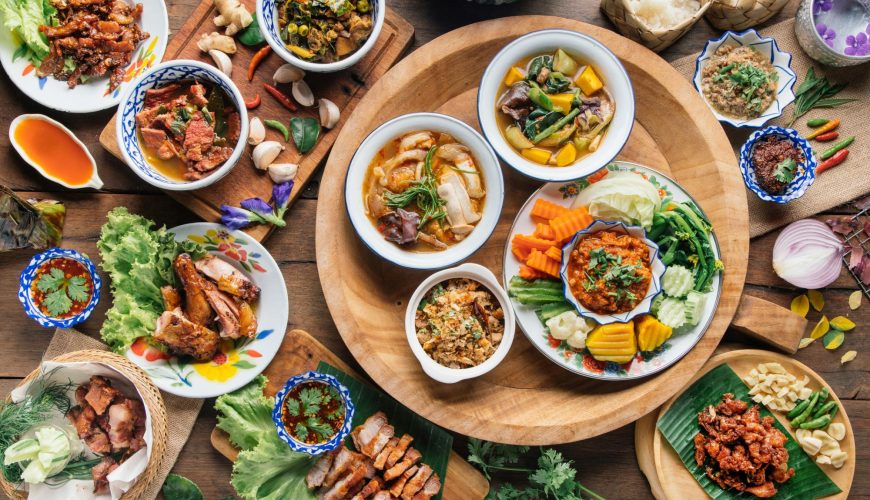
- The Sunday Walking Street: Chiang Mai’s night markets are legendary centers of commerce and culture. Every Sunday evening, the main artery of the old town closes to vehicle traffic, transforming into a massive open-air market. It is an excellent place to purchase handmade Lanna woodcarvings, tribal silver jewelry, hand-woven hill-tribe textiles, and local culinary staples like Khao Soi—a rich, aromatic coconut curry noodle soup topped with crispy fried egg noodles.
2. Flight Logistics and International Arrival Strategies
Arriving in Thailand from long-haul Western destinations is straightforward and highly efficient. The primary aviation hub for the country is Bangkok’s Suvarnabhumi International Airport (BKK), a state-of-the-art facility located east of the capital.
Major legacy airlines operate frequent daily non-stop flights from major European gateways, such as Frankfurt (FRA) and Munich (MUC), with average flight durations ranging between 11 and 12 hours. For travelers choosing premium stopover itineraries via major Middle Eastern transit hubs (such as Doha, Dubai, or Abu Dhabi), total travel times range from 14 to 17 hours. These routes often provide competitive fares and excellent business class products.
For an optimized multi-week itinerary, an open-jaw flight strategy is highly recommended. For example, your long-haul flight arrives from Frankfurt into Bangkok Suvarnabhumi, where you complete your overland loop. You then take an internal flight down to the south, and complete your vacation by booking your return long-haul flight straight out of Phuket International Airport (HKT). This eliminates the need for an unnecessary return flight back up to the capital, freeing up extra time for relaxation by the ocean.
Many tour operators bundle these international itineraries with integrated German Rail & Fly tickets, allowing for seamless, stress-free transit to and from your departure airport on ICE rail lines.
3. Comprehensive Domestic Transport Matrix
Navigating within Thailand is simple, thanks to a well-maintained infrastructure that supports various modes of transport tailored to different speeds, budgets, and comfort levels.
- Domestic Air: Best suited for long-distance hops, such as traveling from Chiang Mai down to Phuket. The key advantages are fast travel times of just 1 to 1.5 hours, alongside highly affordable regional ticket rates. Routes are regularly serviced by Thai Airways, Bangkok Airways, AirAsia, and Nok Air.
- Private Tour Bus: Best suited for overland cultural loops through the central plains. This mode offers door-to-door transit between historic points and allows for flexible sightseeing stops in a climate-controlled environment. These modern tour buses feature professional drivers, spacious seating, and onboard Wi-Fi.
- Overnight Train: Best suited for experiential transit, particularly when traveling from Bangkok up to the North. This option saves a night on hotel costs and offers an authentic local travel experience. The modern, newly sourced sleeper carriages feature comfortable berths that convert into beds.
- Skytrain / MRT: Best suited for navigating urban Bangkok. This system completely avoids city traffic, is very affordable, and operates fast, clean, air-conditioned trains that connect major shopping, dining, and cultural hubs.
- Tuk-Tuk / Taxi: Best suited for short-distance urban transfers. They offer a fun experience and point-to-point delivery. Taxis require the meter to be turned on, while Tuk-Tuk fares must be negotiated before boarding.
4. Nature Reserves, Ecotourism, and Ethical Animal Conservation
Beyond its historical towns and temples, Thailand protects an incredible network of biodiversity across more than 150 national parks. The country has placed an increasing emphasis on sustainable travel and eco-conscious initiatives.
Doi Inthanon National Park: The Roof of Thailand
Südwestlich von Chiang Mai lies the massive Doi Inthanon National Park, home to Thailand’s highest peak at 2,565 meters above sea level. This high altitude creates an unusual, temperate microclimate where temperatures drop significantly compared to the tropical lowlands, occasionally reaching frost levels during the winter months (November to January).
The park’s ecosystem transitions down from the 2,565-meter peak, which features a sphagnum bog and a misty cloud forest trail, down past the royal twin pagodas, and terminates at the lower terraces where the powerful Wachirathan Waterfall is located.
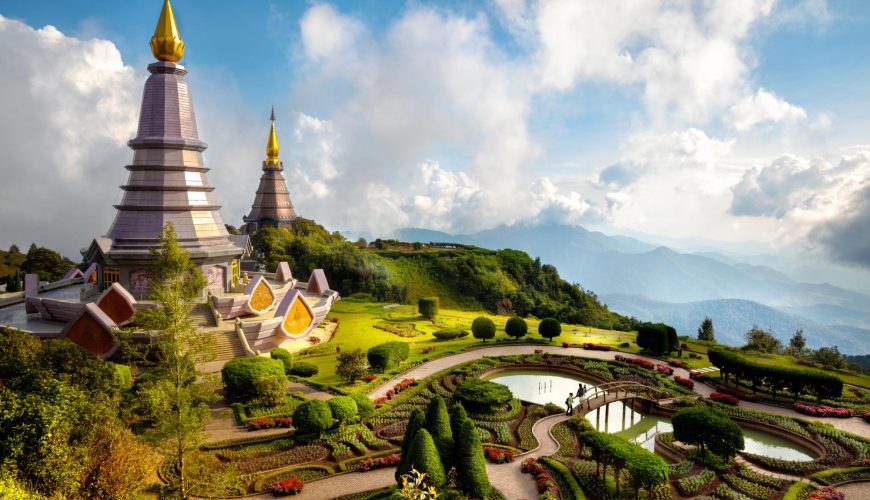
The park is a sanctuary for misty cloud forests, rare bird species, and cascading waterfalls. Walking along the Angka Nature Trail reveals a unique ecosystem where trees are completely draped in thick green moss and wild orchids. Near the mountain crest, the twin royal pagodas—built to honor King Bhumibol Adulyadej and Queen Sirikit—rise gracefully above beautifully manicured alpine gardens.
The Shift to Ethical Elephant Conservation
The Asian elephant holds an important place as the national symbol of Thailand, deeply intertwined with its history, religion, and folklore. For decades, domesticated elephants were used in heavy logging operations and, later, in traditional tourism activities like riding shows. Today, modern ecotourism standards have driven an important shift away from these outdated practices.
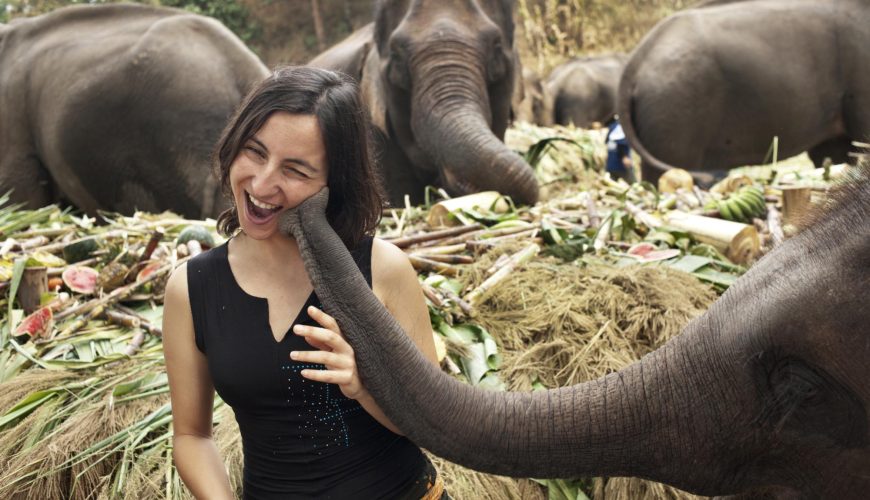
Traditional tourism models relied on heavy wooden riding chairs, unnatural performance shows, and restricted movement. The modern ethical sanctuary model completely removes riding and performance shows. Instead, the focus shifts to observing natural herd behavior, preparing dietary supplements, and joining the animals for stream-side mud baths and washing.
High-quality, modern round trips firmly reject elephant rides or staged circus performances. Instead, they focus on supporting ethically managed elephant sanctuaries, which are common in the forested hills surrounding Chiang Mai. At these low-impact facilities, elephants rescued from logging and riding camps live out their days in natural family herds. Visitors learn about elephant behavior, assist in preparing dietary fiber supplements, and accompany the animals to local rivers for their daily baths. This sustainable model provides vital funding for the elephants’ lifetime care while ensuring their welfare and protection.
5. Premium Beach Resorts and Southern Island Paradises
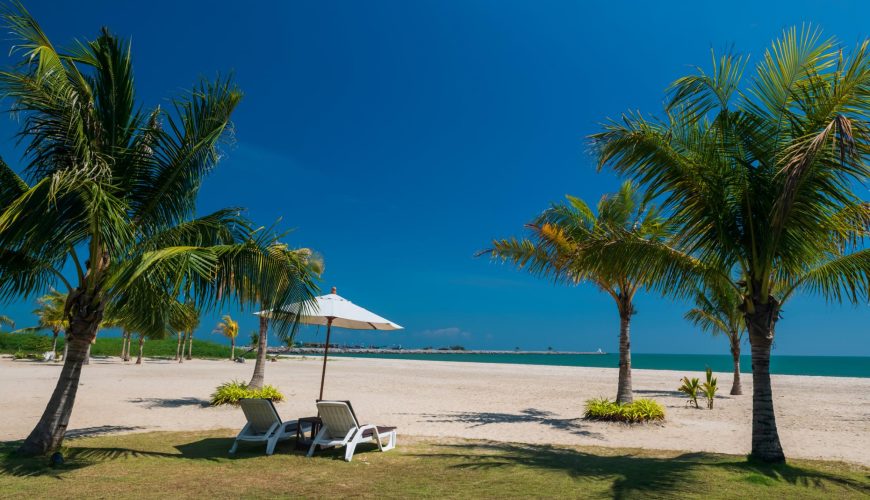
After an immersive overland cultural tour, a beach extension in Southern Thailand offers an ideal setting to rest and unwind. The southern coast is split into two distinct marine environments: the Andaman Sea and the Gulf of Thailand.
Phuket: The Dynamic Queen of the Andaman Sea
Phuket, Thailand’s largest island, is connected to the mainland by the Sarasin Bridge, offering a mature tourism infrastructure with diverse coastal landscapes. While southern beaches like Patong are known for their lively nightlife, the island’s northern and western shores offer quiet, upscale sanctuaries.
The island features a clear coastal divide: the northern and western coastlines contain Maikhao and Bangtao beaches, known for upscale luxury resorts with sprawling footprints. The southern coastline contains Patong and Kata beaches, characterized by high-density infrastructure and lively bazaars.
- Maikhao and Bangtao Beaches: These long, golden stretches of coastline host luxury resorts that blend into tropical gardens. They are ideal for travelers seeking privacy, world-class wellness spas, and fine dining away from the crowds.
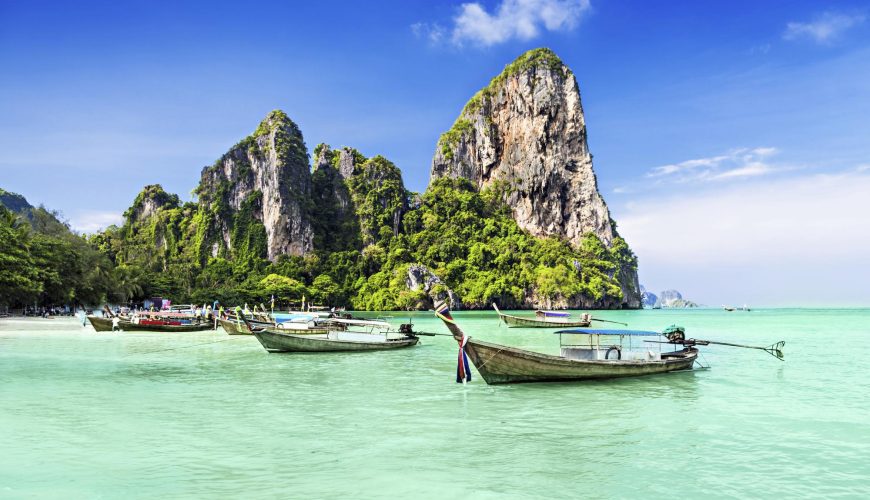
- Marine Gateways: Phuket serves as an excellent base for private boat charters out into Phang Nga Bay—famous for its dramatic limestone cliffs rising vertically from the emerald water—as well as day trips to the Phi Phi archipelago.
Khao Lak: Serene Coastal Retreats by the Rainforest
Located on the mainland shore just north of Phuket, Khao Lak is a peaceful alternative popular with couples, nature enthusiasts, and families. Local building codes prevent high-rise developments, keeping resorts low-profile and spaced along wide beach fronts.
The region is bordered by the forested hills of Khao Lak-Lam Ru National Park, where the jungle meets the sea. Khao Lak is also the primary departure point for diving and snorkeling excursions to the Similan and Surin Islands. These protected marine parks feature crystal-clear waters and coral reefs that rank among the finest dive sites globally.
The Gulf of Thailand: Koh Samui, Koh Phangan, and Koh Tao
On the eastern side of the Isthmus of Kra lies a scenic archipelago with its own unique microclimate, making it an excellent beach option during the European summer months (June to September) when the Andaman Sea experiences higher rainfall.
- Koh Samui: Known for its coconut groves and sandy shores, Samui offers an excellent selection of luxury accommodations. The island features everything from upscale boutique villas to world-renowned five-star resorts tucked into private coves along Choeng Mon and Chaweng Noi beaches.
- Koh Phangan: Located just a short boat ride north of Samui, Phangan features a rugged, mountainous interior. Outside of its monthly full moon gathering point in the far south, the island’s northern bays hide peaceful luxury wellness retreats accessible only by boat or winding jungle roads.
- Koh Tao: The undisputed center for diving education in Southeast Asia. The shallow, clear bays surrounding the island are filled with marine life, making it a premier spot for snorkeling and diving alongside sea turtles and seasonal whale sharks.
6. Flexible Options for Trip Extensions
Many travelers choose to extend their standard two-week itinerary by an extra five to seven days to explore specific regions in greater depth. A few popular options include:
Deep Jungle Exploration in Khao Sok National Park
For an unforgettable nature experience between your cultural tour and beach stay, consider spending three days in Khao Sok National Park. This conservation area protects one of the oldest evergreen rainforests on Earth.
The journey transitions smoothly from your overland loop through Bangkok and Chiang Mai into the Khao Sok extension, where you spend three days in primary rainforest enjoying floating safari lake tents and wildlife tracking before transferring down to your final beach resort.
The highlight of the park is Cheow Lan Lake, a vast reservoir surrounded by dramatic limestone towers. Extension packages offer stays in luxury floating safari tents built directly on the water. Days are spent kayaking along quiet inlets, tracking wild elephants and hornbills, and enjoying the serene jungle surroundings.
Cultural Immersion in the Golden Triangle
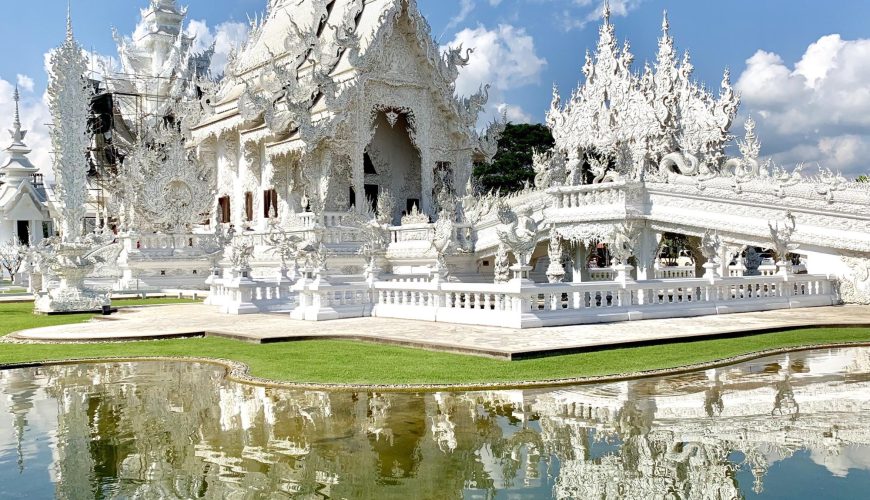
Another excellent option is extending your northern tour into Chiang Rai province, located at the intersection of Thailand, Laos, and Myanmar. This region offers a look into traditional hill-tribe cultures and features remarkable modern architecture like Wat Rong Khun (The White Temple). Designed by artist Chalermchai Kositpipat, this intricate plaster-and-mirror-work complex reimagines classic Buddhist design through a striking contemporary lens.
7. Passports, Visas, and Entry Regulations
Entering Thailand is a straightforward process for citizens of most European and Western nations, as the country maintains welcoming immigration policies to support international tourism.
- Visa Exempt Entry: Citizens of Germany, Austria, Switzerland, the UK, the US, and Canada traveling for tourism purposes do not need to apply for a visa in advance. Upon arrival at any international airport, immigration officers issue a standard entry stamp allowing a stay of up to 60 days.
- Passport Validity Requirements: Your passport must be valid for at least six months from your exact date of entry into the country. It must be in good physical condition—torn pages or significant water damage can result in a denial of boarding by airlines.
- Required Documentation: You should have at least two blank pages facing each other for entry and exit stamps. While rarely requested, it is wise to keep a printed copy of your return flight ticket and your hotel confirmation on hand to show immigration officials if asked.
8. Currency, Banking, and Financial Best Practices
The official currency of Thailand is the Thai Baht (THB). While major cards are widely used in urban centers, cash remains essential for daily transactions across the country.
The standard financial workflow involves inserting an international card into a Thai ATM, which applies a flat 220 THB fee. To keep banking costs low, travelers should settle larger amounts per single transaction and always select the “Without Conversion” option to secure the bank’s wholesale exchange rate.
- Cash-Based Economy: Cash is required when purchasing street food, shopping at night markets, buying handmade souvenirs, or paying for local transportation like taxis and Tuk-Tuks.
- Card Acceptance: International credit cards (Mastercard and Visa) are accepted at major hotels, luxury resorts, established restaurants, and modern shopping complexes.
- ATM Guidelines: Automated Teller Machines (ATMs) are flächendeckend available across the country, from central Bangkok to small island villages. Thai banks charge a flat fee of 220 THB per transaction on foreign cards, regardless of the withdrawal size. To minimize these fees, it is best to make fewer, larger withdrawals rather than multiple small ones.
- Dynamic Currency Conversion (DCC): When withdrawing cash or paying by card, always choose to be billed in the local currency (Thai Baht) rather than your home currency. Choosing your home currency triggers DCC, which applies less favorable retail exchange rates.
- Currency Exchange: If you prefer exchanging physical currency, currency booths are common in commercial districts. Independent operators like SuperRich often offer significantly better exchange rates than standard airport exchange windows. Make sure your foreign banknotes are clean, unblemished, and free of folds or markings to ensure they are accepted.
9. Tropical Health Preparation and Medical Guidance
Thailand has an excellent healthcare system. Private medical centers in major hubs like Bangkok, Chiang Mai, and Phuket meet international standards, featuring Western-trained specialists who speak fluent English. However, traveling to tropical regions requires a few sensible health precautions.
Recommended Travel Vaccinations
No mandatory vaccinations are required for travelers arriving directly from Europe or North America. However, health professionals recommend making sure your standard routine vaccinations are up to date before departure. These typically include Tetanus, Diphtherie, Pertussis (Whooping Cough), Polio, and Measles.
Vaccination paths are split by travel style: all standard travelers should secure Hepatitis A protection to cover food and water safety. Long-stay travelers or adventurers should add Hepatitis B and Typhoid, while those entering remote, rural trekking regions should complete a Rabies prophylaxis series.
- Hepatitis A: Provides vital protection against food- and water-borne transmission.
- Hepatitis B: Recommended for extended stays or travelers planning close contact with local communities.
- Typhoid and Rabies: Highly recommended if your itinerary includes extended stays in rural areas, jungle trekking, or if you plan to visit remote northern villages where quick access to medical centers may be limited.
Vector-Borne Diseases: Mosquito Defense Strategies
Because of the warm, tropical climate, mosquitoes are common throughout the region. While malaria risks are exceptionally low across Thailand’s main tourist routes and major cities, certain mosquito species that bite during the day and at twilight can transmit viruses like Dengue and Zika. Because there are no widespread vaccines or preventative medications for these conditions, consistent midge and mosquito defense is your best protection.
- Effective Insect Repellents: Standard insect repellents from temperate climates are often less effective in tropical environments. It is best to use formulations with high concentrations of active ingredients like DEET or Icaridin. These can be purchased before your trip or picked up easily at local convenience stores across Thailand (such as 7-Eleven) under trusted local brands like Soffell.
- Protective Clothing: When taking evening walks or jungle treks, wearing lightweight, light-colored long clothing and closed shoes provides a highly effective physical barrier against insect bites.
Dietary Hygiene for a Safe Trip
Thailand is famous for its vibrant food culture and world-class street food stalls. While hygiene standards are generally high, a few basic precautions will help keep your stomach settled:
- Drinking Water: Tap water across Thailand is not potable. Always use sealed bottled water for drinking and brushing your teeth. High-quality resorts generally provide complimentary bottled water daily.
- Ice Safety: The ice cubes served in tourist restaurants, hotels, and bars are safe to consume. They are produced commercially using purified water in local ice plants and distributed in standard shapes with holes through the center.
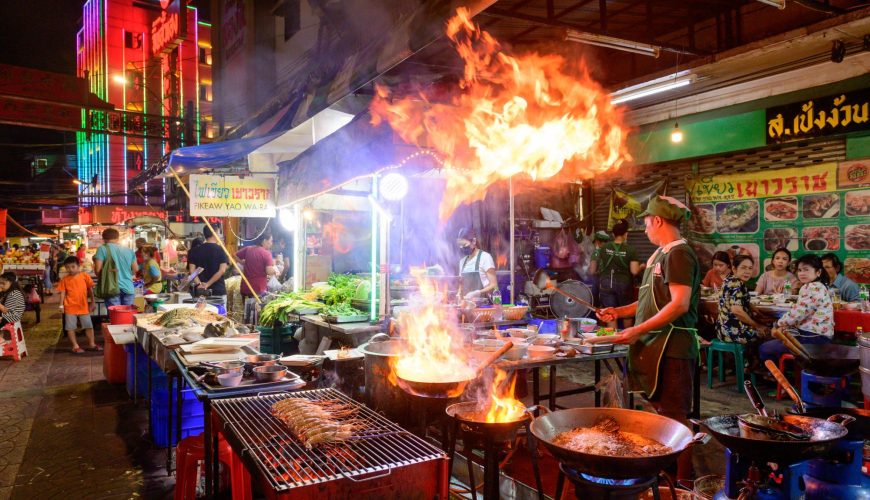
- Street Food Best Practices: When dining at street stalls, choose popular vendors with a high turnover of local customers. This ensures the ingredients are fresh and cooked to order at high temperatures in a hot wok. Avoid raw or undercooked meats, unpeeled fruits, and salads from street stalls to minimize the risk of stomach upset. Packing a basic travel medical kit with rehydration salts and anti-diarrheal medication is a smart finishing touch for your preparations.
10. Cultural Etiquette and Local Traditions
A respectful understanding of Thailand’s cultural and religious traditions is key to an enjoyable and rewarding journey. Following a few simple guidelines ensures a warm welcome wherever you go.
Temple Dress Codes and Etiquette
Buddhist temples (Wats) are active places of worship and meditation. When visiting temple grounds, it is important to dress respectfully.
Unacceptable temple attire includes tank tops, sleeveless shirts, short skirts, hats inside buildings, or pointing your feet at altars. Respectful dress requires completely covered shoulders, long trousers, removing your shoes at the threshold, and keeping your feet tucked safely back when kneeling.
- Cover Up: Shoulders and knees must be fully covered. Sleeveless tops, tank tops, and short shorts are inappropriate. Many major temples provide sarongs or shawls for rent or purchase at their entrances.
- Remove Footwear: You must remove your shoes before entering any main temple building (Ubosot).
- Mind Your Feet: In Thai culture, the head is considered the highest, most sacred part of the body, while the feet are seen as the lowest and least clean. Never point your feet toward a Buddha statue, a monk, or another person. When sitting in a temple hall, tuck your legs neatly behind you in a kneeling position rather than sitting cross-legged.
Respect for the Royal Family
The Thai public holds the Royal Family in deep respect. Remarks, jokes, or critical comments about royalty are not tolerated and are subject to strict legal penalties under the country’s Lèse-Majesté laws.
This respect extends to daily life: never step on a rolling coin or a fallen banknote to stop it, as Thai currency bears the portrait of the King. Additionally, the national anthem is played daily in public spaces like parks, markets, and transit stations at 8:00 AM and 6:00 PM. Local residents will stand quietly in respect during the anthem, and visitors are encouraged to follow this polite custom.
11. Strategic Summary: Bringing It All Together
An overland tour through Thailand offers an unforgettable journey through a rich cultural landscape. The contrast between Bangkok’s lively streets, the historic ruins of Ayutthaya, the quiet hills of Chiang Mai, and the beautiful beaches of the south creates a wonderful travel experience. With its modern infrastructure, excellent hotel standards, and welcoming local hospitality, the Kingdom provides a safe, comfortable, and deeply rewarding destination for international travelers.
The standard travel progression moves from arrival in Bangkok (Days 1–3), through the central loop covering Kanchanaburi and Ayutthaya (Days 4–6), up into Chiang Mai (Days 7–9). From there, you take a domestic aviation hop down to your southern beach extension in Phuket or Khao Lak (Days 10–13) before heading home (Days 14–15).
To help tailor your upcoming trip itinerary, sharing a few extra details can help narrow down your options:
- Your preferred travel window or season (so we can align your route with Thailand’s regional monsoon patterns)
- Your ideal style of travel (whether you prefer the structure of a guided group tour or the flexibility of a private customized trip)
- Your beach stay preferences (whether you are looking for absolute peace and seclusion or an island with a lively local town)

Comment (0)