


TUSCANY TRAVEL GUIDE | GOLF | TENNIS | WELLNESS | CULTURE
Tuscany: The Complete Travel Guide for Cultural Tours, Golf, Tennis, Wellness and Wine
Rolling hills, Renaissance masterpieces, Chianti vineyards, medieval hilltowns and the Tyrrhenian coast. Tuscany is Italy’s most visited region for the simplest of reasons: it rewards every kind of traveller, every time.
There is a particular quality of light in Tuscany in September. It arrives sideways, late in the afternoon, and it turns the hills between Siena and Montalcino a colour that the Renaissance painters captured so accurately that you wonder for a moment whether life is imitating art or the other way around. The cypress trees cast long shadows across the dirt roads. The vineyards are heavy with grapes. Somewhere nearby, a winery is pressing Brunello, and the smell reaches you before the sign does. This is Tuscany at its most itself — unhurried, beautiful in a way that requires no filtering, and generous with exactly the kind of pleasure that travel is supposed to provide.
Tuscany rewards every kind of traveller. The cultural visitor who wants to spend three days in the Uffizi without feeling rushed. The golfer who wants to play the largest golf course in Tuscany at Castelfalfi and then drink the estate’s own wine at dinner. The tennis player who wants twelve outdoor clay courts at the Garden Toscana Resort and the Tyrrhenian Sea fifty metres away. The wellness traveller who wants to lie in 37.5°C natural thermal springs at Terme di Saturnia and have nothing more demanding to decide than whether to order the truffle pasta or the wild boar. All of these are real Tuscany. All of them are available. And all of them are findable on sportmeeting.de.
Cycling and E-Biking Tuscany – Florence, Siena, Chianti, the Coast and Everything Between
In this guide
- Why Tuscany? The honest case for Europe’s most visited region
- The landscape: understanding Tuscany’s geography
- Florence: the non-negotiable
- Siena, San Gimignano and the medieval hilltowns
- The Chianti: wine, olive oil and e-bike
- Val d’Orcia and Montalcino: UNESCO landscape and Brunello
- The Maremma: Tuscany’s wild south
- The Tuscan coast: Punta Ala, Castiglione della Pescaia and the islands
- The best sport and wellness resorts
- Cultural touring: what Studiosus, Gebeco and SKR offer
- Active touring: Hauser, Wikinger and e-bike operators
- Getting to Tuscany
- When to go: season by season
- Find and book your Tuscany trip on sportmeeting.de
1. Why Tuscany? The honest case for Europe’s most visited region
The cynical answer is that Tuscany is overrated — too many tourists, too many tour buses, too many photographs of the same cypress-lined road taken from the same lay-by. This view is wrong, but it is usefully wrong, because it points to the only real risk of a Tuscany trip: going at the wrong time, to the wrong places, with the wrong expectations. The solution is not to avoid Tuscany. It is to plan it properly.
The honest case for Tuscany is this: it is one of the few places in Europe where the concentration of things worth seeing, eating, drinking and doing within a small geographical area is genuinely without equal. Within a 100-kilometre radius of Florence, you have eight UNESCO World Heritage Sites, the world’s most recognised Renaissance art collection, Italy’s three greatest red wine appellations, two of the country’s most scenic golf courses, natural thermal springs that have been attracting visitors since the Etruscan period, and a coastline with some of the least spoiled beaches in central Italy. Nothing else in Europe quite matches this.
The best Tuscany trips are not the ones that try to see everything. They are the ones that choose three or four things to do properly — and do them at the pace the region requires.
2. The landscape: understanding Tuscany’s geography
| Area | Key places | Character | Best for |
| Florence and surrounds | Florence, Fiesole, Certaldo | Renaissance city; art; architecture; Arno River | Uffizi; Duomo; Ponte Vecchio; day trips to Chianti |
| Chianti Classico | Greve, Radda, Castellina, Gaiole | Wine road; olive oil; stone villages; borghi | Wine tasting; e-bike; cycling; agriturismi stays |
| Siena and hilltowns | Siena, San Gimignano, Volterra, Pienza | Medieval towers; Palio tradition; alabaster | City walks; ceramics; photography; hill town hopping |
| Val d’Orcia | Montalcino, Montepulciano, Pienza | UNESCO landscape; rolling hills; Brunello; Vino Nobile | Wine; photography; spa hotels; thermal spas |
| Maremma | Grosseto, Saturnia, Pitigliano, Orbetello | Wild south; thermal springs; Etruscan tombs; cowboys | Wellness; horse riding; wildlife; thermal pools |
| Tuscan coast | Punta Ala, San Vincenzo, Castiglione | Beach; golf; marina; Elba ferry access | Golf; tennis; sailing; beach; island day trips |
The practical consequence of Tuscany’s geography is that you cannot do everything in one trip. Florence alone deserves three full days if you want to see the Uffizi, the Accademia (Michelangelo’s David), the Bargello, the Duomo complex and walk across the Ponte Vecchio at dawn when it is still quiet. Add Siena (one full day), San Gimignano (half a day), Montalcino (a morning for wine, an afternoon for the views), and you have already filled ten days without leaving the most culturally dense 100-kilometre corridor in Europe. The coast and the Maremma are either a separate trip or a deliberate choice to trade some cultural depth for beaches, golf and thermal wellness.
The Compact Tuscan Luxury, Golf and Thermal Grand Tour
3. Florence: the non-negotiable
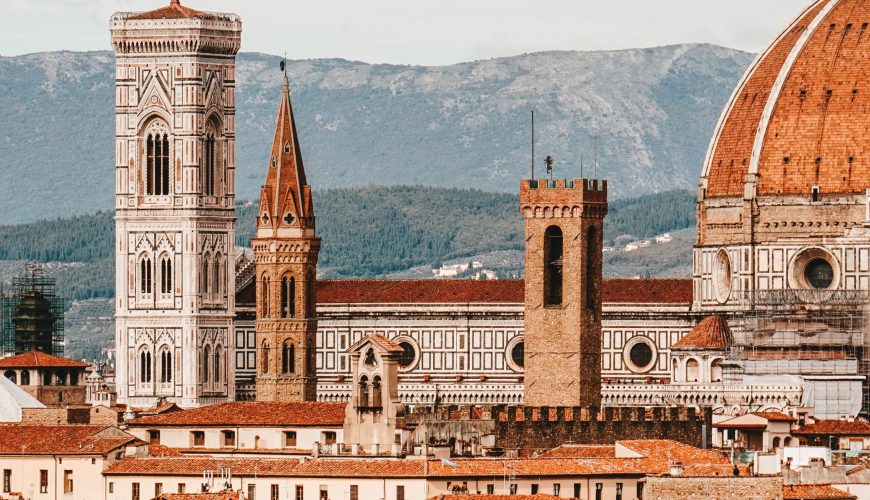
Florence is the reason Tuscany exists as a travel destination. Without the Medici, without the Renaissance, without Botticelli, Michelangelo, Leonardo, Brunelleschi and Ghiberti, the hills of Chianti would be pleasant and the hilltowns charming, but the region would not be what it is: the most concentrated expression of human artistic achievement in the Western world, compressed into a city of 370,000 people on a river in central Italy.
What to prioritise in Florence
- Uffizi Gallery: Book timed tickets at least 3–4 weeks ahead (at peak season, months ahead). The Botticelli room — Primavera and Birth of Venus — is the justification for the queue. Allow at least 3 hours; most people under-schedule and regret it.
- Accademia Gallery: Michelangelo’s David. The sculpture is larger than almost every visitor expects. Book separately from the Uffizi; queues are long without reservations.
- Duomo complex (Brunelleschi’s dome): Climb the dome for the view that makes sense of the entire city. Book online; the climb is 463 steps and worth every one.
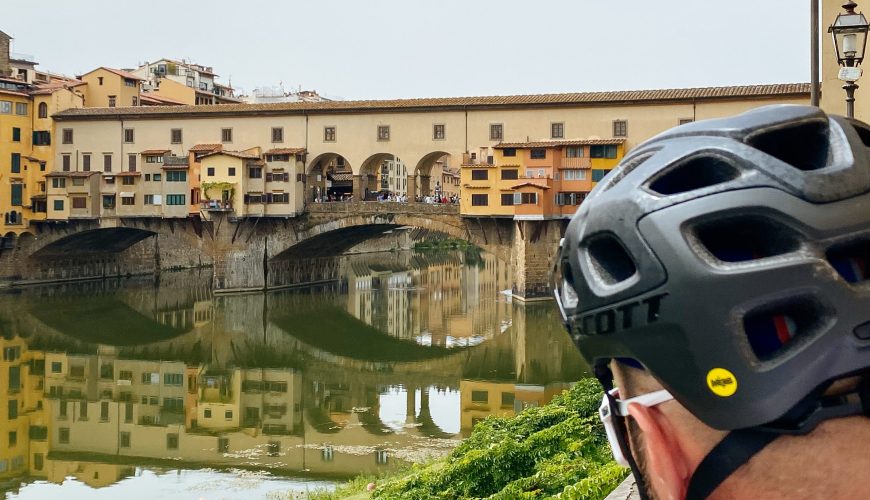
- Ponte Vecchio at dawn: The famous bridge lined with jewellers’ shops is genuinely beautiful when empty. Set an alarm.
- Oltrarno neighbourhood: The left bank of the Arno; Palazzo Pitti, Boboli Gardens, artisan workshops and the best restaurants in Florence away from the tourist corridors.
- Day trip to Fiesole: The Etruscan and Roman hilltop above Florence; panoramic views; 20 minutes by bus; excellent antidote to Florentine museum fatigue.
4. Siena, San Gimignano and the medieval hilltowns
Siena
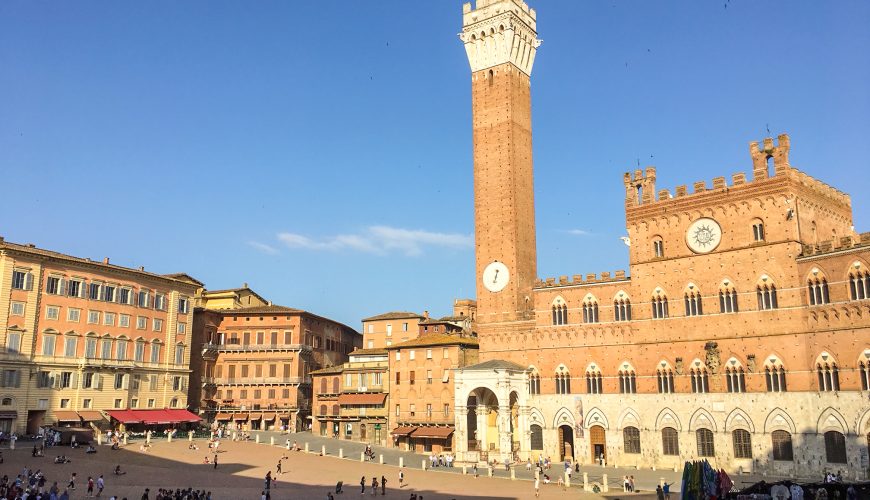
Siena is the city that refused to become Florence — and in doing so became something equally extraordinary. The Piazza del Campo, the most beautiful medieval square in Europe by most assessments, slopes gently down to the Palazzo Pubblico and has been the site of the Palio (the city’s bareback horse race, run twice a year in July and August) since the 13th century. The Siena Duomo, with its striped black-and-white marble, is arguably more beautiful inside than any other cathedral in Italy. Siena deserves an overnight stay, not a day trip from Florence.
San Gimignano
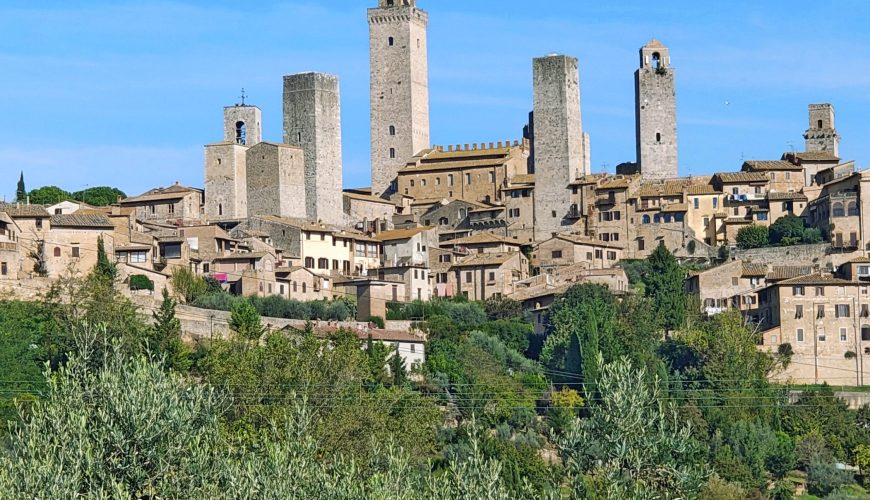
San Gimignano is the town of towers — 14 surviving medieval towers (originally 72) that give the hilltop town its unmistakable skyline and its UNESCO designation. It is the most-visited town in Tuscany after Florence and Siena, which means it is best experienced early in the morning or late in the afternoon, when the day-tripping buses have gone and the streets return to something approaching the atmosphere the towers were built in. The vernaccia wine produced in the surrounding hills is worth trying at its source.
Volterra and Pienza
Volterra, the alabaster city, sits on a plateau 550 metres above sea level with views that reach the sea on clear days. Its Etruscan museum is the most significant outside Rome. Pienza, designed by Pope Pius II as the ideal Renaissance city (and promptly never finished), is one of the most charming small towns in Italy — and the best place to buy the local Pecorino di Pienza, aged in walnut leaves.
5. The Chianti: wine, olive oil and e-bike
The Chianti Classico wine zone — the area between Florence and Siena that produces the black-rooster-labelled wines that have made Tuscany synonymous with Italian red wine internationally — is also one of the most rewarding landscapes in Europe to travel through slowly. The road between Greve in Chianti and Radda, taken on a bicycle or an e-bike on a May morning, with the vine rows on either side of the road and the stone towers of Montefioralle visible on the hill above, is an experience that no amount of wine tasting alone can replicate.
E-bike in the Chianti — the best way to travel slowly
E-bike touring through the Chianti has become one of the most popular active travel formats in Tuscany in recent years — and it is the format most likely to satisfy the common complaint that Tuscany is best seen slowly but is difficult to slow down in. The electric assistance removes the gradient problem (the hills between Greve and Panzano are real hills, not scenic rolls) while preserving the pace. Distances of 40–60 km per day are achievable for anyone who can ride a bicycle. Wikinger Reisen and Hauser Exkursionen both offer guided e-bike programmes through the Chianti.
- Bolgheri Cypress Avenue (Viale dei Cipressi): 5km of cypress-lined road leading to the San Guido estate (Sassicaia winery); one of the most photographed roads in Italy; 19km from the Garden Toscana Resort coast
- Wine tasting Castello di Brolio (Gaiole in Chianti): One of the most historic estates in the Chianti; Baron Ricasoli’s family has produced wine here since the 11th century; open for visits and tastings
- Montefioralle: A hamlet above Greve in Chianti; largely unchanged since the 14th century; excellent views over the vine rows; aperitivo at the single bar in the square
6. Val d’Orcia and Montalcino: UNESCO landscape and Brunello
The Val d’Orcia, the valley south of Siena designated a UNESCO World Heritage Site in 2004, is the Tuscany of the imagination — the rolling hills, the isolated farmhouses, the lines of cypress trees on ridge roads, the wheat fields in spring and the stubble in summer. The landscape looks precisely as it does in the photographs because the photographs are accurate. It is the place most likely to produce the silence-inducing moment that serious travellers come to Tuscany for.
Montalcino, the hilltop town above the Val d’Orcia, produces Brunello di Montalcino — by widespread agreement, the greatest red wine of Tuscany and one of the finest in the world. The Sangiovese Grosso grape here produces wines that require ten years of ageing before they begin to show their character, and twenty years to show it fully. Visiting Montalcino in September, during the harvest, with the smell of fermenting grapes from the cellars below the town, and a glass of Brunello in the enoteca on the main square, is one of the defining Italian wine experiences.
7. The Maremma: Tuscany’s wild south
The Maremma is the part of Tuscany that Tuscany’s promotional materials tend to underemphasise — which is the main reason to go there. The landscape is different from the Chianti hills: wider, flatter in places, wilder, with the Tyrrhenian Sea always present at the edge of the horizon and a quality of light that is more southern and less painterly than the Val d’Orcia. The Parco della Maremma (Parco dell’Uccellina) between Grosseto and Talamone is the least crowded national park in Italy that is actually worth visiting, with coastal forest, wetlands, wild horses and one of the best birdwatching territories in the country.
- Saturnia thermal springs: The Cascate del Mulino — a series of natural thermal waterfalls at 37.5°C, free to enter, open 24 hours — are one of the most extraordinary natural experiences available in Italy without a reservation. The paid spa at Terme di Saturnia is adjacent and offers professional treatments.
- Pitigliano (the Little Jerusalem): A town literally built into a volcanic tufa cliff; Jewish ghetto with perfectly preserved 16th-century synagogue; one of the most dramatic town settings in Italy.
- Sovana and Sorano: Two Etruscan hilltowns near Pitigliano; well-preserved Etruscan tombs in the surrounding countryside; almost no tourists; extremely good local pecorino.
8. The Tuscan coast: Punta Ala, Castiglione della Pescaia and the islands
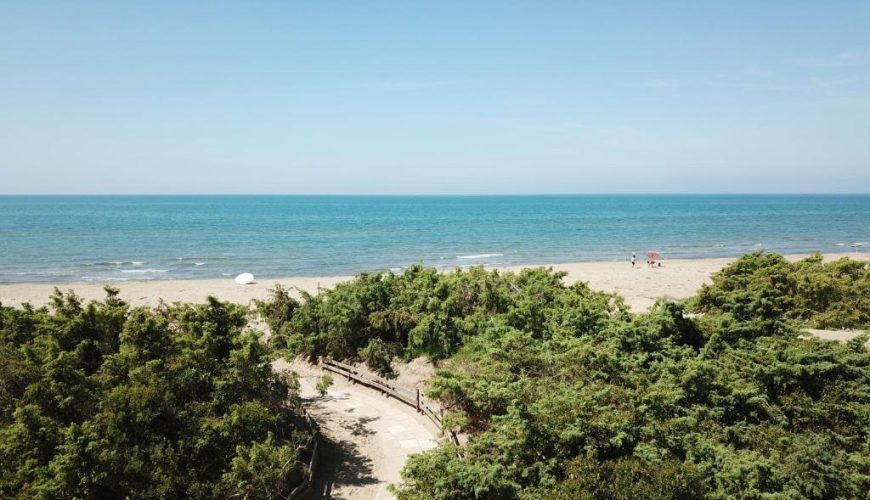
The Tuscan coastline between Livorno and the Argentario promontory is one of the least-known stretches of Italian beach by northern European standards — and one of the best. Pine-backed sandy beaches, clear water, a sailing marina culture that is genuinely Italian rather than international, and the proximity of the Maremma’s interior attractions make the Tuscan coast a far more interesting destination than simple sun-and-sea suggests.
- Punta Ala: The most elegant resort on the Tuscan coast; marina with luxury yachts; sandy beaches backed by pine forest; Golf Club Punta Ala (18 holes, sea views) 10 minutes from Baglioni Resort Cala del Porto
- Castiglione della Pescaia: The most popular resort on the southern Tuscan coast; pleasant old town on a promontory; good beaches; easy access to Maremma park
- Giglio and Elba: The largest Tuscan islands; ferry from Piombino (Elba) and Porto Santo Stefano (Giglio); day trips or overnight stays; excellent snorkelling and diving
9. The best sport and wellness resorts in Tuscany
| Toscana Resort Castelfalfi ★★★★★ — Montaione (Golf)
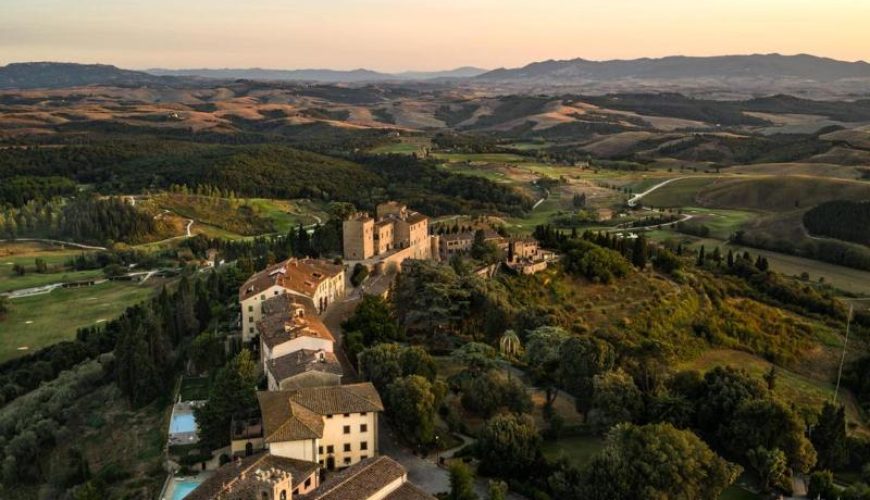
Tuscany’s largest golf facility: 27-hole Castelfalfi Golf Club (Mountain Course: 18 holes, Par 72, 6,351m; Lake Course: 9 holes, Par 37, 3,171m) set in 1,100 hectares of working estate including vineyards and olive groves. 60 minutes from Florence, 50 minutes from Pisa. The historic tobacco warehouse converted to a 5-star hotel; 146 rooms; RAKxa Wellness SPA; 4 pools; 2 outdoor clay tennis courts; 5 restaurants; wine tasting from own production; truffle hunting; Falfy Kids Club. Rated 9.6/10 Exceptional. From approximately EUR 350–700 per night. |
| Baglioni Resort Cala del Porto — Punta Ala (Golf + Luxury)
Relais & Châteaux resort on a Punta Ala promontory with a private beach and a 16th-century watchtower converted into a cocktail bar. Golf Club Punta Ala (18 holes; sea views; one of Italy’s most scenic layouts; EUR 70–110 green fee) is 10 minutes away by car, with preferential rates for hotel guests. Seasonal opening May–September. From approximately EUR 276 per night. |
| Garden Toscana Resort ★★★★ — San Vincenzo (Tennis + Beach)
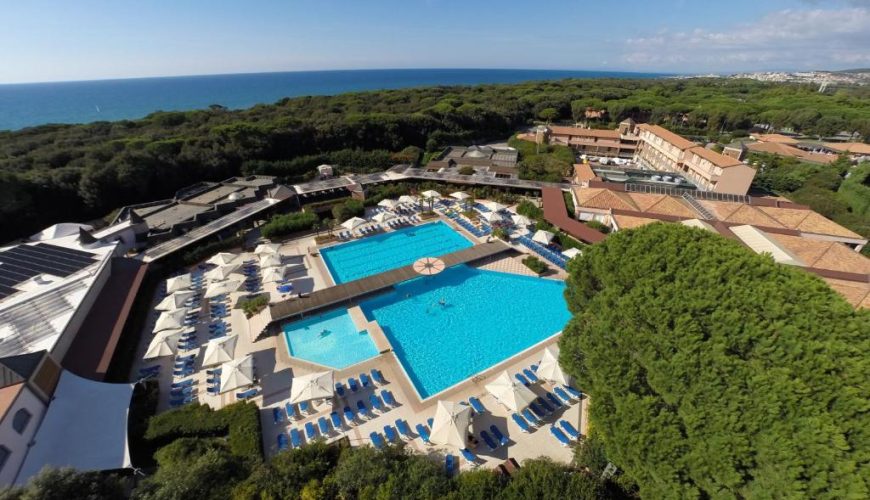
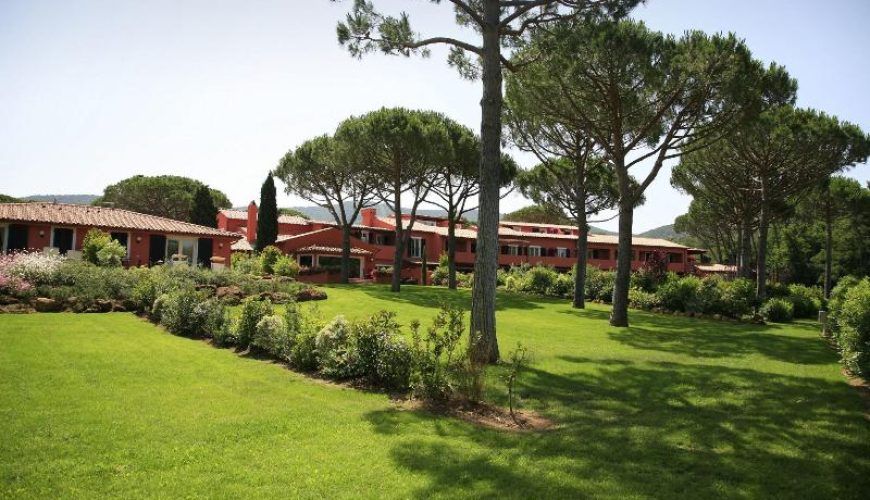
14-hectare resort on the Etruscan Riviera near San Vincenzo; 430 rooms; 12 outdoor tennis courts (the largest tennis facility on the Tuscan coast); private beach 500m; two pools; watersports (diving, sailing, surfing); Ayurveda spa; family club. Ideal as a sport-focused beach base with cultural day trips to Bolgheri (19km), Populonia (17km) and Volterra. Access to the Elba ferry (25km from Piombino). |
| Rosewood Castiglion del Bosco ★★★★★ — Montalcino (Golf + Wine)
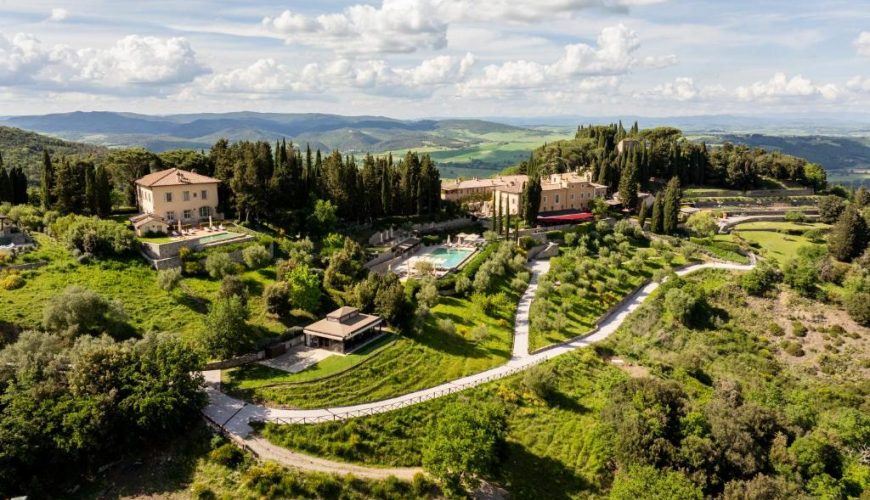
1,700-hectare private estate in the Val d’Orcia UNESCO landscape; Campo del Drago Golf Course (18 holes; exclusively for hotel guests; Val d’Orcia views); own Brunello di Montalcino production; medieval Borgo dating from the 12th century; one of the most exclusive resorts in Italy. From approximately EUR 1,000–2,500 per night. |
| Terme di Saturnia Spa & Golf Resort ★★★★★ — Saturnia (Wellness + Golf)
Natural thermal springs at 37.5°C constant temperature; professional spa with sulphurous thermal treatments, mud baths, thalassotherapy and massage; 18-hole golf course directly adjacent; 140 rooms and suites; Maremma regional cuisine. The free Cascate del Mulino thermal waterfalls are 2km away. From approximately EUR 250–600 per night. |
10. Cultural touring: Studiosus, Gebeco, SKR and what they offer
For travellers who want the cultural depth of Tuscany fully unlocked — not just visiting the Uffizi but understanding what they are looking at, not just driving past the hilltowns but knowing the history that built them — a guided cultural tour with an expert art historian is the most efficient and often the most enjoyable format. German-speaking specialist operators have developed some of the finest art-historical touring programmes in Europe for Tuscany.
| Operator | Tuscany approach | Group | Price | For whom |
| Studiosus | The gold standard for cultural depth; art historian guides; lectures; pre-tour reading materials; Uffizi with expert; premium hotels | 12–20 | High | Serious art lovers; best possible guided experience |
| Gebeco | Well-rounded Tuscany experience; wine, culture, landscape balanced; competent guides; good hotels | 12–20 | Mid-High | First-time Tuscany cultural visitors; balanced programme |
| SKR Reisen | Small groups; insider knowledge; off-the-beaten-track villages; authentic encounters | 6–14 | Mid-High | Return visitors; those who already know the main sites |
| Lernidee | Educational focus; Renaissance history; architecture; literature in Tuscany | 12–20 | Mid-High | Literary and educational travellers; scholarly approach |
| Eberhardt Travel | Reliable coach touring; all key highlights covered; comfortable hotels; very organised | 15–40 | Mid | First-time visitors; comfort-focused; 60+ travellers |
11. Active touring: Hauser, Wikinger and cycling operators
| Operator | Active Tuscany offering | Activity | Group | For whom |
| Wikinger Reisen |
E-bike Chianti tour; coastal walking; small groups | E-bike, walking | 6–14 | Cyclists; active adults; e-bike enthusiasts |
| Hauser Exkursionen | Walking tours Val d’Orcia and Maremma; guided hiking | Walking, trekking | 6–14 | Walkers; nature lovers; Maremma specialists |
| SKR Reisen | Cycling Tuscany; culture + activity combination | Cycling, walking | 6–14 | Active return visitors; off-piste routes |
12. Getting to Tuscany
| From | Airport | Airlines | Flight time | Note |
| London (LHR/STN/LGW) | Pisa (PSA) or Florence (FLR) | Ryanair, easyJet, British Airways, ITA | 2–2.5 hrs | Pisa: more connections, cheaper; Florence: more central |
| Frankfurt (FRA) | Pisa (PSA) or Florence (FLR) | Ryanair, Eurowings, Lufthansa | ~2 hrs | Excellent year-round connections to both airports |
| Munich (MUC) | Florence (FLR) or Pisa (PSA) | Lufthansa, Ryanair, easyJet | ~1.5 hrs | Short flight; Florence airport very close to city |
| Zürich (ZRH) | Pisa (PSA) or Florence (FLR) | easyJet, Swiss (via Milan) | ~1.5 hrs | easyJet direct to Pisa in summer; good value |
| Vienna (VIE) | Florence (FLR) or Pisa (PSA) | Ryanair, Austrian | ~2 hrs | Ryanair direct; Austrian via Rome or Milan |
High-speed rail from Milan to Florence (Frecciarossa, 1h 40min) makes a Milan-Tuscany combination itinerary feasible and genuinely enjoyable — Milan for design, fashion and aperitivo culture; Tuscany for everything else. From Germany, the Munich–Milan Eurocity connection (approximately 4 hours) combined with the Milan–Florence Frecciarossa puts central Tuscany within 6 hours of Munich by train — competitive with flying once airport time is included, and dramatically more comfortable for the journey itself.
13. When to go: season by season
| Month | Temperature | Crowds | Landscape | Verdict |
| March | 12–17°C | Very low | Almond blossom; bare vines; atmospheric fog | Excellent for walkers and photographers; cold mornings |
| April | 16–21°C | Low–moderate | Poppy fields; green vines; full spring colour | One of the best months; good value; beautiful light |
| May | 20–25°C | Moderate | Roses; lavender begins; vines in full leaf | Superb; recommended for first-time visitors |
| June | 24–29°C | High | Sunflowers; golden light; warm evenings | Very good; avoid peak July–August prices |
| July–August | 28–35°C | Very high; exhausting | Harvest approach; dry; golden but harsh | Beach only; cities oppressive; book far ahead |
| September | 22–28°C | Moderate | Vendemmia; golden light; grapes on the vine | Best month overall; harvest atmosphere; ideal wine |
| October | 16–22°C | Low | Olive harvest; autumn colours; truffle season | Excellent; val d’Orcia at its most beautiful; quiet |
| November–February | 8–13°C | Very low | Bare vines; mist; truffle and wine season | For wine lovers and truffle hunters; very cheap |
September is the month that Tuscany residents and seasoned visitors return to consistently as the year’s best. The harvest is underway. The light has changed from the harsh white of high summer to the warm amber of autumn. The tourist numbers have dropped noticeably from August’s peak. The wine estates are open and pressing. The hilltowns are quiet enough by evening to feel like the places they actually are rather than theme parks. And the temperature — 22 to 28°C in the day, 14 to 18°C at night — is perfect for golf, walking, cycling and the long outdoor dinners that Tuscany was invented for.
14. Find and book your Tuscany trip on sportmeeting.de
Tuscany is the destination that rewards planning — not over-planning, but the kind of considered thought about what you actually want from the trip that distinguishes a good experience from an exceptional one. Knowing whether you want the cultural depth of a Studiosus art tour or the active freedom of a Wikinger e-bike week. Knowing whether golf at Castelfalfi or tennis at the Garden Toscana Resort fits your week. Knowing whether the Val d’Orcia in September or the Chianti in May is the right frame for what you’re looking for. sportmeeting.de exists to help with exactly this question.
| Tuscany tours and sport hotels — find yours on sportmeeting.de
On sportmeeting.de you will find Tuscany touring programmes from Germany’s leading specialist operators — Studiosus, Gebeco, Hauser, Wikinger, SKR, Eberhardt and Lernidee — alongside direct bookings for Tuscany’s best sport and wellness hotels: • Toscana Resort Castelfalfi: 27-hole golf, 5-star, vineyards • Baglioni Resort Cala del Porto: Punta Ala, Relais & Châteaux, golf 10 min • Garden Toscana Resort: 12 tennis courts, private beach, San Vincenzo • Rosewood Castiglion del Bosco: Private golf, Brunello, Val d’Orcia • Terme di Saturnia Spa & Golf Resort: thermal springs, golf, Maremma → Find your Tuscany trip on sportmeeting.de |
Tuscany does not need to be defended or recommended. It recommends itself — to everyone, every time. What it needs is a good plan: the right season, the right pace, the right hotel in the right place, and the knowledge that Florence in the morning is different from Florence in the afternoon, that the Chianti by e-bike is different from the Chianti by car, and that September in a Brunello estate is one of the finest experiences Italy offers. sportmeeting.de helps with all of it.
more as 8000 tours and round trips world wide
Booking Request
- Complete Financial Safeguard: Every holiday investment is legally bonded and protected from start to finish through the German Travel Security Fund (DRSF).
Comment (0)