
VIENNA TRAVEL GUIDE | STUDIOSUS | NEW YEAR’S EVE | SINGLES | YEAR-ROUND
Vienna for Every Season: Culture, New Year’s Eve, Solo Travel and the World’s Most Liveable City
Vienna is not just a city — it is a standard. The standard against which every other city in the world measures the quality of its coffee, its concert halls, its museums, its New Year’s Eve and its daily life.
For twelve consecutive years, Vienna was ranked the world’s most liveable city by the Economist Intelligence Unit. Not the most exciting, not the most glamorous, not the most surprising — the most liveable. The distinction matters. Liveability is about the sustained, daily quality of a city’s public life: its public transport, its parks, its cultural institutions, its sense of safety, its food, its healthcare, its social spaces. Vienna scores at the top of all of these, every year, because Vienna takes them seriously in a way that very few cities anywhere in the world do.
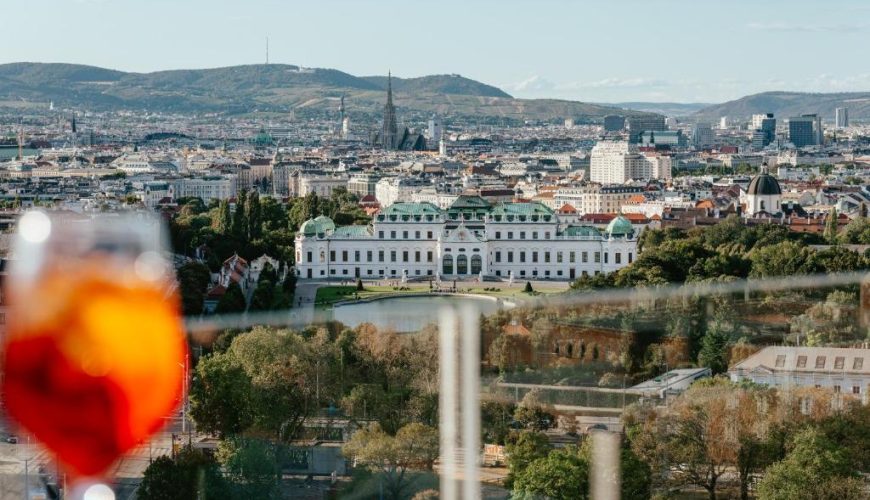
But Vienna is also — and this is what the liveability rankings fail to capture — one of the most intensely beautiful and culturally rich cities in Europe. The Ringstrasse, the boulevard of imperial palaces, museums and opera houses built by Emperor Franz Joseph in the second half of the 19th century, is one of the great urban planning achievements in history. The Kunsthistorisches Museum contains one of the finest collections of European art outside the Louvre. The Vienna Philharmonic, performing in the Musikverein’s golden hall, is the finest orchestra in the world. And the Viennese coffee house — the Kaffeehaus — is an institution recognised by UNESCO as Intangible Cultural Heritage: a room where you can sit all day with a single coffee, a newspaper and your thoughts, and nobody will ask you to leave or order more.
Vienna is also a city for every kind of traveller: the first-time visitor who wants the Habsburg palaces and the opera; the solo traveller who wants organised cultural tours and the social structure of group travel; the New Year’s Eve celebrant who wants the most spectacular and civilised Silvester in Europe; and the year-round visitor who discovers that Vienna in February, with the Opera Ball on the calendar and the coffee houses warm against the cold, is as satisfying as Vienna in June. On sportmeeting.de you will find Vienna city tours and cultural trips from Studiosus and other leading operators — bookable and comparable in one place.
In this guide
- Why Vienna? The honest case for Europe’s most civilised city
- The Habsburg city: Schönbrunn, the Hofburg and the Ringstrasse
- Vienna’s world-class museums
- Music in Vienna: the opera, the Philharmonic and the coffee houses
- Vienna’s coffee house culture: a UNESCO heritage worth protecting
- Vienna for solo travellers: Studiosus and organised city tours
- Vienna at New Year’s Eve: Silvester in the world’s most elegant city
- Vienna in winter: Opera Ball, Christmas markets and the cold season
- Vienna in spring: the Prater and the Danube in bloom
- Vienna in summer: outdoor concerts, heurige and the Danube Island
- Vienna in autumn: the wine villages and Viennese melancholy
- Day trips from Vienna: Klosterneuburg, Baden, Bratislava and Budapest
- Practical Vienna: getting there, getting around, eating and sleeping
- Find your Vienna trip on sportmeeting.de
1. Why Vienna? The honest case for Europe’s most civilised city
The case for Vienna is not made on any single attraction. It is made on the accumulation of things that are simply done better here than almost anywhere else in Europe: the coffee is better, the public transport is more reliable, the museums are more generously curated, the opera is more affordable than in London or New York, the streets are safer at 2 a.m. than most European capitals, and the architecture — the sheer, sustained, unapologetic grandeur of the Ringstrasse — makes walking around the city centre feel like inhabiting a permanent reminder that human beings are capable of extraordinary things.
Vienna is also the city where Beethoven, Brahms, Schubert, Mozart, Haydn, Mahler and Strauss all lived and worked, and where Freud invented psychoanalysis, and where Klimt and Schiele redefined European painting, and where Wittgenstein, Popper and the Vienna Circle changed the way philosophy understood itself. This is not history held at a respectful distance in museums. It is the city’s daily atmosphere — the presence of what happened here is felt in the streets and coffee houses and concert halls in a way that no other European city quite replicates.
Vienna is the city where culture is not an event you attend but an environment you inhabit. You don’t go to Vienna for a concert. You go to Vienna and find yourself, somewhat unavoidably, at a concert.
2. The Habsburg city: Schönbrunn, the Hofburg and the Ringstrasse
Schönbrunn Palace
Schönbrunn, the summer palace of the Habsburgs, is one of the great baroque palaces of Europe and Vienna’s single most-visited attraction. The palace has 1,441 rooms (40 are open to visitors in the Grand Tour); the gardens extend to 160 hectares and include the Gloriette — a neoclassical colonnade on the hill above the gardens from which the view over Vienna, on a clear day, reaches to the Carpathian mountains. The palace is where Napoleon stayed twice, where Franz Joseph was born and where the last Habsburg emperor, Karl I, signed his abdication in 1918. Book timed entry tickets online in advance.
The Hofburg
The Hofburg is the Imperial Palace in the centre of Vienna — the winter residence of the Habsburgs, now home to the Austrian President’s offices, the Spanish Riding School, the Vienna Boys’ Choir and three major museums. The Sisi Museum (dedicated to Empress Elisabeth, the most romantically tragic figure in Habsburg history), the Imperial Apartments and the Imperial Silver Collection are housed together and visited on a single ticket. The Spanish Riding School — where the white Lipizzan horses have been trained in classical dressage since 1572 — offers public performances and morning training sessions; book months ahead for major performances.
The Ringstrasse
Emperor Franz Joseph ordered the demolition of Vienna’s medieval city walls in 1857 and their replacement with the Ringstrasse — a four-kilometre boulevard of monumental public buildings built in a sequence of historical styles: neo-Gothic (Rathaus and Votivkirche), neo-Renaissance (Kunsthistorisches Museum and Naturhistorisches Museum), neo-Baroque (Burgtheater and the Opera) and neo-Classical (Parliament). Walking the Ringstrasse is a free architectural education in the ambitions of the 19th-century liberal bourgeoisie and the Habsburg state that alternately supported and competed with them.
3. Vienna’s world-class museums
| Museum | Collection | Don’t miss | Practical |
| Kunsthistorisches Museum | One of the greatest collections of European art; Bruegel (world’s best collection); Vermeer; Raphael; Titian; Cellini Salt Cellar | Bruegel Room; Cellini Salt Cellar; Coin Cabinet | EUR 21; allow 3–4 hours; book online for peak season |
| Belvedere (Upper) | Austrian art 19th–20th century; Klimt; Schiele; Kokoschka | Klimt’s The Kiss; Judith I; Schiele rooms | EUR 18; Upper + Lower combined EUR 27; very popular |
| Leopold Museum | World’s largest Schiele collection; Klimt; Gerstl; Vienna Secession art | Schiele nude paintings; Klimt landscapes | EUR 17; MuseumsQuartier; café with courtyard |
| Kunsthaus Wien (Hundertwasser) | Hundertwasser’s permanent collection; colourful irregular architecture | The building itself is the first exhibit | EUR 14; Hundertwasser’s final project |
| Vienna Museum (Karlsplatz) | Viennese city history; relics of Roman Vindobona; medieval Vienna; Biedermeier | Roman finds; 19th-century Vienna panoramas | Free permanent collection since 2023; renovated 2023 |
| Albertina | World’s largest graphic art collection; Dürer; Monet; Picasso; Modigliani | Monet water lilies; Dürer prints | EUR 21; Albertina Modern (Karlsplatz) separate |
| Vienna City Card
The Vienna City Card (EUR 17–29 per day) includes unlimited public transport on metro, tram and bus plus discounts at most museums. For a stay of 3+ days with multiple museum visits it pays for itself; for 1–2 museums it may not. The all-inclusive museum pass (Wien Museum Pass) covers most state museums and is worth it for serious museum visitors. |
4. Music in Vienna: the opera, the Philharmonic and the concert halls
Vienna State Opera (Wiener Staatsoper)
The Vienna State Opera is the most prestigious opera house in the world, with the most demanding schedule: 300 performances per season, 60 different productions, rarely repeating a production in successive nights. The building itself — neo-Renaissance, 1869, Ringstrasse — was so widely criticised at its opening that one of its architects, Eduard van der Nüll, died by suicide before the Emperor could attend the premiere. Today it is universally considered one of the most beautiful opera houses in existence. Standing room tickets (Stehplatz) are available from EUR 3–6 — the democratic mechanism that has made the Viennese opera genuinely accessible to everyone for generations. Book weeks or months ahead for seated tickets to popular productions.
Vienna Philharmonic
The Vienna Philharmonic, self-governing since 1842, plays in the Musikverein’s Großer Saal — the Golden Hall, built in 1870, considered the finest concert hall acoustic in the world. The New Year’s Concert, broadcast annually to 90 countries and watched by an estimated 50 million viewers, is performed here. Subscription tickets for the New Year’s Concert are allocated by lottery; occasional released tickets appear on the Philharmonic’s website. For other Philharmonic concerts, tickets go on sale 6–8 weeks before performance and sell out quickly.
Other concert venues
- Musikverein: Four halls; the Brahms Saal (chamber music) is as beautiful as the Golden Hall; programme runs October–June; summer festival season July–August
- Konzerthaus: Vienna Symphony Orchestra’s home; less prestigious than Musikverein but excellent acoustics and more accessible tickets
- Vienna Volksoper: Second opera house; lighter repertoire (operetta, musical, ballet); excellent value; more relaxed atmosphere than the Staatsoper
- Stephen’s Cathedral organ concerts: Free and ticketed; the Cathedral’s organ is one of the finest in Austria; evensong is free and extraordinary in the Gothic space
5. Vienna’s coffee house culture: a UNESCO heritage worth protecting
The Viennese Kaffeehaus is UNESCO Intangible Cultural Heritage — not because of what is served (though the coffee is excellent and the Mehlspeisen, the pastries and cakes, are a category of their own) but because of what the institution represents: a public room where time moves differently, where a paying customer has no obligation to leave, where newspapers are provided on wooden holders, where the waiter (Ober) is deferential to the point of invisibility, and where writers, artists, politicians and dreamers have conducted their intellectual and social lives for over three centuries.
| Coffee house | Character | Classic order | Address |
| Café Central | Most famous; former haunt of Trotsky, Freud, Schnitzler; neo-Gothic interior | Einspänner (black coffee, whipped cream); Apfelstrudel | Herrengasse 14, 1010 |
| Café Landtmann | Most distinguished; connected to Burgtheater; politicians and actors | Melange (Viennese cappuccino); Gugelhupf | Dr.-Karl-Lueger-Ring 4, 1010 |
| Café Hawelka | Most bohemian; same family since 1939; artists; warm and dark | Melange; famous Buchteln (Wednesday evening only) | Dorotheergasse 6, 1010 |
| Café Schwarzenberg | Ringstrasse location; traditional; tourists and regulars mixed | Mokka (black espresso); Sachertorte | Kärntner Ring 17, 1010 |
| Café Sperl | Jugendstil interior; billiard table; most authentically Viennese | Verlängerter (lengthened coffee); Cremeschnitte | Gumpendorfer Str. 11, 1060 |
| Café Prückel | 1950s interior preserved; low prices; locals; Ringstrasse adjacent | Kapuziner (coffee with a dash of cream); Linzer Torte | Stubenring 24, 1010 |
6. Vienna for solo travellers: Studiosus and organised city tours
Vienna is one of the finest cities in the world for solo travel — and one of the best reasons for this is the city’s organised cultural tour offering, which reaches its highest quality with Studiosus Reisen. Studiosus, Germany’s most prestigious cultural travel operator, offers Vienna as both a standalone city tour and as part of larger Central European programmes, with expert art historian guides, small groups and a social structure that makes solo travel genuinely sociable rather than merely tolerated.
Why Vienna works so well for solo travellers
- Safety: Vienna is consistently rated one of the safest cities in the world for solo travellers of any gender; public spaces are well-lit and populated at all hours
- Public transport: Vienna’s U-Bahn, tram and bus network is the most reliable urban public transport in Europe; a solo traveller can reach any part of the city within 30 minutes
- Coffee house culture: The Kaffeehaus is the natural habitat of the thoughtful solo traveller — a space designed for one person, a newspaper, a coffee and several hours of unhurried time
- Opera standing room: EUR 3–6 standing room tickets make world-class opera accessible; the standing room community at the Staatsoper is a social institution in itself, with regulars who have stood through the same operas dozens of times
- Museum solo pace: Vienna’s museums are designed to be walked at one’s own pace; audio guides are excellent; no group tour bus required
- Studiosus small groups: The typical Studiosus Vienna group is 12–18 people; expert art historian guide; structured programme that leaves time for individual exploration; ideal for solo travellers who want social structure without losing autonomy
7. Vienna at New Year’s Eve: Silvester in the world’s most elegant city
Vienna’s New Year’s Eve — Silvester in German — is the most elegant, the most musical and arguably the most beautiful in Europe. The city does not do mass fireworks displays at midnight in the manner of Sydney or London. It does something more characteristically Viennese: it turns the entire inner city into an outdoor ballroom, with multiple stages playing Viennese waltzes, classical music and operetta from 2 p.m. until the early hours. The Wiener Silvesterpfad — the Vienna New Year’s Trail — links nine stages across the inner city with free entry; the entire area becomes a promenade of dressed-up Viennese and visitors, champagne flutes in hand, drifting between Mozart and Strauss.
| Vienna New Year’s Eve (Silvester) — complete guide
The Wiener Silvesterpfad runs from approximately 14:00 on 31 December until the early hours of 1 January. Entry is free across all stages. The area covered includes: Rathausplatz (City Hall Square), Stephansplatz (St. Stephen’s Cathedral), Graben, Kohlmarkt, Michaelerplatz, Heldenplatz and several additional venues. At midnight, a fireworks display over St. Stephen’s Cathedral and the Prater is visible from most parts of the inner city. New Year’s Concert: The Vienna Philharmonic New Year’s Concert on 1 January in the Musikverein’s Golden Hall is broadcast live and available with tickets by lottery (apply at wienerphilharmoniker.at from June of the previous year). Television broadcast in Austria and 90+ countries. New Year’s Opera Gala: The Vienna State Opera traditionally performs a New Year’s Eve Gala; tickets available through staatsoper.at. Opera Ball: The Vienna Opera Ball (Wiener Opernball) takes place in the Staatsoper in late January or early February; the most prestigious of Vienna’s 450+ annual balls; tickets from EUR 300–several thousand. Practical: Book accommodation for New Year’s Eve in Vienna at least 6 months ahead; prices triple in the inner city; the 5th–9th districts (5–10 minutes by U-Bahn from the centre) are significantly more affordable. |
8. Vienna in winter: Opera Ball, Christmas markets and the cold season
Winter is Vienna’s most theatrical season. The city’s Christmas markets (Christkindlmärkte) — the most beautiful of which is on Rathausplatz, where the Gothic City Hall is lit with fairy lights and the smells of mulled wine (Glühwein), roasted chestnuts and Lebkuchen create an atmosphere that has been imitated across the world but never quite equalled — run from mid-November until Christmas. The Opera Ball in late January or early February transforms the Staatsoper into the greatest ballroom in the world for one night.
- Rathausplatz Christmas Market (mid-Nov – 26 Dec): The most beautiful Christmas market in Austria; ice rink in front of City Hall; over 150 stalls; free entry
- Schönbrunn Palace Christmas Market (mid-Nov – 26 Dec): In the palace courtyard; smaller and more exclusive feeling than Rathausplatz; fewer tourists
- Am Spittelberg Christmas Market (mid-Nov – 26 Dec): The most charming; Biedermeier neighbourhood; handmade crafts; beloved by locals
- Opera Ball (late January / early February): The Staatsoper filled with 7,000 guests in white tie and ball gown; tickets from EUR 300; debutantes open the ball; Austrian TV broadcasts live
- Fasching (February): Vienna’s carnival season; hundreds of themed balls at venues across the city; the Philharmonikerball, Kaffeehausterball, Jägerball and Ball der Wiener Kaffeesieder are among the most beloved
9. Vienna in spring: the Prater, blossoms and the Danube awakening
Vienna in spring — roughly March through May — is the season that Viennese photographers use for postcards and that visitors remember longest. The chestnut trees of the Prater (Vienna’s vast public park) blossom in April; the Hauptallee, the four-kilometre avenue of horse chestnut trees that runs through the centre of the park, is at its most spectacular in late April and early May. The giant Ferris wheel (Wiener Riesenrad, 1897) at the park’s entrance is one of Vienna’s most recognisable landmarks.
- Prater and Wurstelprater: The old amusement park section of the Prater has been operating since 1766; the Riesenrad has been operating since 1897; both are free to enter (rides charged separately)
- Heurigen in the Wienerwald: The wine taverns of the Vienna Woods — Grinzing, Neustift am Walde, Gumpoldskirchen — open their terraces in March and April; young Viennese wine (Grüner Veltliner, Riesling) drunk in gardens under blossoming trees is a specifically Viennese spring pleasure
- Vienna spring festival: The Wiener Festwochen (Vienna Festival Weeks) runs May–June; theatre, opera, dance and performance art from international companies; often experimental and provocative in a way the opera house season is not
10. Vienna in summer: outdoor concerts, heurige and the Danube Island
Viennese summers are warm (25–30°C in July and August) without the oppressive heat of Mediterranean capitals, and the city responds to them with an outdoor cultural programme that is, by European standards, exceptional in both quantity and quality.
- Rathausplatz Film Festival (July–August): Free outdoor cinema on the square in front of City Hall; approximately 100 evenings of opera, classical music and film; deckchairs available; food stalls; free entry — one of Vienna’s most beloved summer institutions
- Donauinselfest (June): The Danube Island Festival is the largest free open-air music festival in Europe, with over 3 million visitors over three days; rock, pop, folk and traditional music on multiple stages; free entry
- Danube Island (Donauinsel): The 21-kilometre artificial island in the Danube; swimming, cycling, rollerblading, volleyball; restaurants and beach bars; the Viennese summer leisure space
- Outdoor concerts in the parks: Free concerts in the Stadtpark, Volksgarten and Burggarten throughout summer; the Stadtpark’s Kursalon hosts Johann Strauss concerts in the pavilion where Strauss himself conducted
11. Vienna in autumn: wine villages and Viennese melancholy
Vienna’s autumn — September through November — has a particular quality that the Viennese call Gemütlichkeit: cosiness, warmth, a comfortable sadness at the end of summer that somehow feels pleasant rather than depressing. The city’s wine harvest (Weinlese) in September and October brings the heurigen back to their busiest season; the concert season reopens in September; and the light — the low, golden October light on the copper roofs of the Ringstrasse — makes the city look like a painting of itself.
- Viennese wine harvest: September–October; the vineyards within the city limits (Vienna is the only world capital with significant wine production within its boundaries) harvest Grüner Veltliner and Gemischter Satz; wine festivals in Stammersdorf, Grinzing and Neustift
- Concert season reopens: September marks the return of the full Vienna Philharmonic, Staatsoper and Konzerthaus seasons; early autumn often features season-opening performances with high artistic ambition
- Vienna autumn light: October mornings in the Prater and the Naschmarkt are among the most photographically perfect moments the city offers; the low sun, the chestnut leaves and the market stalls combine into a Vienna that no postcard fully captures
12. Day trips from Vienna: Klosterneuburg, Baden, Bratislava and Budapest
| Destination | Distance | How to get there | What to see | Time needed |
| Klosterneuburg | 20 km north | Train from Franz-Josefs-Bahnhof (30 min) | Augustinian Monastery (one of Austria’s finest); Danube views | Half day |
| Baden bei Wien | 25 km south | Train from Wien Meidling (45 min) | Spa town; Beethoven Museum; Art Nouveau architecture; vineyards | Full day |
| Krems and Wachau | 80 km west | Train to Krems (1 hr) + boat on Danube | UNESCO Wachau valley; Melk Abbey; apricot orchards; Riesling wine | Full day |
| Bratislava | 80 km east | Train or bus (1 hr); high-speed ship on Danube (1.5 hrs) | Slovak capital; Old Town; Castle; dramatically compact and beautiful | Full day or overnight |
| Budapest | 240 km east | Train (2.5 hrs direct) | Hungarian capital; Buda Castle; Parliament; thermal baths; great food | 2+ days; overnight recommended |
| Salzburg | 300 km west | Train (2.5 hrs direct) | Mozart’s birthplace; Fortress; Baroque city; Sound of Music | 2 days minimum; overnight |
13. Practical Vienna: getting there, getting around, eating and sleeping
Getting there
| From | Airlines | Journey time | Note |
| London (LHR/LGW/STN) | British Airways, Austrian, Ryanair, easyJet | 2–2.5 hrs | Multiple daily connections; BA and Austrian direct from LHR |
| Frankfurt (FRA) | Lufthansa, Austrian | 1.5 hrs | Austrian hub; multiple daily non-stops; very reliable |
| Munich (MUC) | Lufthansa, Austrian | 1 hr | Shortest flight in Europe; also excellent rail (3.5 hrs) |
| Zürich (ZRH) | Swiss, Austrian, easyJet | 1.5 hrs | Swiss non-stop; also by rail via Salzburg (8 hrs scenic) |
| By rail (EU) | Railjet, Nightjet, EuroCity | Munich 3.5 hrs; Zurich 8 hrs; Budapest 2.5 hrs | Vienna’s Hauptbahnhof is the most modern station in Central Europe |
Getting around
Vienna’s public transport (Wiener Linien) is the most efficient urban transport system in Europe: 5 U-Bahn lines, 28 tram lines, 130 bus routes, all running to the minute. A 24-hour ticket costs EUR 8; a 72-hour ticket EUR 17.10; weekly ticket EUR 17.10. The Vienna City Card combines unlimited transport with museum discounts. The inner city (1st district) is compact enough to walk entirely; most sights are within 15 minutes of each other on foot.
Where to eat
- Gasthaus/Beisl: The Viennese equivalent of the French bistro; unpretentious; excellent Wiener Schnitzel, Tafelspitz and Zwiebelrostbraten; typically EUR 15–25 per main
- Naschmarkt: Vienna’s covered street market; open Monday–Saturday; the best place to eat breakfast or lunch with locals; everything from Austrian to Turkish to Lebanese
- Heurige: Wine taverns in the outer districts; open evenings; cold buffet (bread, cheese, smoked meats, spreads) plus the house wine; EUR 20–30 per person for a full evening
- Fine dining: Vienna has several Michelin-starred restaurants; Steirereck in the Stadtpark is consistently considered one of the best restaurants in Europe; Tian (vegetarian) is outstanding
Where to stay
| Category | Hotels | Area | Price range/night |
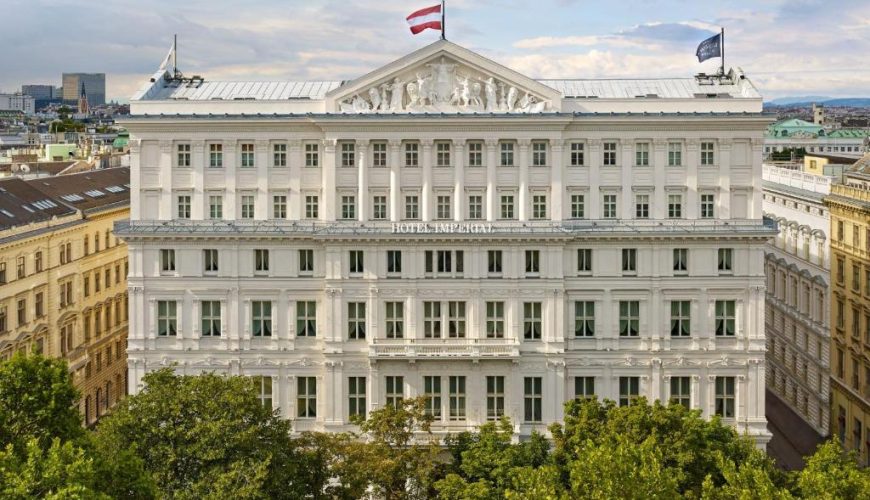
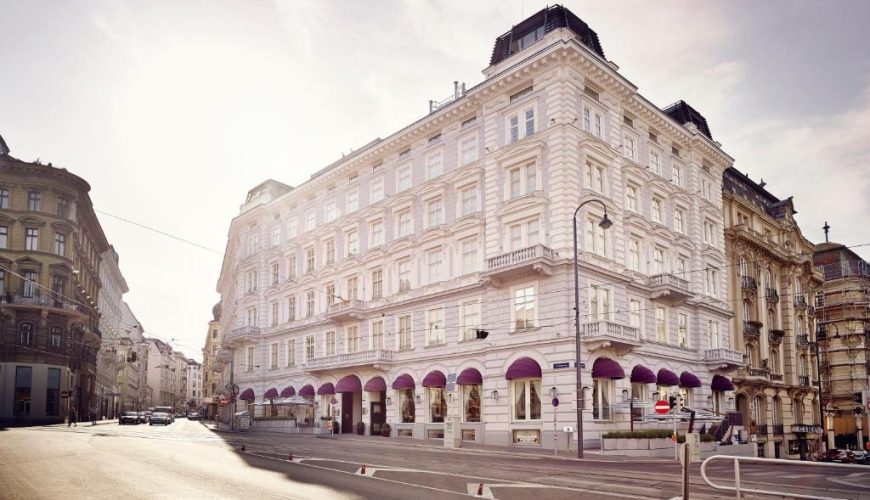
| Luxury | Hotel Imperial; Sacher; Bristol; Park Hyatt | 1st district Ringstrasse | EUR 350–800+ |
| Upper mid-range | Roomz Vienna; The Guesthouse Vienna; Hotel Altstadt | Various | EUR 150–350 |
| Mid-range | 25hours Hotel; Boutiquehotel Stadthalle; Wombat’s | 4th–7th districts | EUR 100–200 |
| Budget | Wombat’s City Hostel; A&O Vienna; Jutel | Near Westbahnhof | EUR 25–80 |
14. Find your Vienna trip on sportmeeting.de
Vienna rewards every kind of travel and every season of the year. Whether you are coming for the New Year’s Eve Silvesterpfad, for a Studiosus cultural city tour in autumn, for a solo week in the coffee houses and concert halls in February, or for a summer evening at the Rathausplatz Film Festival — Vienna will give you exactly what a great city should give: the feeling that the world is better organised and more beautiful than you usually believe it to be. On sportmeeting.de you will find Vienna city tours, cultural trips and round trip packages from Studiosus and other leading operators — directly bookable and comparable.
| Vienna trips and city tours — find yours on sportmeeting.de
On sportmeeting.de you will find Vienna travel packages from leading operators: • Studiosus: Vienna cultural city tours with expert art historian guides; the deepest available cultural experience of the Habsburg city; small groups; year-round programme • Vienna New Year’s Eve packages: Hotel + Silvesterpfad guide + concert tickets; the most in-demand dates in the city • Vienna for solo travellers: organised group tours with independent time built in; ideal for first-time visitors • Vienna combined with Bratislava, Budapest, Prague or Salzburg: Central European touring programmes All offerings directly comparable by date, price, duration and group size. → Find your Vienna trip on sportmeeting.de |
Vienna does not compete with other cities. It operates on its own terms, at its own pace, by its own standards. A city where the waiter at the Café Central has been serving the same table for thirty years, where the standing room queue at the opera has its own social codes and insider knowledge, where the wine grows within the city limits and the orchestras play in rooms built to last forever. The world’s most liveable city is also, if you give it a week and your full attention, one of its most memorable. sportmeeting.de helps you plan which week to give it.
A Warm Welcome to Travellers from Around the World
We warmly welcome cycling enthusiasts from Norway, the Netherlands, USA, Poland, Italy, Greece and across Europe and the world.
Hjertelig velkommen – Varmt välkommen – Hjertelig velkommen – Sydämellisesti tervetuloa – Serdecznie witamy – Bienvenue – Hartelijk welkom – Bienvenuti – Un caloroso benvenuto – A warm and hearty welcome – Srdečně vítáme – Szívélyes üdvözlet – Srdačno dobrodošli – Topel dobrodošli – Bun venit călduros – Kalósorisma – Kordialmente bonbini – Herzlich willkommen – A warm American welcome
All tour destinations
Sports Travel
Comment (0)