

Moselle Valley luxury travel guide – five exceptional hotels, twenty castles, one unforgettable river
The Moselle is Germany’s most romantic river. From its confluence with the Rhine at Koblenz to its Roman origins at Trier, the 250-kilometre valley threads through a landscape of steep slate vineyards, medieval market towns and more castles per kilometre than almost anywhere in Europe. This guide maps the finest luxury hotels along the route, lists twenty castles worth visiting and explains how to arrive, where to hire a car and how to organise group travel from the nearest airports.
The Moselle Valley – vineyard slopes, medieval towns and a river that never bores
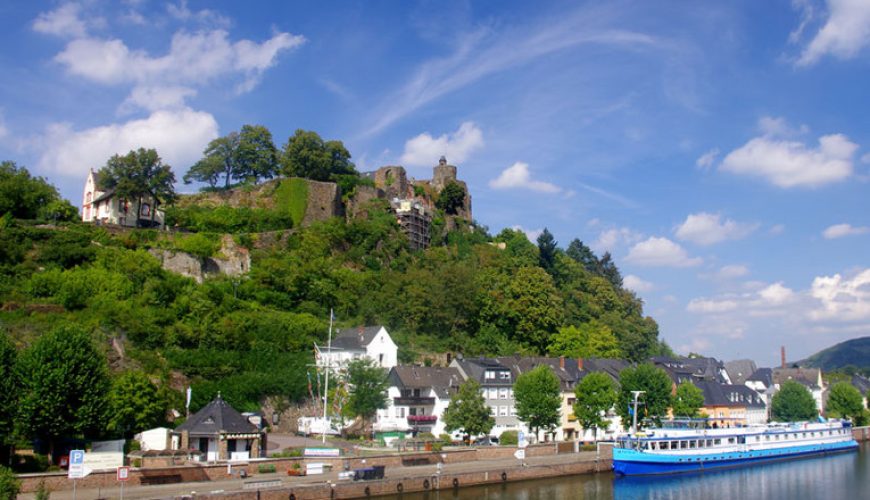
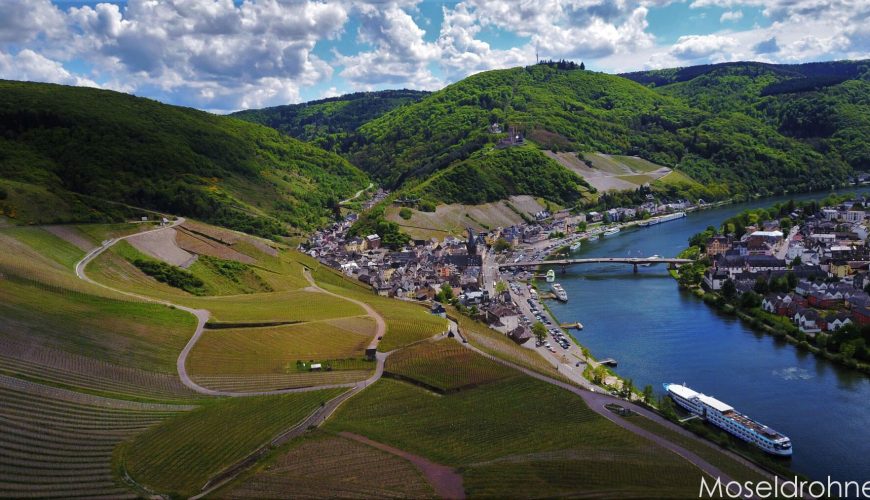
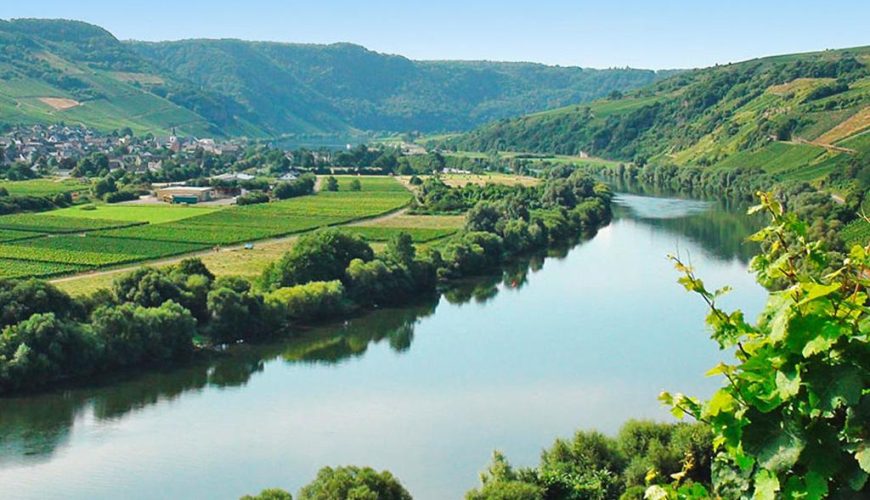
The Moselle enters Germany from Luxembourg at Perl and flows northward for 250 kilometres, growing through the Eifel and Hunsrück highlands, past Trier, Bernkastel-Kues, Traben-Trarbach, Zell, Beilstein, Cochem and Koblenz, before joining the Rhine at the Deutsches Eck. The valley it carves through the slate highlands is one of the most distinctive landscapes in Central Europe: impossibly steep vineyard terraces stacked from river to ridgeline, half-timbered market towns on the meanders, and above them – almost always, on the nearest spur of rock – a castle or its ruins.
The Moselle is Germany’s most important wine river and the world’s greatest producer of Riesling grown on slate soils. The mineral quality of Moselle Riesling – that combination of fruit, acidity, petrol and stone that distinguishes it from every other white wine on earth – comes directly from the weathered slate that covers the valley’s slopes. Tasting your way from Koblenz to Trier is an education in the terroir of an entire geological era.
Moselle Valley luxury tour 2026 – enquire about customised packages and group travel
Self-drive from Frankfurt, Cologne, Düsseldorf, Luxembourg or Hahn – or private chauffeured service
Moselle Cycle Tours – Germany’s Most Beautiful Wine Cycle Path
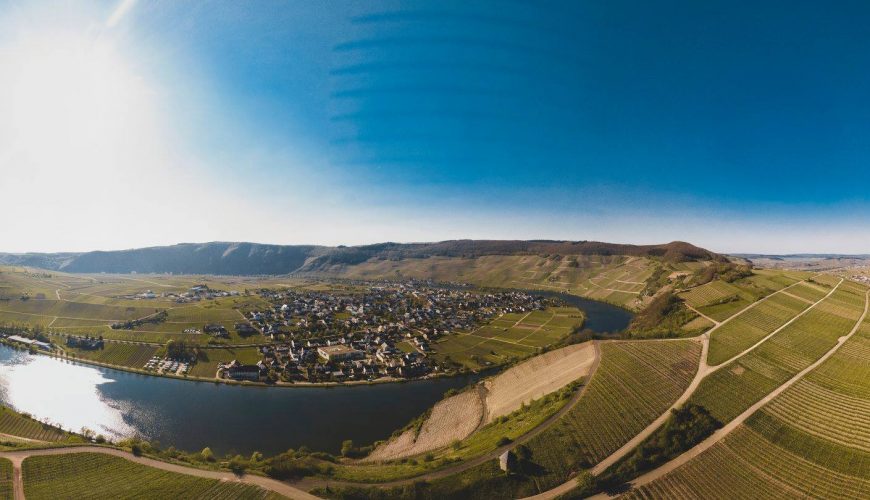
The Moselle bends at least a hundred times between Koblenz and Trier. At every bend, the view is different. At almost every bend, a tower rises from the ridge. After two days on the river, you understand why generations of German Romantic painters could not stop drawing it.
The Moselle Valley – key facts for travellers
- Length in Germany: 250 km – from Perl (Luxembourg border) to Koblenz (Rhine confluence)
- Wine: World’s most important Riesling region – 9,000 hectares of vineyard – steepest slate slopes in Europe
- Castles: Over 50 castle sites along the German Moselle – 20 of the most visitable listed in this guide
- Key towns: Koblenz – Cochem – Beilstein – Zell – Traben-Trarbach – Bernkastel-Kues – Trittenheim – Trier
- Best season: May to October – harvest season (late September/October) the most atmospheric
- Self-drive route: The B49/B53 river road follows the Moselle on the south bank almost continuously – one of Germany’s finest scenic drives
- UNESCO: Trier’s Roman monuments are UNESCO World Heritage – including the Porta Nigra, the Amphitheatre and the Imperial Baths
The luxury hotel route – from the Rhine confluence to the oldest city in Germany
The five hotels in this guide form a natural linear route from the northern end of the Moselle Valley to its southern origin at Trier. Driven unhurriedly – one or two nights at each stop – this is a five- to seven-night journey through some of the most beautiful small-town and river scenery in Europe. The total drive from Koblenz to Trier along the river road is approximately 200 kilometres and takes between three and four hours without stops. With stops, it fills a week comfortably.
The route – north to south
- 1. Koblenz (arrival): FÄHRHAUS – the elegant Rhine-Moselle junction – gateway to the valley
- 2. Treis-Karden / Moselkern area: Day excursion to Burg Eltz – no hotel needed, day trip from Koblenz or Cochem
- 3. Traben-Trarbach area: Moselschlösschen – the mid-valley luxury stop – Art Nouveau town
- 4. Lieser (near Bernkastel-Kues): Schloss Lieser – the Marriott Autograph castle – finest wine village address
- 5. Trier (southern end): Romantik Hotel – Roman city, Porta Nigra, Karl Marx birthplace
FÄHRHAUS Koblenz – the elegant start at Germany’s most famous confluence
Luxury boutique hotel – Koblenz – Rhine-Moselle confluence – Deutsches Eck 2 km – fine dining
FÄHRHAUS Koblenz
Koblenz – Rhineland-Palatinate – Germany – at the convergence of Rhine and Moselle
The FÄHRHAUS (literally: ferry house) in Koblenz is the ideal starting point for a Moselle luxury journey – a refined boutique hotel in one of Germany’s most historically charged cities. Koblenz sits at the Deutsches Eck – the German Corner – where the Moselle empties into the Rhine in a confluence that has defined the geography of Central Europe since the Roman fort of Confluentes was built here in the 1st century BC. The fortress of Ehrenbreitstein, which towers 118 metres above the confluence, is one of the largest preserved fortifications in Europe and is visible from the hotel.
The FÄHRHAUS offers a refined riverside setting with excellent regional cuisine and easy access to Koblenz’s Old Town, the cable car to Ehrenbreitstein and the starting point of the B49 Moselle Valley road heading south-west. Arriving here first – before the wine villages, the vineyard slopes and the castles of the middle Moselle – allows the journey to build properly.
Schloss Lieser – a 19th-century castle reborn as a luxury hotel
5-Star – Marriott Autograph Collection – Lieser – 49 rooms and suites – directly on the Moselle – spa
Schloss Lieser – Autograph Collection
Schlossberg 10 – 54470 Lieser – Moselle Valley – near Bernkastel-Kues – Rhineland-Palatinate
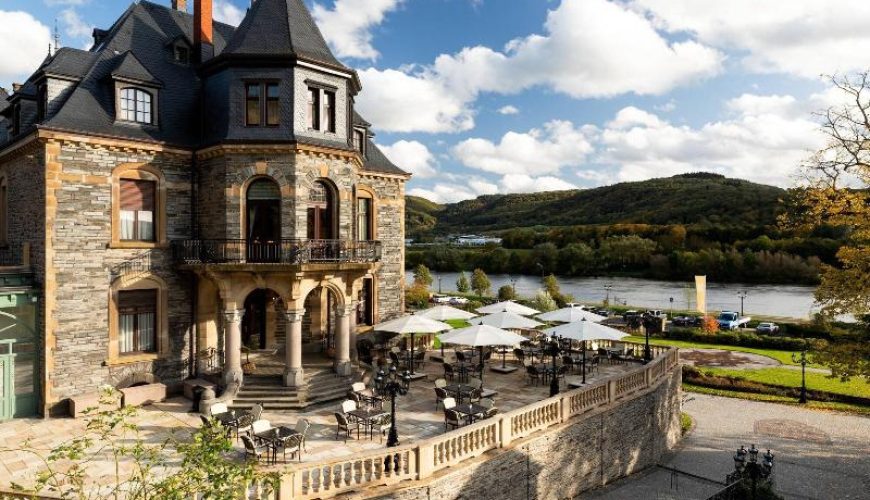
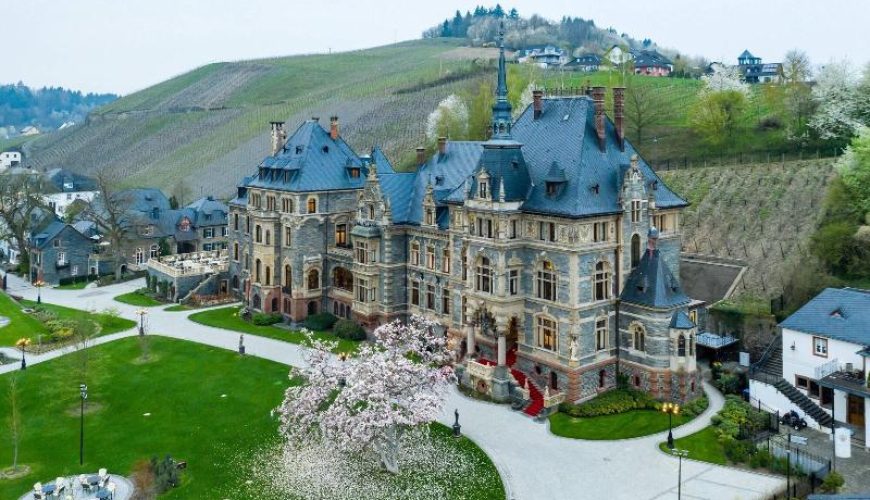
Schloss Lieser is the single most dramatic place to sleep in the Moselle Valley. Built in 1884 for the industrialist Eduard Puricelli – a combination of Neo-Renaissance and Art Nouveau that was designed to announce wealth on a river full of wealthy people – the castle fell into long disrepair after the Second World War before being acquired in 2007 by Mr. Kilas, who undertook the extensive restoration that transformed it into a luxury hotel. The future Queen Juliana of the Netherlands stayed here in the original iteration. Today the Marriott Autograph Collection holds it as one of its signature European castle properties.
The 49 rooms and four suites are individually decorated with ornate woodwork, crystal chandeliers and marble bathrooms. The Emperor Suite – with its Jacuzzi overlooking the Moselle – is the finest room in the valley. The restaurant Puricelli serves seasonal cuisine paired with the outstanding Rieslings of the surrounding estates. The spa and indoor pool complete an offer that few valley hotels can match.
Moselschlösschen – the mid-valley address with the river below
Boutique castle hotel – Moselle riverbank – vineyard panorama – romantic atmosphere
Hotel Moselschlösschen
Traben-Trarbach area – middle Moselle Valley – Rhineland-Palatinate
The Moselschlösschen is a romantically positioned boutique hotel that captures the essential character of the middle Moselle – the section of the valley between Cochem and Bernkastel-Kues where the river is at its most sinuous, the villages at their most half-timbered and the vineyards at their most improbably steep. The hotel sits above the river with panoramic views across the valley and is ideally placed for both Cochem (Reichsburg is 20 km north) and the wine villages of the Bernkastel-Kues area (15 km south).
Burg Eltz – the castle that survived everything
Burg Eltz is not a hotel – it is an excursion. But it is the most important single stop on any Moselle Valley itinerary and deserves its own section in any serious guide to the valley. Burg Eltz, near the village of Wierschem above the Elzbach tributary of the Moselle, is widely considered the finest medieval castle in Germany – and one of the finest in all of Europe. What makes it unique is its continuity: the castle has been in uninterrupted ownership of the House of Eltz for over 850 years and has never been conquered or destroyed in its entire history. The interior – with its rooms largely unchanged since the medieval period – contains eight centuries of European art, weaponry, porcelain and furnishings.
Burg Eltz – visitor information 2026
- Location: Burg Eltz 1, 56294 Wierschem – in the Elzbach valley, above the village of Moselkern
- Access: By foot from Moselkern (parking available, 45-minute forest walk) – or by shuttle bus from the car park on the ridge
- Opening season: April 1 – November 1 – daily 09:30–17:30 – closed in winter
- Guided tours: Mandatory – English-language tours available – approximately 45 minutes
- Highlights: Knights’ Hall – Rübenach and Rodendorf family apartments (largely unchanged since 16th century) – treasury with medieval weaponry, silver and paintings
- Eight towers: The castle’s distinctive silhouette with eight towers rising from a wooded valley is one of the most photographed images in Germany
- From the hotels: 45 min from FÄHRHAUS Koblenz – 60 min from Schloss Lieser – 40 min from Moselschlösschen
Burg Eltz appears at the end of a forest path – you hear it before you see it, because the sound of the water changes. Then the valley opens and the castle is simply there, rising from the rock above the stream, eight towers in the morning light, and it looks exactly as it did in every illustration you’ve ever seen of it. Nothing prepares you adequately.
Romantik Hotel Trier – sleeping in Germany’s oldest city
Romantik Hotel – Trier – UNESCO World Heritage – Porta Nigra 2 min walk – Karl Marx birthplace
Romantik Hotel Zur Glocke – Trier
Glockenstrasse 12 – 54290 Trier – Rhineland-Palatinate – pedestrian zone – 2 min from Porta Nigra
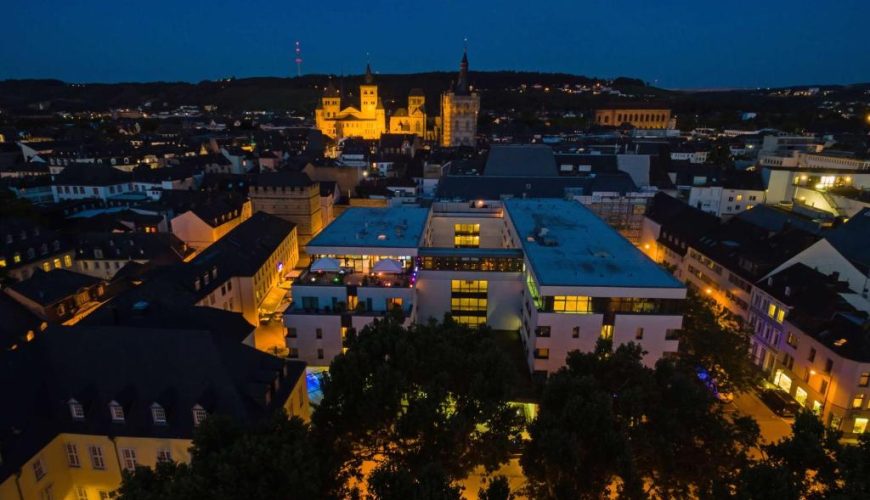
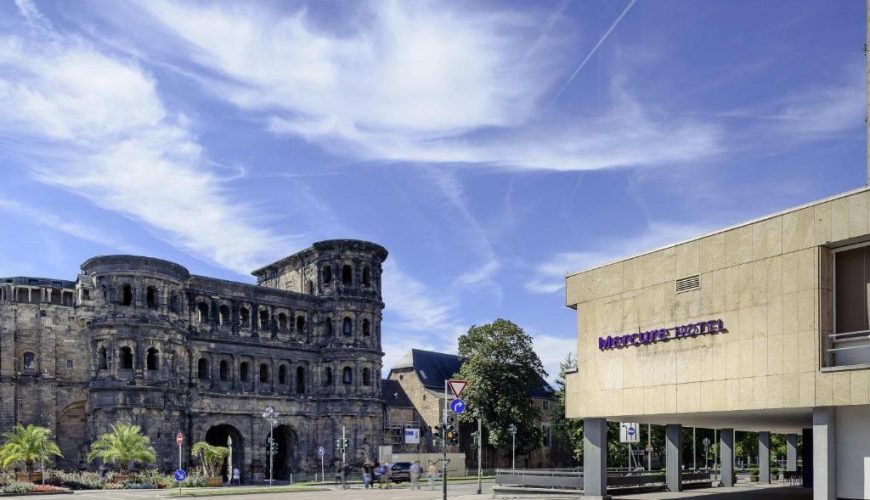
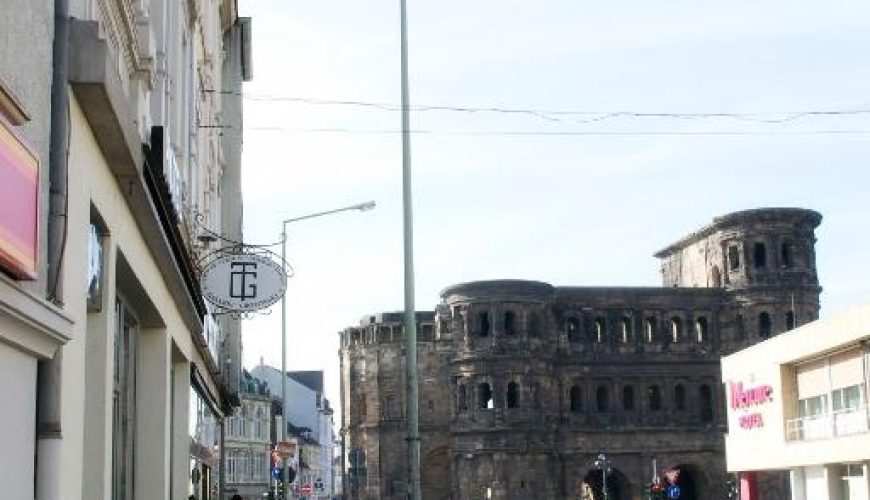
Trier is the final and most historically resonant stop on the Moselle luxury route. Founded as Augusta Treverorum by the Emperor Augustus around 16 BC, Trier is Germany’s oldest city and one of the best-preserved Roman cities north of the Alps. Its Roman monuments – the Porta Nigra (the largest surviving Roman city gate north of the Alps), the Imperial Baths (Kaiserthermen), the Barbarathermen, the Amphitheatre and the Basilica of Constantine – were designated UNESCO World Heritage in 1986. The Cathedral, begun on Roman foundations in the 4th century, is the oldest in Germany.
The Romantik Hotel Zur Glocke is positioned in the pedestrian heart of Trier’s Old Town, two minutes’ walk from the Porta Nigra and the central market square. Part of the Romantik Hotels collection – which gathers independently run hotels of character throughout Europe – the Zur Glocke offers personal service, excellent regional cuisine and a wine list that represents the best of the Moselle and Saar regions. A perfect place to end five days on the river.
Trier – UNESCO World Heritage sites included in a day’s walking tour
- Porta Nigra: The largest and best-preserved Roman city gate north of the Alps – 2nd century AD – 36 metres high – free exterior, guided tour inside
- Cathedral (Dom St. Peter): Founded on Roman imperial foundations – construction began in 326 AD under Emperor Constantine – the oldest cathedral in Germany
- Liebfrauenkirche: Adjacent to the Cathedral – one of the earliest Gothic churches in Germany – 13th century
- Kaiserthermen (Imperial Baths): One of the largest Roman bath complexes in the Roman Empire – 4th century – extensive underground vaulting visible
- Amphitheatre: Roman arena seating 20,000 – built around 100 AD – underground gladiator cells still intact
- Karl Marx Birthplace: The red sandstone house in the Brückenstrasse where Marx was born in 1818 – now a museum and the most-visited address in Trier after the Porta Nigra
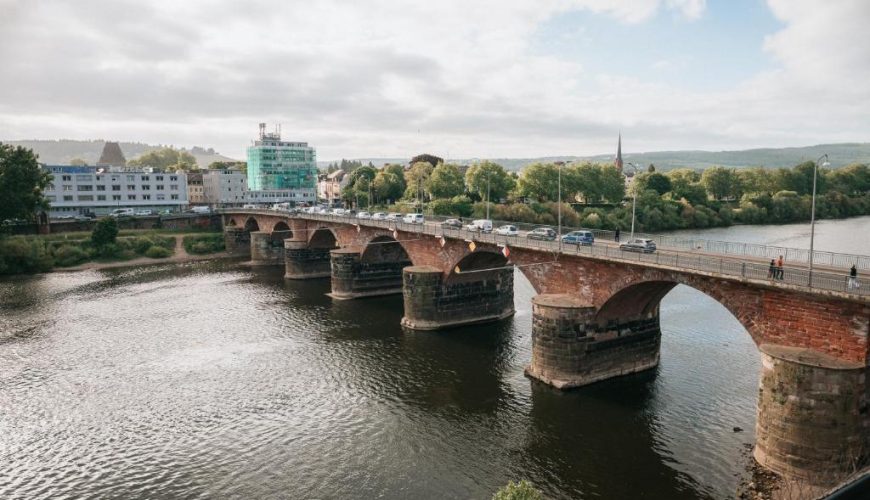
- Roman Bridge (Römerbrücke): The oldest still-standing bridge in Germany – original Roman stone pillars from the 2nd century AD support a medieval carriageway
The 20 Moselle castles – a complete guide for castle enthusiasts
The Moselle Valley contains more castle sites per kilometre than almost any comparable river valley in Europe. The following twenty are the most rewarding to visit – ranging from fully restored castle-hotels and visitor attractions to atmospheric ruins with panoramic viewpoints. Listed from north (Koblenz end) to south (Trier end) for ease of planning the route.
| Castle | Location | Character and highlights | Open to visitors |
|---|---|---|---|
| Festung Ehrenbreitstein | Koblenz | Largest preserved fortress in Europe – 118m above Rhine-Moselle confluence – Landesmuseum Koblenz – cable car access from Koblenz | Yes – year-round |
| Burg Thurant | Alken | Unique double castle once co-owned by the archbishops of Cologne and Trier – two separate towers, the Cologne Tower and the Trier Tower – 800 years old – vineyard views from the Cologne Tower | Yes – seasonal |
| Burg Eltz | Wierschem | Germany’s finest medieval castle – 850 years – never conquered – eight towers – interiors unchanged since 16th century – mandatory guided tour | April–November |
| Burg Bischofstein | Hatzenport | Well-preserved medieval ruin above the Moselle – managed by the CVJM youth organisation – atmospheric setting – panoramic views | Yes – seasonal |
| Reichsburg Cochem | Cochem | Largest castle in the Moselle Valley – set on 100m rock above Cochem – neo-Gothic restoration 1877 – Knight’s Hall, Dining Hall, Trophy Room – Friday/Saturday Knights’ Feast medieval evenings | Year-round |
| Burg Pyrmont | Roes (east of Cochem) | Hidden gem – enthroned on slate rock above a waterfall on the Elzbach – 800 years of history – authentic courtyard – café – weddings for up to 300 guests – hiking trails nearby | Yes – seasonal |
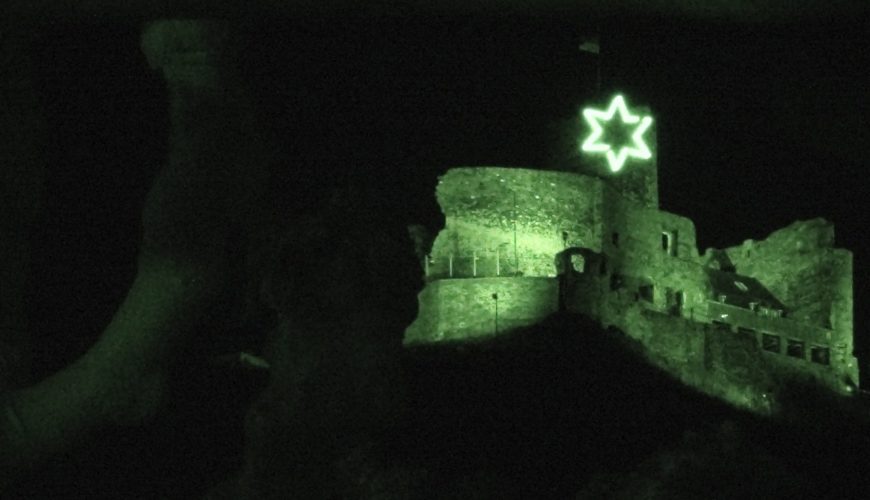
| Burg Metternich | Beilstein | Ruins above the «Sleeping Beauty of the Moselle» – the village of Beilstein is arguably the most perfectly preserved on the river – castle was destroyed by French troops in 1689 | Ruins – free access |
| Schloss Zell | Zell | Medieval castle directly on the Moselle in the town of Zell – now operating as a hotel – rooms in the castle towers – restaurant with regional wine list – departure point for bicycle tours | Hotel – year-round |
| Burg Arras | Alf | Romantically hidden in the forest above the Moselle south of Alf – well-preserved – guided tours – castle winery on site – distinctive slate architecture | Yes – seasonal |
| Grevenburg (ruin) | Traben-Trarbach | Impressive ruin above Traben-Trarbach – 30-minute walk from the town centre – towers above the Art Nouveau town on the Moselle – exceptional views of the river bends | Ruin – free access |
| Burg Wolf (ruin) | Traben-Trarbach | Romantic ruin directly above the Moselle in Traben – visible from the Art Nouveau bridge – destroyed by French in 1689 along with most valley castles | Ruin – visible from road |
| Burg Landshut (ruin) | Bernkastel-Kues | Former residence of the Archbishops of Trier – built on Roman fort foundations – now a romantic ruin on a 60m rock above Bernkastel – shuttle bus or on foot – panoramic valley views – connected to the legend of the Bernkasteler Doctor wine | Yes – April–October |
| Burg Lieser | Lieser | Strictly: Schloss Lieser – the Neo-Renaissance castle hotel of the Marriott Autograph Collection – fully restored – the finest hotel address in the valley | Hotel guests |
| Burg Graach (ruin) | Graach | Small ruin above the famous Graacher Himmelreich vineyard – more wine history than castle drama but worth a vineyard walk | Open access |
| Burg Wiltingen | Wiltingen (Saar) | Above the Scharzhofberg vineyard – the greatest Riesling site in Germany – the castle provides the visual anchor for the most famous wine view in the Moselle/Saar region | Exterior only |
| Burg Montclair (ruin) | Mettlach (Saar) | Dramatic ruin in the Saar loop at Mettlach – accessible on foot through forest – extraordinary panoramic position over the Saar loop (Saarschleife) | Open access |
| Burgruine Kasselburg | Pelm (Eifel) | Off the Moselle proper but close to the valley – fully restored – falconry centre (one of Germany’s finest) – bird of prey shows – Medieval market in summer | Yes – seasonal |
| Burg Trifels | Annweiler (Palatinate) | Slightly off-route but historically unmissable – where Richard the Lionheart was held captive in 1193 – dramatic position on three sandstone peaks – restored Staufen imperial castle | Yes – seasonal |
| Burg Saarburg | Saarburg | Medieval castle ruins above the town of Saarburg – 360-degree views over town, Saar River and vineyards – town itself notable for a 20-metre waterfall in the centre and the oldest bell foundry in the world (still operating) | Yes – seasonal |
| Porta Nigra / Roman Trier | Trier | Not a castle but the Roman fortification that preceded all Moselle castles – 2nd century AD – UNESCO World Heritage – the most powerful single monument in the valley | Year-round |
Moselle wine – the world’s greatest Riesling and how to experience it
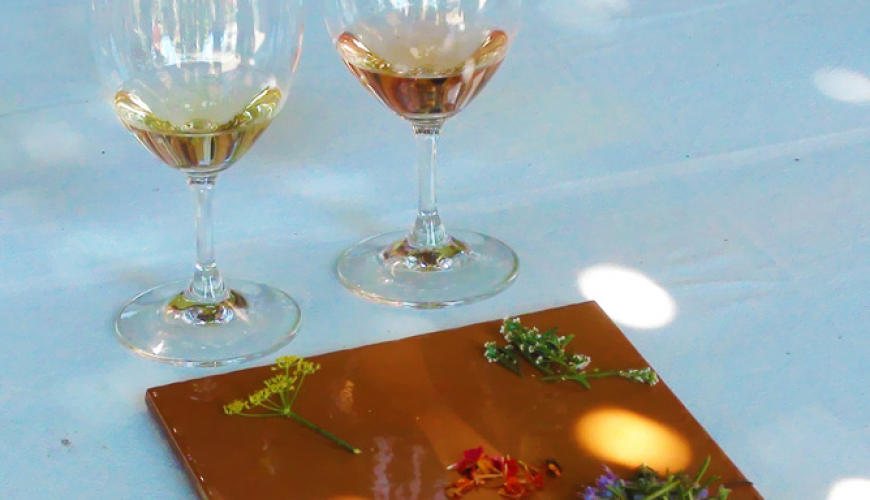
The Moselle Riesling is one of the great wine experiences on earth. The combination of steep south-facing slate slopes, the cool-but-sunny climate and the reflective heat from the river creates conditions that produce a white wine of unique mineral intensity – simultaneously light in alcohol, high in acidity and packed with flavours that range from green apple and peach in youth to petrol, honey and slate in maturity. The Bernkasteler Doctor vineyard, one of Germany’s most expensive, rises directly above Bernkastel-Kues and is visible from Schloss Lieser.
Best wine experiences along the luxury route
- Bernkastel-Kues: The double town divided by the Moselle – Bernkastel on the south bank with the iconic half-timbered market square and Landshut ruin above – surrounded by the finest Riesling estates: Dr. Loosen, Joh. Jos. Prüm, Willi Schaefer, Wegeler
- Schloss Lieser wine cellar: The hotel’s own wine cellar with tasting events featuring Moselle producers – excellent curated list of local estates – enquire about tasting sessions at booking
- Trittenheim: Charming wine village mid-valley – Apotheke vineyard – several top producers including Clüsserath-Weiler
- Scharzhofberg, Wiltingen (Saar): A 30-minute detour from Trier to the greatest Riesling vineyard in Germany – the Egon Müller estate produces some of the world’s most expensive white wines here
- Harvest season (late September/October): The Moselle harvest is one of Germany’s most atmospheric agricultural events – vineyards active, villages festive, wine taverns full
Getting there – airports, self-drive and group transfers
The Moselle Valley is served by five international airports at varying distances. The choice of arrival airport depends on whether the journey starts at Koblenz (north end) or Trier (south end). For a north-to-south route, Frankfurt or Cologne/Düsseldorf are the natural choices; for arrival directly at Trier, Luxembourg is the closest airport.
Best for north route – Koblenz
Frankfurt Airport (FRA)
Germany’s largest hub – widest international connectivity. Koblenz by IC train in 1.5 hours or 85 km by car (A48 motorway, 1 hr). Major hire car fleets available in both Terminal 1 and Terminal 2. Best option for arrivals from USA, Middle East and Asia.
Good for Koblenz or Cochem
Cologne/Bonn Airport (CGN)
90 km from Koblenz – 1 hour by car (A61). Excellent connections from UK (easyJet, Eurowings, Ryanair), Netherlands and Scandinavia. Full hire car availability. A good alternative for groups arriving from northern European cities.
Northern approach
Düsseldorf Airport (DUS)
130 km from Koblenz – 1.5 hours by car (A61/A48). Germany’s third-largest hub with strong international and intercontinental connections. Large group vehicle hire availability. Good for groups flying in from outside Europe.
Best for Trier – south route
Luxembourg Airport (LUX)
50 km from Trier – 40 minutes by car. The closest airport to the southern Moselle – ideal for tours starting or ending in Trier. Direct connections from London, Paris, Brussels, Amsterdam, Vienna and several other European capitals. Hire car availability is good though smaller fleets than Frankfurt.
Budget option – Ryanair hub
Frankfurt-Hahn Airport (HHN)
In the Hunsrück hills above the Moselle Valley – only 25 km from the river at Traben-Trarbach. Primarily served by Ryanair with connections from London Stansted, Dublin, Stockholm, Barcelona and other European cities. Small hire car fleet available. The most dramatic location of any arrival airport – you descend directly into the wine landscape.
Transport options – self-drive, minibus and coach
Self-drive – the recommended option for couples and small groups
- Best route: Follow the B49/B53 river road on the south bank of the Moselle – the most scenic road in Rhineland-Palatinate, passing through every wine village without motorway detours
- Time estimate: Koblenz to Trier via river road – approximately 3.5 hours without stops. With castle stops and wine tastings: plan 5–7 days
- Car category: Standard estate or comfortable saloon is sufficient – the road is well-surfaced throughout. GPS essential as the river road is not always intuitively signed
- Parking: All five hotels have parking – castle sites have car parks (most charged). Bernkastel-Kues and Cochem can be busy in July/August – park and walk
- One-way hire: Possible between Frankfurt and Luxembourg (or reverse) – surcharges apply but worth it for the linear route. Book well ahead in summer
Group travel – minibus and coach with driver
- Groups of 6–12: Luxury minibus with English-speaking driver – bookable through German specialist operators such as AutoEurope, Sixt Business or regional Moselle tour operators – allows all passengers to enjoy the scenery and wine without driving concerns
- Groups of 13–50: Full-size coach with driver – best coordinated through a specialist DMC (Destination Management Company) based in Koblenz, Trier or the Moselle region – operators such as Mosella Touristik or Touristikring Mosel
- Suggested programme for groups: Day 1 – Frankfurt/Cologne arrival, drive to Koblenz, FÄHRHAUS dinner; Day 2 – Burg Eltz morning, Cochem Reichsburg afternoon, drive to Moselschlösschen; Day 3 – Traben-Trarbach Art Nouveau, drive to Bernkastel-Kues, wine estate visit; Day 4 – Schloss Lieser check-in, wine tasting, Burg Landshut walk; Day 5 – Scharzhofberg detour, drive to Trier, Roman monuments, Romantik Hotel dinner; Day 6 – departure from Luxembourg or Trier
- Booking lead time: For groups of 20+ in high season (May–October): 4–6 months advance booking recommended for hotels and coach hire
Best time to visit the Moselle Valley
- May and June: Excellent – warm, green vineyards, all castles open, wine taverns quiet enough for conversation. Ideal for cycling alongside the hire car
- July and August: Peak season – busier, warmer (28–32°C), fully alive – wine festivals in most villages. Book well ahead
- September and October: The connoisseur’s choice – harvest atmosphere, golden vine leaves, cooler temperatures, the river reflecting autumn light. Most atmospheric time of year
- November to March: Quiet, cold, most castles closed – but Trier’s Roman monuments are open year-round and Schloss Lieser and the FÄHRHAUS operate year-round. A winter weekend at Schloss Lieser with the castle snow-covered is an extraordinary experience
Moselle Valley Luxury Tour 2026 – five hotels, twenty castles, one unforgettable valley
The Moselle – where a river road becomes a journey.
FÄHRHAUS Koblenz at the Rhine-Moselle confluence. Burg Eltz rising from the forest. Schloss Lieser on the riverbank with a Jacuzzi facing the water. Moselschlösschen among the vines. Romantik Hotel Trier at the Porta Nigra. Twenty castles in between. The Moselle is one of Europe’s great journeys. Start planning now for 2026.
Comment (0)