



TRAVEL GUIDE ANDALUSIA | COSTA TROPICAL
Playa Granada: Spain’s Best-Kept Secret on the Costa Tropical
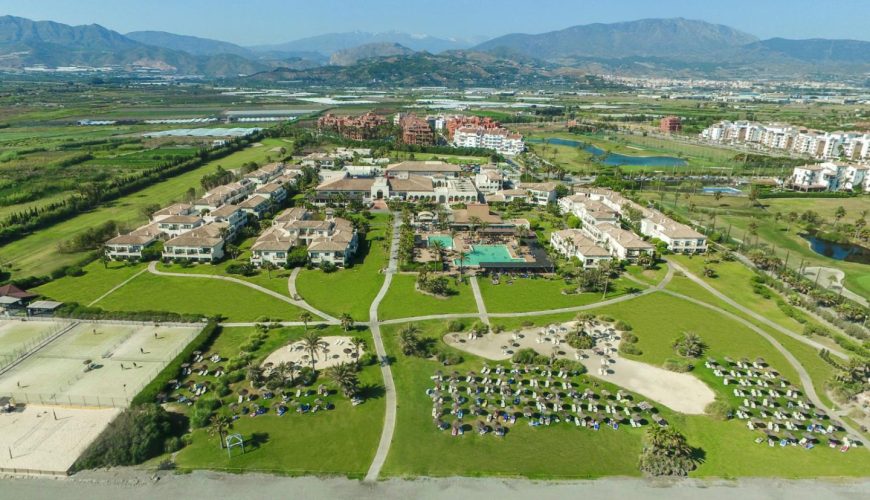
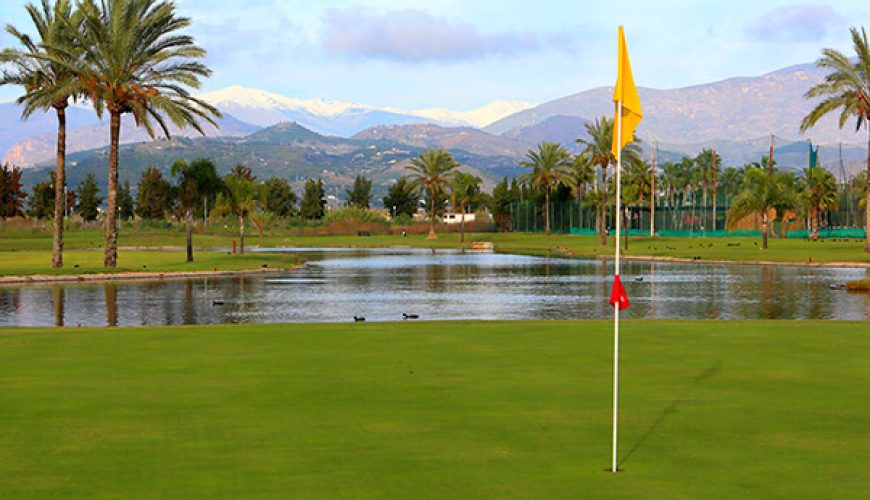
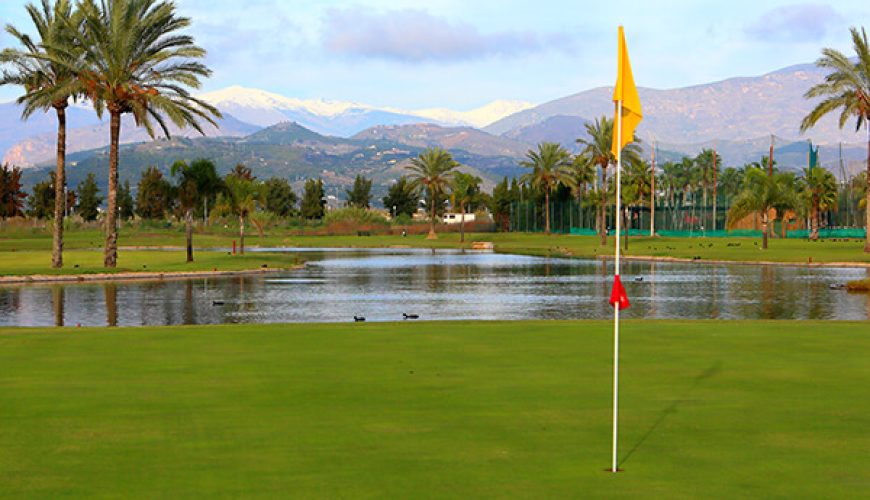
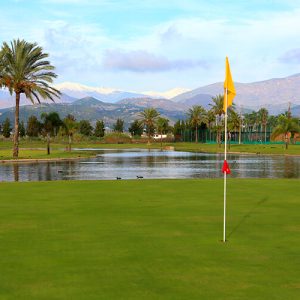
Snow-capped Sierra Nevada mountains behind you, the Mediterranean in front, tropical fruits growing on the hillsides and a golf course next to the beach: Playa Granada near Motril is one of the most unusual and underrated coastal destinations in all of Andalusia.
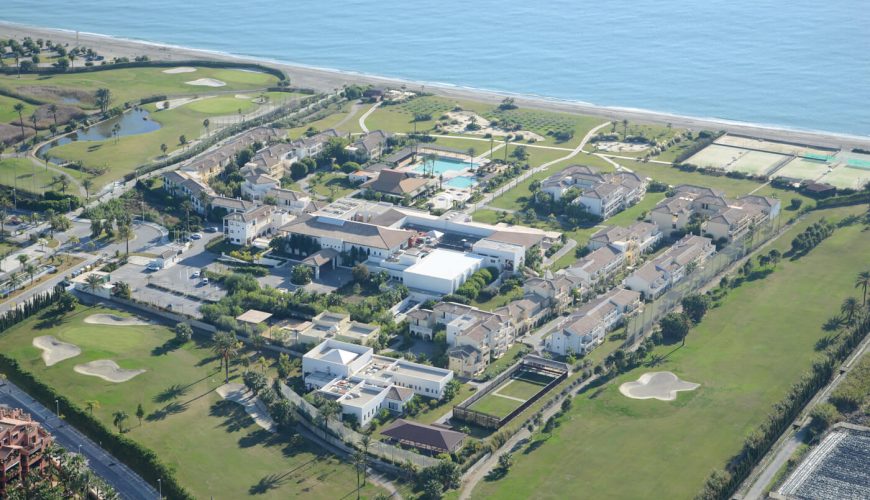
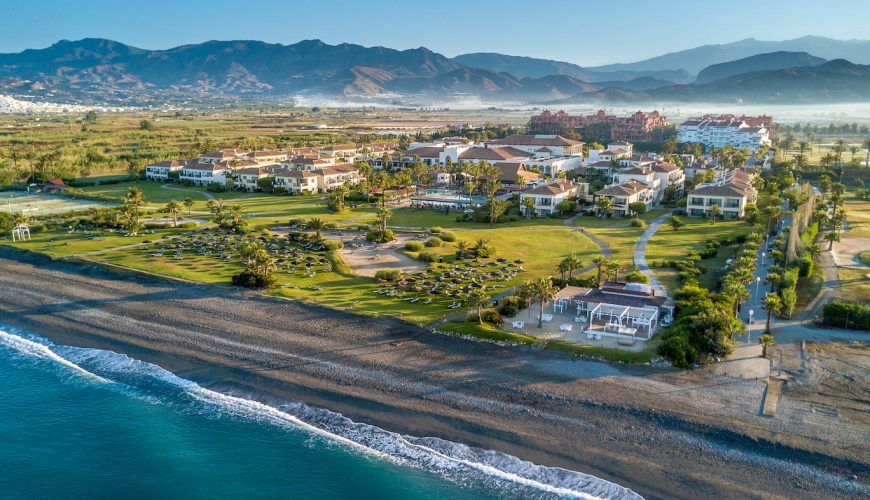
Most visitors to southern Spain head straight to Malaga, Marbella or the crowded resorts of the Costa del Sol. Very few continue east along the coast to the Costa Tropical — and those who do tend to return every year. The stretch of coastline between Motril and Almunecar, known as the Costa Tropical, is one of the most climatically unusual corners of Spain: a microclimate so mild and stable that avocados, mangoes, custard apples and papayas grow commercially on terraced hillsides above the sea, while the snow line of the Sierra Nevada is visible on the horizon from the beach. At the heart of this distinctive landscape sits Playa Granada, a residential resort community built around one of the most dramatically situated golf courses in Andalusia.
Playa Granada is not a traditional Spanish village or historic town. It is a purpose-built beach and golf community on the outskirts of Motril, offering a remarkable combination of beachfront access, year-round mild weather, immediate proximity to the Los Moriscos Golf Club and — for those who look further — the cultural riches of Granada city, the hiking trails of the Alpujarras and the ski slopes of the Sierra Nevada all within an hour’s drive. This guide covers everything you need to plan a visit: the beaches, the hotel, the golf, the sports facilities, the surrounding region and how to get there.
What is in this guide
- Playa Granada at a glance: location, climate and what makes it special
- The Costa Tropical: a microclimate unlike anywhere else in Spain
- The Impressive Playa Granada Golf Hotel: rooms, facilities and dining
- Golf: Los Moriscos Club and the wider Costa del Sol golf circuit
- Sport and active holidays: tennis, water sports, cycling and more
- Beaches: Granada Beach, Platja de Ponent and the Costa Tropical coast
- The surrounding region: Granada city, Alhambra, Alpujarras and Sierra Nevada
- Day trips: Salobrena, Almunecar and the whitewashed villages
- Getting to Playa Granada: airports and transfer times
- Best time to visit and practical tips
1. Playa Granada at a glance: location, climate and what makes it special
| Feature | Details |
| Location | Playa Granada, Motril, Granada province, Andalusia; Costa Tropical |
| Distance to Granada city | 70 km, approx. 55 minutes by car |
| Distance to Malaga Airport | 80 km, approx. 60–70 minutes by car |
| Distance to Granada Airport | 55 km, approx. 40 minutes by car |
| Golf | Los Moriscos Golf Club: 18-hole course adjacent to the hotel (5-minute walk) |
| Hotel | Impressive Playa Granada Golf: 4-star beachfront resort, 330+ rooms |
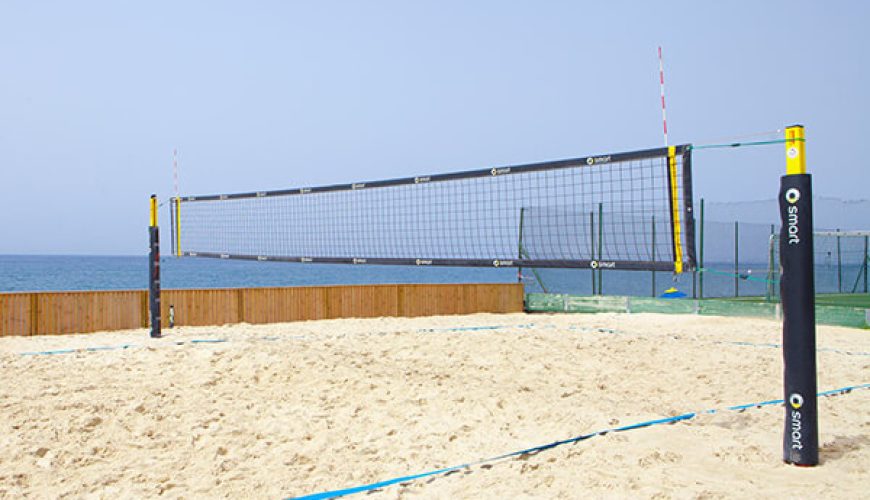
| Sport | 6 tennis courts, 2 beach volleyball courts, water sports, archery, fitness classes |
| Beach | Direct beachfront access; Granada Beach and Platja de Ponent within walking distance |
| Climate | Subtropical microclimate: one of the warmest and sunniest coasts in Europe year-round |
| Unique selling point | Snow-capped Sierra Nevada visible from the beach; tropical fruit production on hillsides |
What genuinely sets Playa Granada apart from other Costa del Sol destinations is this geographical improbability: standing on the beach, you can see snow on the mountains behind you while swimming in a sea warm enough for year-round bathing. The Sierra Nevada — highest mountain range in mainland Spain, home to the southernmost ski resort in Europe — rises to 3,479 metres at Mulhacen, just 60 kilometres from the coast. This proximity creates a microclimate unique in Europe, and the result is a landscape that simultaneously produces tropical fruits (the Costa Tropical is Spain’s main avocado and mango growing region) and allows skiing from December to April on peaks visible from the beach.
The Costa Tropical is the only place in Europe where you can ski in the Sierra Nevada in the morning and swim in the Mediterranean in the afternoon — and on many winter days, that is exactly what the locals do.
2. The Costa Tropical: a microclimate unlike anywhere else in Spain
The Costa Tropical stretches for approximately 80 kilometres along the coast of Granada province, from La Mamola in the east to Almunecar in the west. It is administratively distinct from the Costa del Sol — which belongs to Malaga province — and has deliberately maintained a quieter, less commercialised character than its better-known neighbour. The result is a coastline of small coves, rocky cliffs, fishing villages and long sandy beaches that retains an authenticity that much of the Costa del Sol traded away in the 1970s.
The climate here is classified as subtropical semi-arid — the only such classification on the European continent. Annual average temperatures hover around 20 degrees Celsius, winter temperatures rarely drop below 12 degrees, and frost is essentially unknown. Rainfall is concentrated in autumn and winter but remains low by northern European standards. The combination of warmth, sun, fertile soil and sheltered valleys creates ideal conditions for year-round outdoor sport, and the Costa Tropical is increasingly popular with cyclists, golfers and active travellers who want to train through the European winter in a genuinely warm environment.
| Tropical fruit on the Costa Tropical
The hillsides around Motril and Almunecar are terraced with avocado, mango, custard apple (chirimoya), papaya and loquat orchards — crops that would struggle to survive anywhere else in mainland Europe. The custard apple from the Almunecar area carries a Protected Designation of Origin (PDO) and is considered the finest in the world. Local markets in Motril, Salobrena and Almunecar sell fresh tropical fruit at exceptional prices, and many restaurants along the coast feature the produce prominently on their menus. The Motril Sugar Museum (Museo del Azucar) tells the story of another historic crop: sugar cane, which was cultivated on the Costa Tropical from Moorish times until the 20th century. |
3. The Impressive Playa Granada Golf Hotel: rooms, facilities and dining
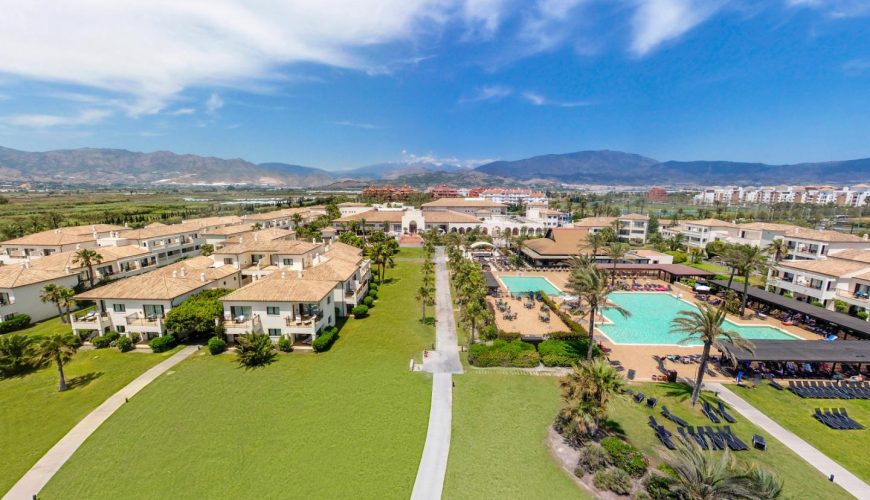
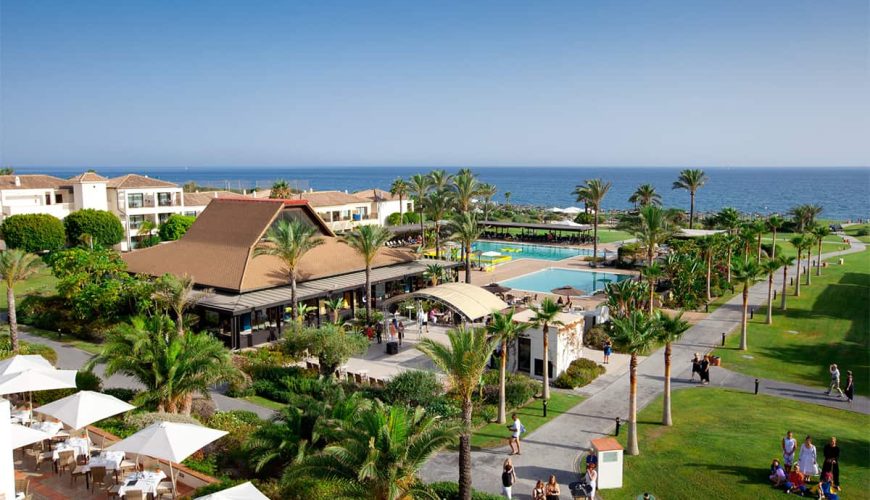
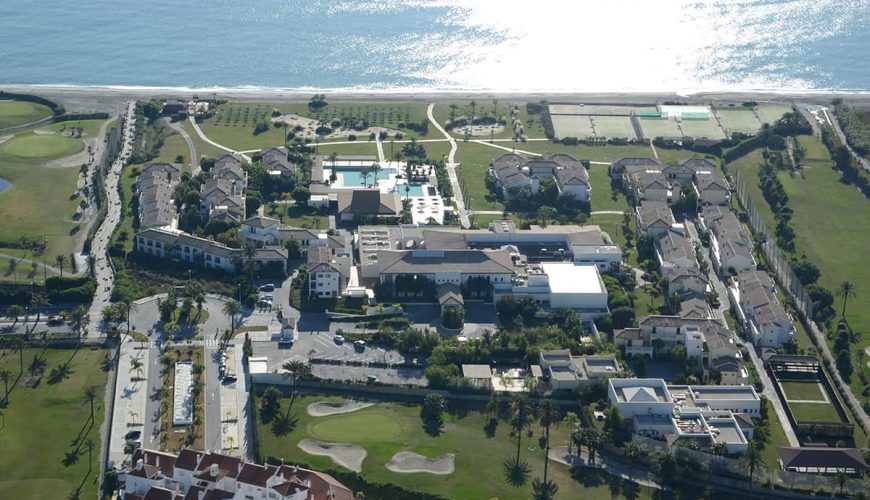
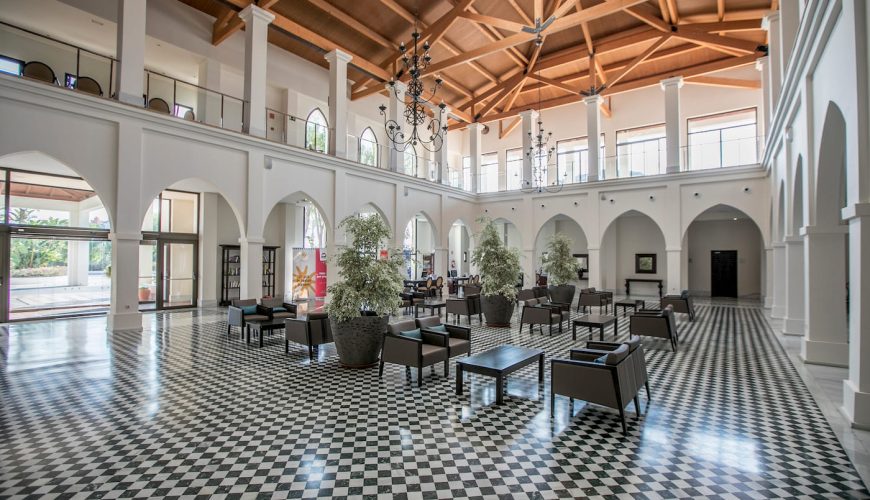
The Impressive Playa Granada Golf is the anchor accommodation for visitors to Playa Granada and the best-equipped hotel on this stretch of the Costa Tropical. Located directly on the beach and immediately adjacent to the Los Moriscos Golf Club, it offers a self-contained resort experience unusual for a four-star property — with a breadth of sporting and leisure facilities that genuinely rivals larger, more expensive resorts elsewhere on the Costa del Sol.
Rooms and layout
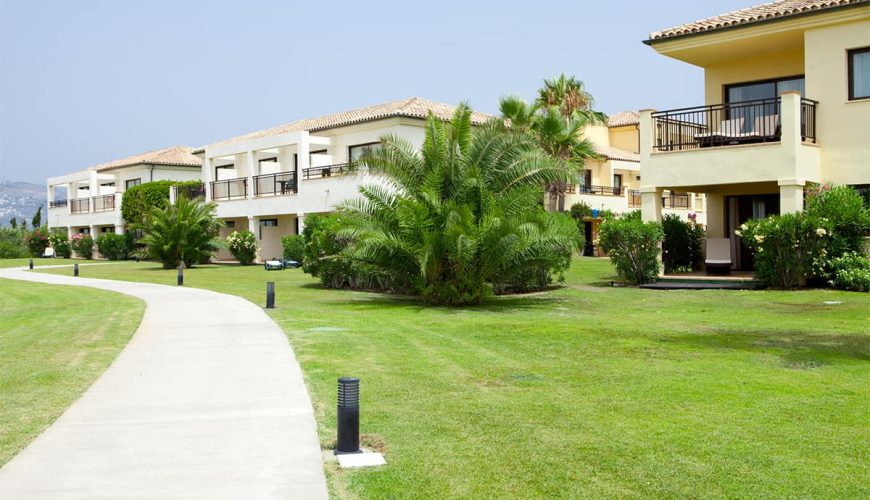
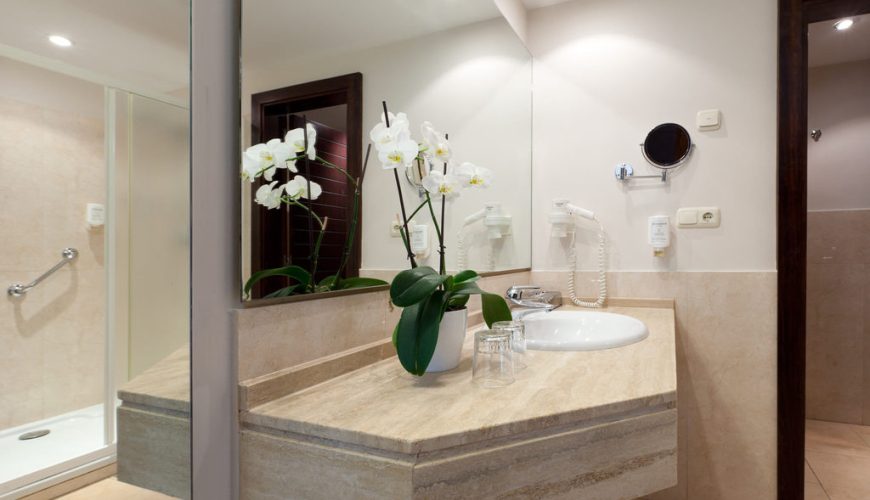
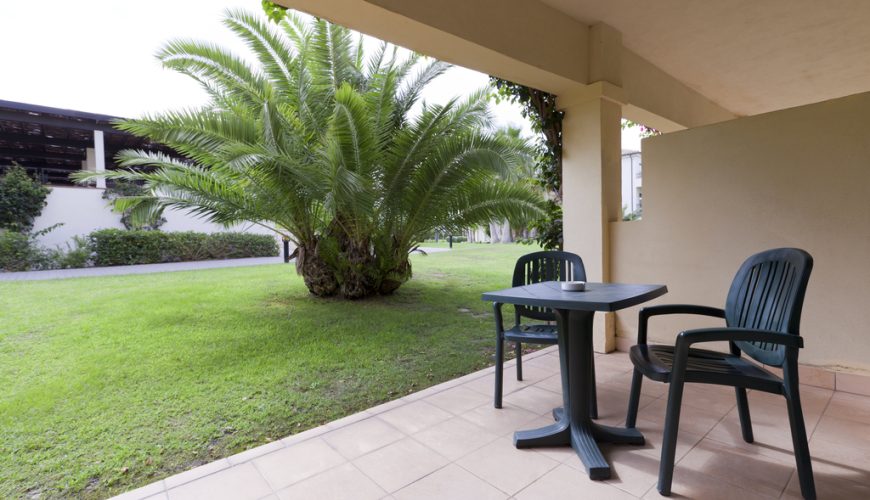
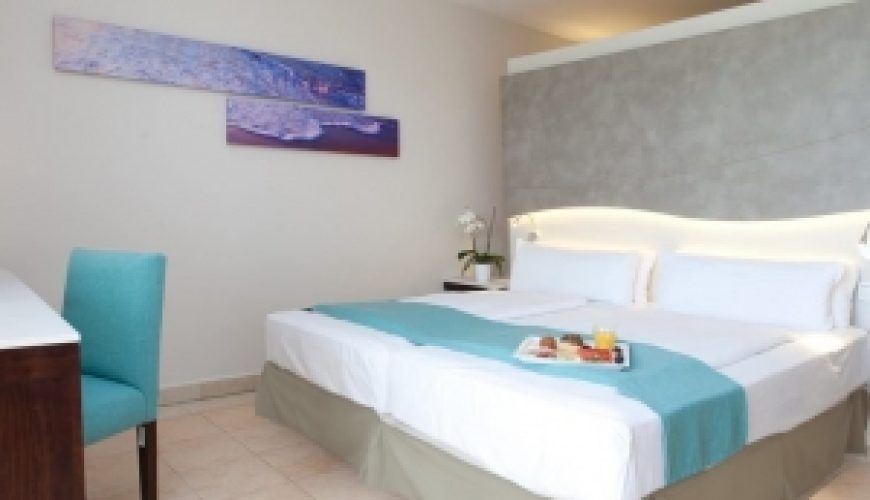
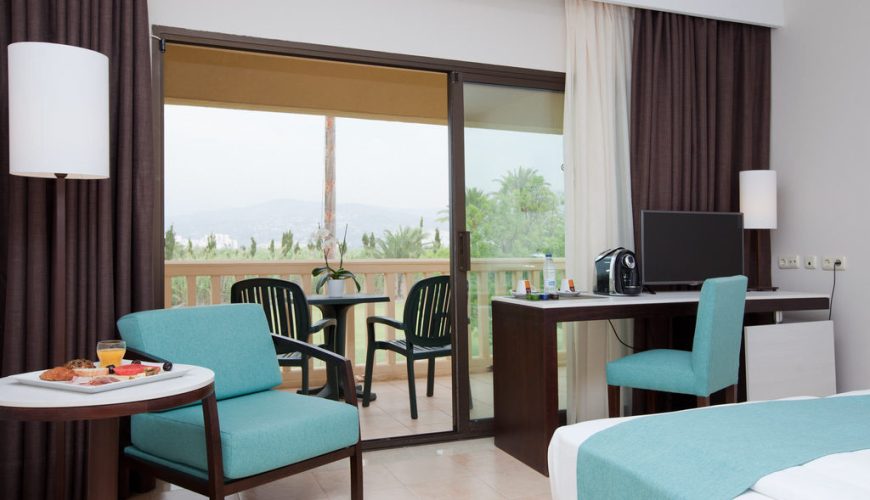
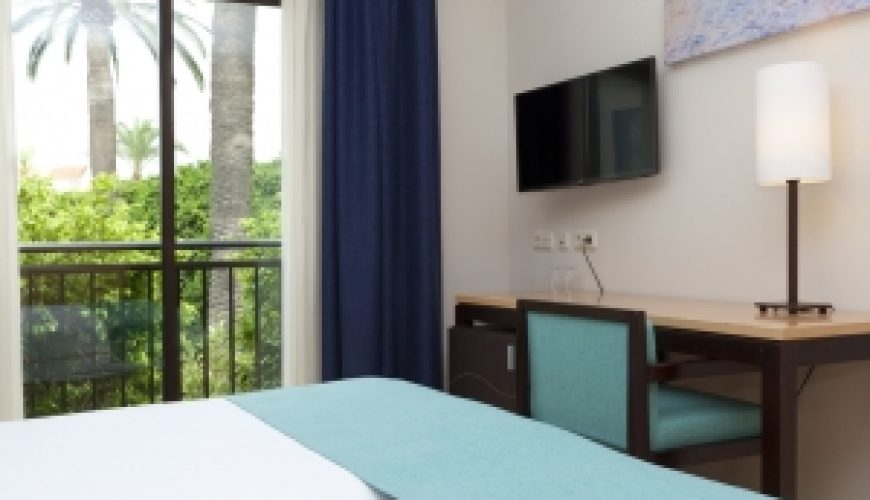
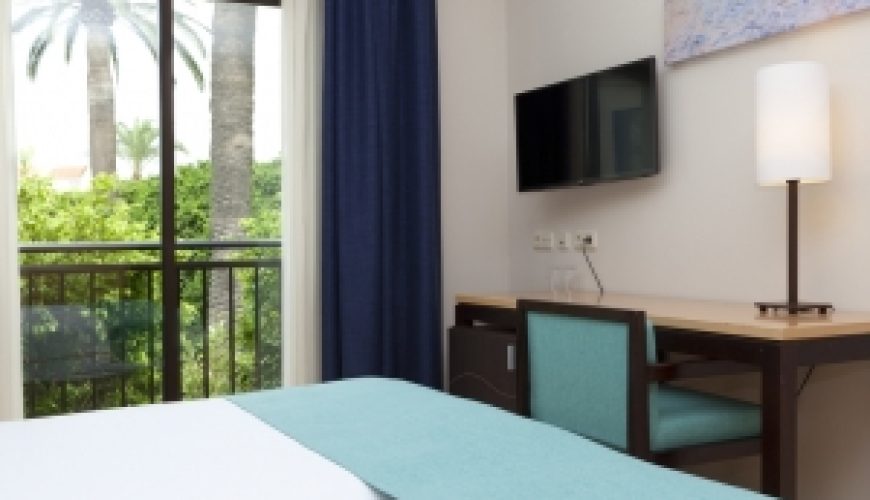
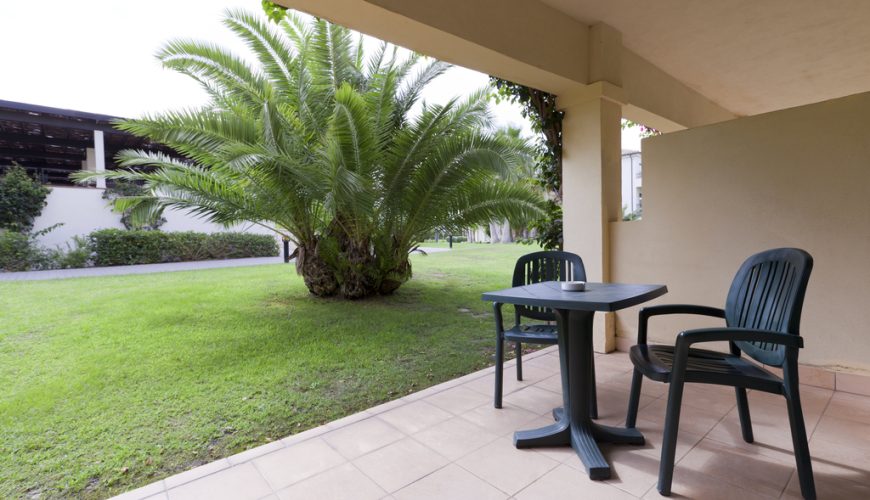
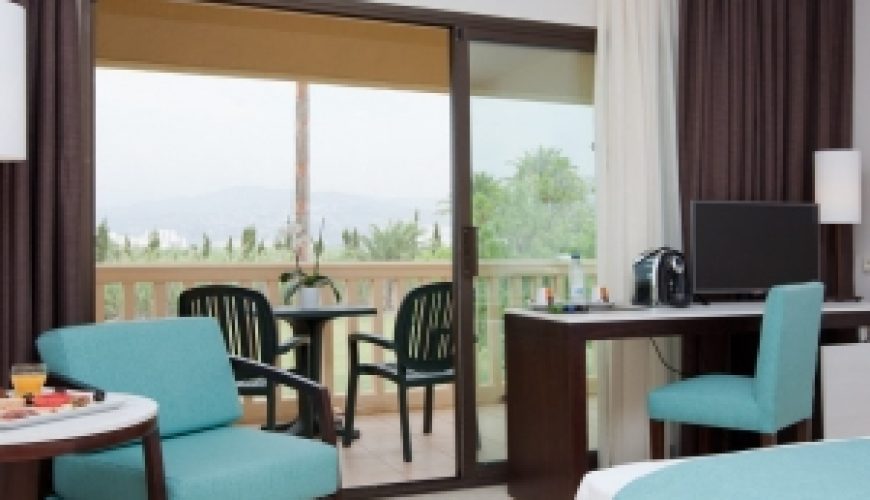
The resort comprises 330 rooms and apartments distributed across eight low-rise buildings in landscaped gardens. Room types range from standard double rooms with sea or garden view to two-bedroom apartments and junior suites. All rooms have air conditioning and heating, private balcony or terrace, satellite TV, safe and minibar. Most rooms offer sea views, and the layout — spread across generous grounds rather than concentrated in a single tower — gives the property a spacious, village-like feel that encourages outdoor living. Some buildings do not have lifts; guests with mobility requirements should specify a ground-floor or accessible room at booking.
Facilities at a glance
| Facility | Details |
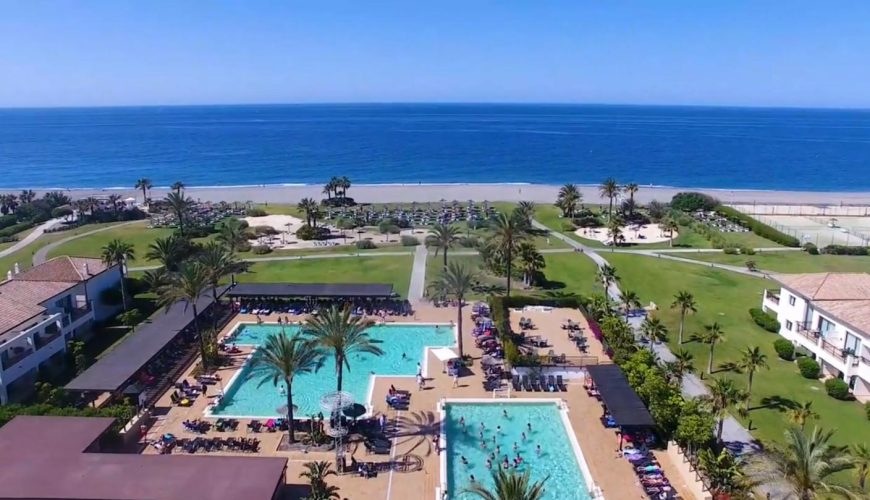
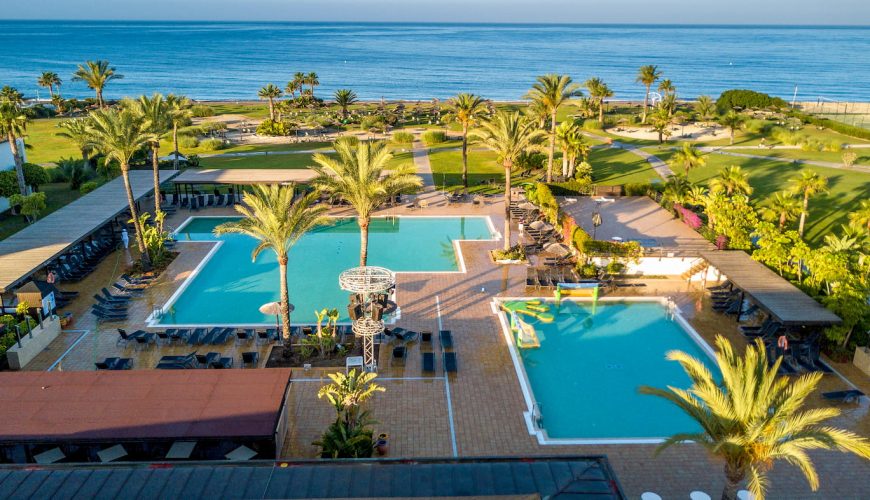
| Pools | 2 freshwater outdoor pools + 1 children’s pool; pool area with sunbeds and parasols |
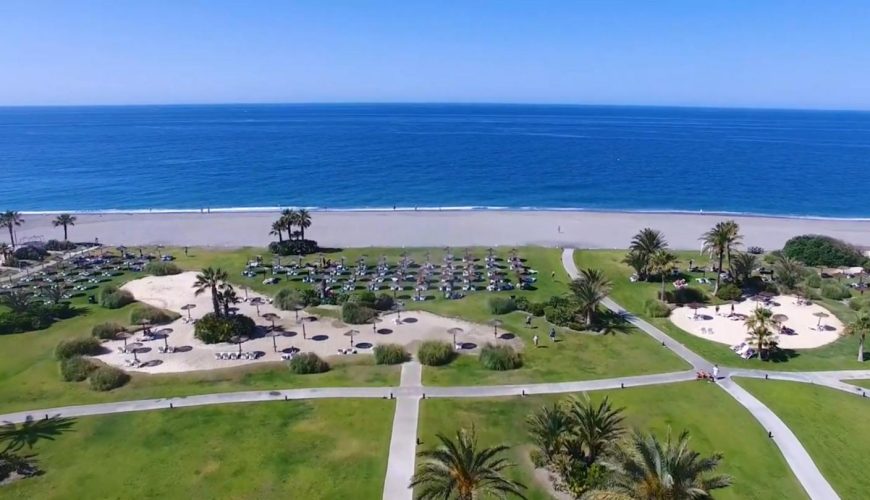
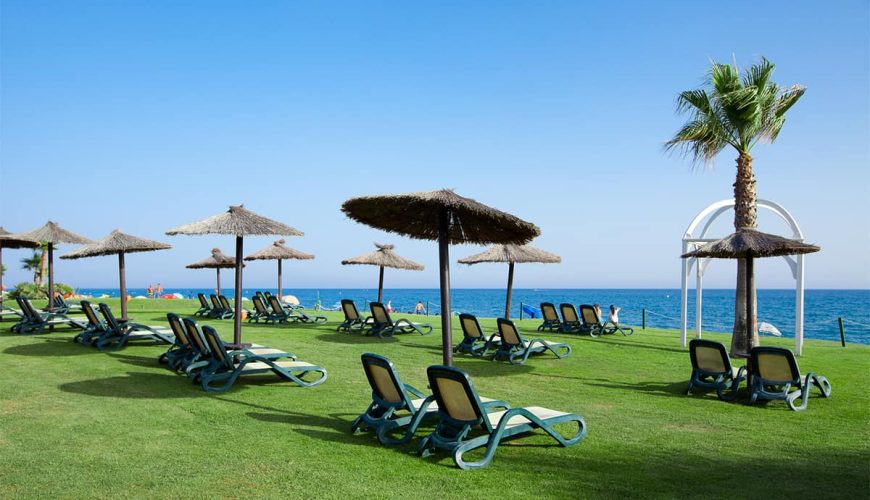
| Beach access | Direct beachfront; private beach area with sunbeds and umbrellas |
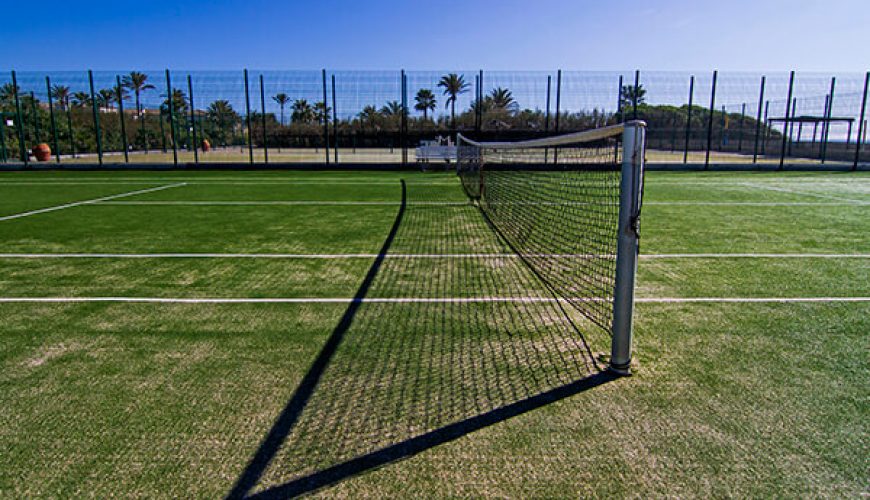
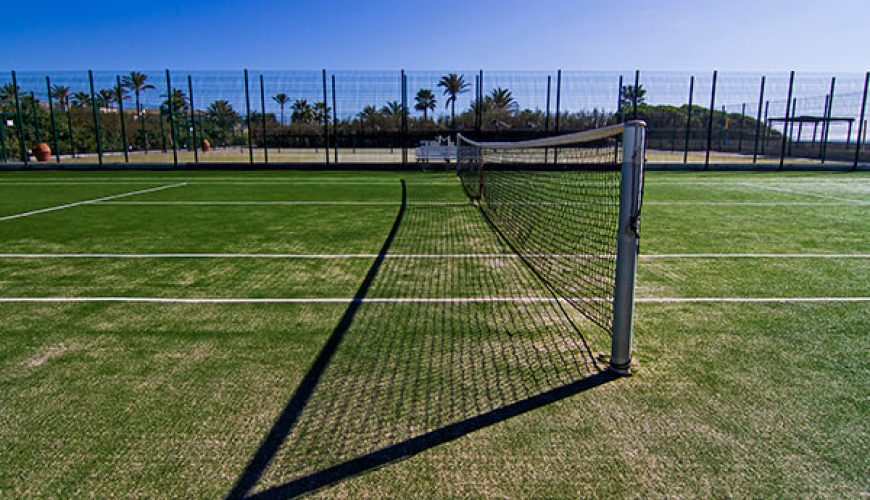
| Tennis | 6 outdoor clay tennis courts; available free of charge for guests |
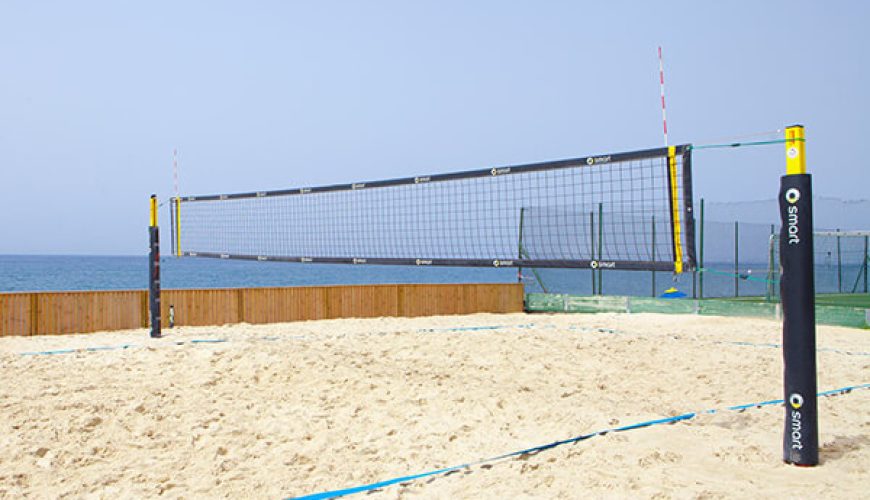
| Beach volleyball | 2 dedicated beach volleyball courts |
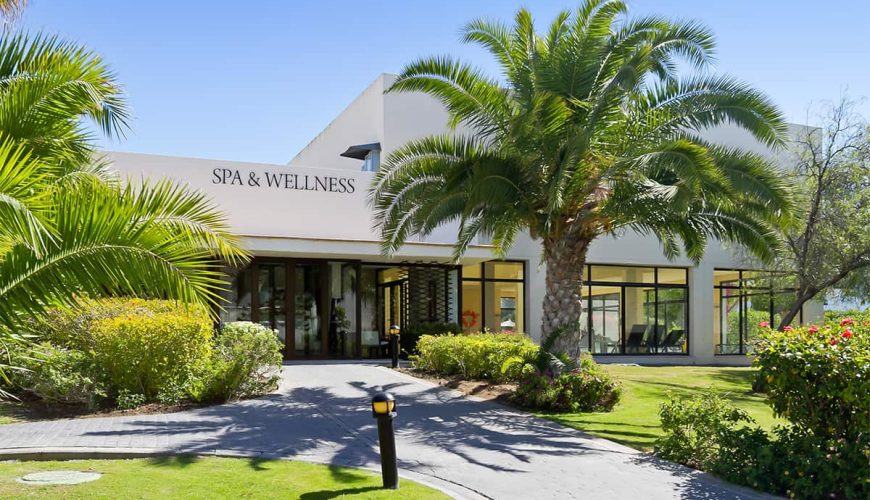
| Spa and wellness | WellFit Spa: Finnish sauna, hammam, solarium, massage and body treatment rooms (surcharge) |
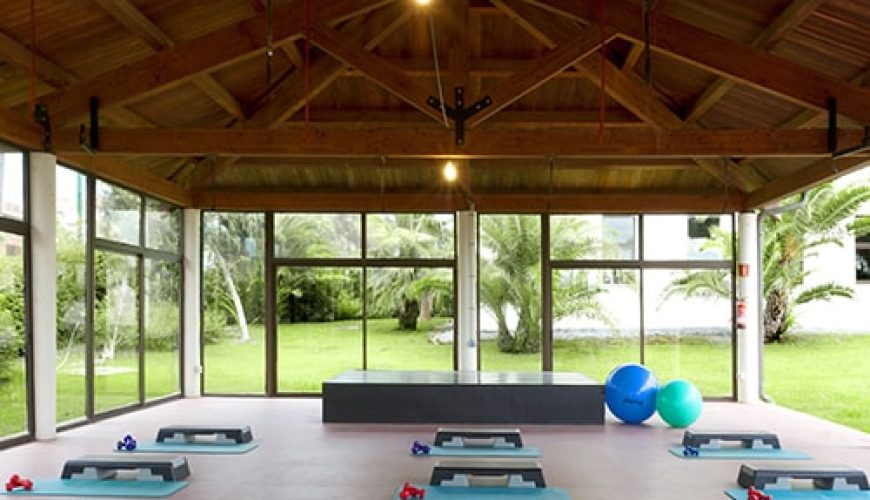
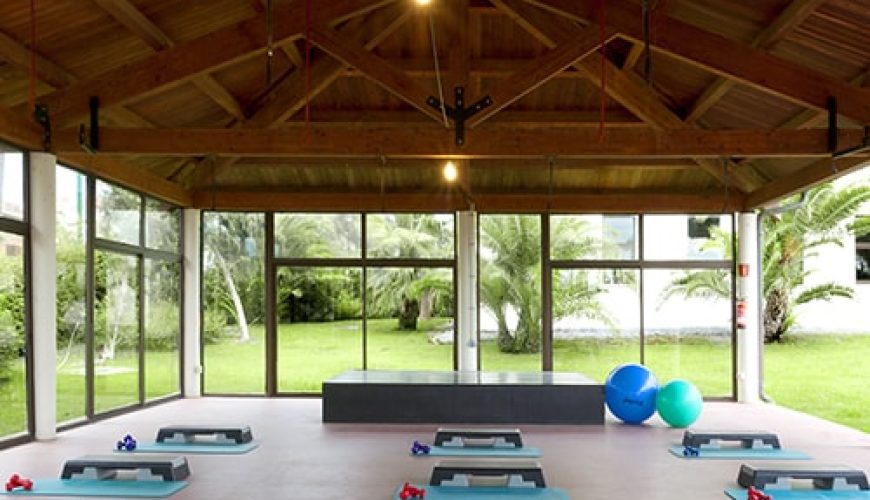
| Fitness centre | Fully equipped gym; daily fitness classes included |
| Golf | Los Moriscos Golf Club: 5-minute walk from hotel; 18 holes; preferential rates for guests |
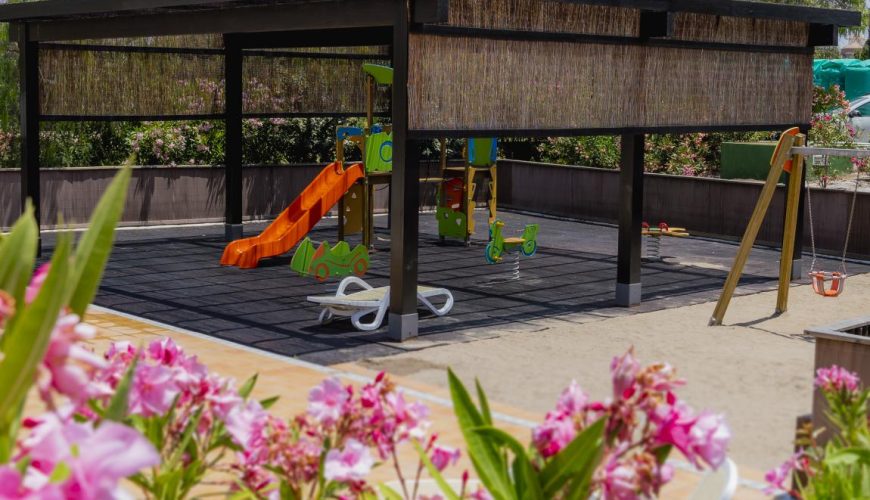
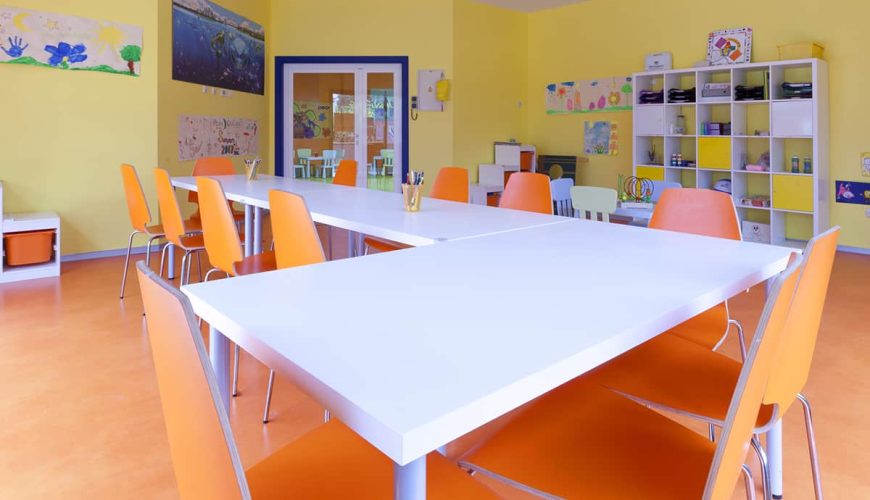
| Kids Club | Mini Club for children aged 4–12; supervised activities and entertainment |
| Sky Bar Terrace | New exclusive rooftop bar with ocean views; cocktails and premium drinks |
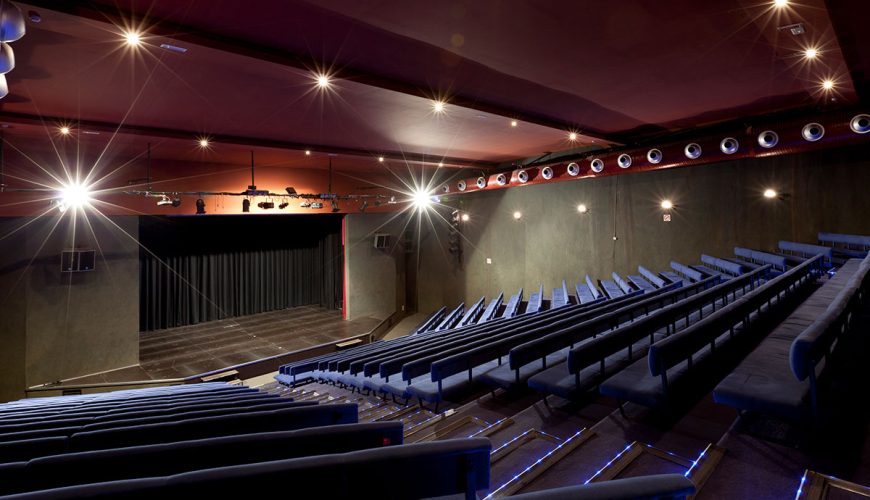
| Entertainment | Daily activity programme for all ages; evening shows and live music |
| Parking | On-site paid parking; free street parking available nearby |
Dining
The Impressive Playa Granada Golf offers several dining options reflecting the renovation and upgrade programme of recent years. The main buffet restaurant serves breakfast, lunch and dinner with show cooking stations and themed nights celebrating Andalusian and international cuisine. The La Bodega a la carte restaurant offers Mediterranean cuisine and a curated selection of Spanish wines in a more relaxed evening setting. From June to September, two themed restaurants — the Italian Villa Magna and the Mediterranean El Olivo — operate with one complimentary service per guest per stay included. The Sky Bar Terrace provides an elevated setting for sunset cocktails, while poolside and beach bars keep guests refreshed throughout the day.
| All-inclusive option
The Impressive Playa Granada Golf offers an all-inclusive package that covers meals and most drinks. For families and active guests spending most of their time on site, this represents good value and removes the friction of individual payments. Gratuities are included. For guests planning frequent excursions to Granada city, Salobrena and the Alpujarras, a bed-and-breakfast arrangement may offer more flexibility. |
4. Golf: Los Moriscos Club and the wider Costa del Sol circuit
Los Moriscos Golf Club — next to the hotel
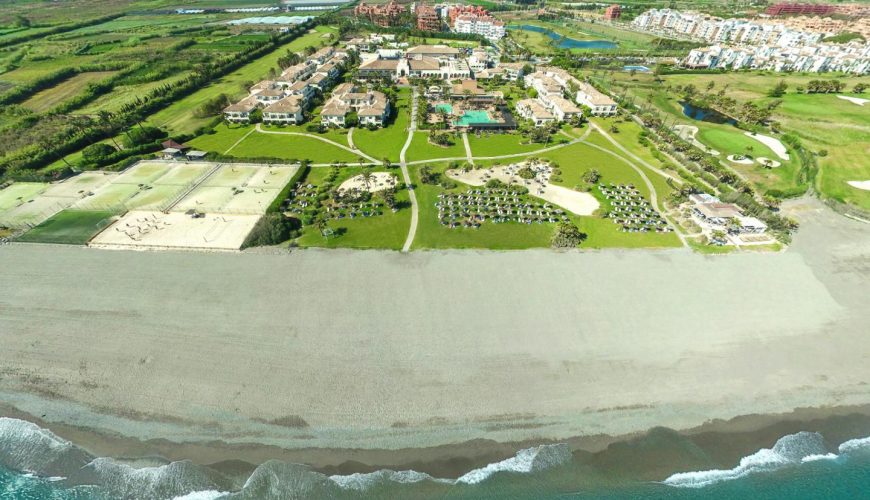
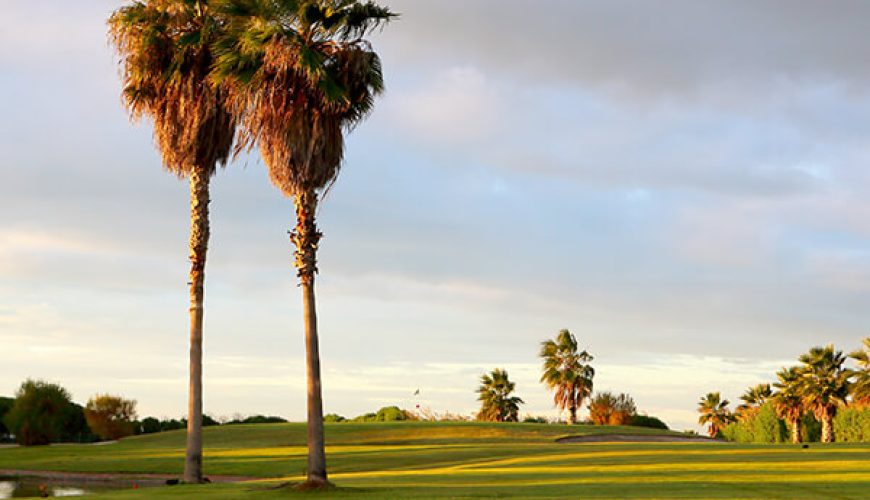
The Los Moriscos Golf Club is the most convenient golf course in this part of Andalusia for hotel guests — it is literally adjacent to the Impressive Playa Granada hotel, reachable on foot in five minutes. The 18-hole course plays through a landscape of palm trees, citrus groves and Mediterranean vegetation, with views of the sea and the Sierra Nevada creating a backdrop that is genuinely difficult to find elsewhere in European golf. The course is well-maintained and suitable for all ability levels; it is not a tournament venue in the manner of Valderrama or La Reserva, but it delivers a consistently enjoyable round in an extraordinary setting. The hotel has preferential rate arrangements with the club.
Golf on the wider Costa del Sol
Playa Granada sits at the eastern end of the Costa del Sol golf circuit — often called the Costa del Golf for the density of courses it contains. Within 90 minutes’ drive, golfers can access more than 70 courses ranging from accessible resort layouts to some of the finest championship venues in Europe. The major courses within practical driving distance of Playa Granada include:
- Parador de Malaga Golf (50 km): historic course next to Malaga Airport; one of the oldest in Spain
- Lauro Golf Resort (60 km): 36 holes in the hills above Malaga; challenging terrain with mountain views
- La Cala Resort (70 km): three 18-hole courses; one of the largest golf complexes in southern Spain
- Real Club Valderrama (130 km): 1997 Ryder Cup host; best course in continental Europe; 90 minutes west
- Real Club de Golf Sotogrande (130 km): Robert Trent Jones Sr. design; historic club (1964)
For golfers who want to combine a base at Playa Granada with a touring golf itinerary across the Costa del Sol, the location works well — central enough to access both the Malaga area courses and the premium Sotogrande/Valderrama cluster with reasonable driving times.
5. Sport and active holidays: tennis, water sports, cycling and more
Tennis
Six outdoor clay tennis courts are available free of charge to hotel guests — an unusually generous provision for a four-star resort. The courts are well-maintained and the year-round mild climate of the Costa Tropical makes outdoor tennis comfortable in every month except the hottest weeks of July and August (when early morning play is the preferred option). Coaching is available for guests wishing to improve their game, and informal social tennis is easily arranged with other guests through the animation team.
Water sports and beach activities
- Beach volleyball: 2 dedicated courts directly on the beach; regular organised games through the activity programme
- Water polo: pool-based sessions as part of the daily animation programme
- Kayaking and stand-up paddleboarding: available on the beach; rental and guided sessions bookable through the hotel
- Swimming: both pool and sea swimming; the beach at Playa Granada is sheltered and suitable for all levels
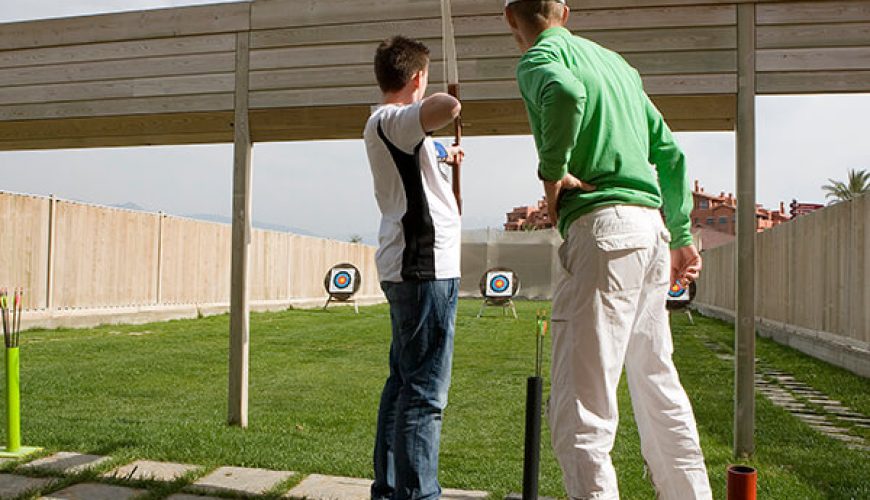
- Archery: available on-site as part of the resort’s activity programme — an unusual addition well-received by guests
Cycling and hiking
The Costa Tropical and the Sierra Nevada foothills behind it offer outstanding cycling and hiking terrain. Road cyclists find the mountain passes of the Alpujarras — the high valley communities south of the Sierra Nevada — among the most challenging and scenically rewarding rides in Spain. Mountain bikers can access trails directly from the coast. Hikers can walk the GR7 long-distance trail through the Alpujarras, reaching Berchules, Trevelez (the highest village in mainland Spain at 1,476 metres) and the hiking trails of the Sierra Nevada National Park. The hotel can arrange bicycle rental, and guided excursions into the Alpujarras are available through local operators in Motril.
Skiing in the Sierra Nevada
One of the most remarkable features of a Playa Granada stay in winter and spring is the proximity of the Sierra Nevada ski resort — just 50 miles (80 km) from the hotel and reachable in approximately 50 minutes by car. Sierra Nevada is the most southerly ski resort in Europe and typically operates from December to April. The combination of a beach hotel base in the mild Costa Tropical climate and day-trip access to proper alpine skiing is one that very few European destinations can offer. For guests travelling with a mix of skiers and non-skiers, Playa Granada resolves the problem neatly.
6. Beaches: Granada Beach, Platja de Ponent and the Costa Tropical coast
The beach at Playa Granada is the resort’s most immediate attraction and one of its most underrated assets. Unlike the narrow, crowded strips of sand typical of the central Costa del Sol, the beaches of the Costa Tropical tend to be wider, less built-up and calmer — qualities that make them particularly attractive for families and visitors seeking a more relaxed beach environment.
Granada Beach (Playa de Granada)
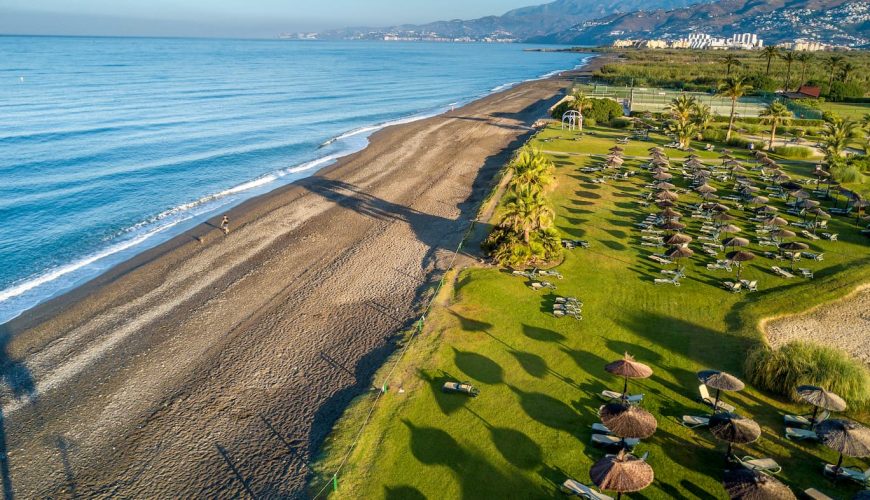
The main beach directly in front of the Impressive Playa Granada hotel is a broad, dark-sand beach with gentle waves well-suited to swimming and paddling. The hotel maintains a private area with sunbeds and parasols for guests. The beach is backed by palm-lined promenades and the resort’s gardens, giving it a verdant, lush character that contrasts pleasantly with the more arid coastlines found further west. Lifeguard supervision operates in season.
Platja de Ponent and further beaches
Platja de Ponent, a five-minute walk from the hotel, is a quieter alternative beach popular with locals and longer-stay visitors. Further along the coast, Salobrena Beach offers a more traditional setting overlooked by the Moorish castle on the hill above the village. Almunecar, 25 minutes by car, has a series of small coves and beaches with clear water ideal for snorkelling — and an aquarium worth visiting with children.
| Beach tip
The beaches of the Costa Tropical are generally darker in colour than the white or golden sands typical of the Costa del Sol — the sand is mixed with dark volcanic mineral content from the Sierra Nevada. The water temperature is warmer year-round than on Spain’s Atlantic coasts, making swimming comfortable from April to November. |
7. The surrounding region: Granada city, Alhambra, Alpujarras and Sierra Nevada
The strongest argument for choosing Playa Granada over other Costa del Sol destinations is the day-trip potential. No other coastal resort in Andalusia offers such easy access to such a diversity of experiences within a 90-minute drive.
| Destination | Distance | What to see or do |
| Granada city and Alhambra | 70 km, 55 min | Alhambra Palace and Generalife gardens (UNESCO); Albaicin quarter; flamenco; tapas culture |
| Sierra Nevada Ski Resort | 80 km, 50 min | Skiing December–April; highest ski resort in southern Europe; 105 km of pistes |
| Alpujarras villages | 40–70 km, 40–60 min | Berchules, Trevelez (highest village in Spain), Capileira; hiking, local crafts, jamón |
| Salobrena | 12 km, 10 min | Moorish hilltop castle; whitewashed streets; traditional village; good local restaurants |
| Almunecar | 25 km, 25 min | Roman ruins (Almunecar Castle); aquarium; beaches; lively town centre |
| Nerja | 55 km, 45 min | Balcon de Europa; Nerja Caves (spectacular stalactites); attractive old town |
| Malaga city | 80 km, 70 min | Picasso Museum; Alcazaba fortress; Soho art district; excellent food scene |
The Alhambra in Granada is one of the most visited monuments in Europe and arguably the finest example of Moorish architecture in the world. Tickets sell out weeks in advance — advance online booking through the official Patronato de la Alhambra website is essential, and the hotel concierge can assist with arrangements. The drive from Playa Granada to Granada city (55 minutes on the A-44 motorway) is straightforward and offers increasingly dramatic mountain scenery as you gain altitude.
8. Day trips: Salobrena, Almunecar and the whitewashed villages
Salobrena — the hilltop village above the sea
Salobrena, just 12 kilometres from Playa Granada, is one of the most visually striking small towns on the Costa Tropical. The whitewashed streets of the old town climb steeply to a well-preserved Moorish castle (Castillo Arabe), from whose battlements the views extend across the coast and out to sea. The castle contains a small museum of Moorish and Reconquista history, and the walk up through the narrow streets past bougainvillea-draped walls is one of the most pleasant half-hours in the region. Several excellent tapas bars and restaurants in the old town make Salobrena an ideal lunch excursion from Playa Granada.
Almunecar — Roman ruins and clear water
Almunecar, 25 kilometres west of Playa Granada, is the Costa Tropical’s largest resort town and has a surprisingly rich historical layer beneath the tourist surface. The Romans established a fish-salting and garum-production industry here, and the remains of their aqueduct, fish ponds and castle foundations can still be seen. The Almunecar Aquarium is a popular family stop, and the town’s several small beaches have clear water ideal for snorkelling. The Paseo del Altillo, a clifftop promenade, provides panoramic views of the coast.
The Alpujarras — Spain’s highest inhabited villages
The Alpujarras are a series of deep valleys on the southern slopes of the Sierra Nevada, home to a cluster of white-painted villages that retain strong Moorish architectural and agricultural traditions. Trevelez, at 1,476 metres above sea level, is the highest permanently inhabited village in mainland Spain and is famous throughout the country for its air-cured ham (jamón de Trevelez), produced using the cold mountain air as a natural drying agent. The drive up from the coast through increasingly dramatic mountain scenery is remarkable, and a morning in Trevelez or neighbouring Capileira — with lunch in a local bar and a leg of air-dried ham to take home — is a deeply satisfying Spanish experience.
9. Getting to Playa Granada: airports and transfer times
| Airport | Code | Distance | Transfer time | Notes |
| Granada-Jaen Airport | GRX | 55 km | 40 minutes | Closest airport; limited European routes; growing |
| Malaga International Airport | AGP | 80 km | 60–70 minutes | Main hub; broadest choice of European direct flights |
| Almeria Airport | LEI | 120 km | 90 minutes | Eastern option; some UK and European connections |
| Seville Airport | SVQ | 200 km | 2 hours | Useful for long-haul via Madrid; limited direct use |
Malaga is by far the most practical entry point for the majority of European visitors. It offers the widest range of direct connections, good car hire infrastructure and a straightforward 60–70 minute drive east along the A-7 and N-340 coastal roads to Motril and Playa Granada. The drive itself is scenic, particularly the coastal section between Nerja and Almunecar where the road winds between rocky cliffs and the sea.
Granada Airport is notably closer and worth considering for visitors whose primary goal is a cultural stay with Alhambra visits, using Playa Granada as a base. The route network is smaller but includes direct connections from several major European cities. By car from Granada Airport to Playa Granada, the route runs through the Sierra Nevada foothills with impressive views.
| Getting around
A hire car is strongly recommended for any stay at Playa Granada. Public buses connect Motril with Granada city and Malaga, but the frequency and convenience do not match car travel for visitors wanting to explore the Alpujarras, Sierra Nevada and surrounding towns independently. Parking at the hotel is available (paid) or free street parking is available just outside the resort perimeter. |
10. Best time to visit and practical planning tips
| Season | Temperature | Sport and activities | Character |
| March–May (Spring) | 18–24°C; mild; occasional rain | Golf, tennis and cycling in ideal conditions; Sierra Nevada still skiable | Quiet, lush, excellent value; Alhambra manageable |
| June–early July | 24–29°C; dry and warm | All outdoor sport excellent; sea warm enough to swim | Moderately busy; good availability and prices |
| July–August | 28–34°C; hot midday | Beach and pools; golf and tennis early morning | Peak season; busy; highest prices; lively atmosphere |
| September–October | 22–28°C; warm and stable | Best golf and tennis of the year; sea still warm | Post-peak; excellent value; quieter than summer |
| November–February | 14–20°C; mild; occasional rain | Golf year-round; skiing from December; hiking Alpujarras | Very quiet; lowest prices; cultural travel ideal |
The Costa Tropical genuinely works year-round in a way that few Spanish coastal destinations can claim. November to February is ideal for golfers who want empty courses, fair weather and low prices. March to May is peak season for active travellers — hikers, cyclists and tennis players — who want the landscape at its greenest and the temperatures at their most comfortable. September and October combine warm sea temperatures with quieter beaches and excellent golf conditions. Only July and August introduce the heat extremes and crowd levels that require some planning around (early morning for outdoor sport; afternoons in the pool or on the beach).
- Alhambra tickets: book online at least 2–3 weeks in advance through alhambra.org; do not rely on day-of availability, especially in spring and summer
- Sierra Nevada skiing: ski season typically December to April; check conditions at sierranevada.es before planning a day trip
- Currency: Euro; cards accepted everywhere; cash useful for markets and smaller village bars
- Language: Spanish throughout; English spoken at the hotel and main tourist sites; some French and German also understood in resort areas
- Health: European Health Insurance Card (EHIC/GHIC) valid for UK and EU visitors; comprehensive travel insurance recommended regardless
- Tropical fruit: try the chirimoya (custard apple) from Almunecar — it is genuinely one of the finest fruits produced in Europe and available cheaply at local markets from October to March
Playa Granada is the kind of destination that rewards the traveller who did not plan to be there. Most people arrive having heard about the Alhambra, realise the coast is a reasonable drive away, and discover that the journey between the two contains one of the most extraordinary microclimates in Europe, a golf course next to the sea, tropical fruits growing on the hillsides and snow on the mountains behind them. It is a place that resets expectations about what a Spanish beach holiday can be — and a very good reason to look east of Malaga on the map.

Comment (0)