
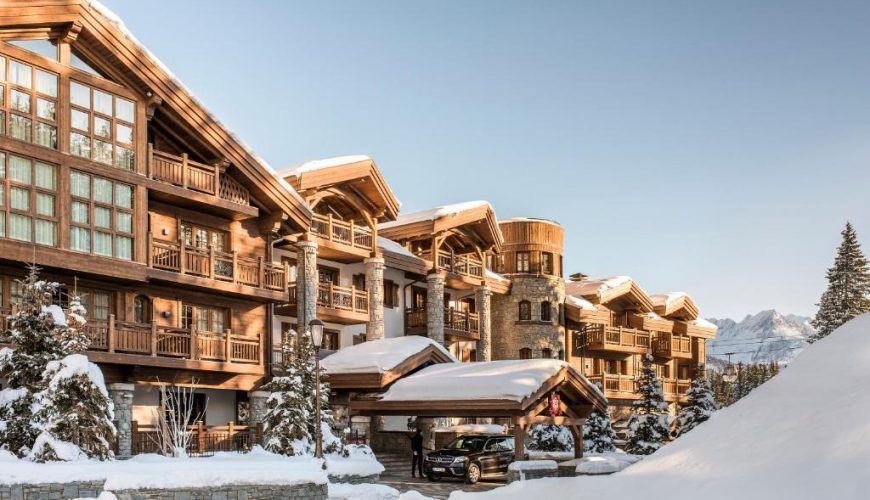
Courchevel – more Palace hotels than any ski resort on earth, and a summer almost nobody mentions
In 1946, a French civil servant drew a ski resort on a blank sheet of paper at 1,850 metres, in a valley that had never seen a chairlift. Eighty years later, that drawing has become the most decorated ski address on the planet — five Palace-rated hotels, access to the largest interconnected ski area in the world, a guest list that has included European royalty and Hollywood for seventy years, and a summer season that turns the same mountain into one of the quietest, most beautiful places in the Alps. This is the complete story of how Courchevel got here, and how to experience it properly.
A resort drawn on paper — the history of Courchevel
Almost every great European ski town began as something else first — a farming hamlet, a mining settlement, a monastery’s land. Courchevel did not. It began as an idea on a drafting table, conceived in 1946 by Laurent Chappis, a young planner working with the regional authorities of Savoie. Chappis proposed something that had essentially never been attempted in France: a ski resort built entirely from scratch, purpose-designed for skiing, on an empty high-altitude plateau at 1,850 metres with no existing village to constrain it.
The first lifts opened for the 1946–47 season. What set Chappis’s plan apart from the concrete-heavy resort developments that would later scar parts of the French Alps was his insistence on integration with the landscape — chalets that respected the contour of the mountain, a village centre designed for walking rather than driving, and crucially, the Altiport: a small mountain airstrip built directly into the ski area, allowing light aircraft to land on a sloped runway at altitude. No other ski resort in Europe has anything comparable. It became, almost immediately, a statement about who this resort was for.
Chappis didn’t build a village that merely worked. He built one that looked, from the very first season, as though it had always belonged on that mountain — which is precisely the trick, because it hadn’t been there at all.
Growth came in distinct waves. French and British skiers arrived through the 1950s and 60s. By the 1980s, Courchevel’s reputation had crossed into a different register entirely — a roster of European and Middle Eastern royal families, Hollywood actors and the first generation of post-Soviet wealth began treating the resort not as a skiing destination but as a winter address, on a par with Gstaad or St. Moritz but with considerably better snow and a noticeably younger energy. That reputation, and the five-Palace-hotel infrastructure that now serves it, is the direct legacy of a decision made in 1946 to build something from nothing.
Courchevel 2026 — winter and summer enquiries
Palace hotels — Three Valleys skiing — spa — summer in the Alps — 2 hours from Geneva
Courchevel at a glance, 2026
- Founded: 1946 — planner Laurent Chappis — first lifts opened winter 1946–47
- Altitude levels: Courchevel 1850 (the summit village, officially renamed simply «Courchevel») — Courchevel Moriond (1650) — Courchevel Village (1550) — Le Praz (1300)
- Ski area: Part of Les Trois Vallées — 600km of pistes — 165 lifts — the largest interconnected ski area in the world
- Palace hotels 2026: 5 — Airelles, Cheval Blanc, Le K2 Palace, L’Apogée, Fouquet’s — more than any other ski resort anywhere
- The Altiport: Europe’s only ski-area airstrip — light aircraft and helicopters land directly on the mountain
- Peak season: Christmas through to late April — full snowmaking infrastructure
- Summer season: June to September — hiking, mountain biking, golf, spa — minimal crowds
Who’s been here — seventy years of the world’s most photographed winter address
No serious account of Courchevel can avoid its social history, because the resort’s identity has always been inseparable from the people who chose it. Unlike Aspen or Vail, which built their reputations primarily on terrain and Hollywood proximity, Courchevel’s mythology was constructed deliberately, almost architecturally, from its earliest seasons — a resort engineered for a clientele that didn’t yet exist when Chappis drew his plans.
The pattern accelerated through the 1970s and 80s as European aristocracy and the Gulf royal families established a winter presence that became semi-permanent — chalets bought rather than rented, staff retained year-round, entire floors of the early hotels reserved on standing arrangements. By the 1990s and 2000s, the post-Soviet wealth that reshaped luxury hospitality across the Mediterranean found its winter counterpart in Courchevel specifically — the resort’s combination of discretion, genuinely excellent skiing and an established infrastructure of high-end retail made it the obvious choice over flashier but shallower alternatives.
What makes the Courchevel guest list different from other Alpine resorts
- Multi-generational presence: Several European royal and aristocratic families have maintained a presence in Courchevel across three generations — a continuity rare even among elite ski resorts
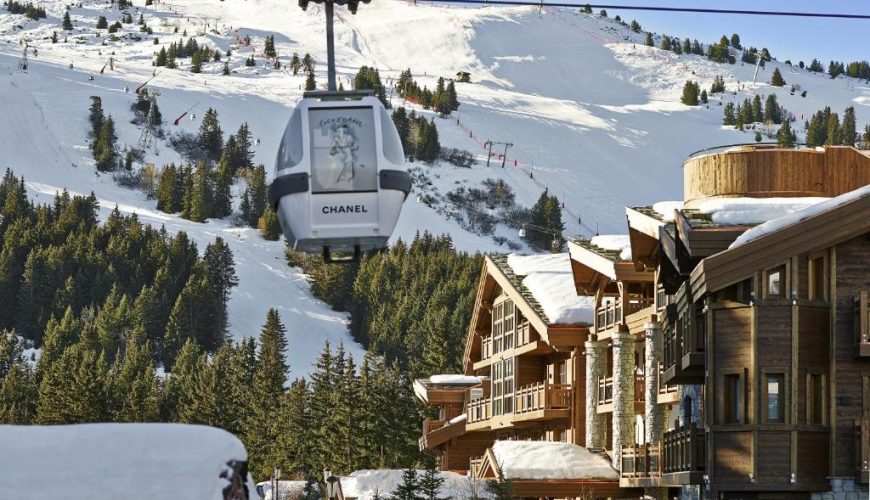
- The boutique strip: Hermès, Dior, Chanel and Louis Vuitton operate full boutiques in Courchevel 1850 — a retail density matched by almost no other ski village on earth
- Privacy by design: Unlike paparazzi-heavy destinations, Courchevel’s layout and clientele culture have long discouraged intrusive photography — part of its appeal to genuinely famous and genuinely wealthy guests alike
- The Altiport factor: The ability to land a private aircraft directly on the mountain, rather than transferring by road from a regional airport, has been a quiet but significant draw for the resort’s most discreet visitors since the 1960s
The Three Valleys — why nothing else compares
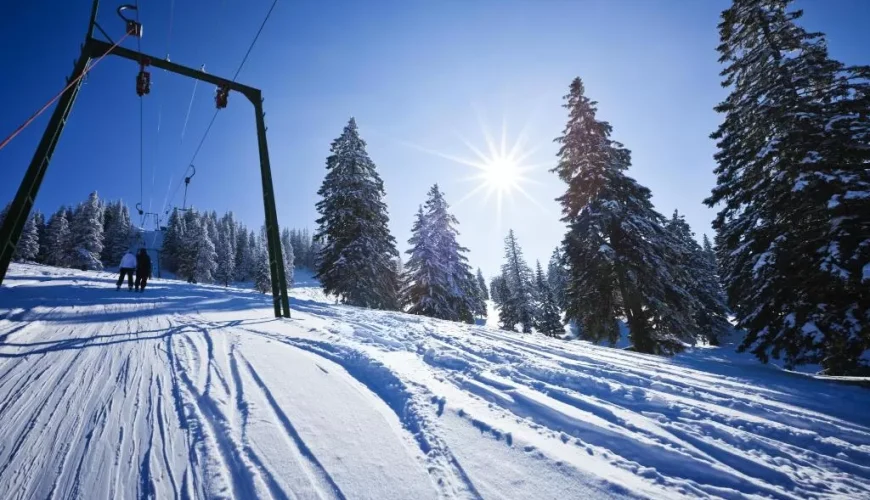
Les Trois Vallées — comprising Courchevel, Méribel, and Les Menuires/Val Thorens — is, by every measurable standard, the largest interconnected ski area on the planet. A single lift pass grants access to all three valleys via an uninterrupted network of pistes and lifts. It is entirely possible to start a ski day in Courchevel, take a lunch break in Méribel, ski the high glacier runs above Val Thorens at 3,230 metres in the afternoon, and return to a Palace hotel in Courchevel for dinner — all without removing your skis for longer than a chairlift queue requires.
The Three Valleys — facts and figures
- Total piste length: 600km of groomed runs across the connected area — roughly 150km within Courchevel itself
- Lift infrastructure: 165 lifts — gondolas, chairlifts and drag lifts
- Courchevel piste breakdown: 18 green, 43 blue, 37 red and 14 black runs
- Altitude range: 1,300m (Saint-Bon) to 2,738m (Saulire summit) — high-altitude terrain extends the season into April
- Snowmaking: Comprehensive artificial snow coverage protects the lower pistes through warm spells
- Beginners: The Jardin Alpin, a gentle practice area in the heart of Courchevel 1850 — ESF and several private ski schools operate here
- Lift pass: The Three Valleys pass costs roughly EUR 70–85 per day depending on season — multi-day passes offer better value
For beginners and families
Green and blue runs
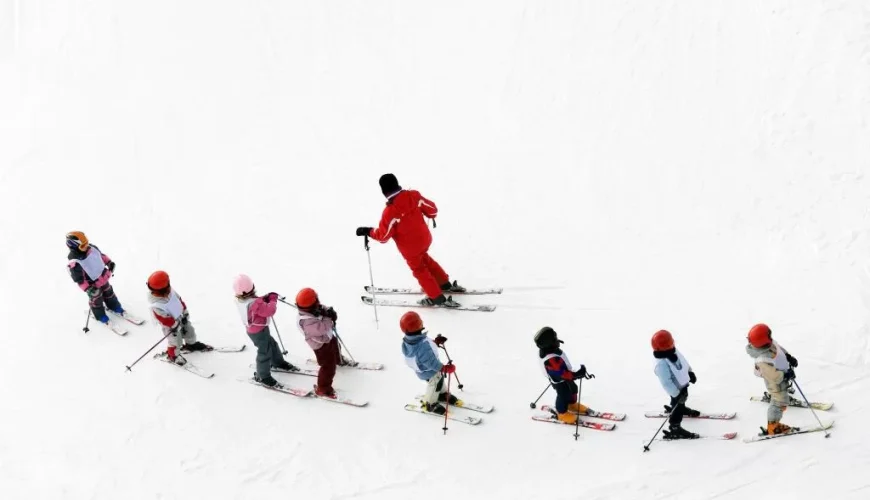
The Jardin Alpin offers a genuinely flat practice area within walking distance of the village centre. The long blue runs of Les Grandes Bosses and Bellecôte are well-groomed and gentle enough for confident beginners and families. The ESF (Ecole du Ski Français) and several private ski schools offer lessons across all age groups and abilities.
For intermediate skiers
Red runs and guided off-piste
The red runs from Saulire and the Vizelle area are among the most beautiful descents in the Alps. The black-rated «Émile Allais» piste is one of the more technically demanding marked runs in Courchevel. Guided off-piste excursions into the untouched terrain behind Saulire are bookable through certified mountain guides.
For expert and advanced skiers
Black runs and freeride terrain
The Couloir des Pylônes and the north-facing access from Saulire constitute serious freeride terrain reserved for experienced skiers. In a strong snow year, the north slopes of Saulire remain skiable into May. Avalanche bulletins are published daily — off-piste skiing should never be undertaken without a transceiver and a qualified guide.
Five Palace hotels — Courchevel 2026, decoded
A Palace rating is the highest official hotel classification awarded in France — a category sitting above standard five-star, governed and awarded by the state tourism authority Atout France. As of 2026, Courchevel holds five Palace-rated properties — Airelles, Cheval Blanc, Fouquet’s, L’Apogée and Le K2 Palace — more than any other ski resort in the world and more than most major cities. In practical terms, this means Courchevel is the only place on earth where a guest can choose between five genuinely top-tier luxury addresses while standing on the largest connected ski area in the world.
Palace — fairytale Alpine architecture — six restaurants — ski-in/ski-out — La Mer spa — open since 1992
Airelles Courchevel
Courchevel 1850 — slope-side location — Austro-Hungarian castle aesthetic
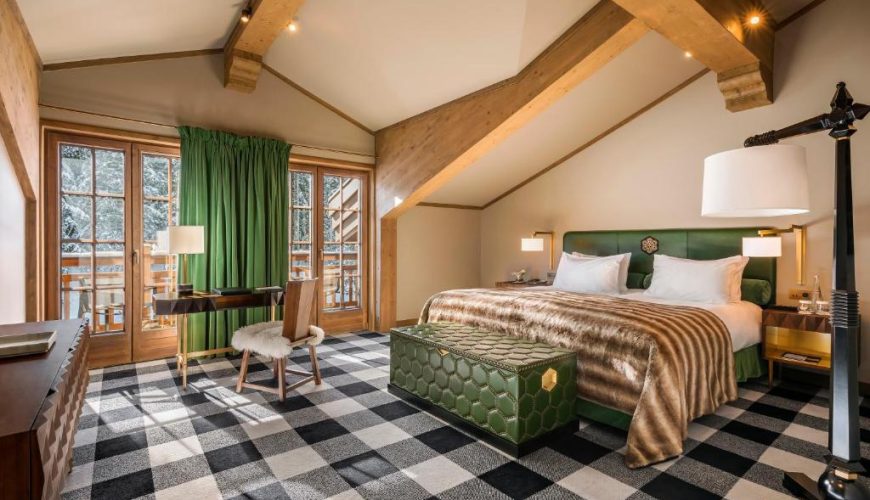
Les Airelles is the most theatrical of Courchevel’s five Palace hotels — turreted, hand-painted, and deliberately styled after the fairytale castles of nineteenth-century Austro-Hungarian aristocracy rather than conventional Alpine chalet design. Many regular guests consider it the warmest and most personal of the five Palaces. Six restaurants operate within the property, alongside the La Mer spa and a dedicated children’s club. The ski-in/ski-out arrangement is direct: the boot room sits in the lower level, and the piste begins essentially at the door.
Palace — LVMH group — Three Michelin Keys — contemporary Alpine design — Guerlain spa
Cheval Blanc Courchevel
Courchevel 1850 — LVMH flagship — modern design language
Cheval Blanc Courchevel is the LVMH group’s Alpine flagship — sleeker and considerably more contemporary in its design language than Airelles, with a strength that lies specifically in its dining and spa offering. The property holds Three Michelin Keys, confirming its place among the most accomplished hospitality addresses in France. The Guerlain spa is widely regarded as the most comprehensive beauty and wellness facility among Courchevel’s five Palaces. The hotel sits directly adjacent to Airelles — making the comparison between the two one of the more enjoyable debates among regular Courchevel guests.
Palace — Three Michelin Keys — slope-side — Spa K2 — Courchevel 1850
Le K2 Palace
Courchevel 1850 — direct piste access — Savoyard chalet design
Le K2 Palace is named, with characteristic understatement, after the world’s second-highest mountain — and its Savoyard chalet design combines timber, stone and Alpine craftsmanship at a level that has earned it Three Michelin Keys and Palace status. The Spa K2 is among the most extensive wellness facilities in the resort. Ski access is genuinely direct, placing it among the better-located properties in Courchevel 1850 for skiers who want to minimise time spent walking in boots.
Palace — Oetker Collection — Two Michelin Keys
L’Apogée Courchevel
L’Apogée belongs to the Oetker Collection — the hospitality group owned by the German family behind Brenners Park-Hotel in Baden-Baden and Eden Rock in St Barths. It holds Two Michelin Keys and Palace status, with a contemporary Alpine chalet design and a notably more personal, intimate atmosphere than the larger properties nearby — appealing strongly to repeat guests who prioritise discretion over scale.
Palace — Barrière Group — newest addition
Fouquet’s Courchevel
Fouquet’s Courchevel is the resort’s newest Palace address, operated by the Barrière Group, which also runs the legendary Fouquet’s on the Champs-Élysées in Paris. Michelin-recognised and Palace-rated as of 2026, it brings a distinctly Parisian sensibility into an Alpine setting — the youngest and least-documented of the five Palace properties, and arguably the one worth watching most closely over the coming seasons.
Aman Le Mélézin — Courchevel’s sixth major luxury address — Aman Group — the resort’s quietest location.
Dining — Michelin stars at 1,850 metres
After Megève, Courchevel is the most significant culinary destination among French Alpine resorts. The concentration of Michelin-recognised restaurants within a single mountain village is exceptional even by international standards.
Michelin-starred — Airelles — the headline table
Pierre Gagnaire pour Les Airelles
Pierre Gagnaire — one of the most significant chefs in French gastronomy — operates his Courchevel restaurant within Les Airelles. The cooking is both experimental and rooted in classical technique, drawing on produce from Savoie and across France, executed with the precision of a three-star kitchen. Reservations should be made months ahead. The single most talked-about table in the resort.
Fine dining — Cheval Blanc
Le 1947 — Cheval Blanc
Cheval Blanc’s signature restaurant — named for the resort’s founding year — combines classical French haute cuisine with Alpine produce sourced from Savoie. Truffle, foie gras, Bresse poultry and regional mountain cheeses anchor a menu that shifts with the seasons.
Après-ski and brasserie
La Saulire — lively and traditional
La Saulire is Courchevel’s best-known après-ski restaurant — slope-side, with a panoramic terrace and a hearty Savoyard menu of raclette, tartiflette and fondue. No Michelin star, but one of the most sociable tables in the resort. Booking ahead is essential.
Authentic Alpine cooking
Le Génépi — Courchevel 1550
For visitors seeking genuine Savoyard cooking without Palace-hotel pricing, Le Génépi in Courchevel 1550 preserves something of the resort’s original Alpine identity — homemade ravioles, regional charcuterie, local wines and an atmosphere not yet entirely reshaped by glamour.
Spa and wellness — recovery after the slopes
Courchevel has the highest concentration of world-class spa facilities of any ski resort on earth. Each of the five Palace hotels operates its own spa, and they differ meaningfully in philosophy and offering.
The best spa addresses in Courchevel, 2026
- Guerlain Spa — Cheval Blanc: The resort’s most comprehensive beauty concept — Guerlain’s own treatments, body exfoliation, anti-ageing programmes, sauna, steam room and indoor pool — ideal for guests prioritising skincare and beauty treatments
- La Mer Spa — Airelles: Marine-based treatments from the American luxury skincare house La Mer — seaweed wraps, deep hydration therapy, massage — arguably the most exclusive and expensive spa offering in Courchevel
- Spa K2 — Le K2 Palace: Extensive facilities including hammam, sauna, steam room and pool with a broad massage menu — the most complete thermal spa among the Palace hotels
- Aman Spa — Aman Le Mélézin: The characteristic Aman approach — minimal decoration, maximum effect — yoga, Pilates, shiatsu and Alpine herbal treatments — the quietest, most meditative spa experience in the resort
- Les Bains de Courchevel (public facility): The resort’s public wellness centre — pool, sauna, steam room and massage — accessible to visitors not staying at a Palace property
The Courchevel nobody talks about — summer in the Alps
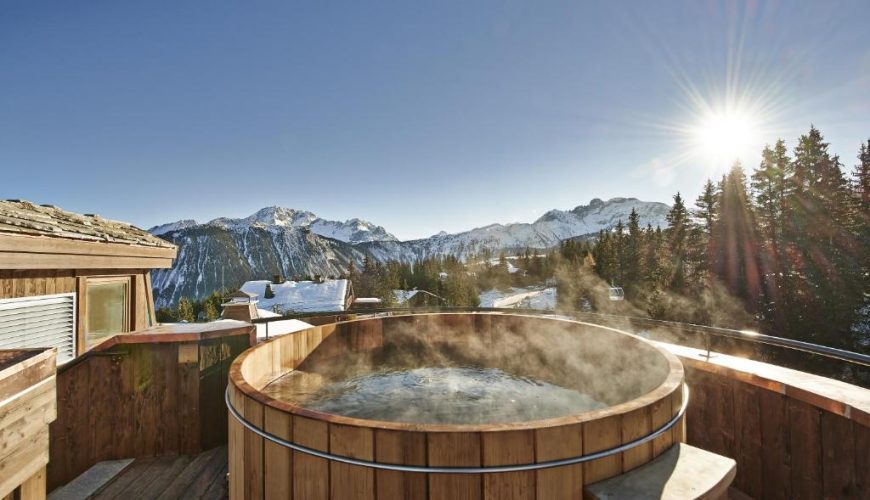
In summer, Courchevel becomes a genuinely different place. The lifts that carry skiers in winter lift hikers and mountain bikers to 2,700 metres instead. The pistes, white in winter, turn into wildflower meadows thick with arnica, gentian and Alpine rose. Several Palace hotels remain open through summer — and the value proposition shifts dramatically in the visitor’s favour.
Courchevel in summer 2026 — what’s on offer
- Hiking: Over 150km of marked trails around Courchevel, ranging from gentle alpine pasture walks to a serious ascent of Saulire (2,738m) — cable cars continue operating through summer to access the high plateaus
- Mountain biking: Courchevel forms part of one of the largest bike parks in Savoie — downhill trails, flow tracks and cross-country routes — bike rental available in Courchevel 1850
- Golf: Courchevel’s golf course sits at 1,100 metres, among the highest-altitude courses in France, with views directly onto the Three Valleys peaks — 18 holes, open daily through July and August
- Climbing: The rock faces around the Courchevel valley offer excellent routes across all difficulty levels — guided climbs available through certified mountain guides
- Tennis: Courts within the village offer summer coaching and tournaments for all standards
- Paragliding: Tandem flights launching from Saulire deliver one of the more dramatic Alpine panoramas available without leaving the ground entirely — bookable through local operators
- Summer pricing: Palace hotel rates in summer run at a fraction of winter pricing — the same hotel, the same standard, typically 60–70% lower room rates
Practical information — understanding Courchevel before you go
Essential information for Courchevel visitors
- Altitude villages and naming: Courchevel comprises four altitude levels. Courchevel (formerly 1850) is the summit village holding the Palace hotels. Courchevel Village (1650), Courchevel Moriond (1650, informal) and Le Praz (1300) are more affordable and authentic — all connected by ski bus
- Currency: Euro — credit cards accepted universally
- Language: French — English, German, Russian and Arabic widely spoken at Palace hotels and upscale restaurants
- Equipment rental: Multiple rental outlets across all altitude levels — Palace hotels offer exclusive ski valet services including boot warming, storage and waxing
- Ski school: ESF (Écoles du Ski Français) is the national ski school; several private schools offer smaller groups and private lessons
- Childcare: All Palace hotels operate kids’ clubs and babysitting; ESF runs a dedicated children’s ski school from age 3
- Shopping: Courchevel 1850 hosts full boutiques for Hermès, Dior, Chanel, Louis Vuitton and other major luxury houses — one of the most complete luxury retail offerings outside a major city
- The Altiport: The mountain airstrip — ICAO code LFLJ — is certified for light aircraft and helicopters. Private jet connections typically route via Chambéry or Geneva
Getting there — routes into Courchevel
Courchevel sits in the French département of Savoie, roughly 100km southeast of Geneva and 130km east of Lyon. There is no large international airport directly serving the resort — visitors arrive via a regional airport or by train to Moûtiers.
Nearest international hub — 2 hours
Geneva (GVA) — recommended
Geneva Airport offers the most convenient international gateway to Courchevel, with direct flights from London, New York, Dubai and most major European cities. From Geneva, the drive to Courchevel covers roughly 100km — around 2 hours depending on traffic and conditions. Numerous private and shared transfer services operate directly from the airport.
Rail alternative — 45 minutes from the valley
Moûtiers — Tarentaise (train)
Moûtiers-Salins-Brides-les-Bains, in the valley below, is the nearest major rail station — with direct TGV connections from Paris Gare de Lyon (around 5 hours, changing in Chambéry). From Moûtiers, bus transfer or taxi to Courchevel 1850 takes roughly 45 minutes. Direct overnight TGV services from Paris operate during peak season.
Group travel — 2.5 hours
Lyon Saint-Exupéry (LYS)
Lyon is the region’s second-largest airport, with direct connections from numerous European and a growing number of long-haul destinations. From Lyon, the journey to Courchevel takes around 2.5 hours by hire car or group minibus transfer — well suited to groups arriving from outside Europe.
The signature arrival experience
Helicopter from Geneva — 20 minutes
For Palace hotel guests, helicopter transfer from Geneva Airport directly to the Courchevel Altiport takes roughly 20 minutes, crossing Lake Geneva and the Alpine range. The Courchevel Altiport (LFLJ) is the only ski-area airstrip of its kind in Europe, with a sloped runway built directly into the mountain. Bookable through the Palace hotels or specialist transfer operators.
Practical travel notes
- Winter tyres mandatory: Snow tyres or chains are legally required on the mountain approach roads from November onward
- Peak-season congestion: Saturdays (the typical changeover day) frequently bring multi-hour delays on the N90 between Moûtiers and Courchevel — arriving Friday evening or departing Sunday is advisable
- Car hire at Geneva: All major rental agencies operate at Geneva Airport — four-wheel-drive or winter-equipped vehicles are recommended for the mountain approach
- Group transfers: Minibus and coach transfers direct from Geneva or Lyon can be booked for groups of six or more, often working out more cost-effective than individual taxis
- Summer access: No winter tyres required in summer — the mountain road is clear and straightforward to drive
Courchevel 2026 — Five Palace Hotels, the World’s Largest Ski Area, and a Hidden Summer
Courchevel — five Palace hotels, one mountain without rivals.
Airelles, Cheval Blanc, Le K2 Palace, L’Apogée and Fouquet’s — no other ski resort on earth has five Palace hotels. 600 kilometres of piste across the Three Valleys. Dinner with Pierre Gagnaire. An afternoon at La Mer Spa. And a summer that delivers all of it again, with almost nobody else around. Courchevel 2026 is waiting.
Comment (0)